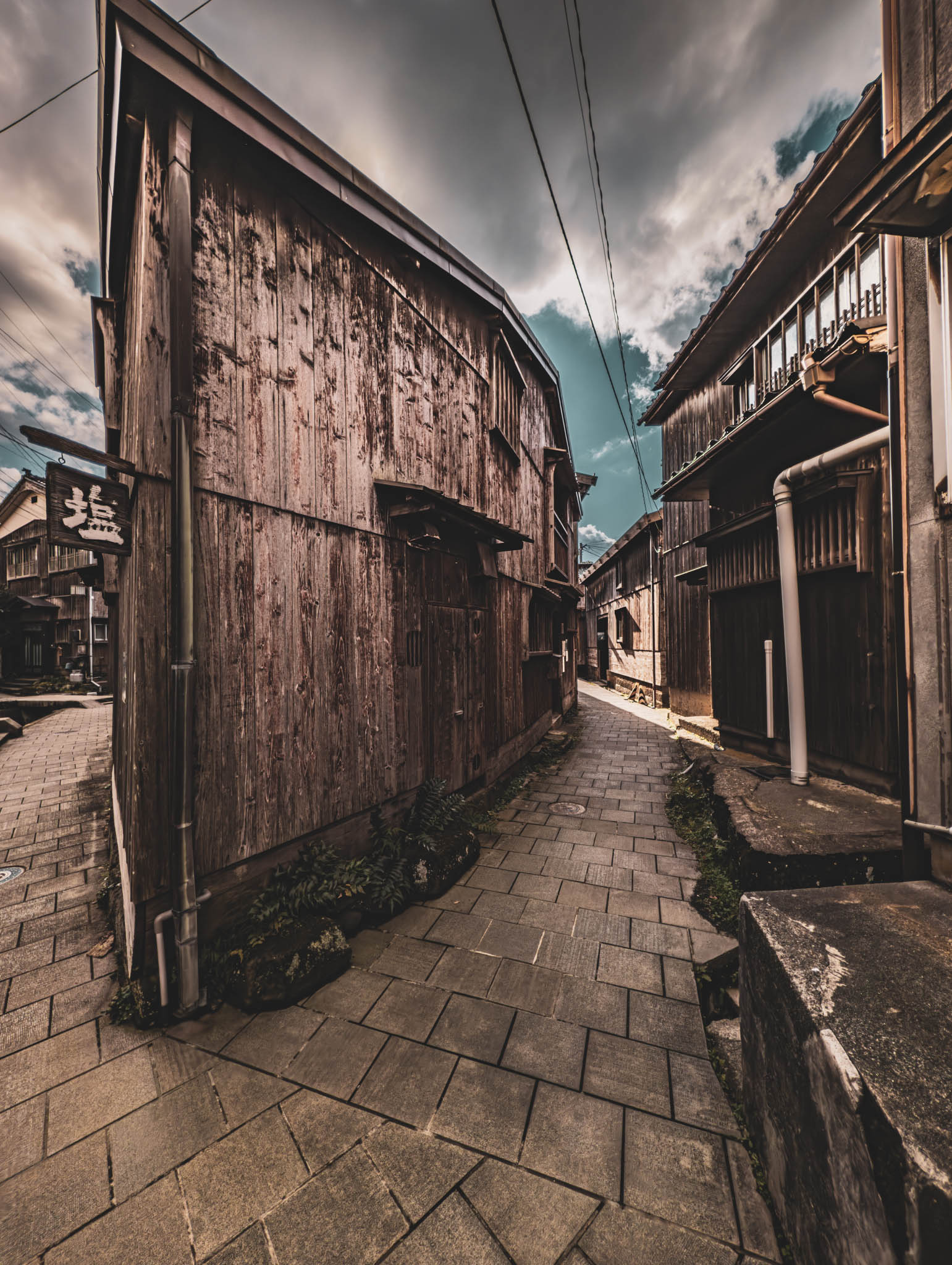
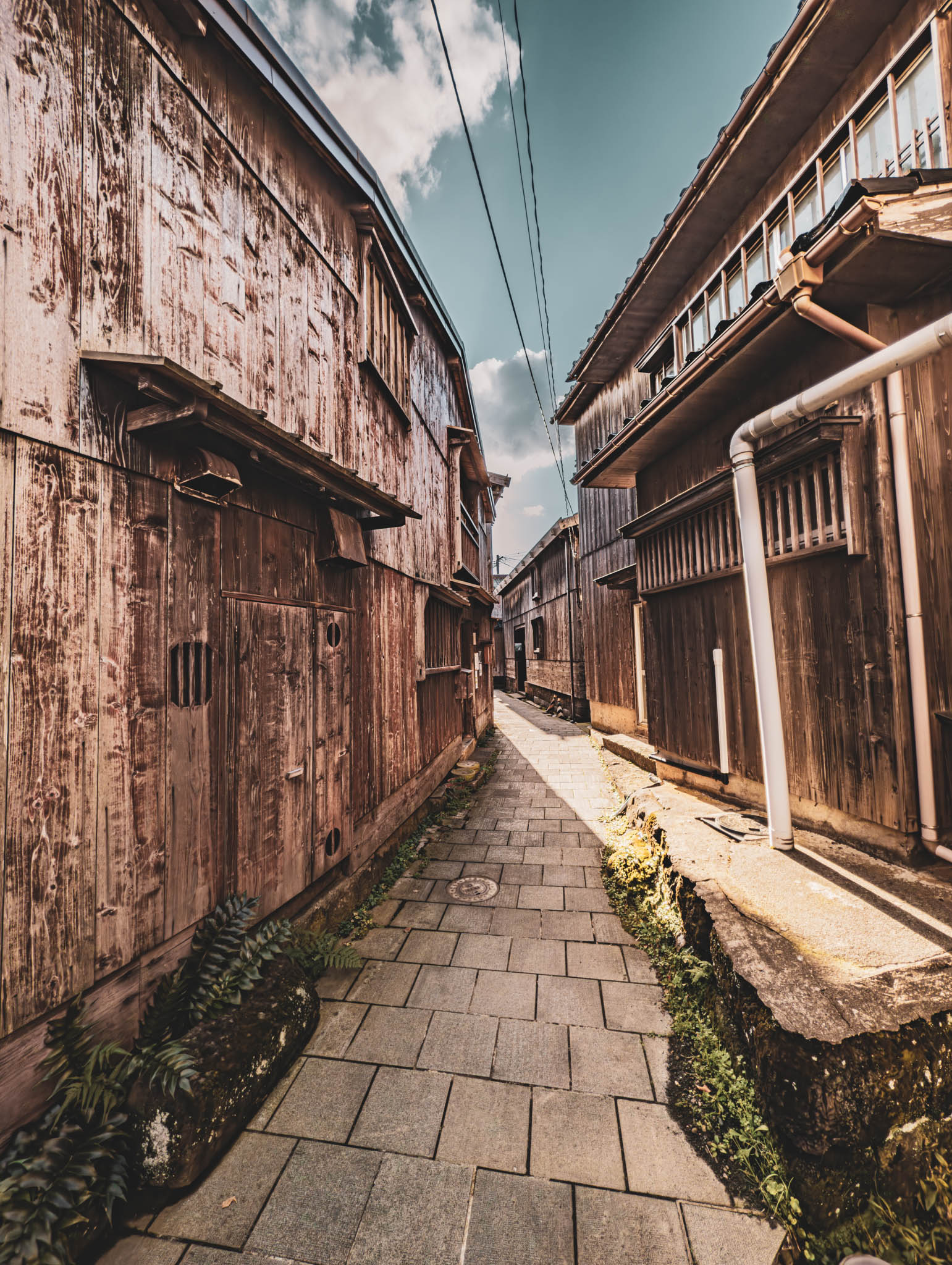
It’s not on an island, as Venice is. In fact, Shukunegi compacts itself into the narrow, steep-walled valley of the Shokojigawa, a deep gully in the fertile upland carved by the stream as it races to the Sea of Japan. And there are not canals, just the fast shallow water. But the latter winds and jogs a bit, and it is crossed over and over by unrailed slab bridges, some of which do lead directly to the houses.
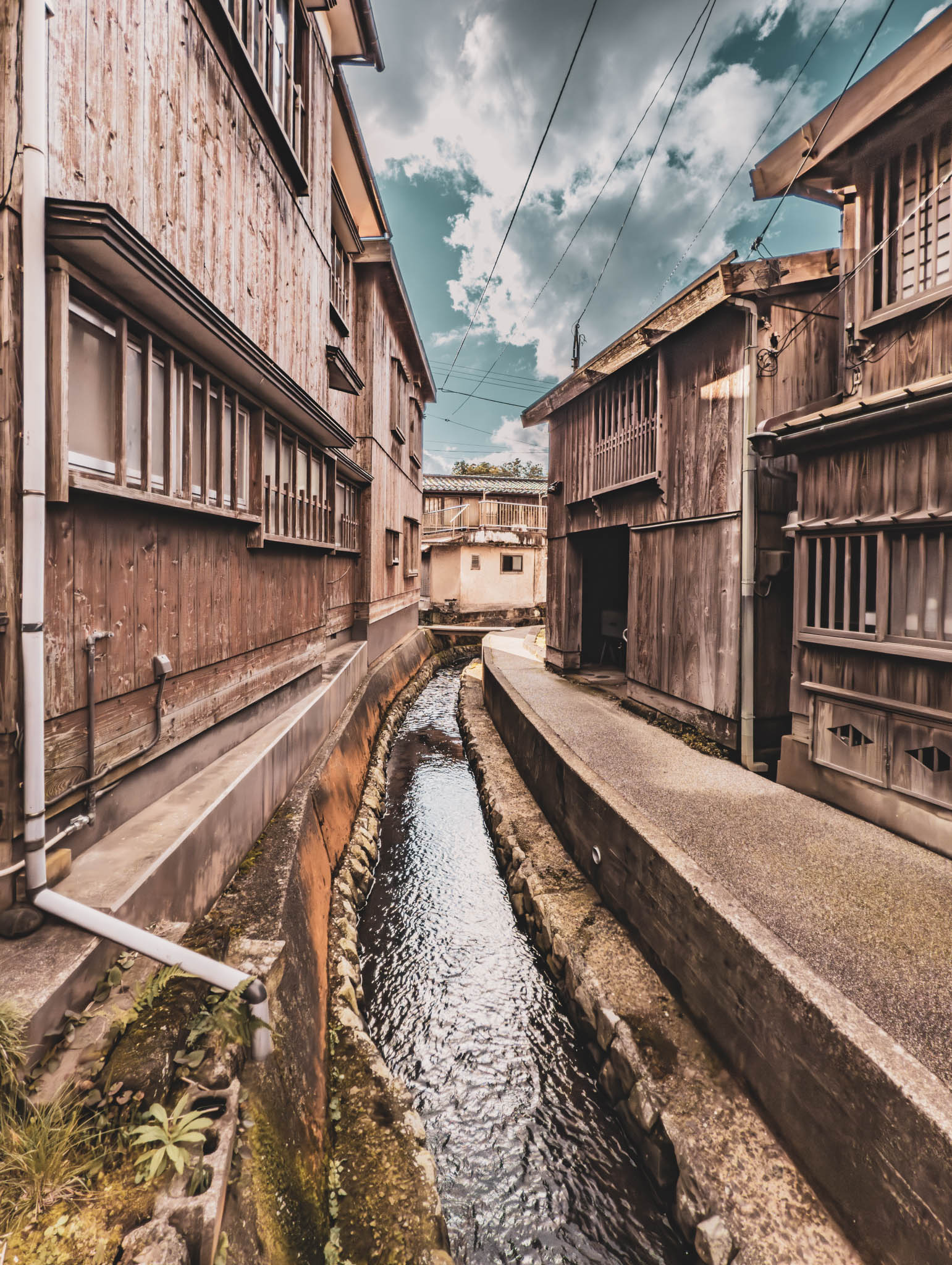
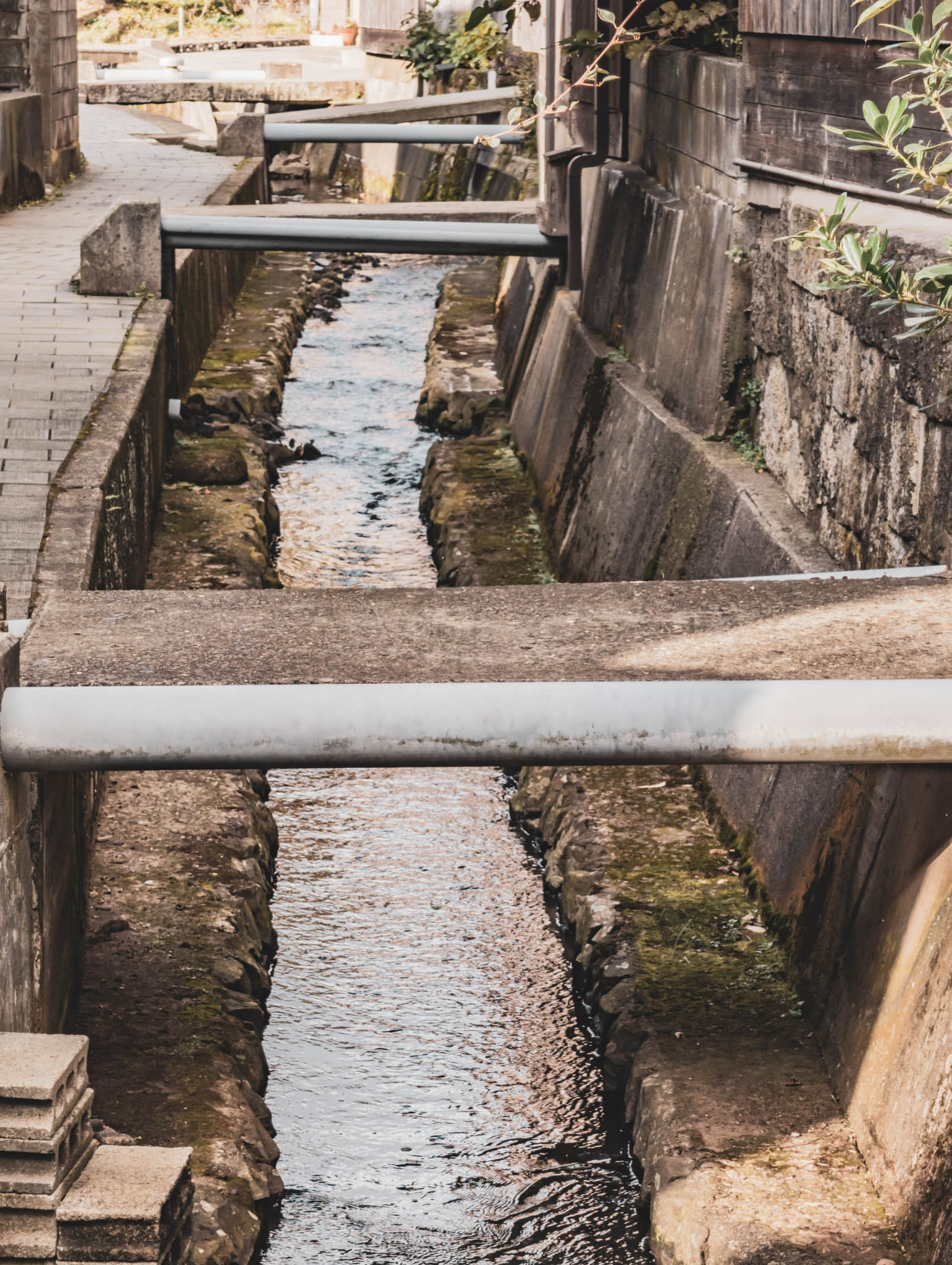
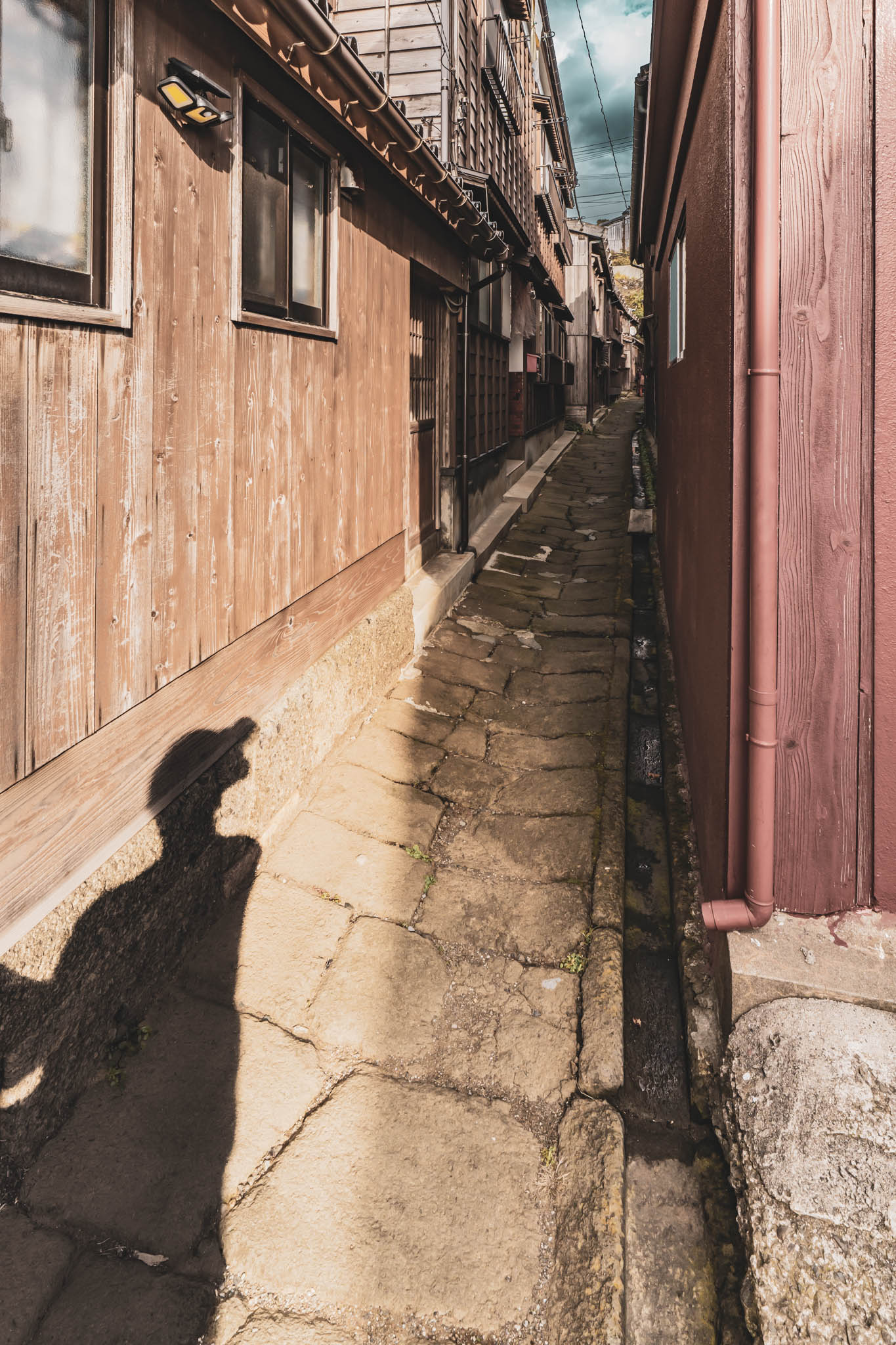
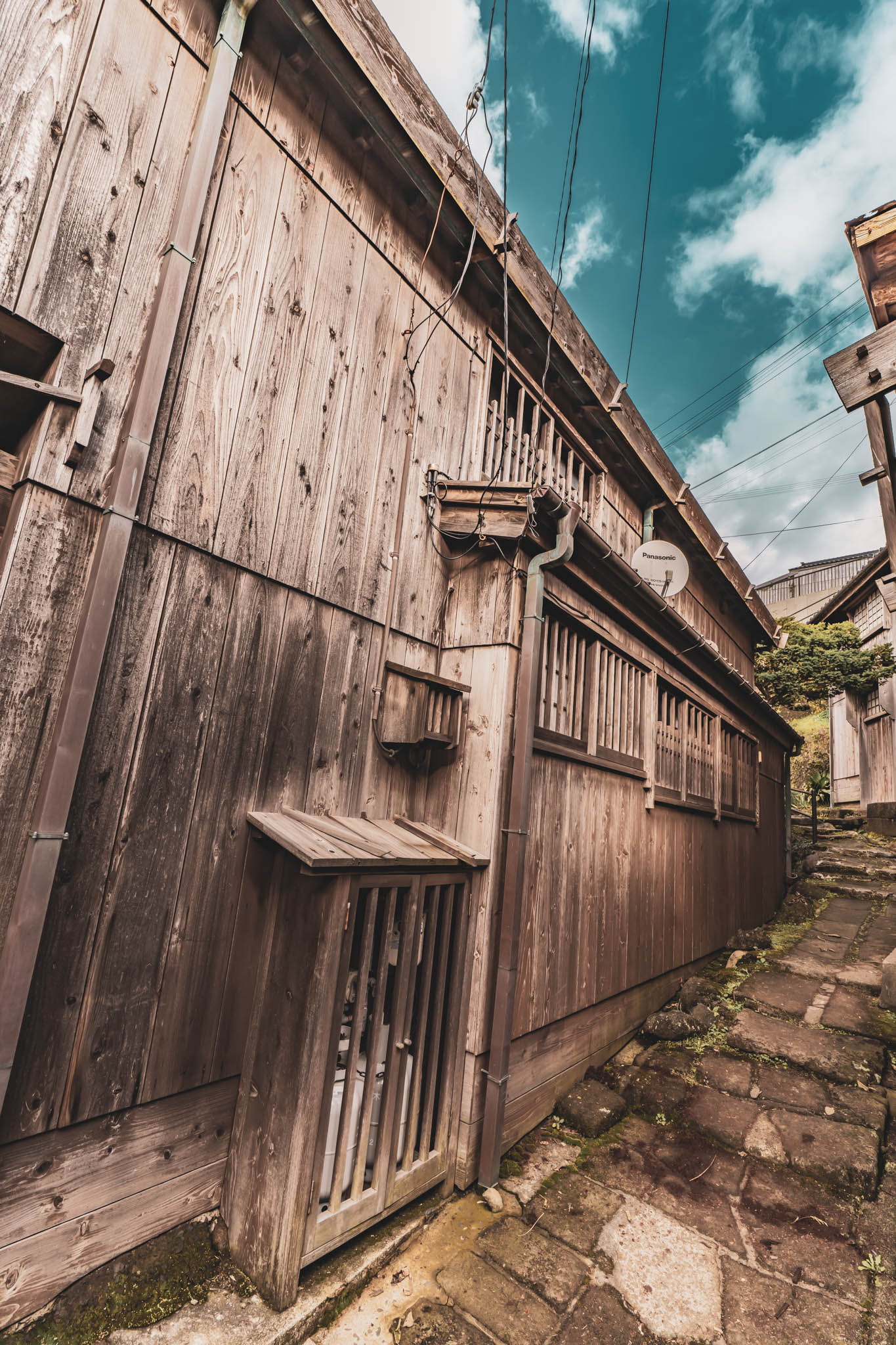
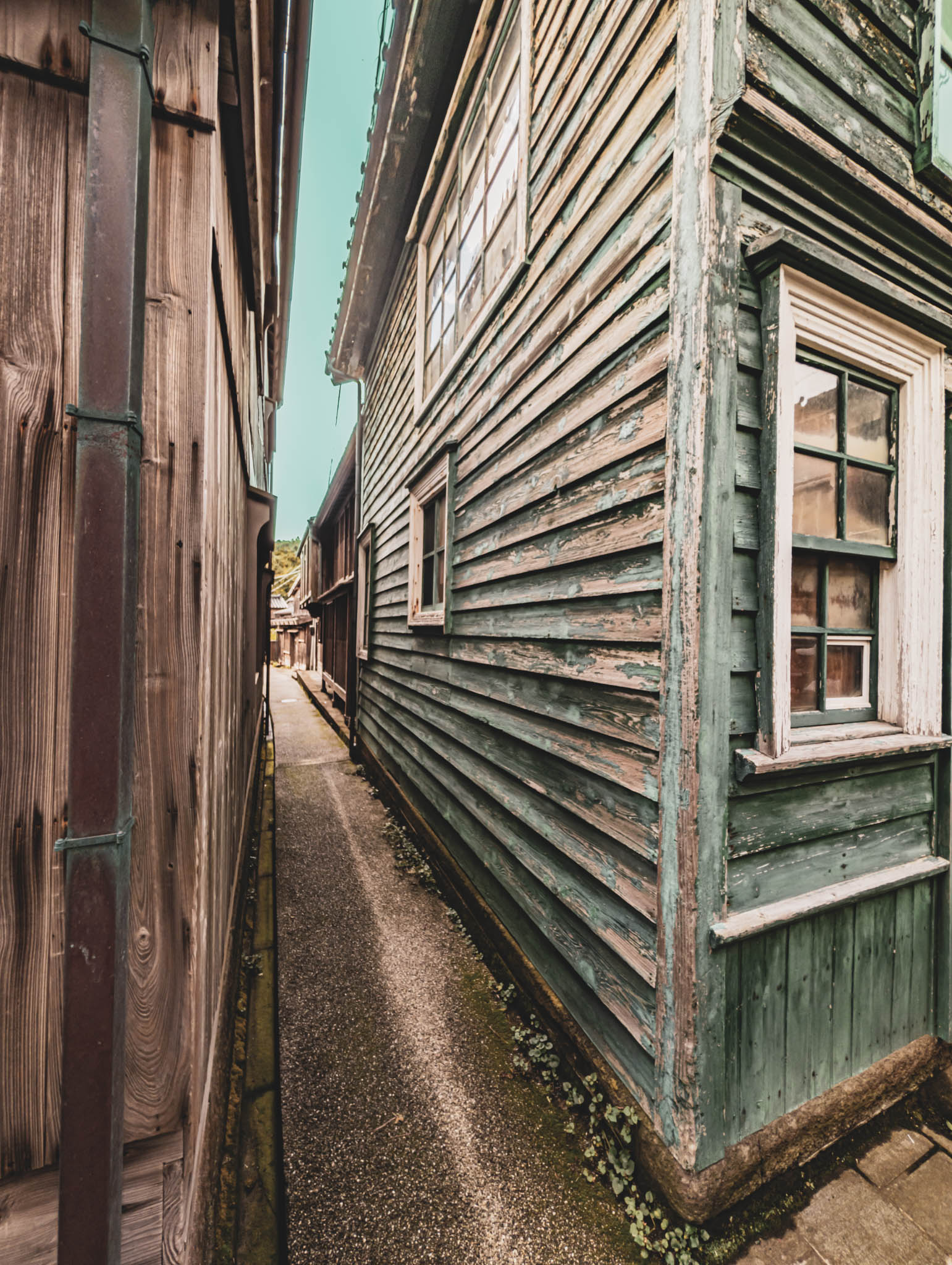
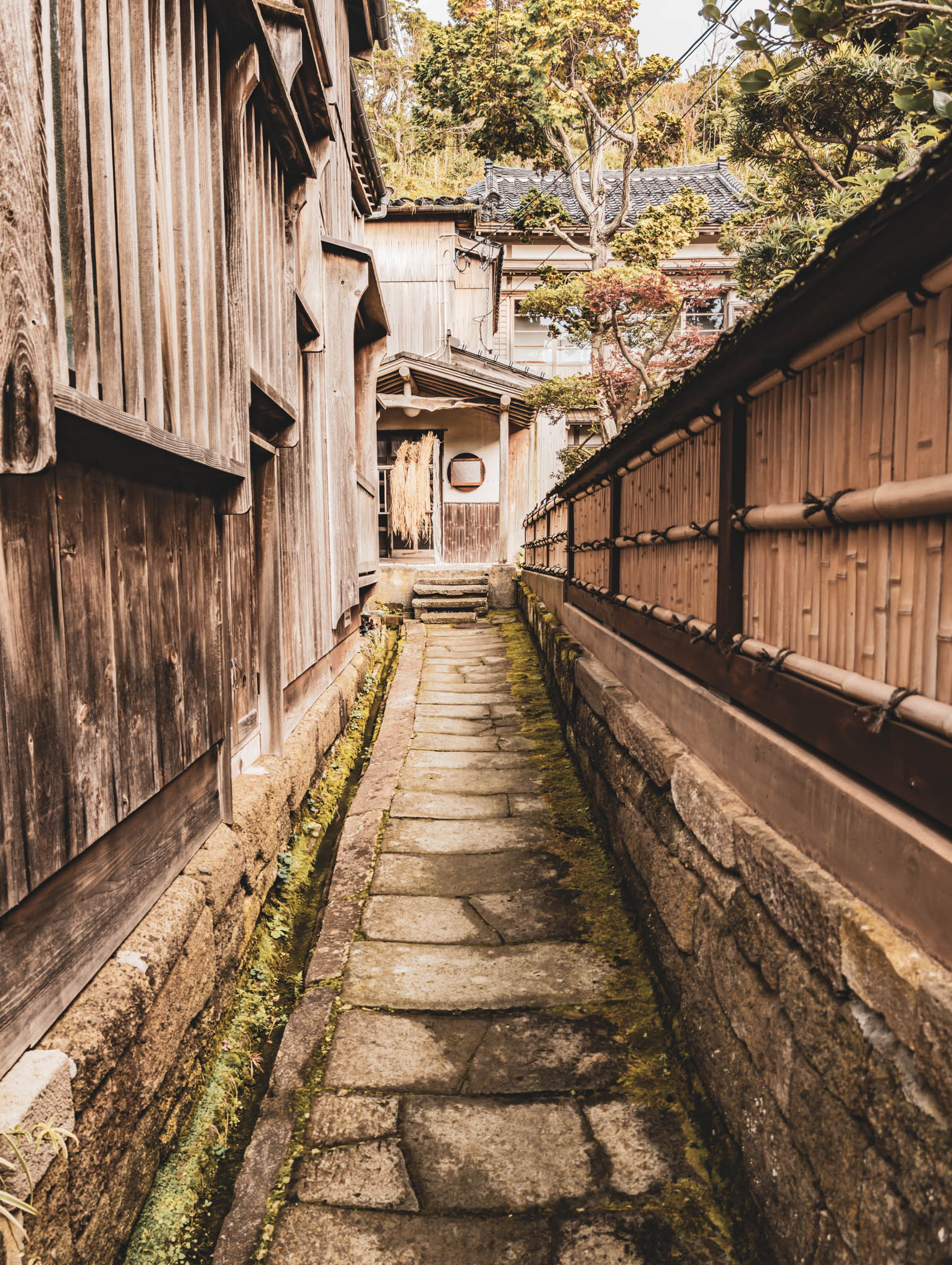
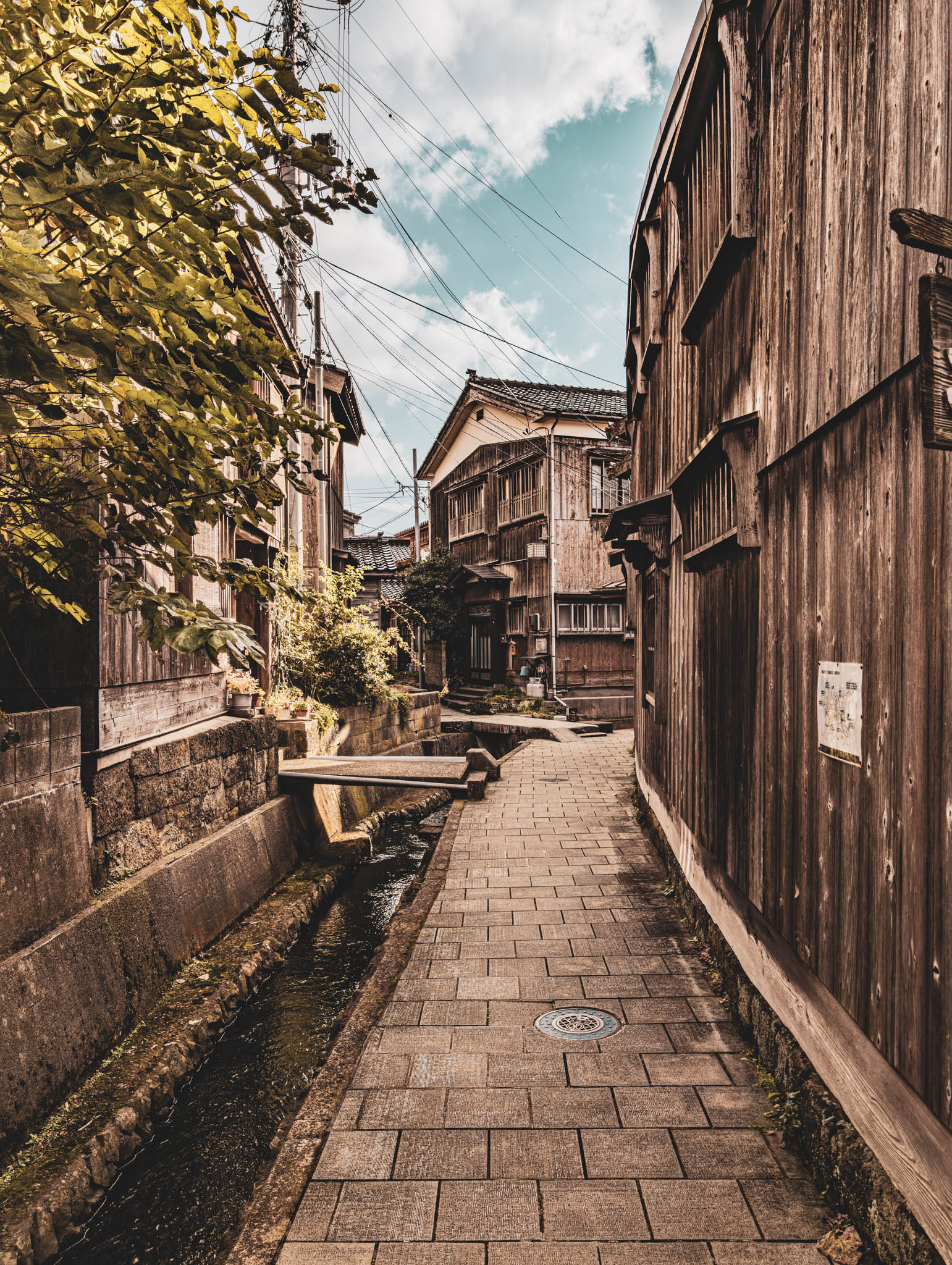
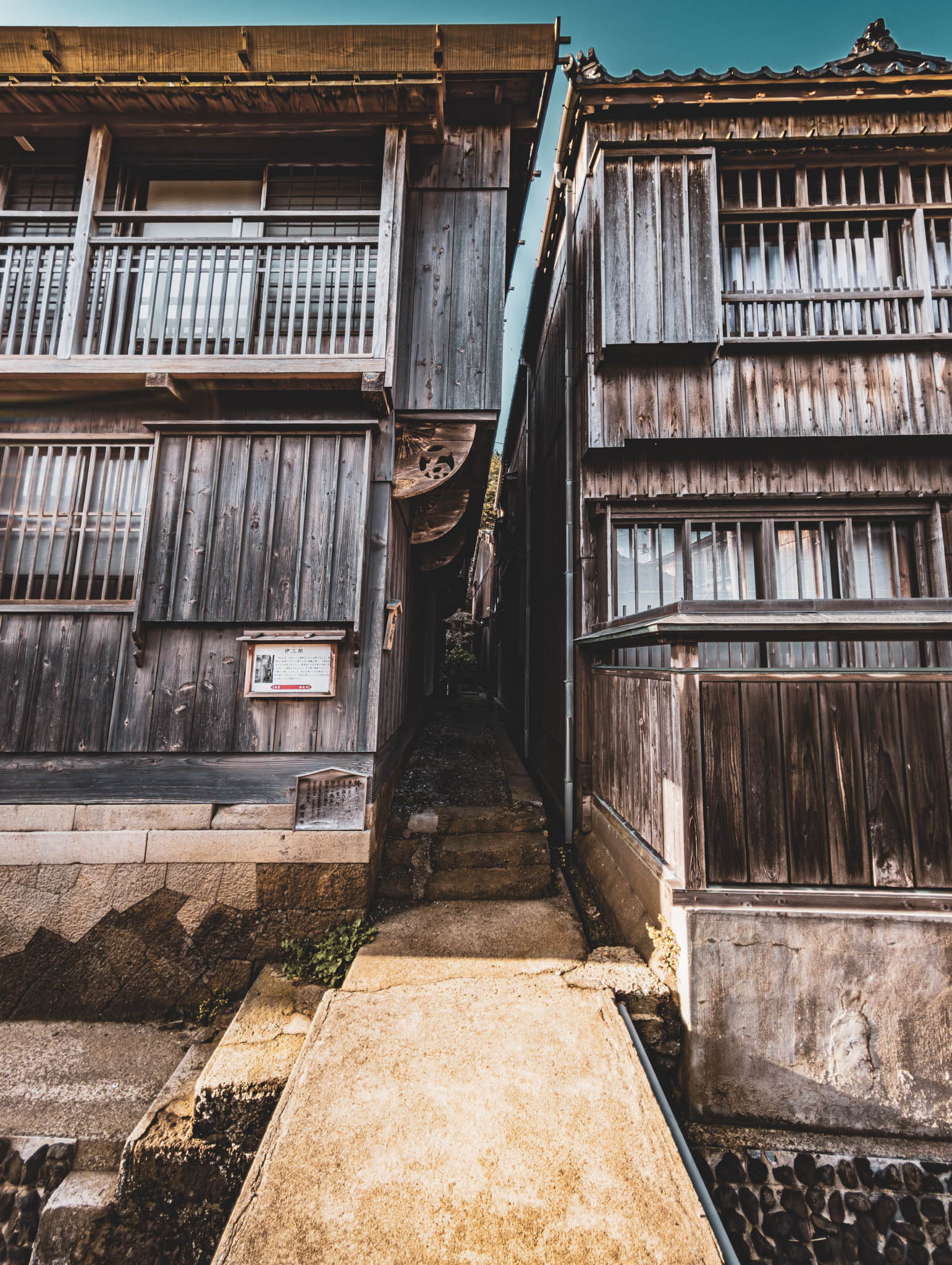
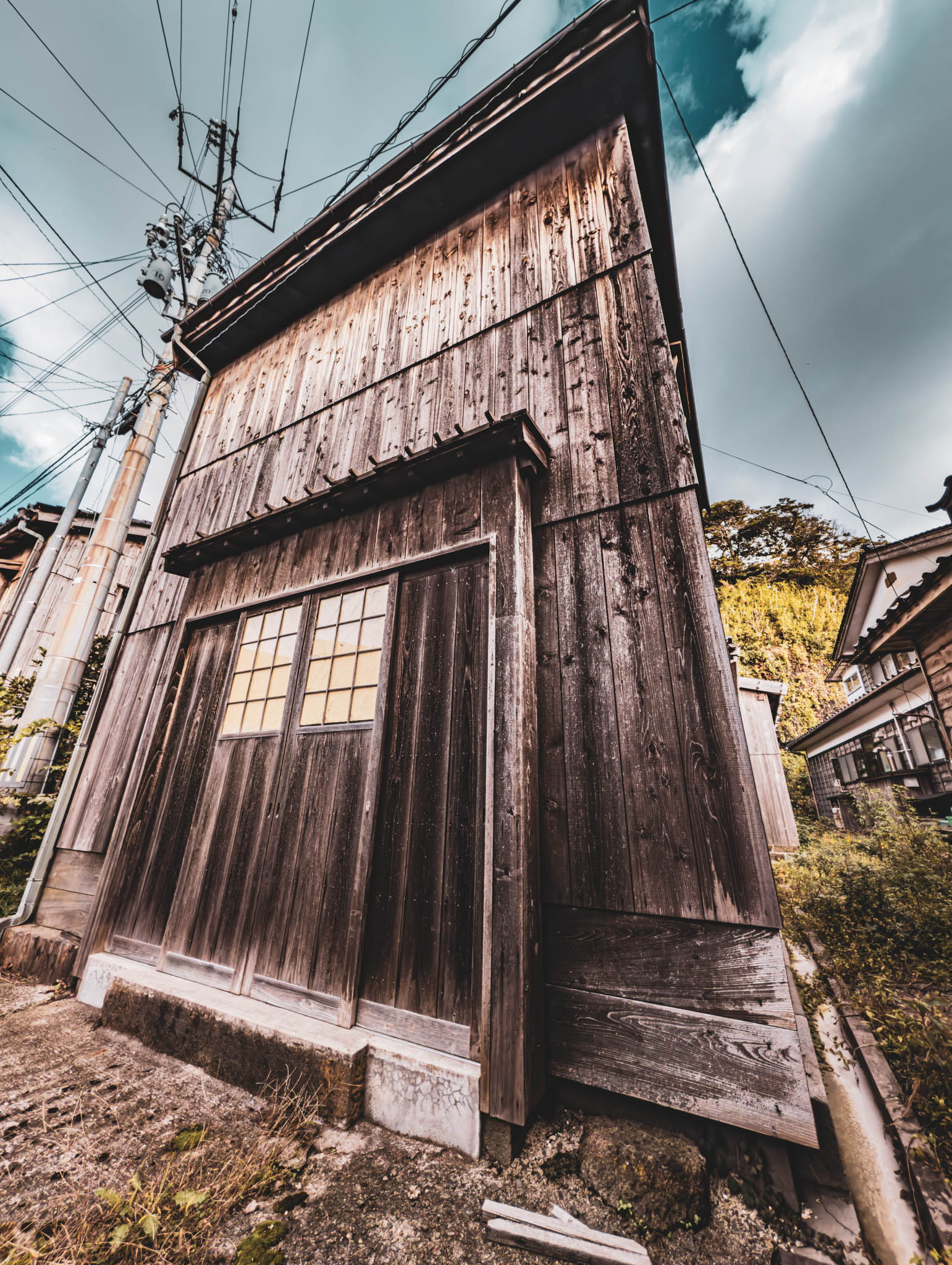
These are not palazzi but Tokugawa-period two-story wooden structures, characteristically clad in vertical plank siding reminiscent of the great sengokubune cargo ships that were built, manned, and owned by the merchants of the tiny city. The granite used for the foundations of these looming, anomalous townhouses as well as some of the bridges and that paves the narrow streets was apparently ballast, brought back in the sengokubune as weight-replacement for the rice delivered to distant ports on the Seto Inland Sea on the other side of Honshu.
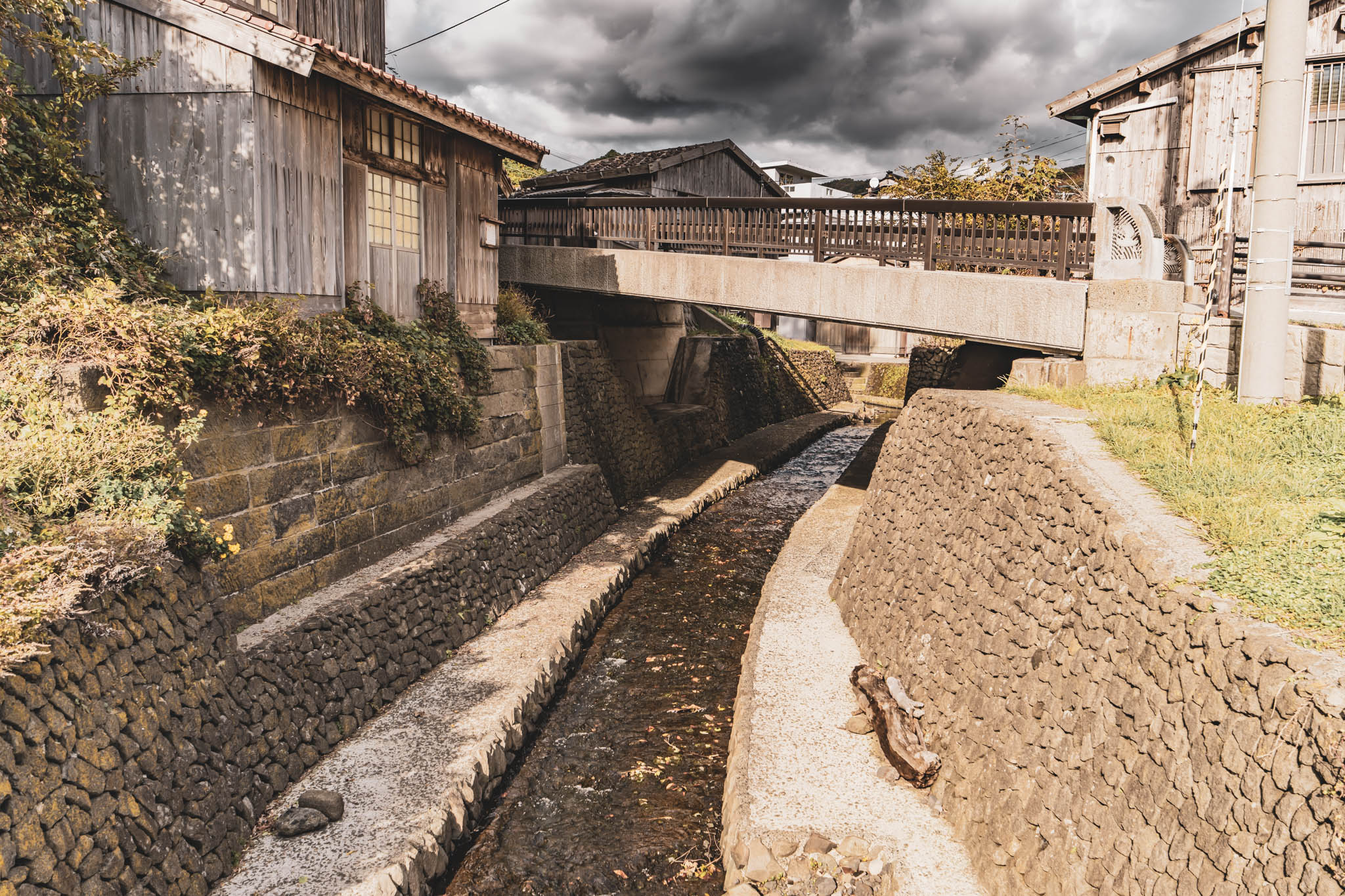
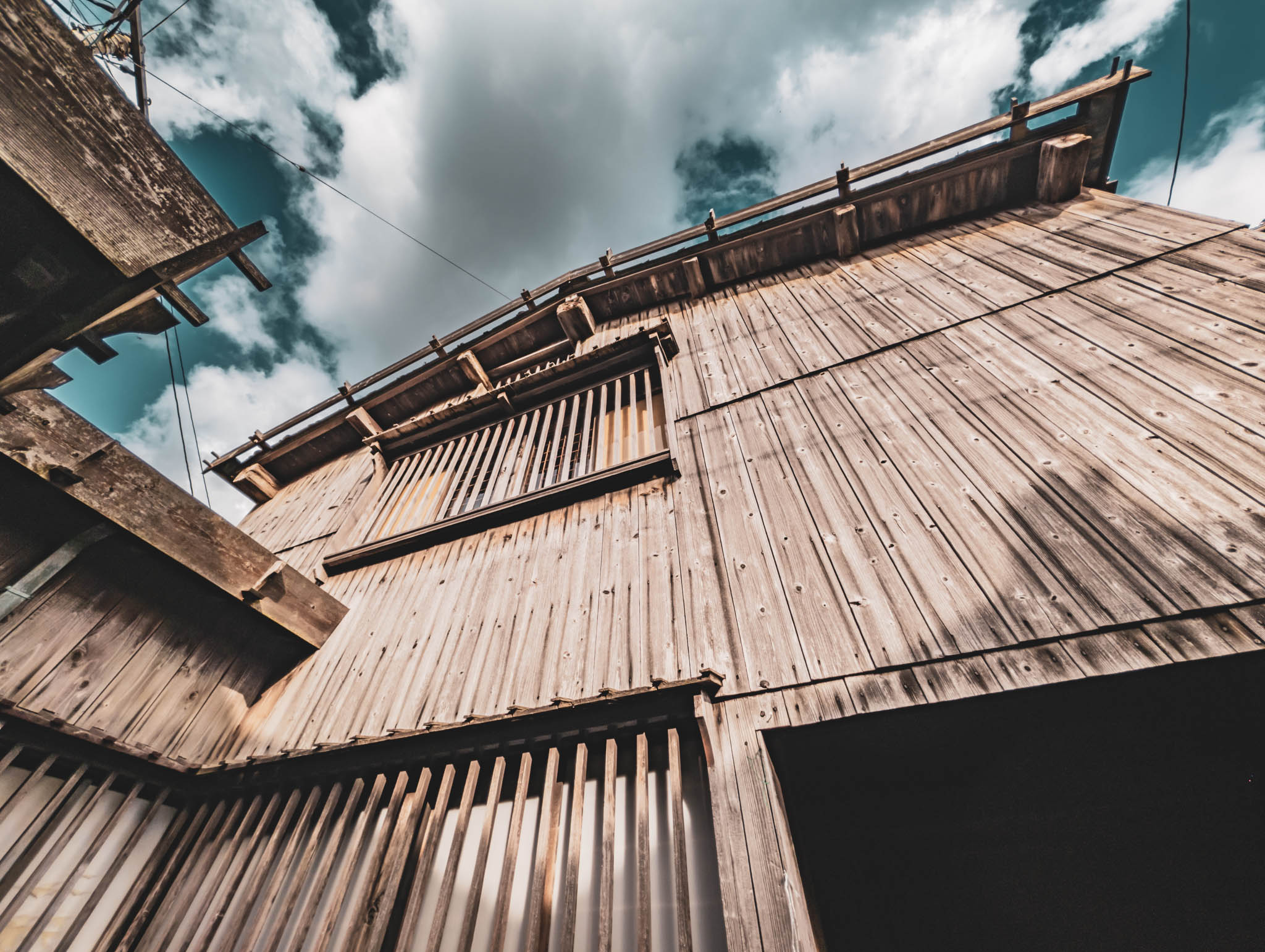
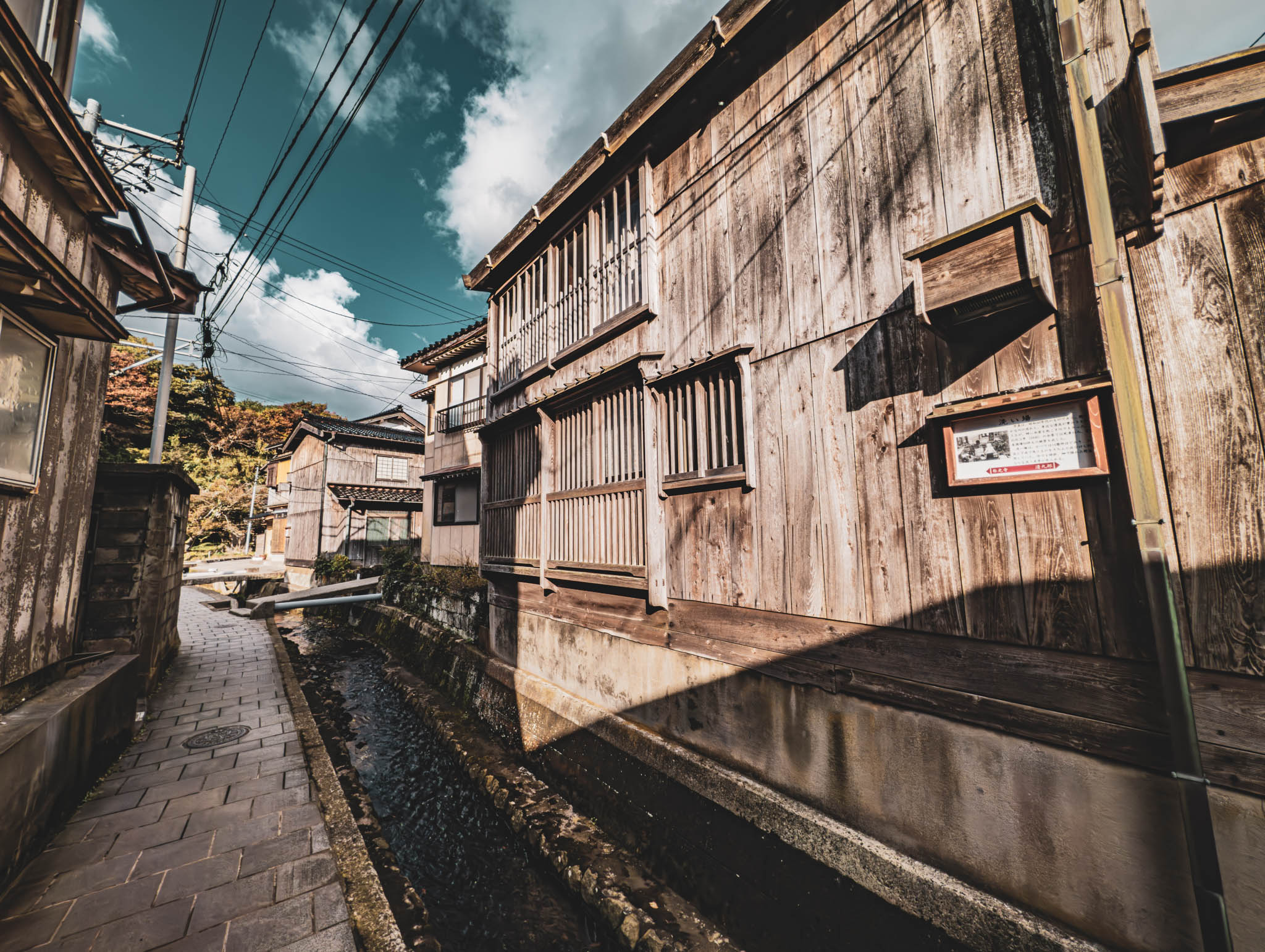
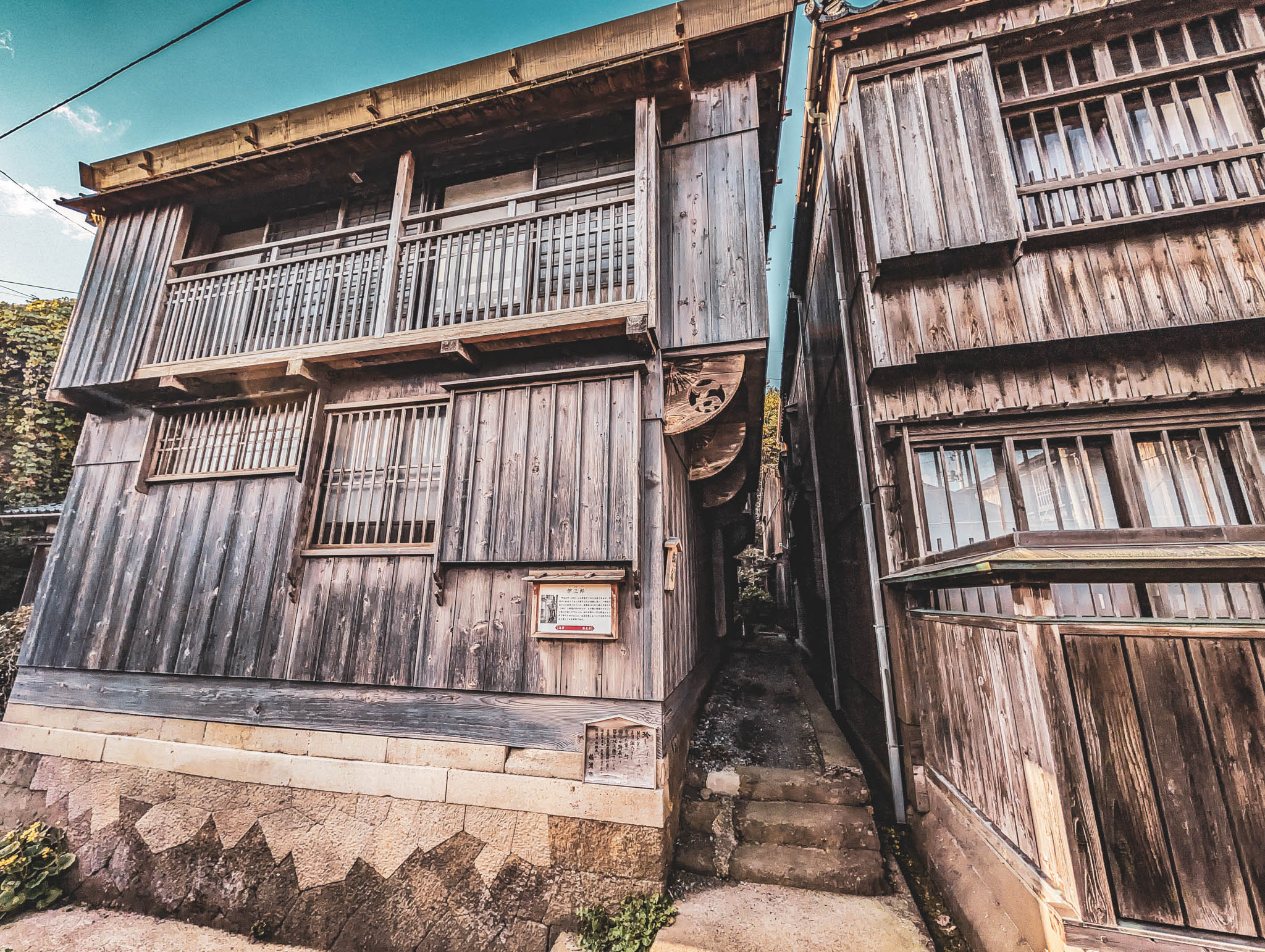
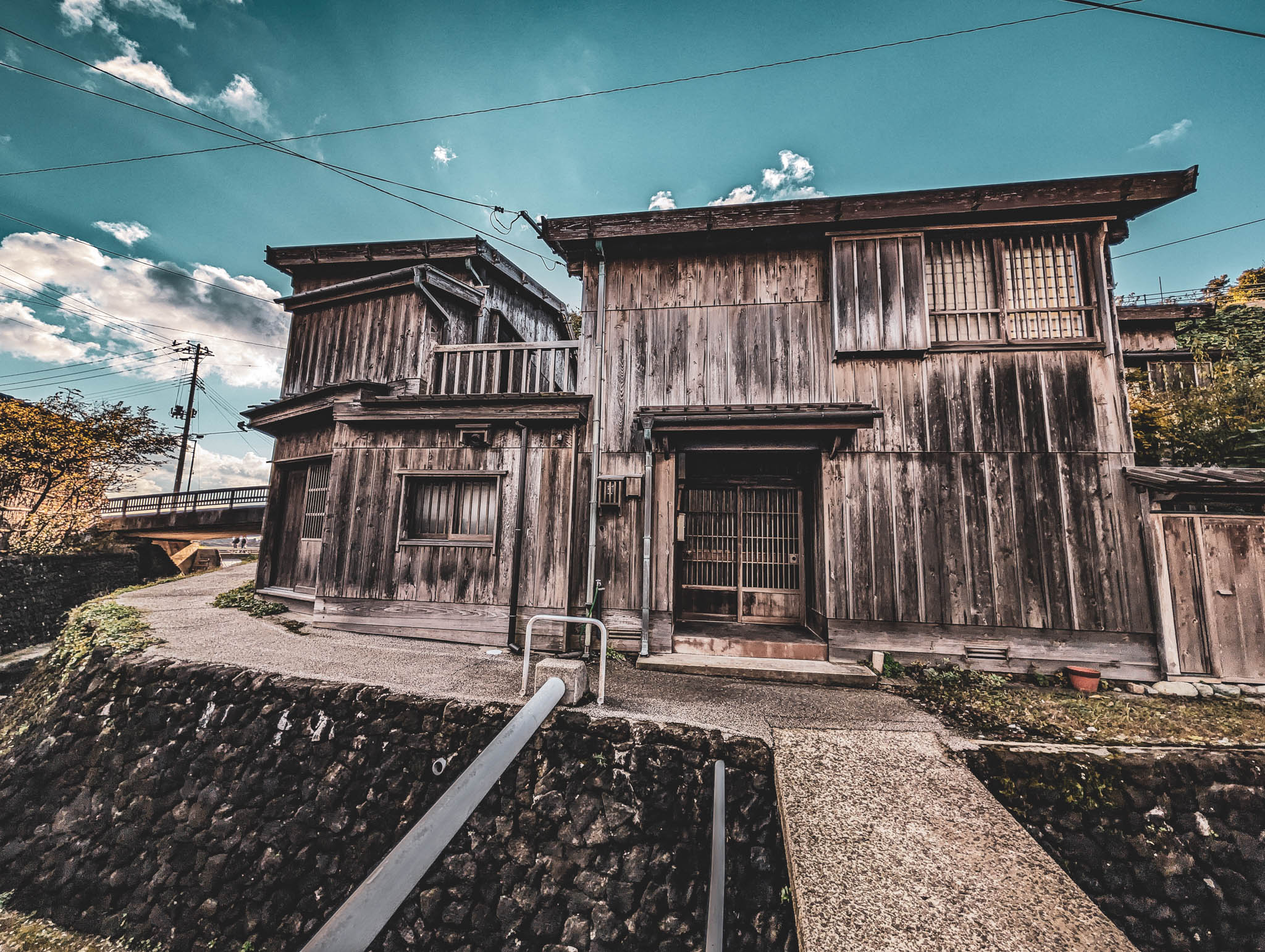
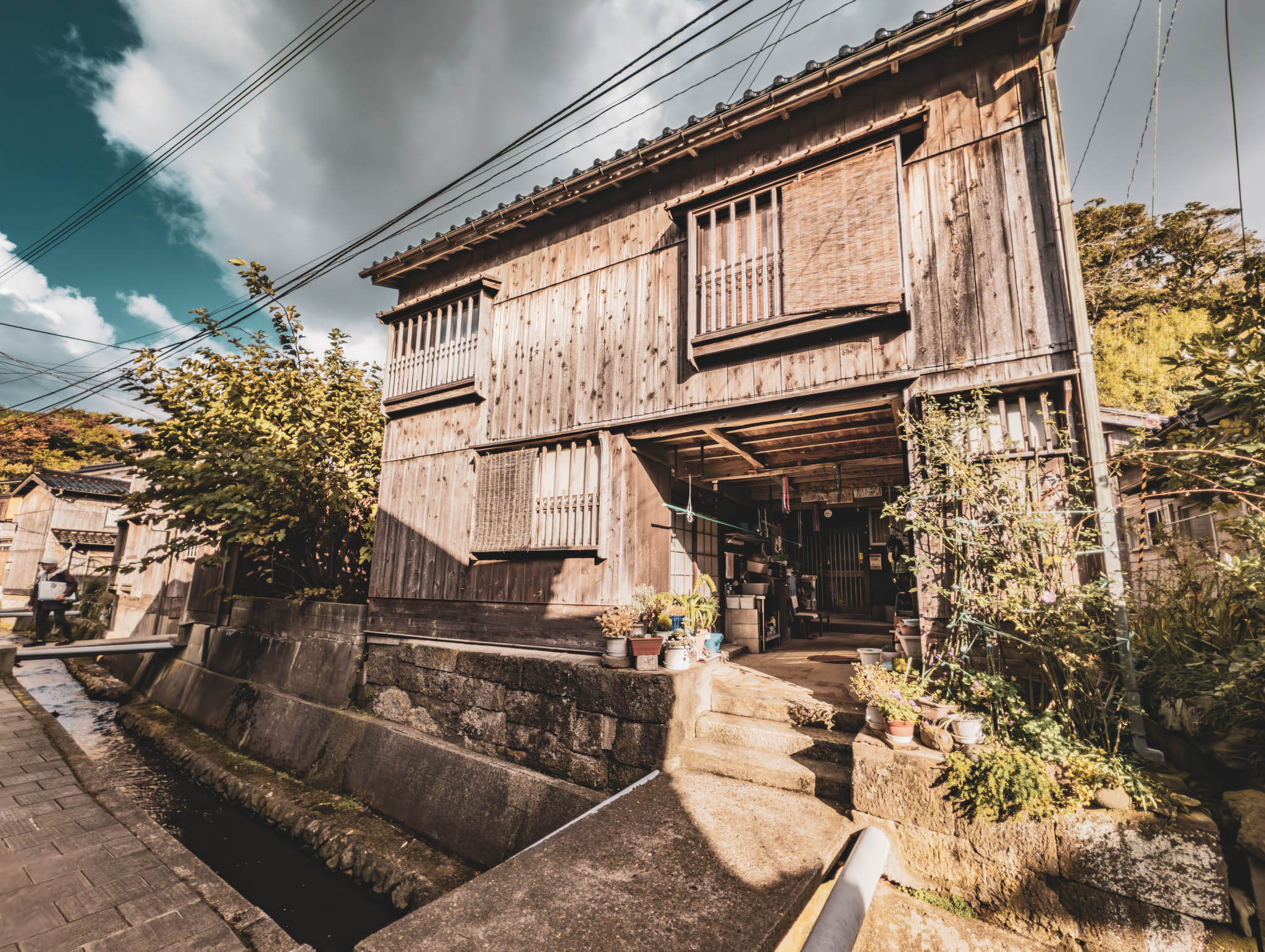
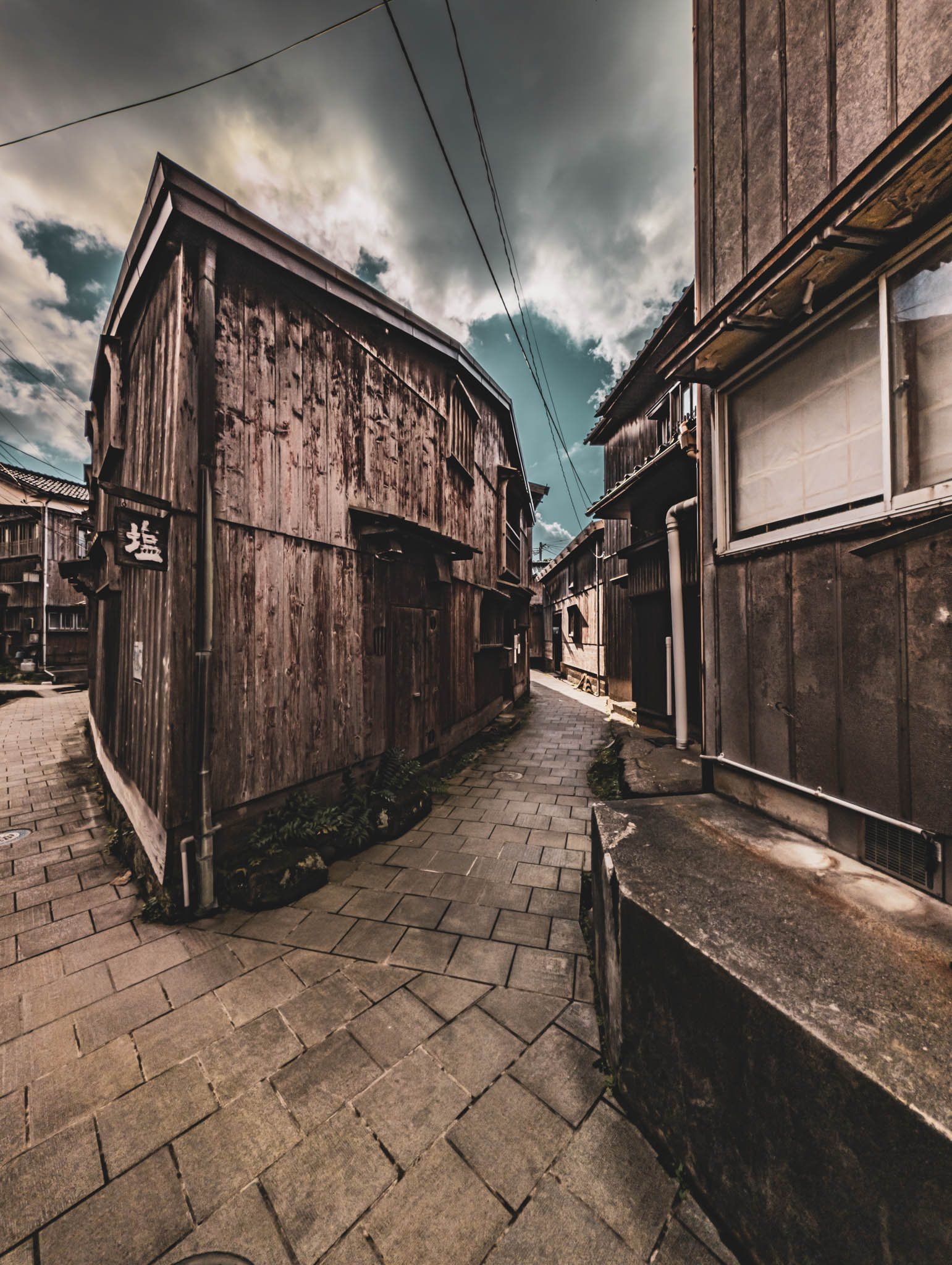
Nevertheless, there is something about this tiny old town that is reminiscent of Venice (or at least my memories of it from three decades ago), and it’s not just the commonalities of mercantile history. Rather, it seems like there is both too much space for such a small area of over-built land (about a hectare, according to the Shukunegi village website), and too little of something else more nebulous and indefinable: that subtle accumulation of visual and cultural cues (as well as living inhabitants) that temporally peg one in the twenty-first century, as opposed to the sixteenth or earlier. It’s a strange sensation of being unmoored, that I also recall when I think of the odd empty calli and murky, similarly bridge-crossed rii in the cramped back-end passages of Canareggio and San Marco, away from the main tourist prowling-grounds. Shukunegi is like that, too. If I take the wrong term, I might leave the village and instead of the dusty parking lot with the tourist office find myself in the Shogunate era ship-port of the sengokubune:
外国人さん、なぜここにいるのですか。
Foreigner, why are you here?
Actually, that’s probably much too polite a set of word choices. And given the time frame, they would probably just take my head off then and there.
Incidentally, at the very head of the valley before the stream takes a turn into the forested funeral precinct of the Buddhist temple that gives Shokojigawa its name, is the inevitable shrine, handsome with unusual granite accessories but as usual (to my thinking) somewhat eerie with its half-open doorway into the mysteries.
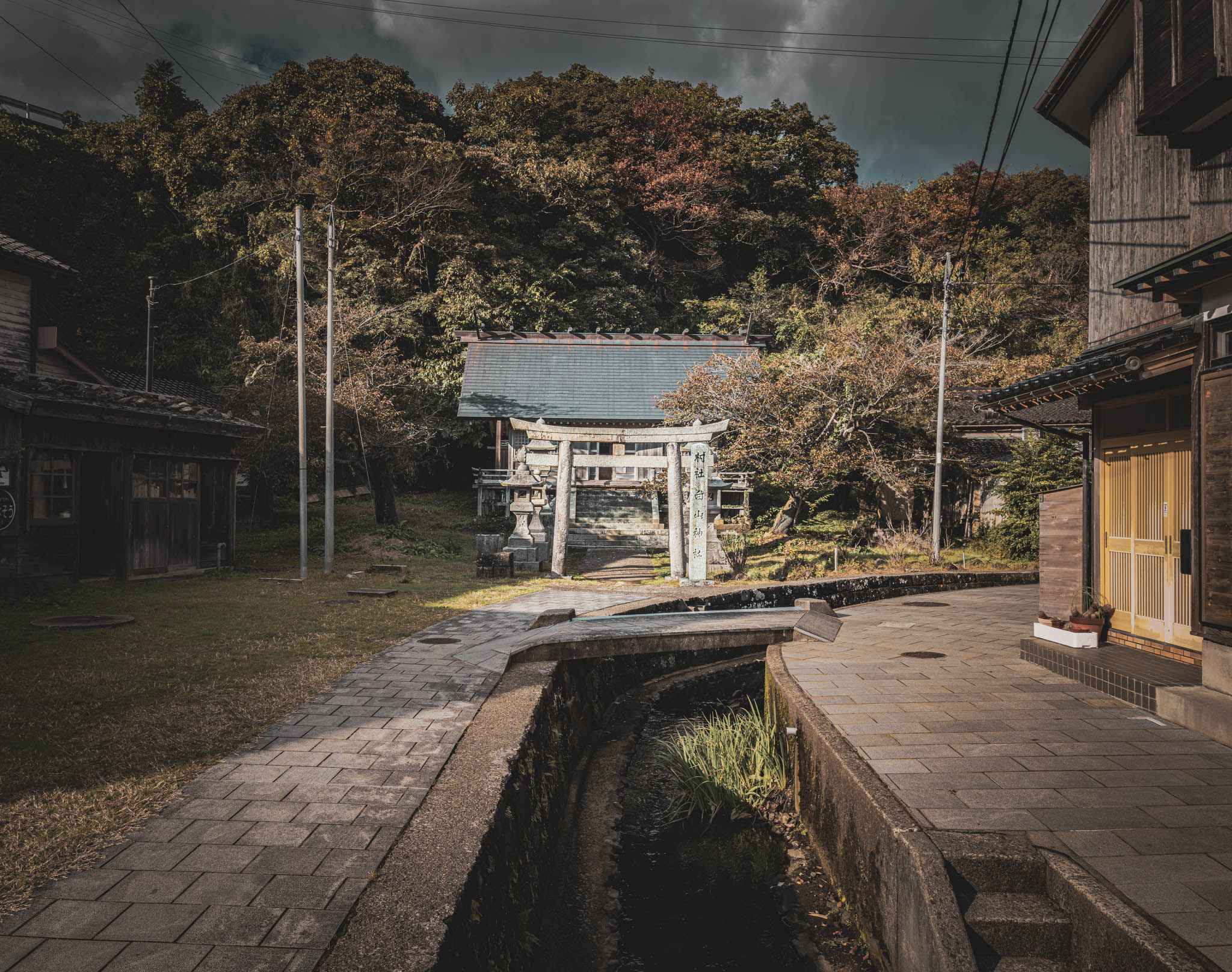
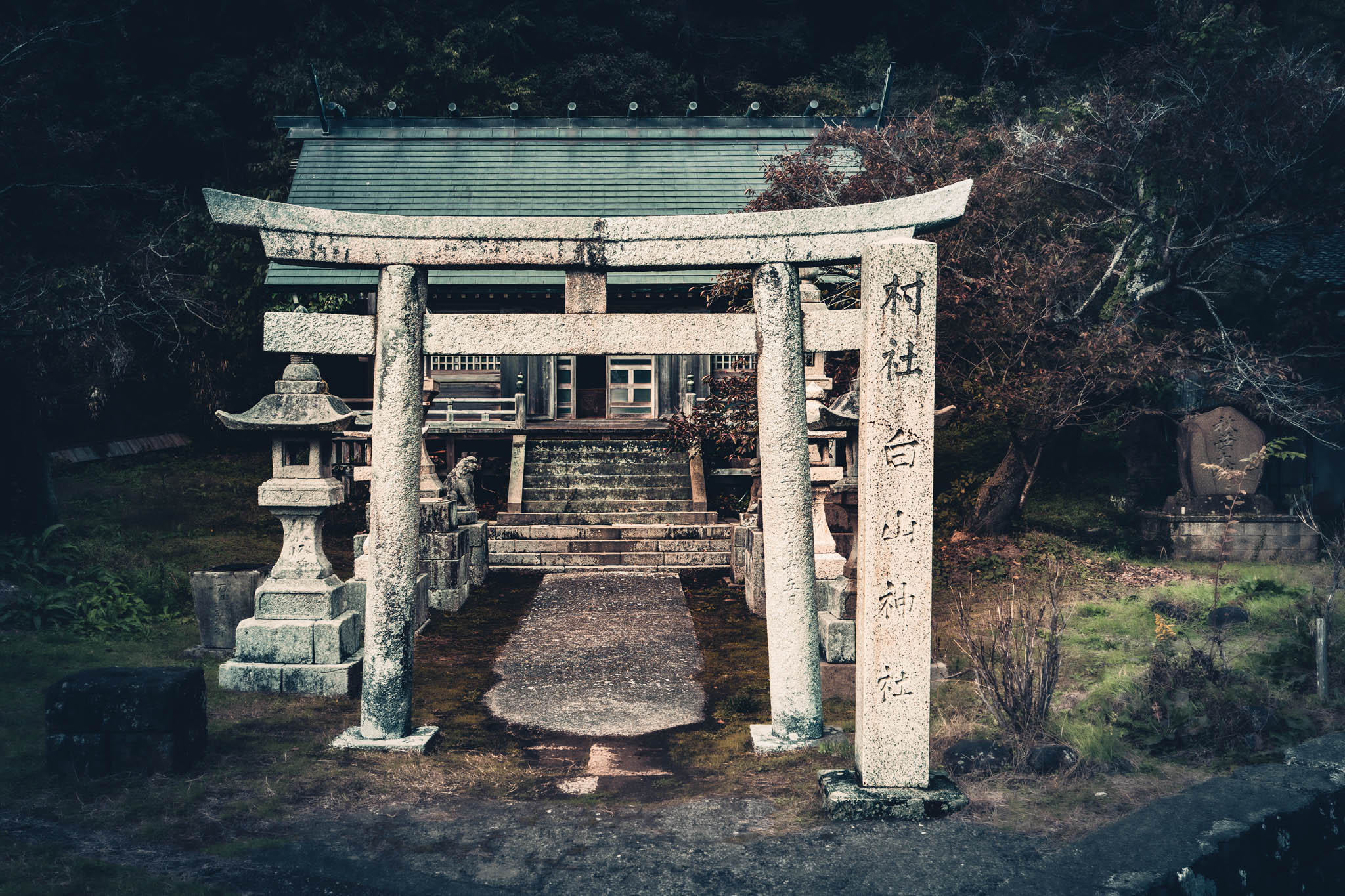
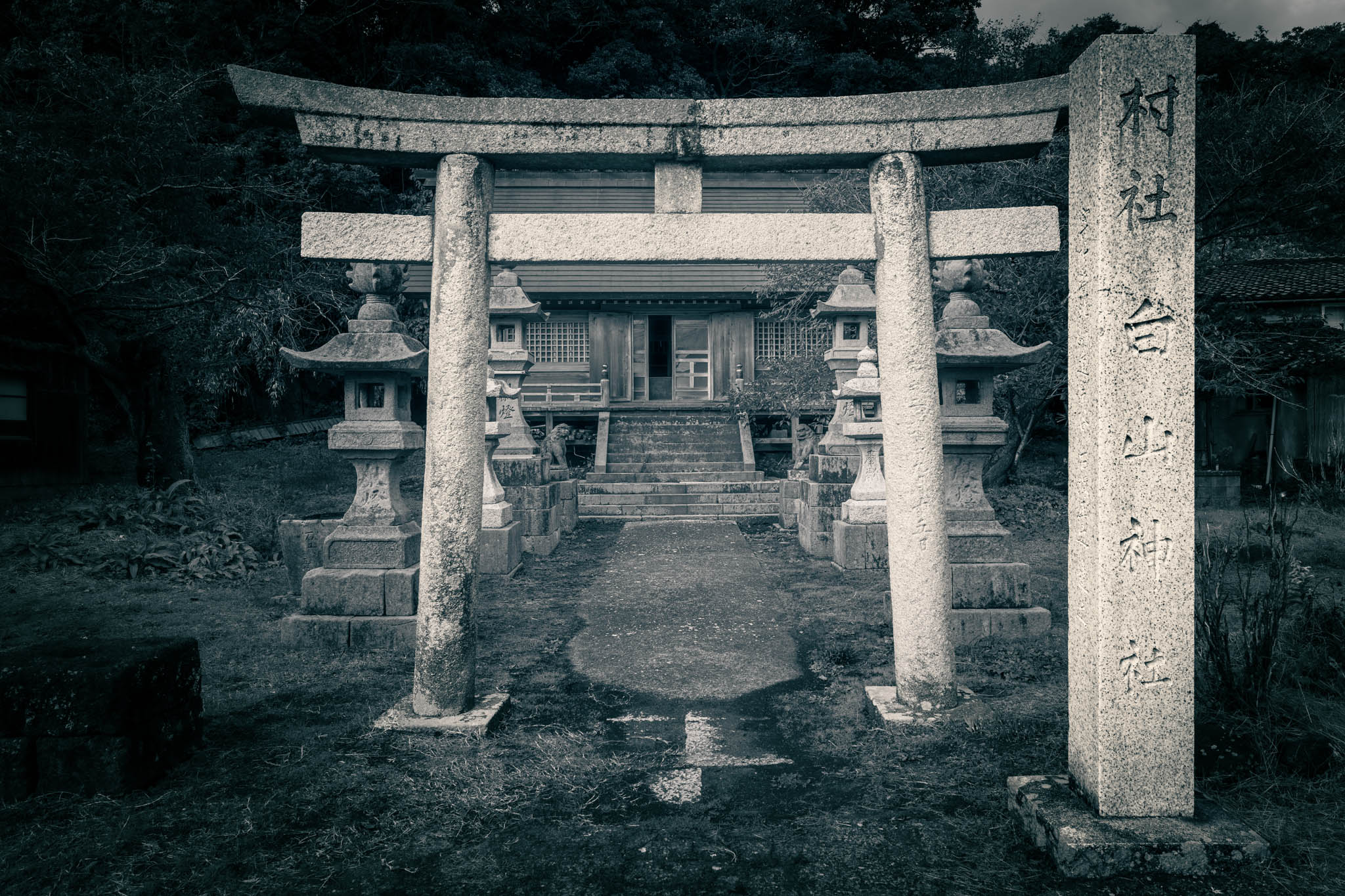
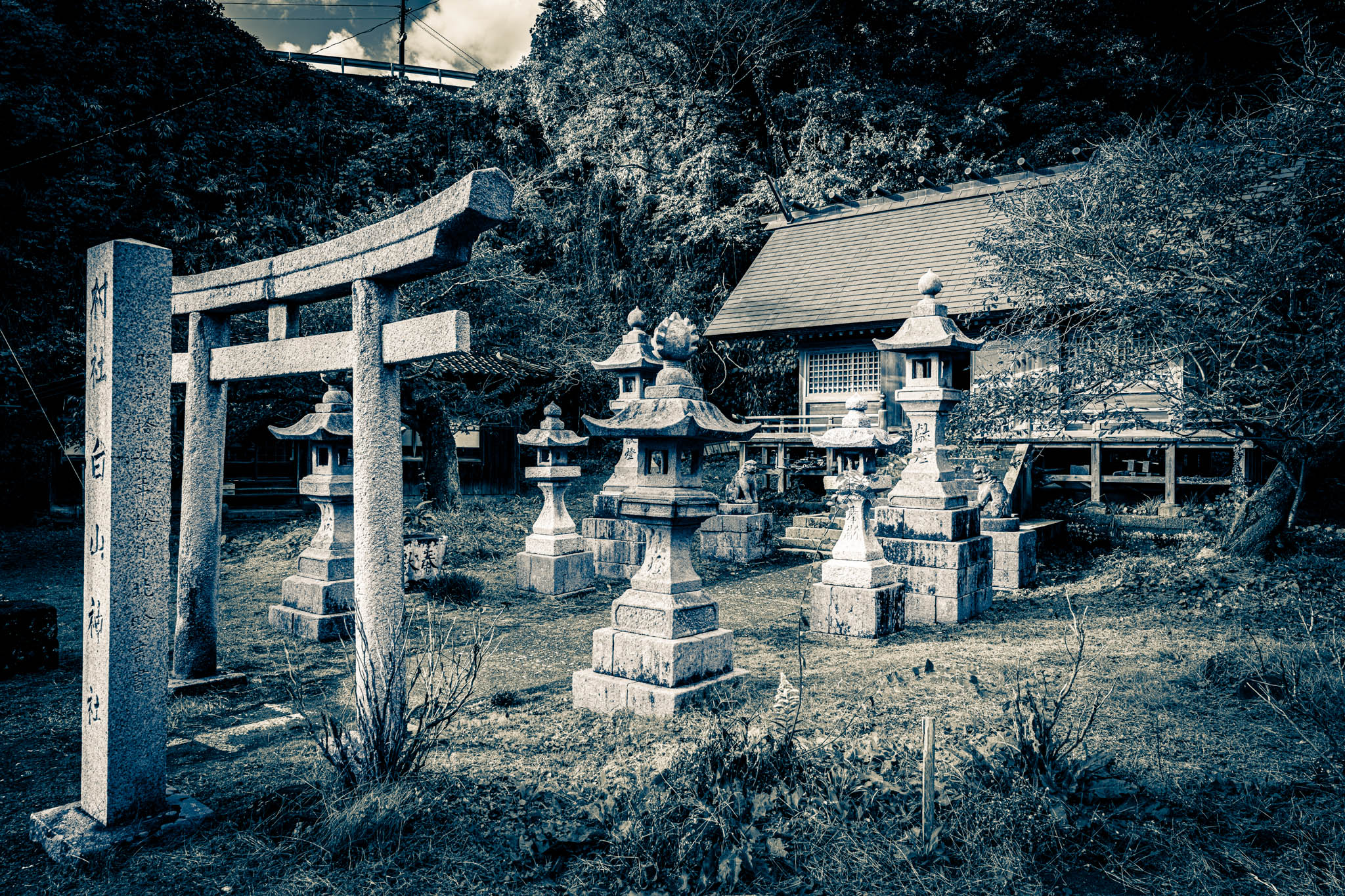
The village’s official website notes that an unique ritual dance known as ちとちんとん Chitochinton is held yearly in October, dedicated to the village tutelary deity, goddess of ships Funadama Myojin. Presumably this edifice is the site for ceremony, although on various maps it is identified as a Hakusan jinja, which means that it would be instead dedicated to Kukurihime-no Ōkami. According to Wikipedia (which I must rely on because I will never be capable of consulting the ancient chronicles myself), the later divinity is principally noted in the Nihongi for playing an unexplained mediating role in Japan’s terrifying variation on the Orphic myth, in which the kami Izanagi braves the Yomi no Kuni underworld for his deceased wife Izanami only to epically flee, pursued by her animated, putrescent and angered corpse. So of course Kukurihime is associated with marriage, relationships, and business.