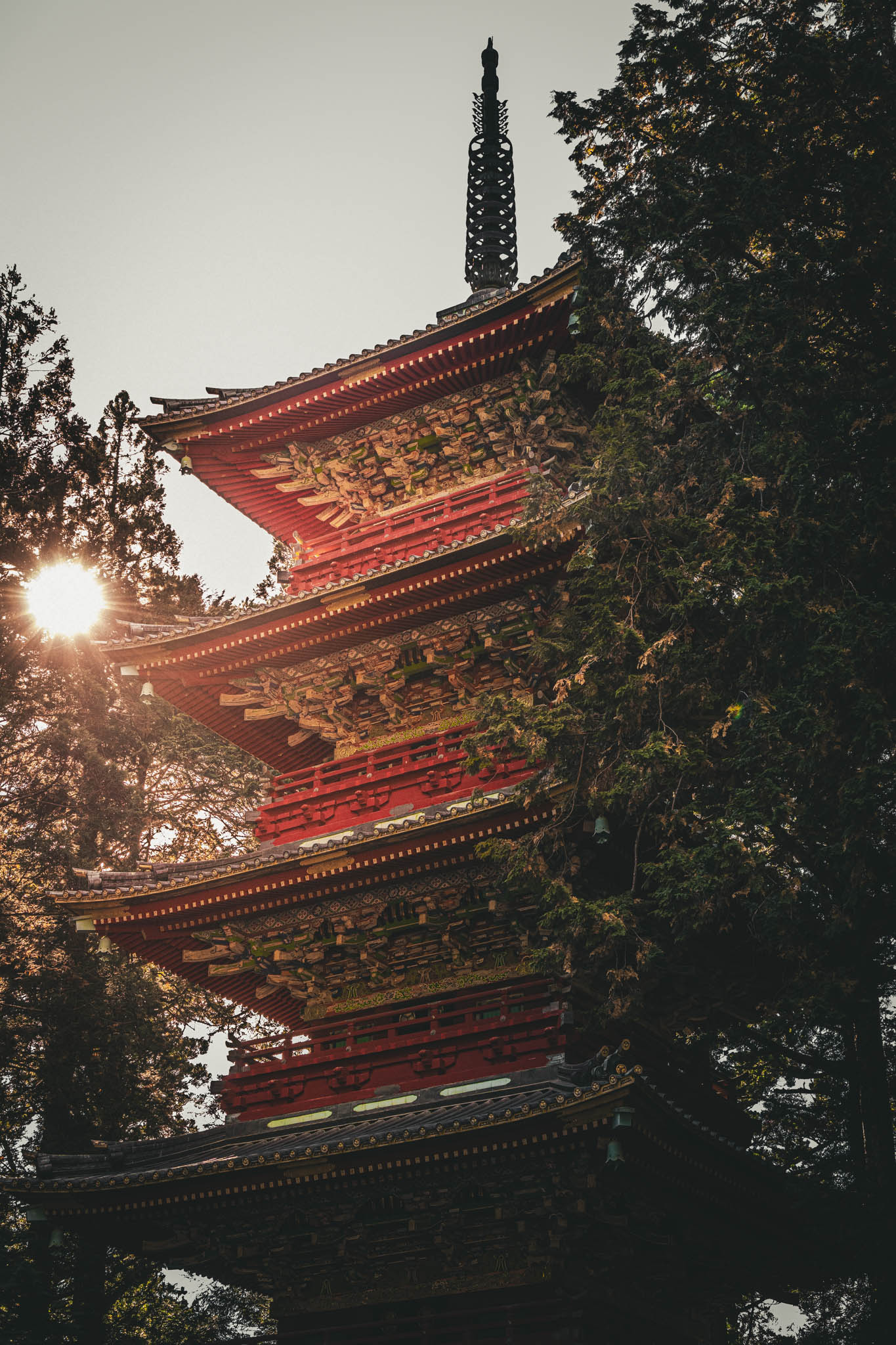
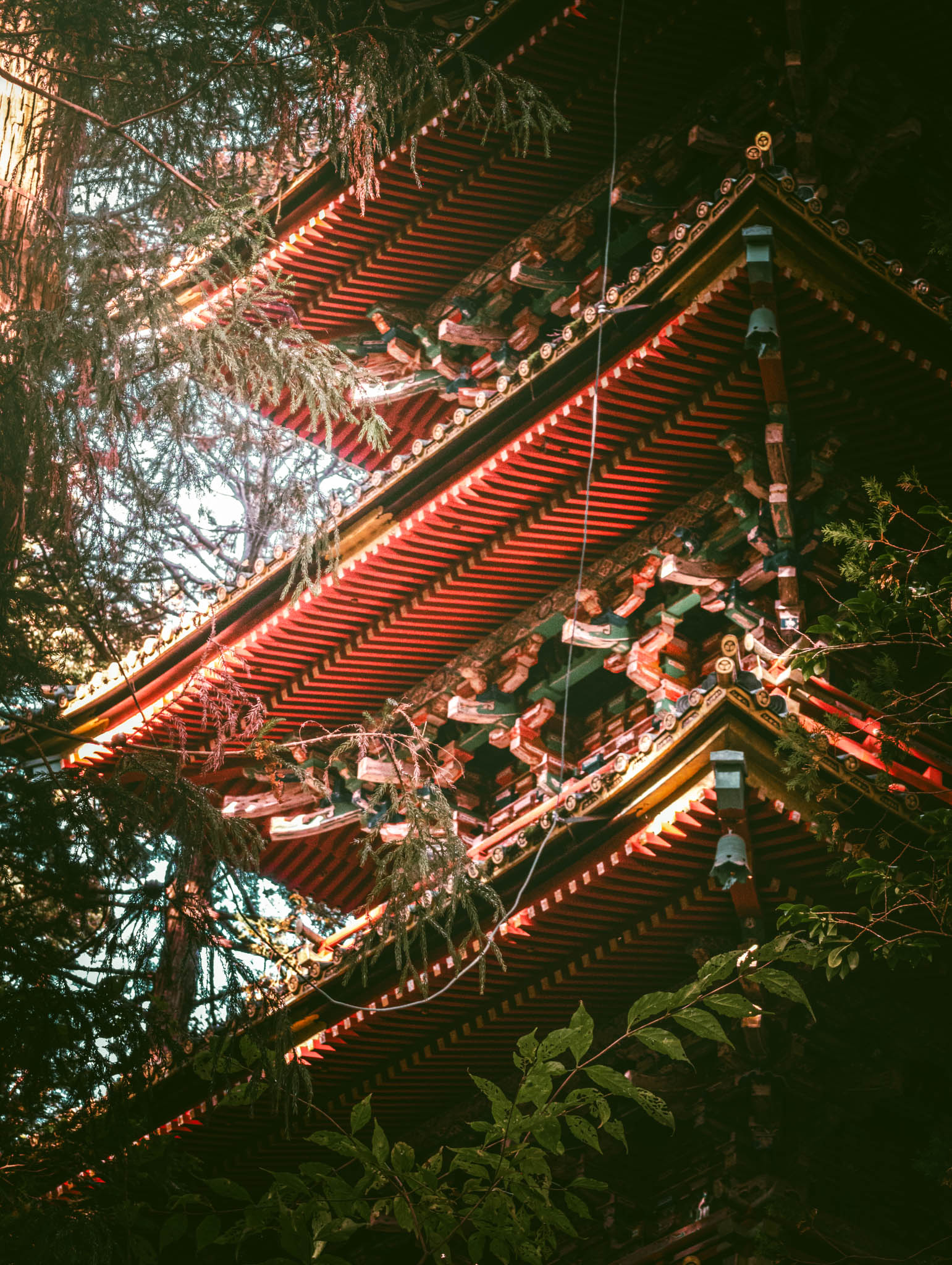
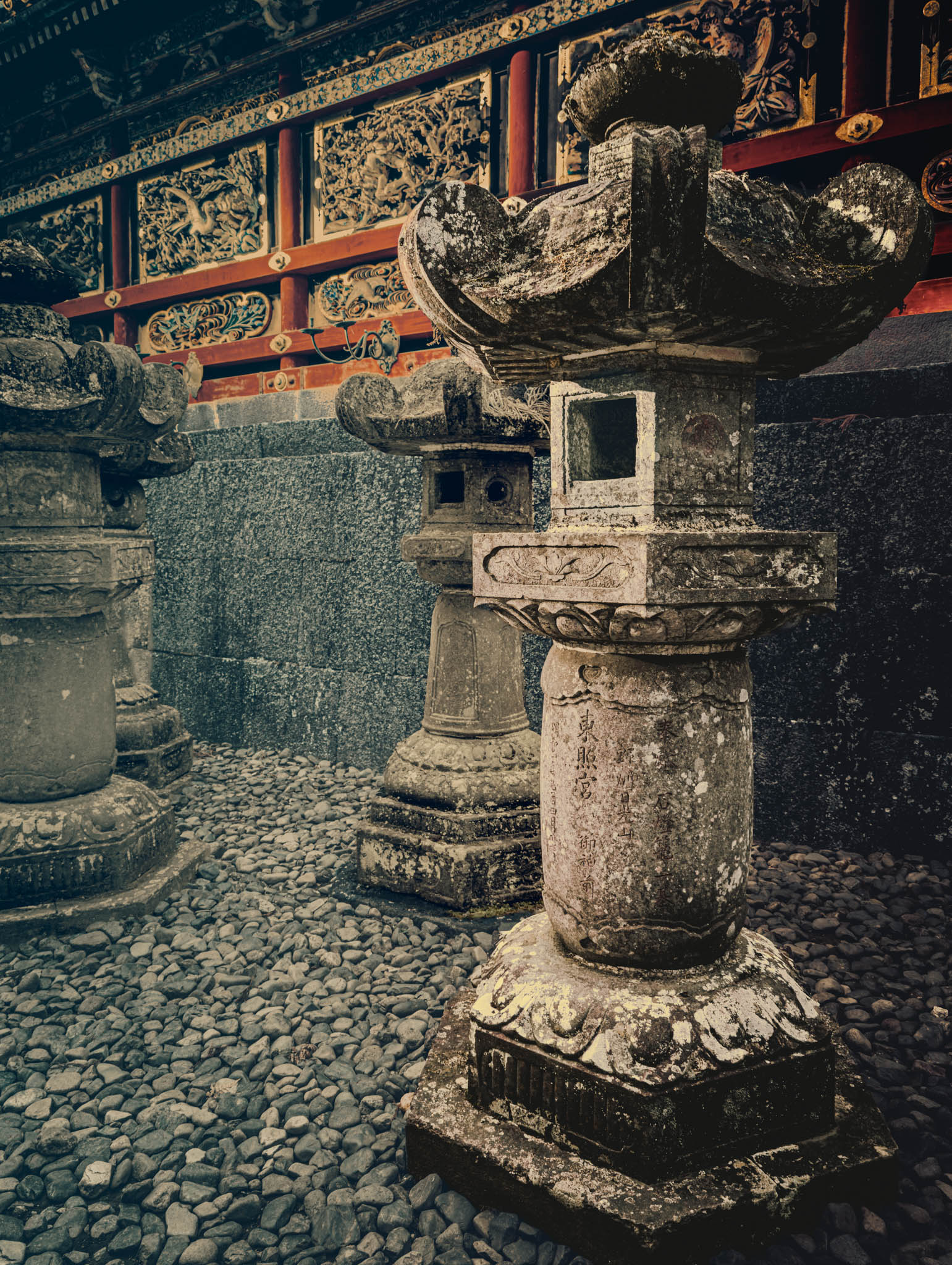
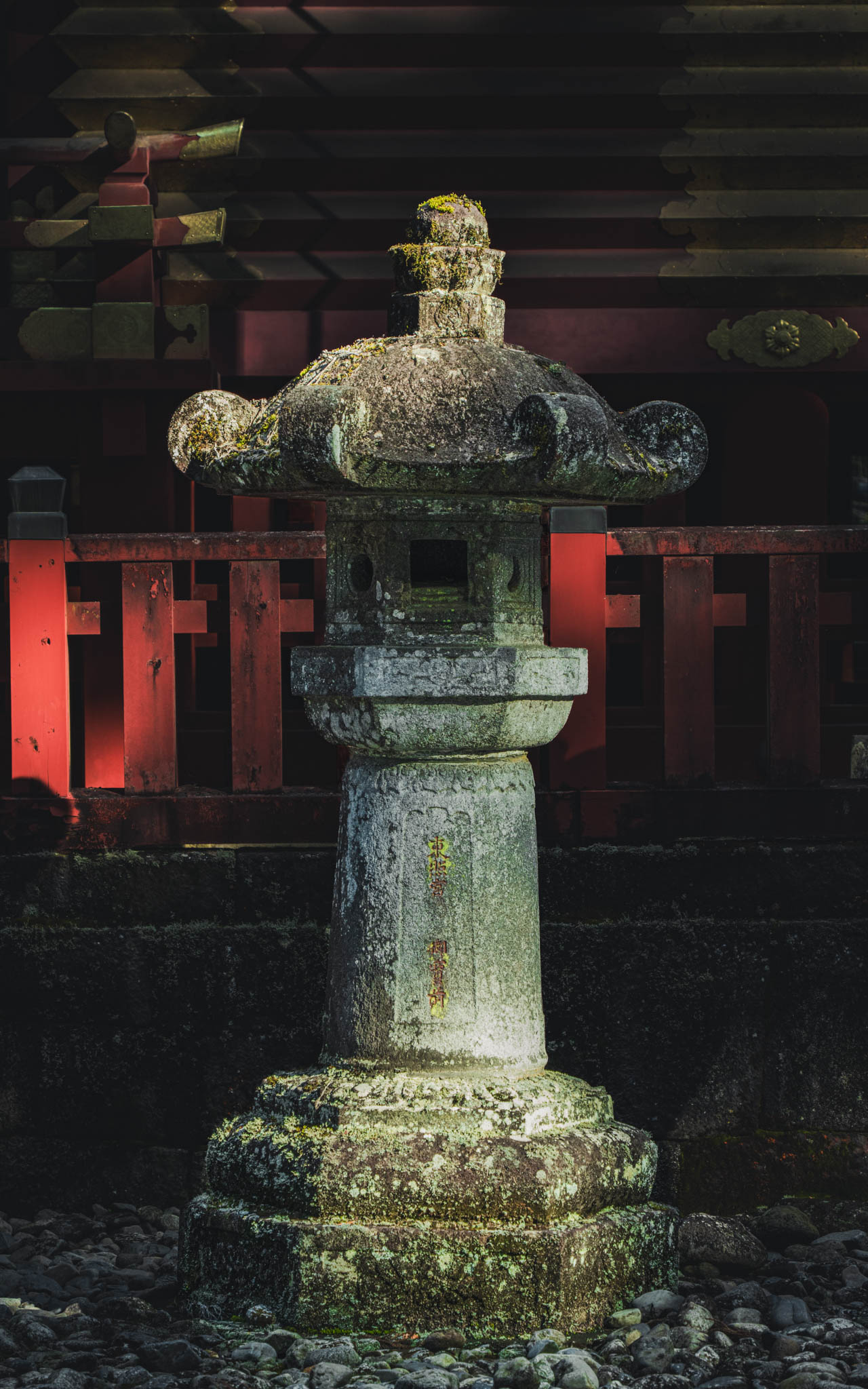
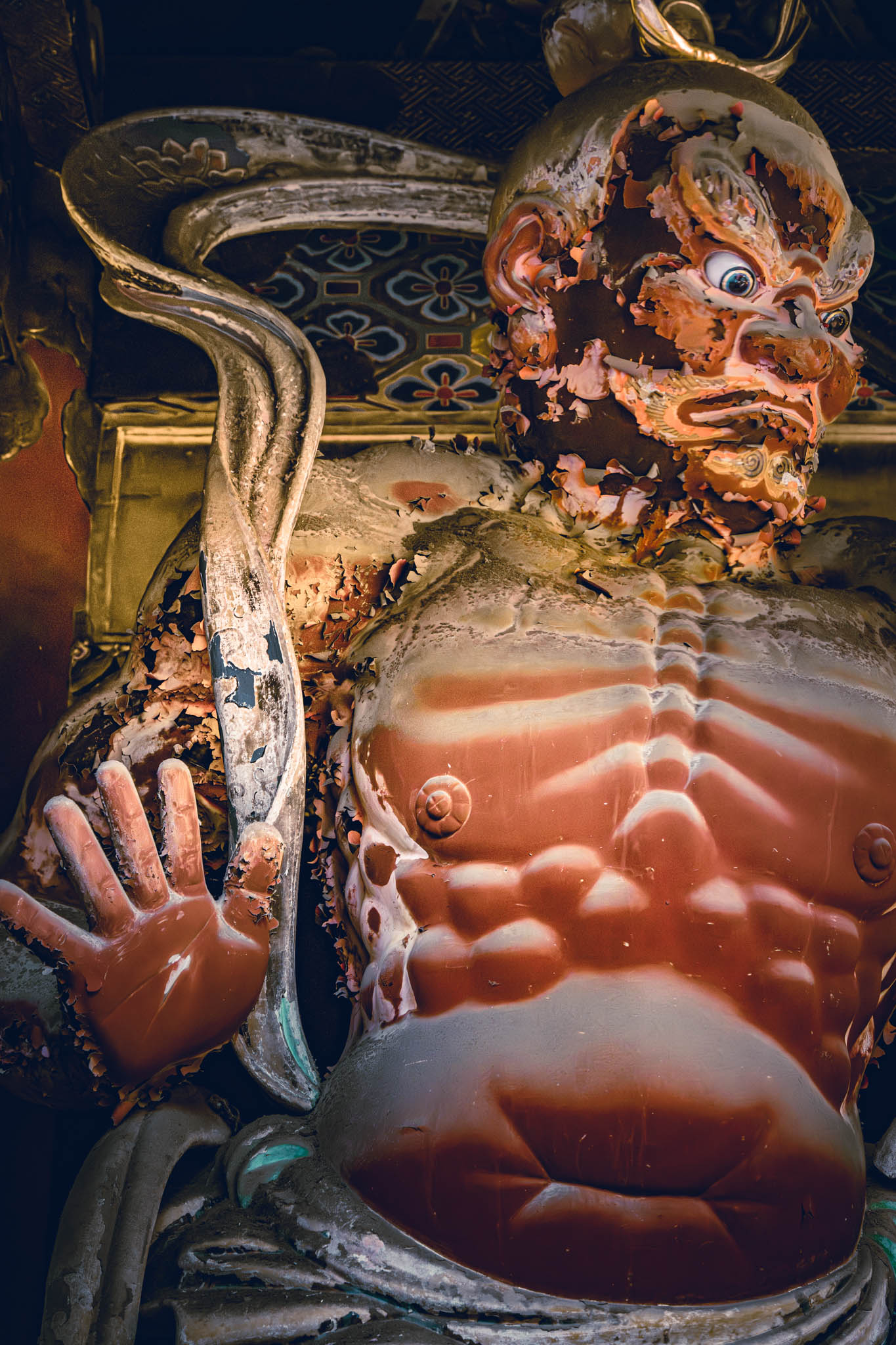
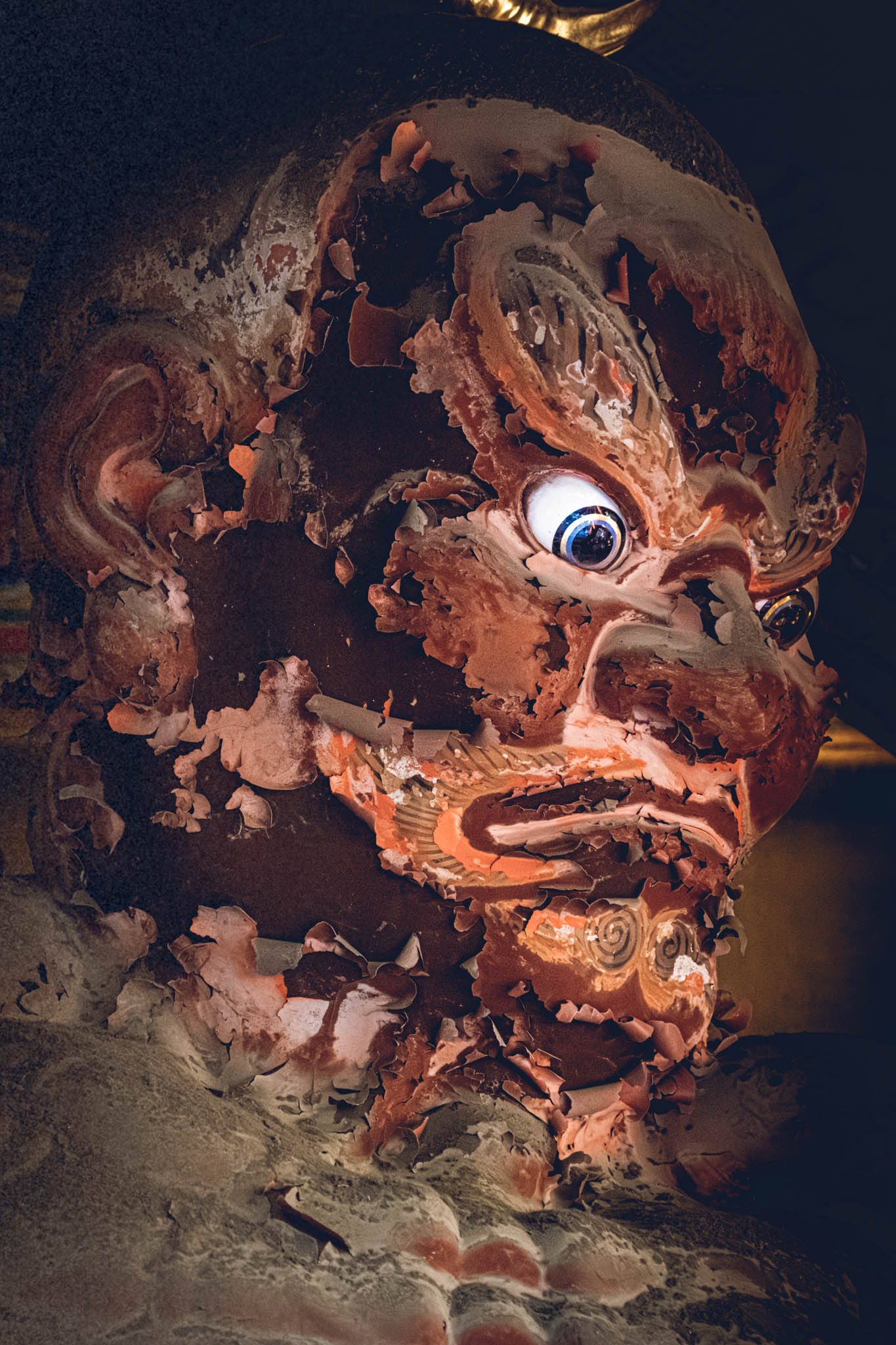
The historian at the Tokugawa Cemetery at Zojo-j in Tokyo had recommended we visit Nikko, if we wanted to imagine the appearance (prior to the American firebombing) of Taitoku-in, the fifteen-building mausoleum complex of second shogun Hidetada that surrounded the temple and extended into what is now Shiba Park.
The shrine to Ieyasu the Founder (1543–1616) in Nikko is held out in various texts as the definitive example of Shinto Shrine gongen-zukuri style, the term deriving from the late Ieyasu’s posthumous categorization as Tōshō Daigongen (東照大權現 “East Illuminate Great Gongen”). A gongen is a Buddha reincarnated as an indigenous kami or divinity in the extensive pantheon of the indigenous Shinto religion of Japan.
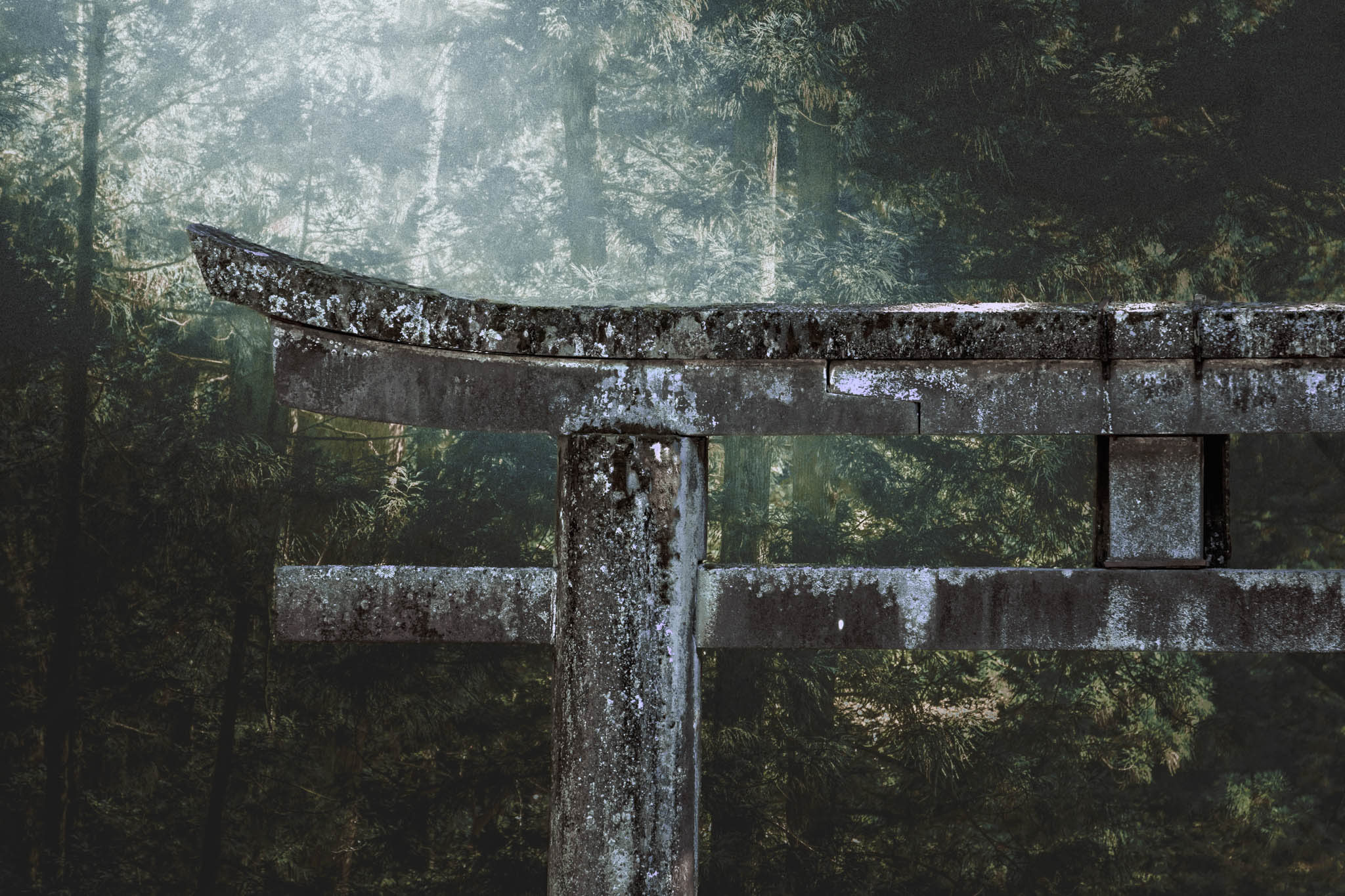
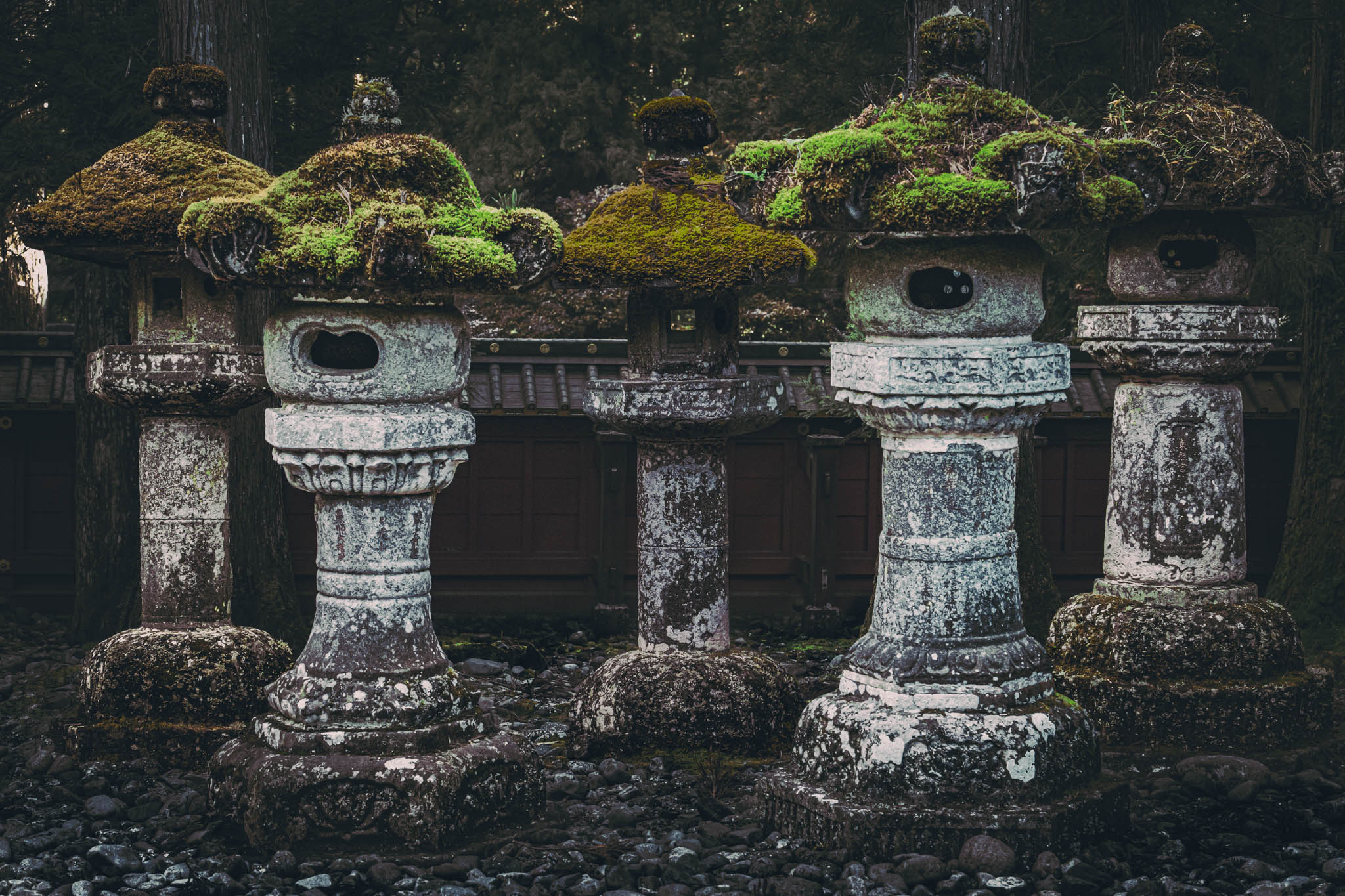
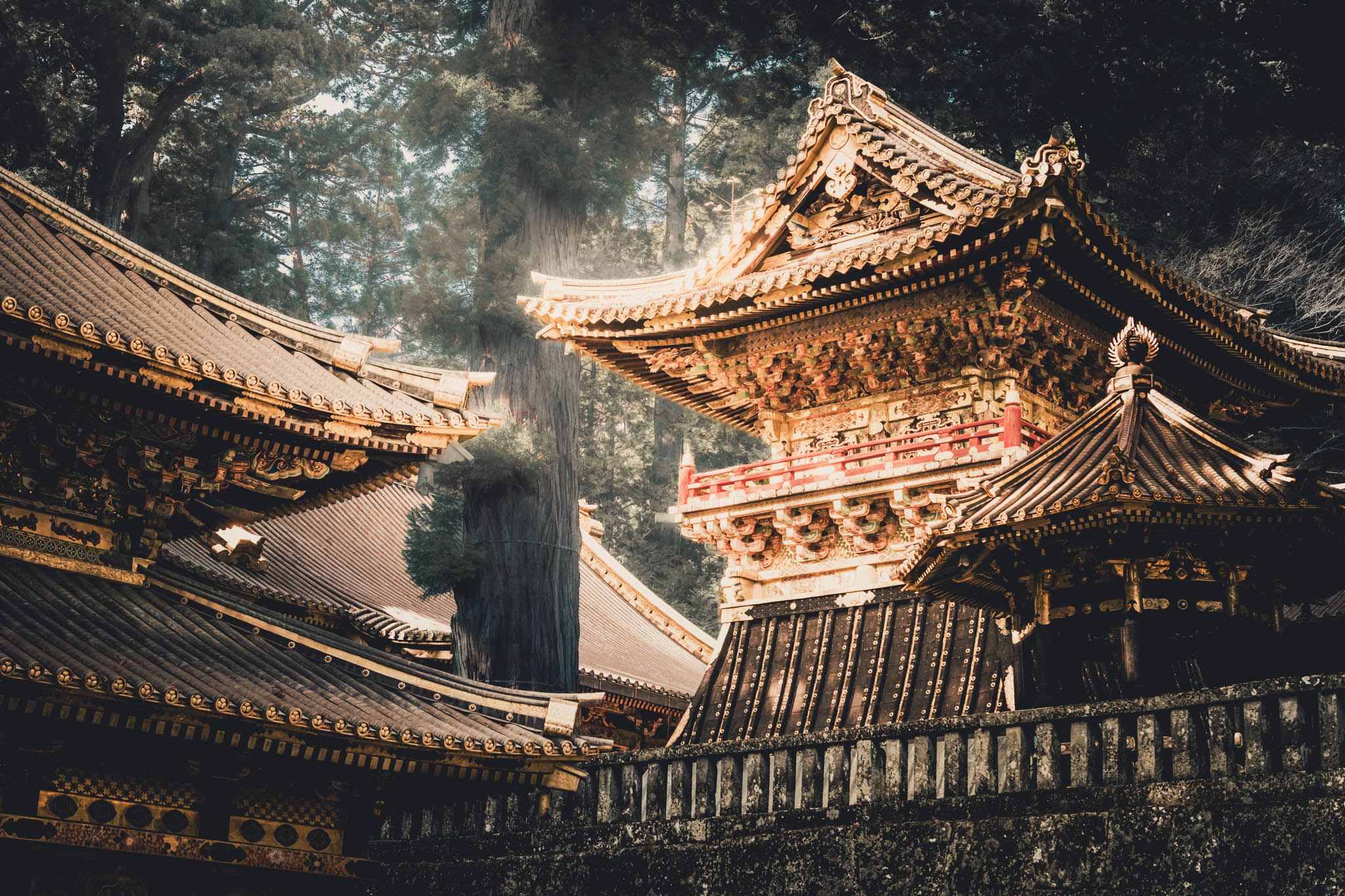
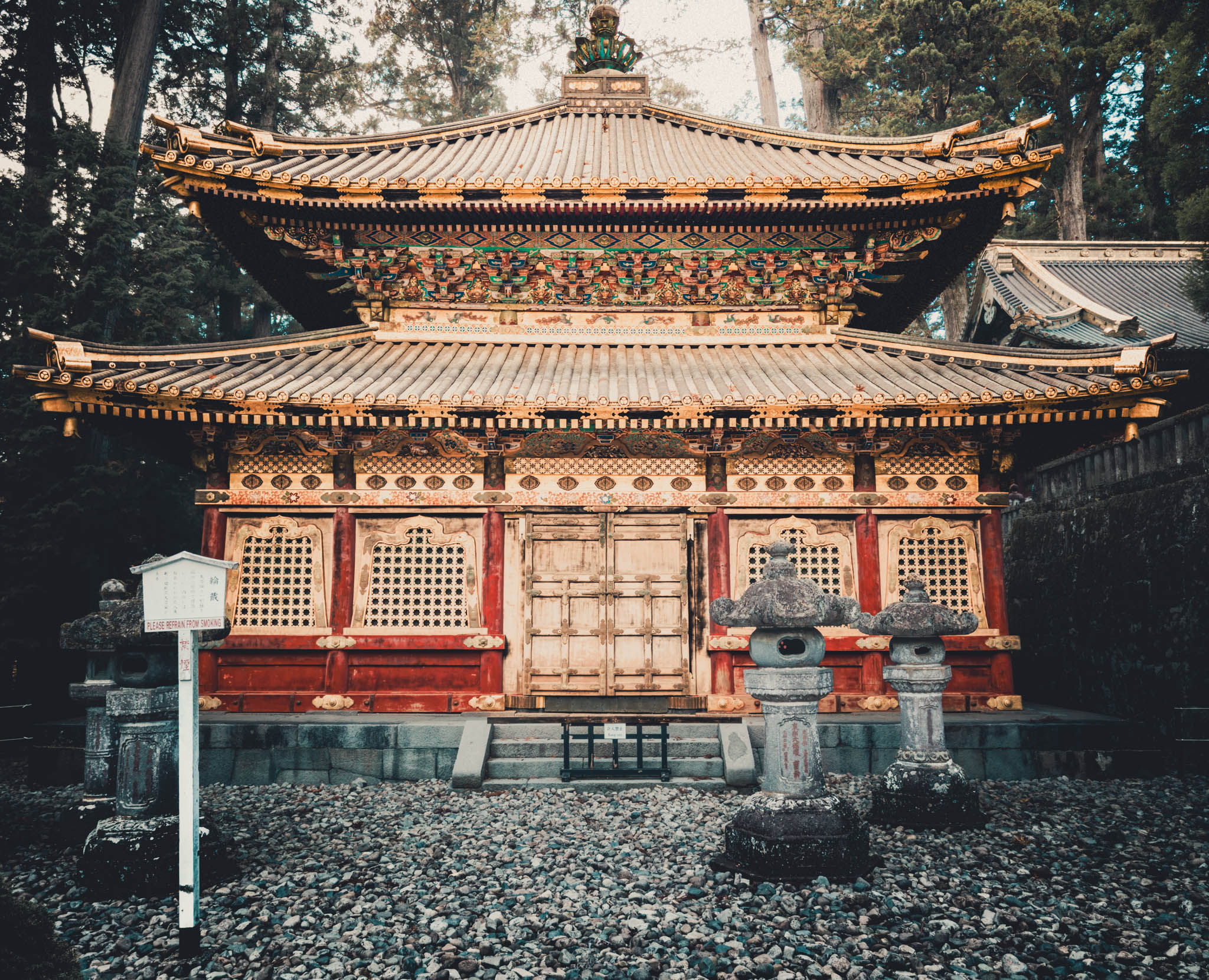
Shrines, unlike other types of Japanese architecture, seem stylistically categorized principally through their floorplans: in gongen-zukuri the public worship hall (the haiden) is connected to the private sanctuary presumably inhabited by the kami (the honden) through a smaller hall called ishi-no-ma or chuden. In other shrine styles, honden and haiden are separate buildings, but with gongen-zukuri the two are united into a single built unit by that intermediate hall.
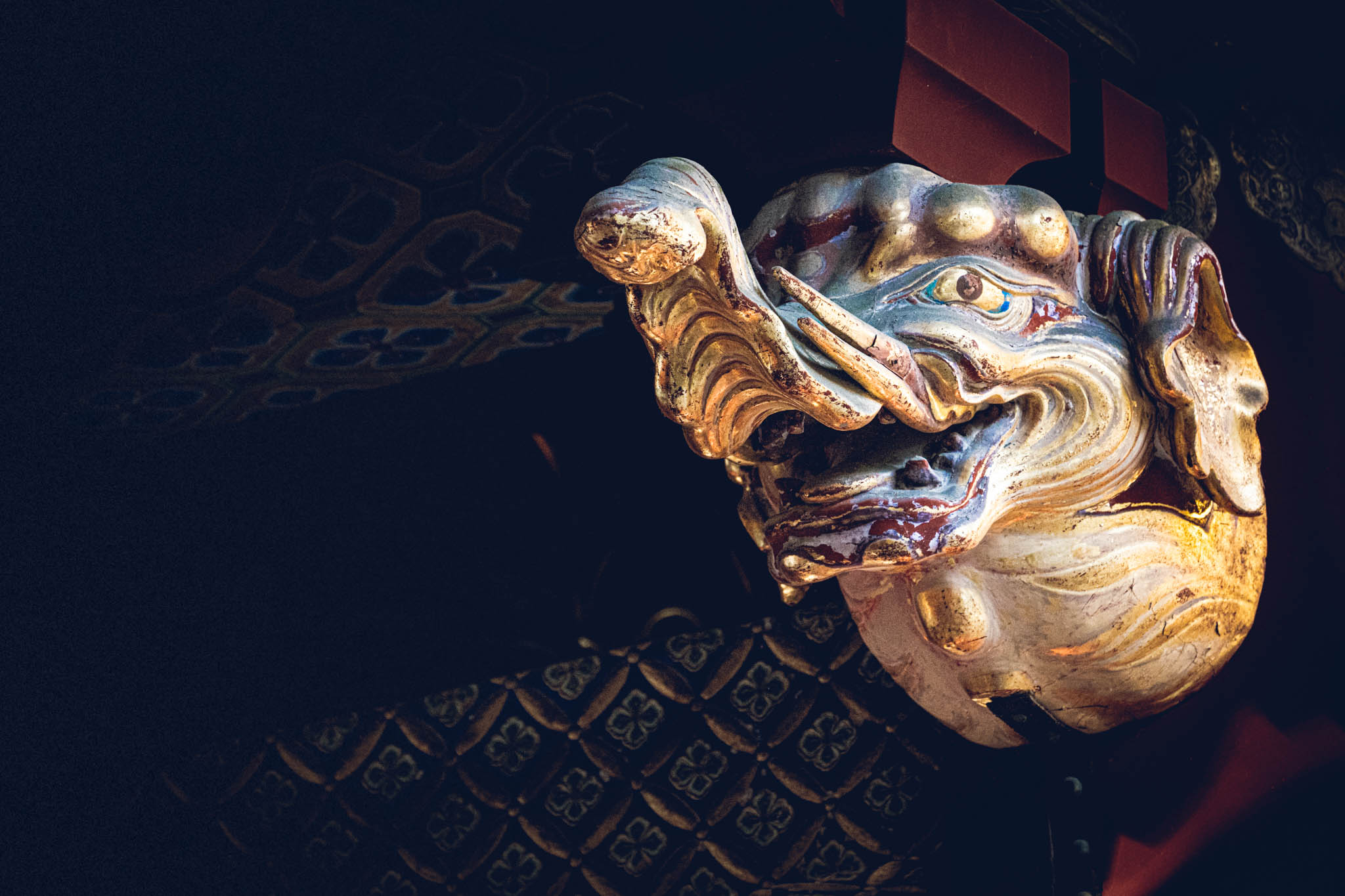
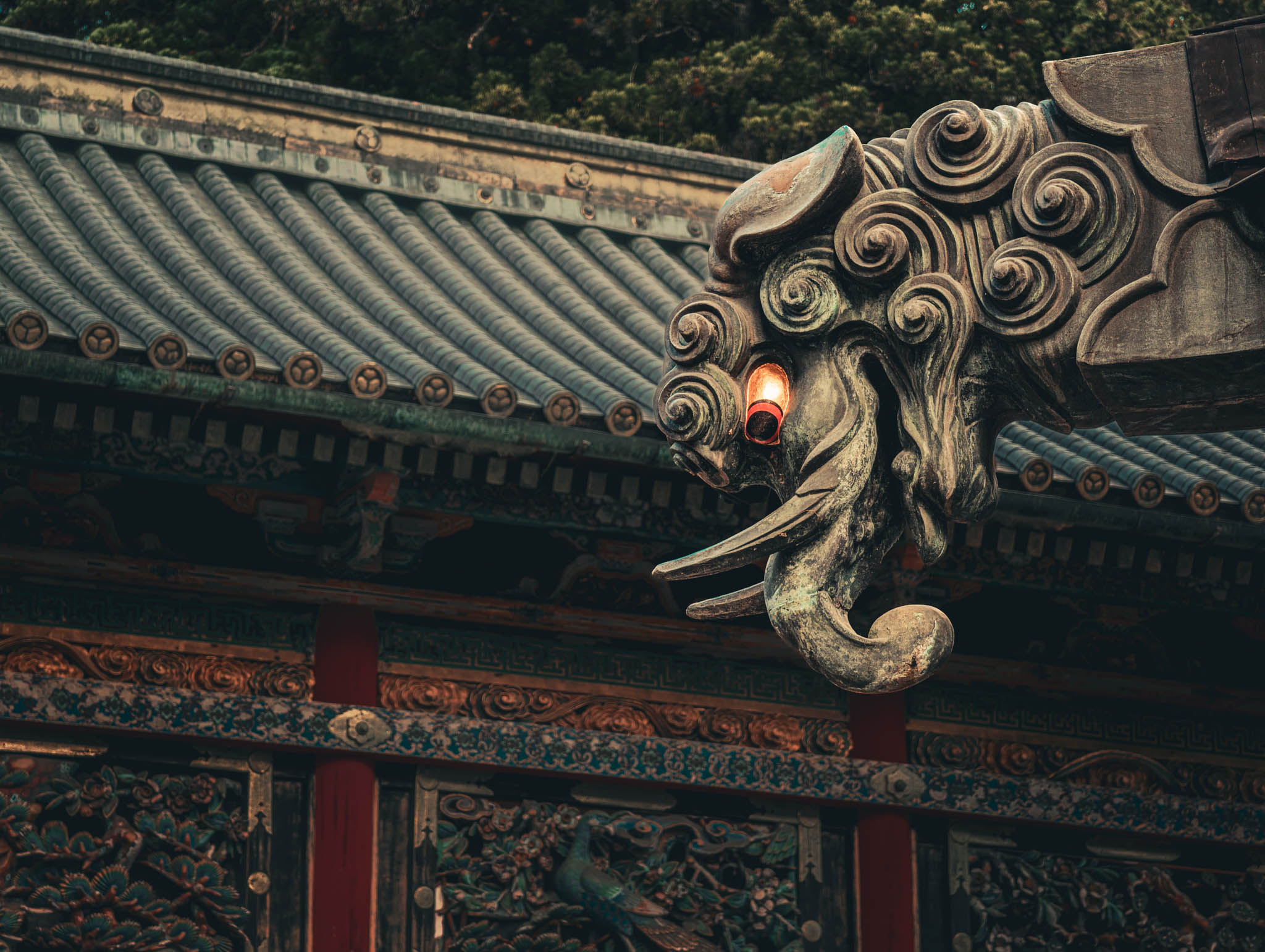
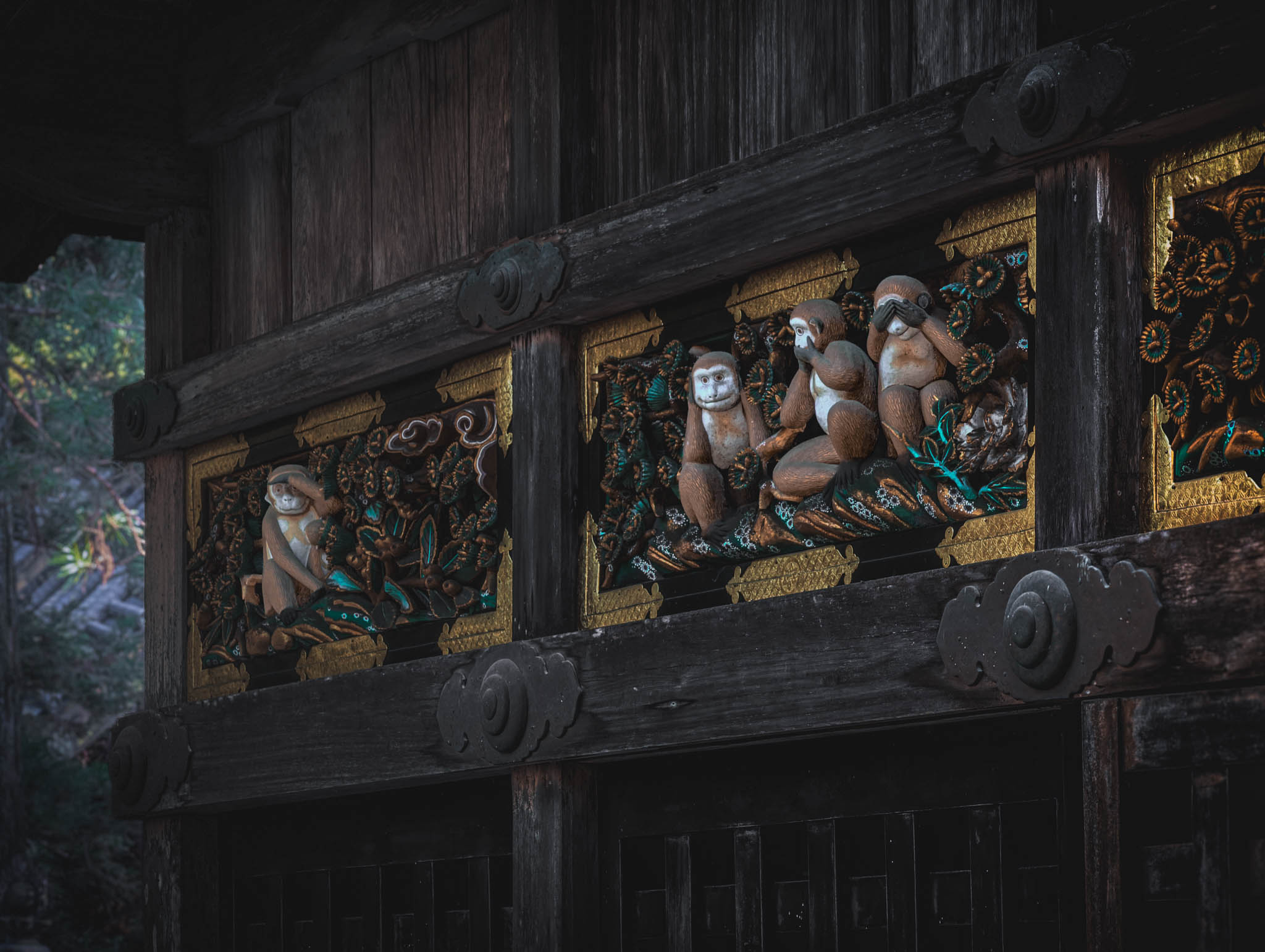
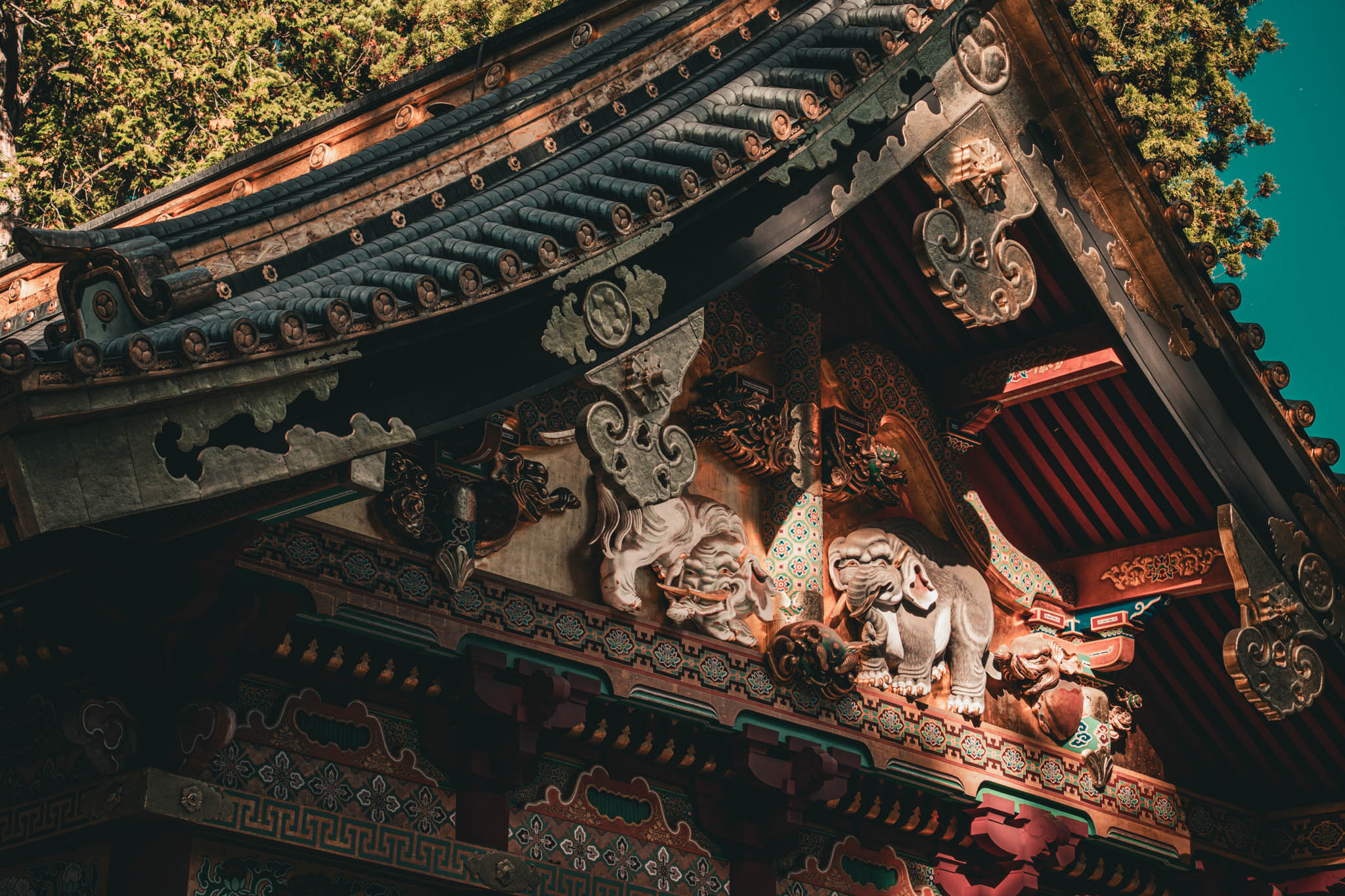
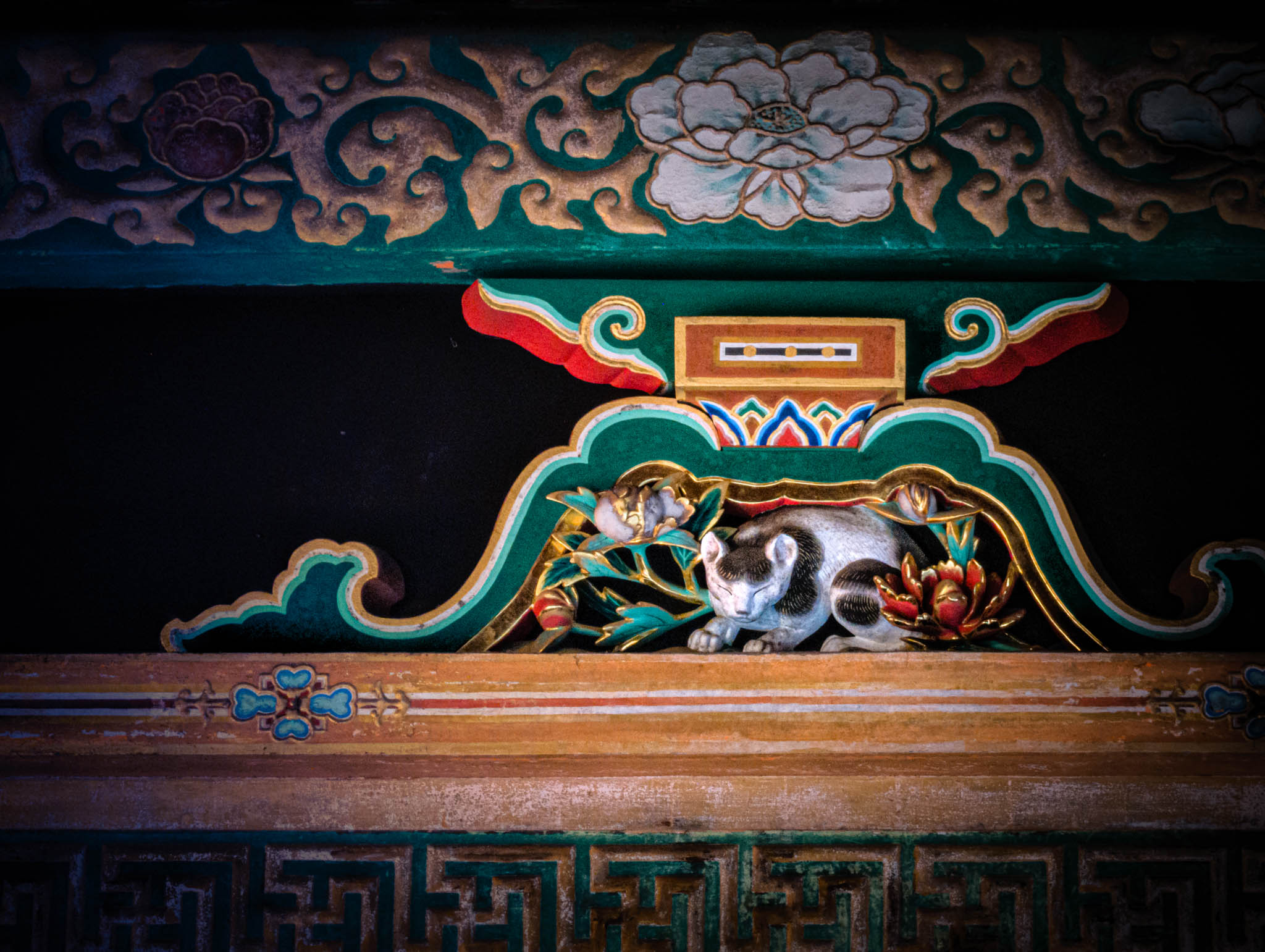
Terminology aside, it is not clear why the Founder’s shrine pullulates to such a degree with gilded fauna (real and mythological) — toothy dragons, angry-eyed elephants, fierce komainu lion-guardians, see-no-speak-no-say-no monkeys, and even a famous drowsy housecat — as well as polychromed brackets and other architectural details. The symmetrical “samurai baroque” with elaborate gilded sculptural decoration (perhaps a particularly overworked form of the formal domestic style referred to as shoin-zukuri) does seem to fly in the face of the much-lauded trends towards asymmetric, understated austerity (sukiya-zukuri) in the late traditional architecture of the Japanese elite, perhaps with a similar motivation to theatrically overwhelm and impress as the contemporaneous Counter-Reformation High Baroque of Catholic Europe. Of course, no Japanese elite have had at their cold dead fingertips before or since the inconceivable wealth and power of the Founder and his grandson, who is also entombed in Nikko. Who needs teahouse wabi-sabi when you (or rather, your surviving dynastic descendents) have a dozen million Tokugawa koku (a measure of wealth equivalent to the amount of rice necessary to feed a man for a year) as well as forty-two tons of gold from the Shogun’s mines?
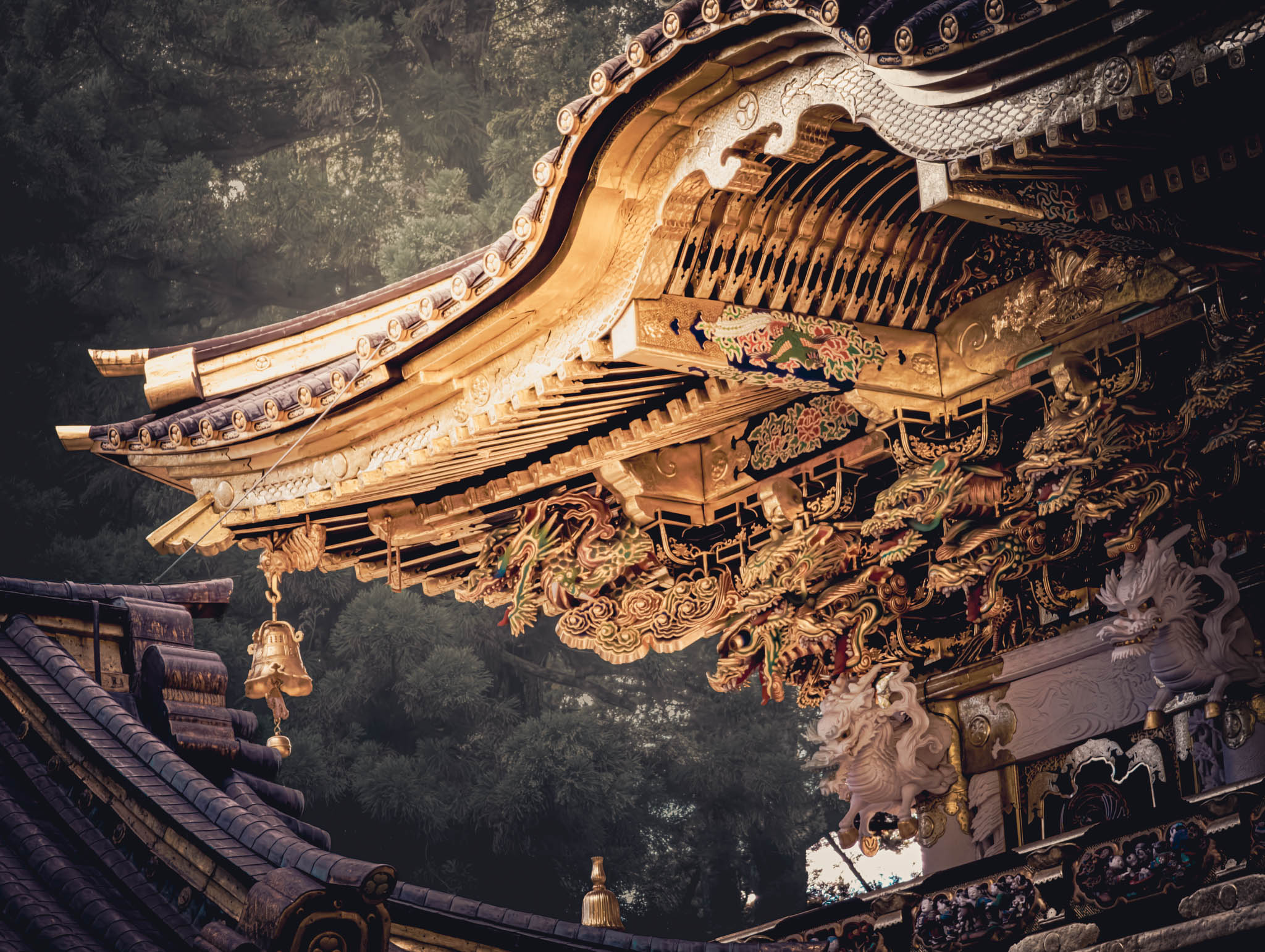
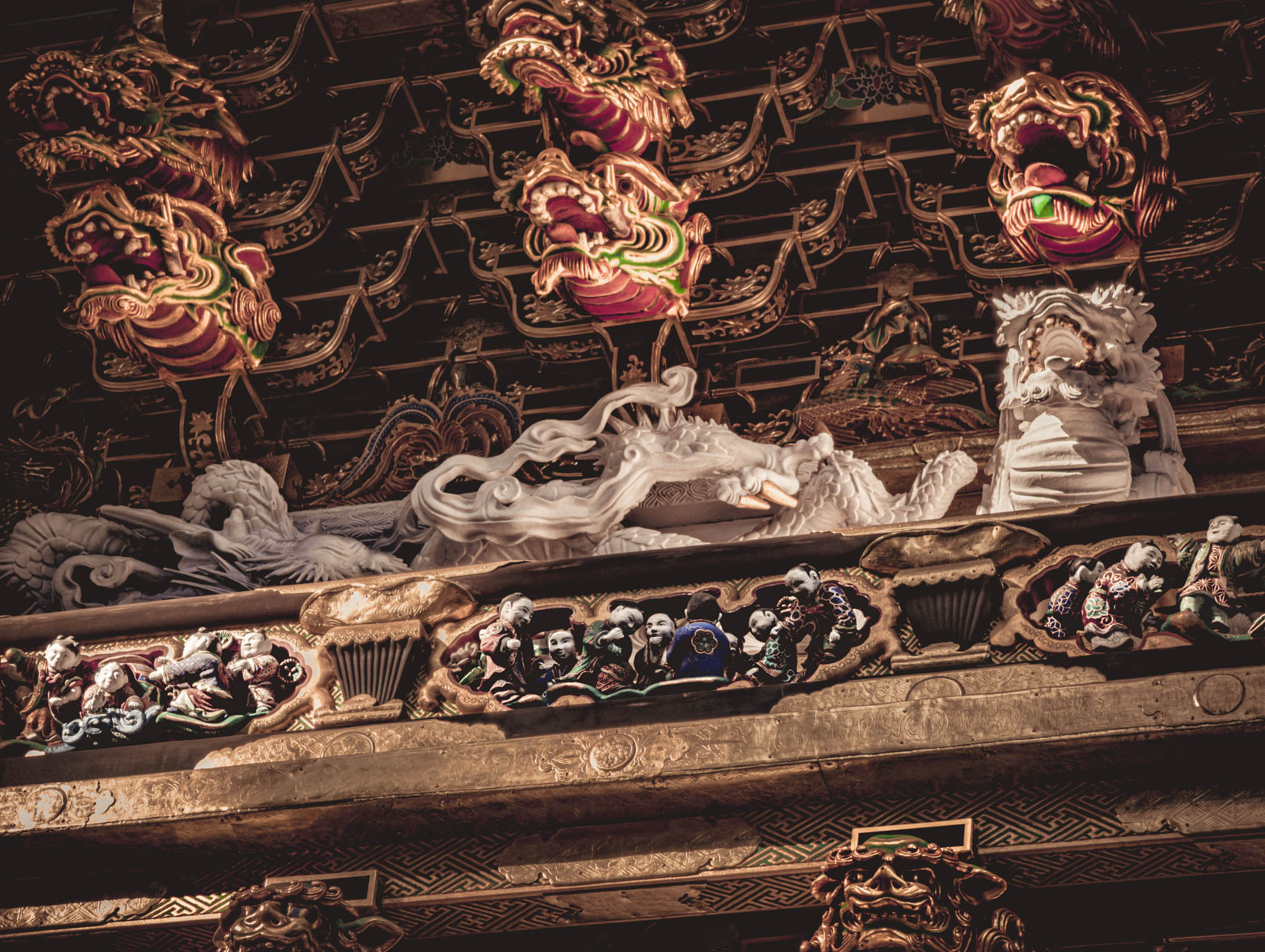
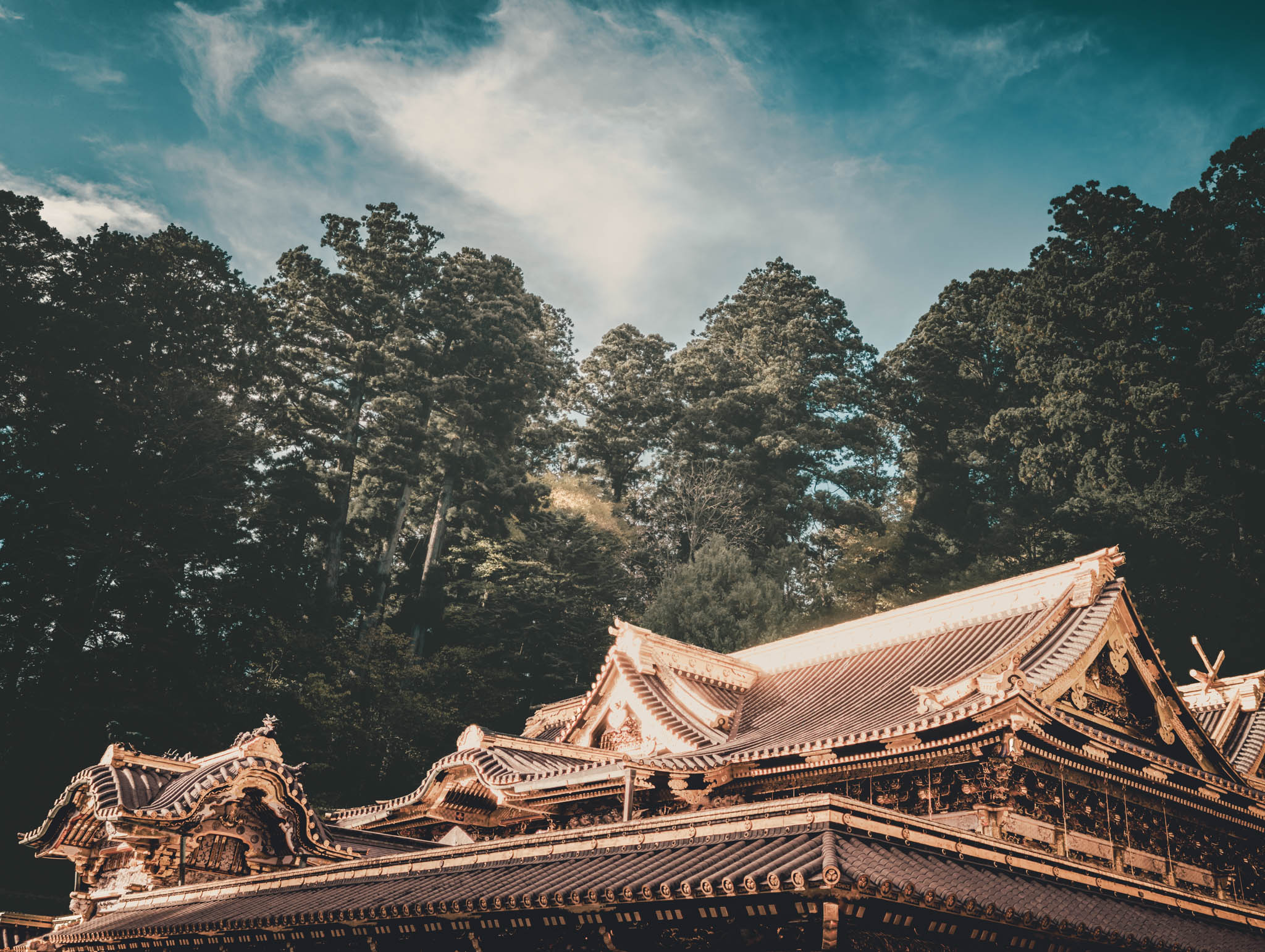
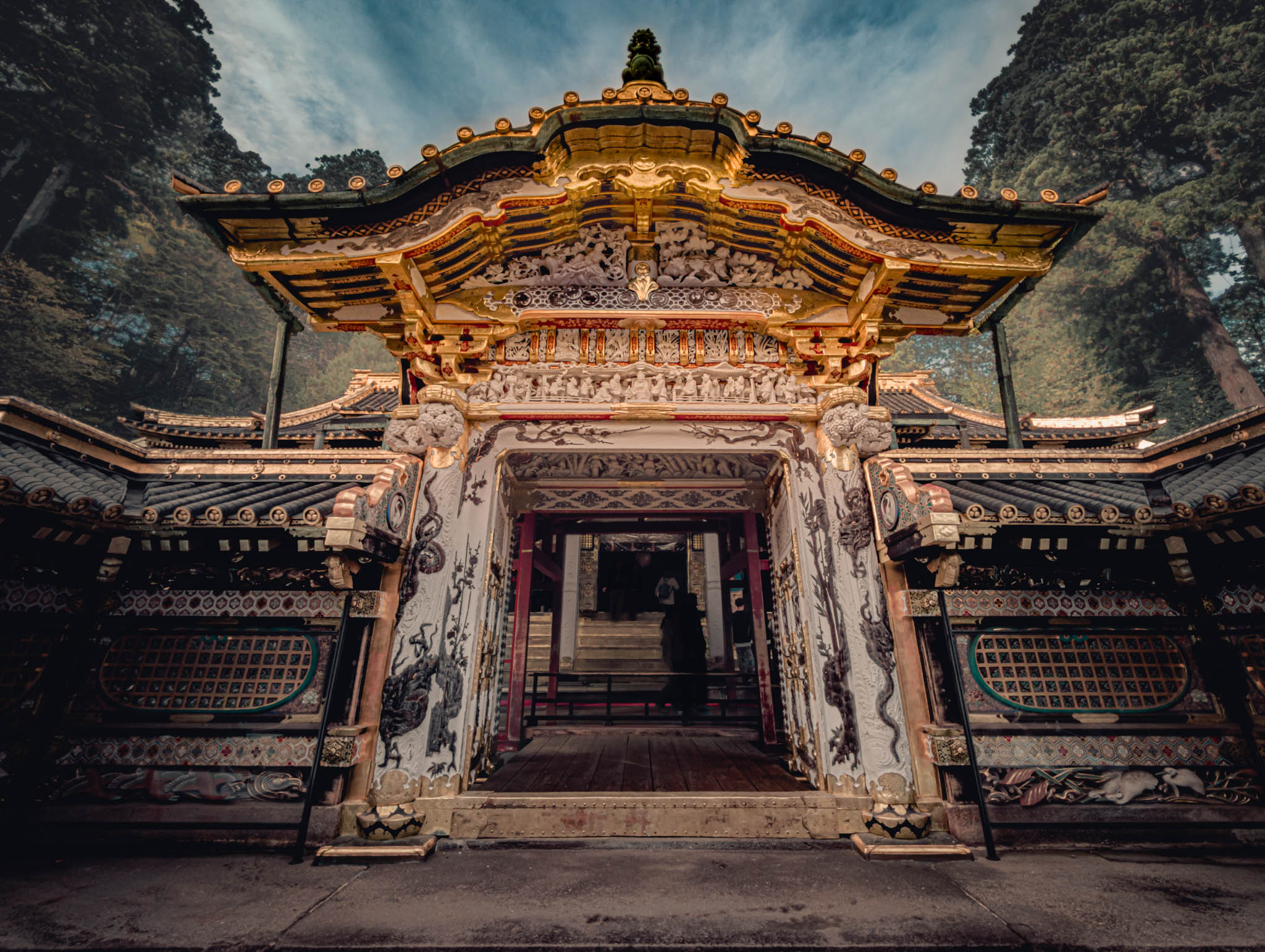
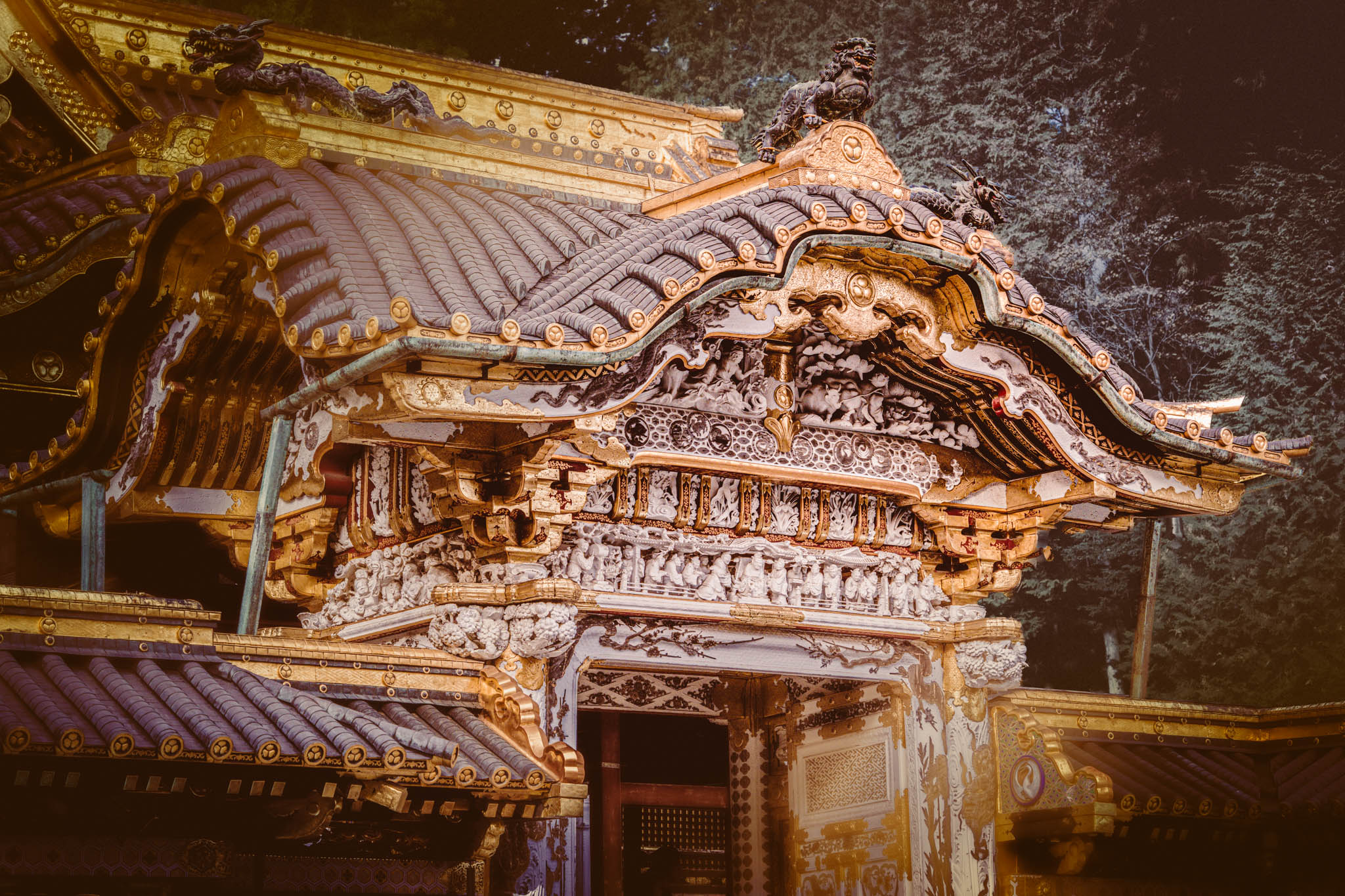
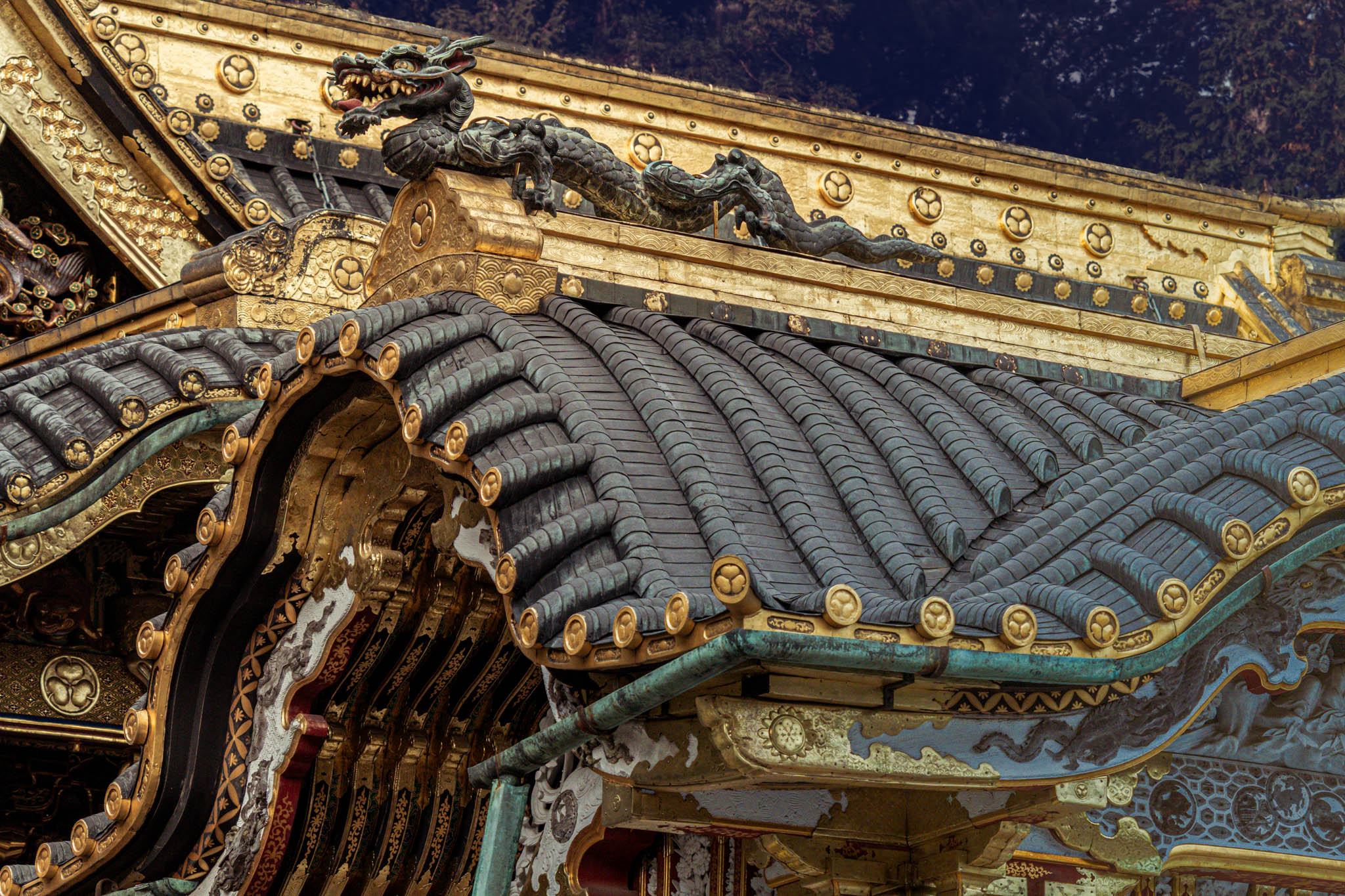
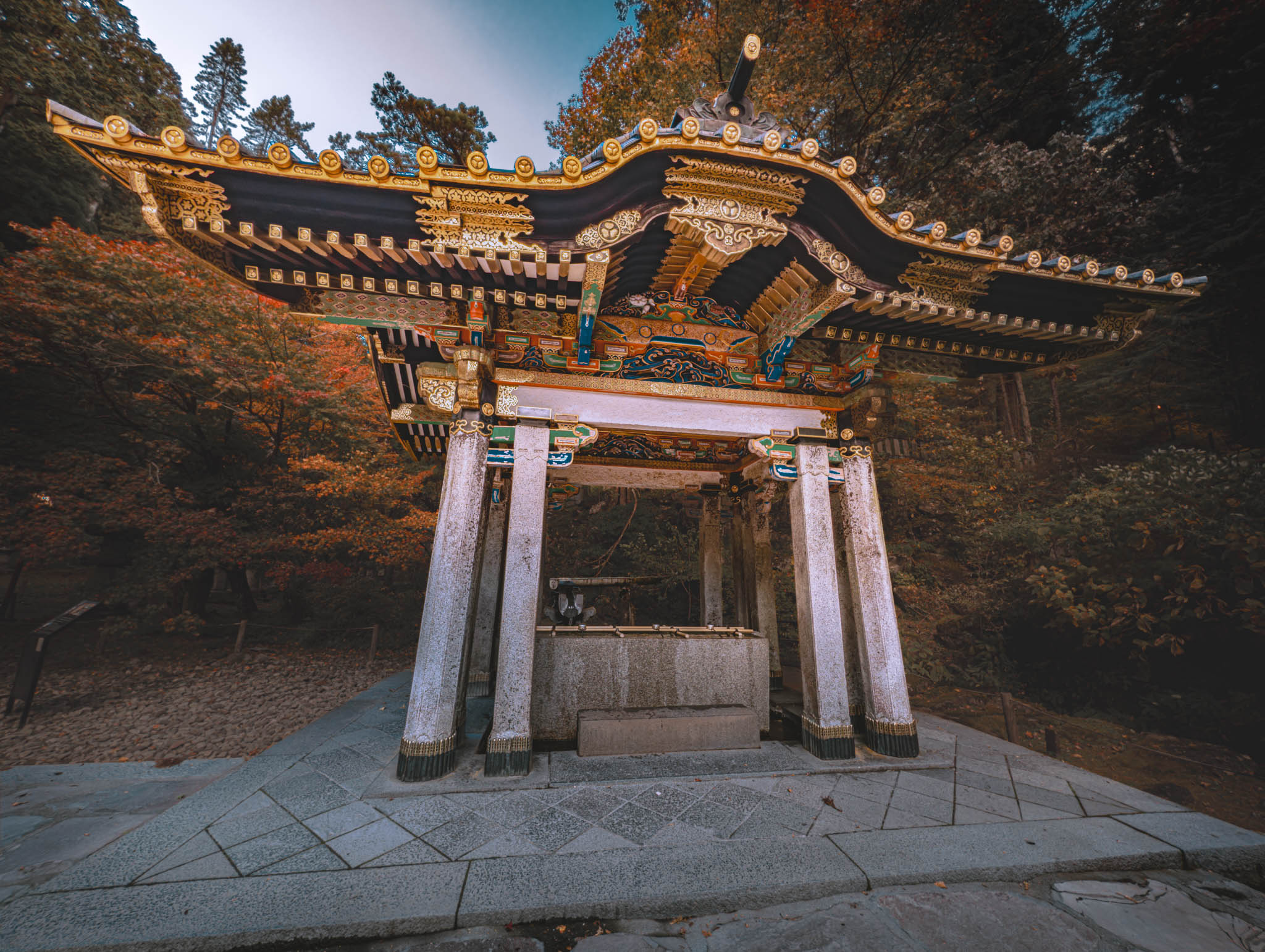
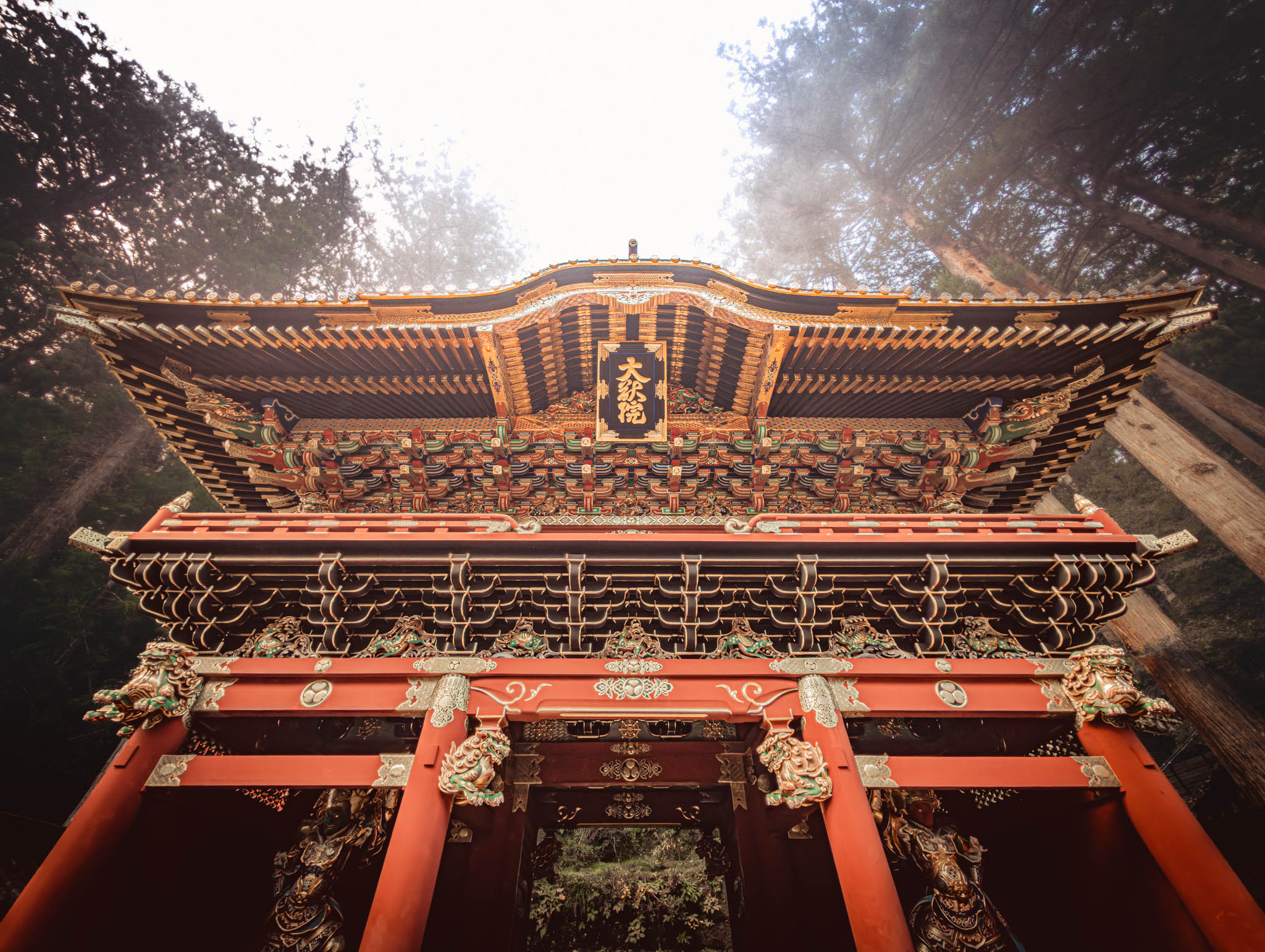
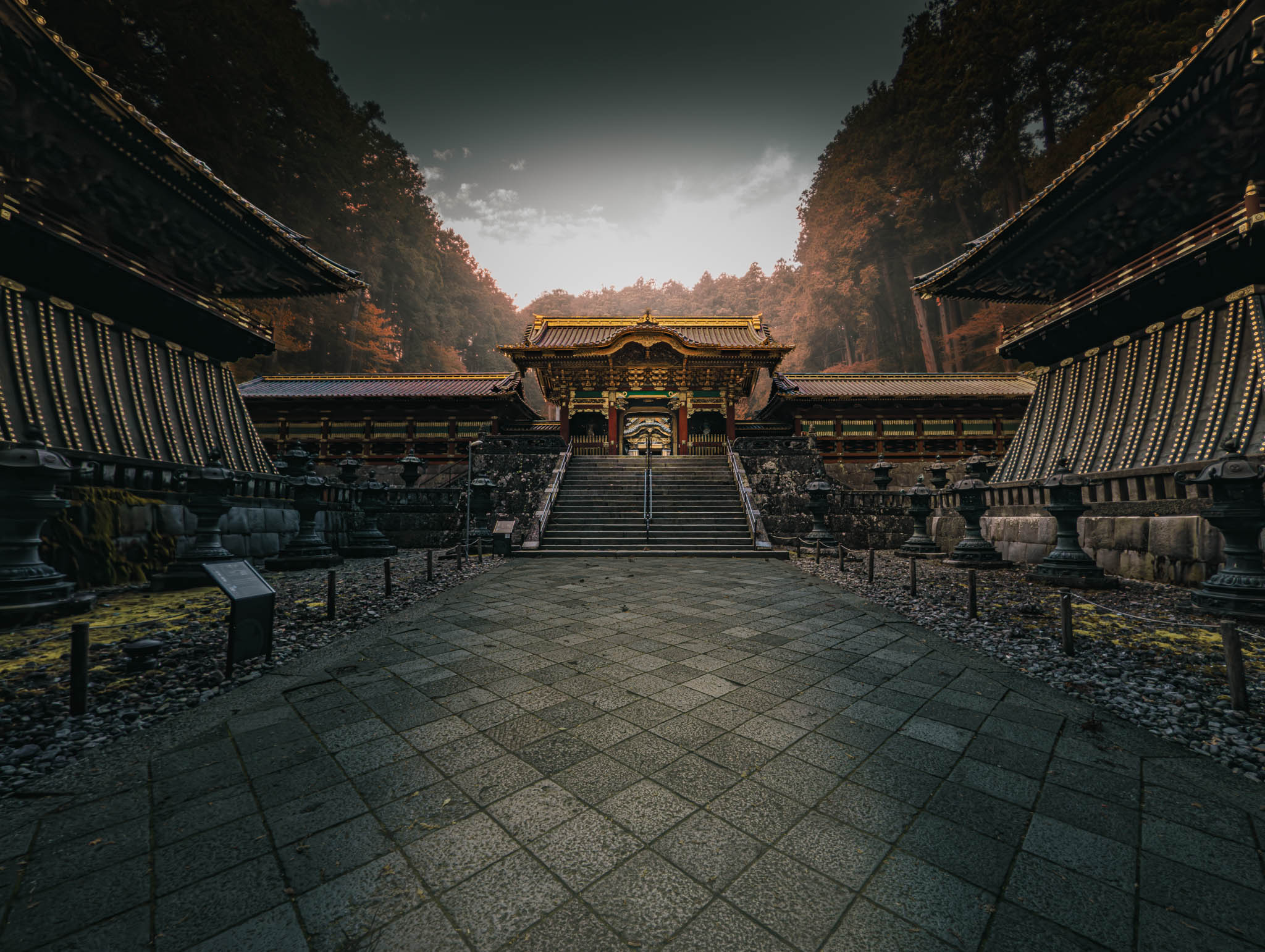
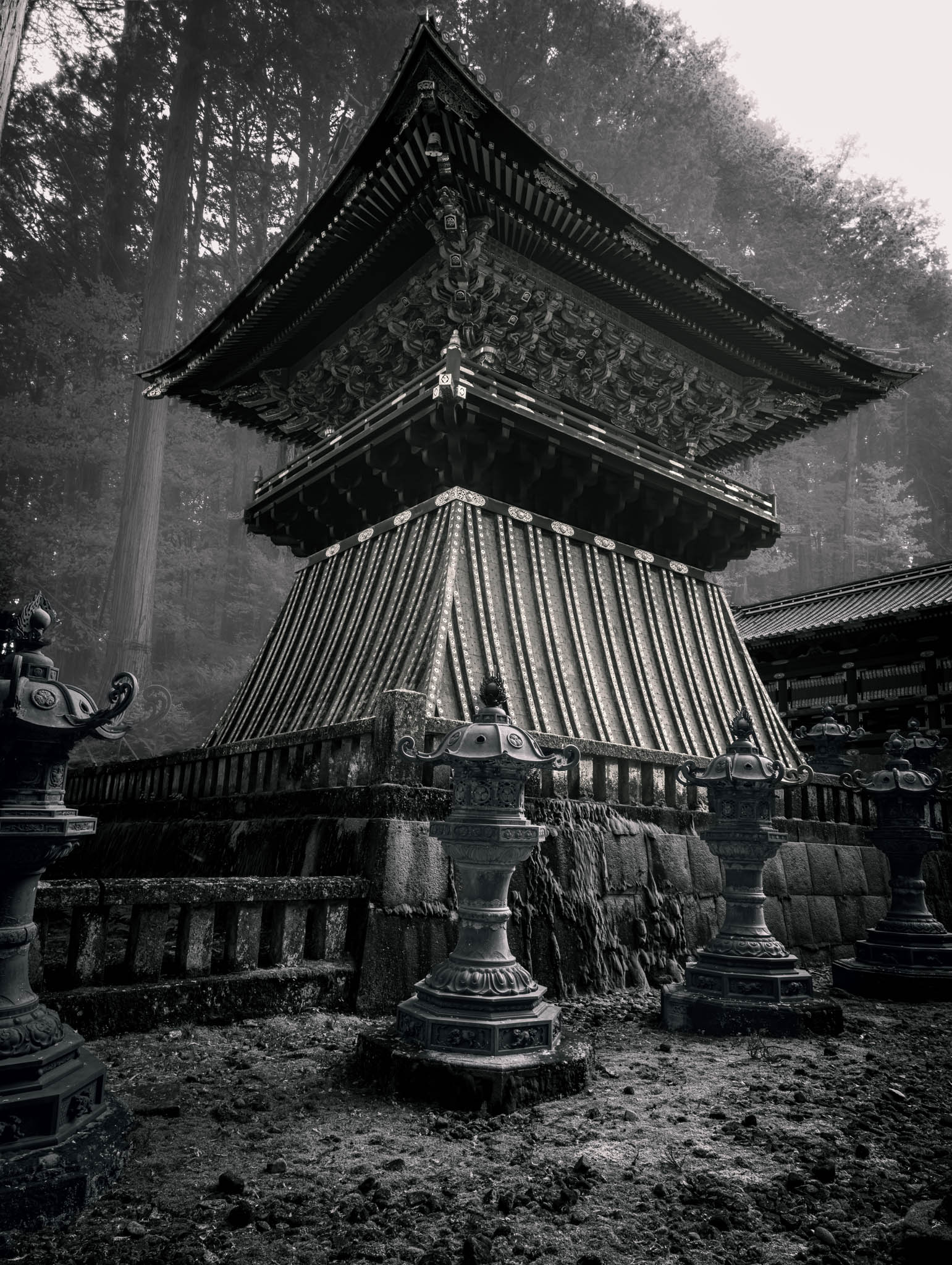
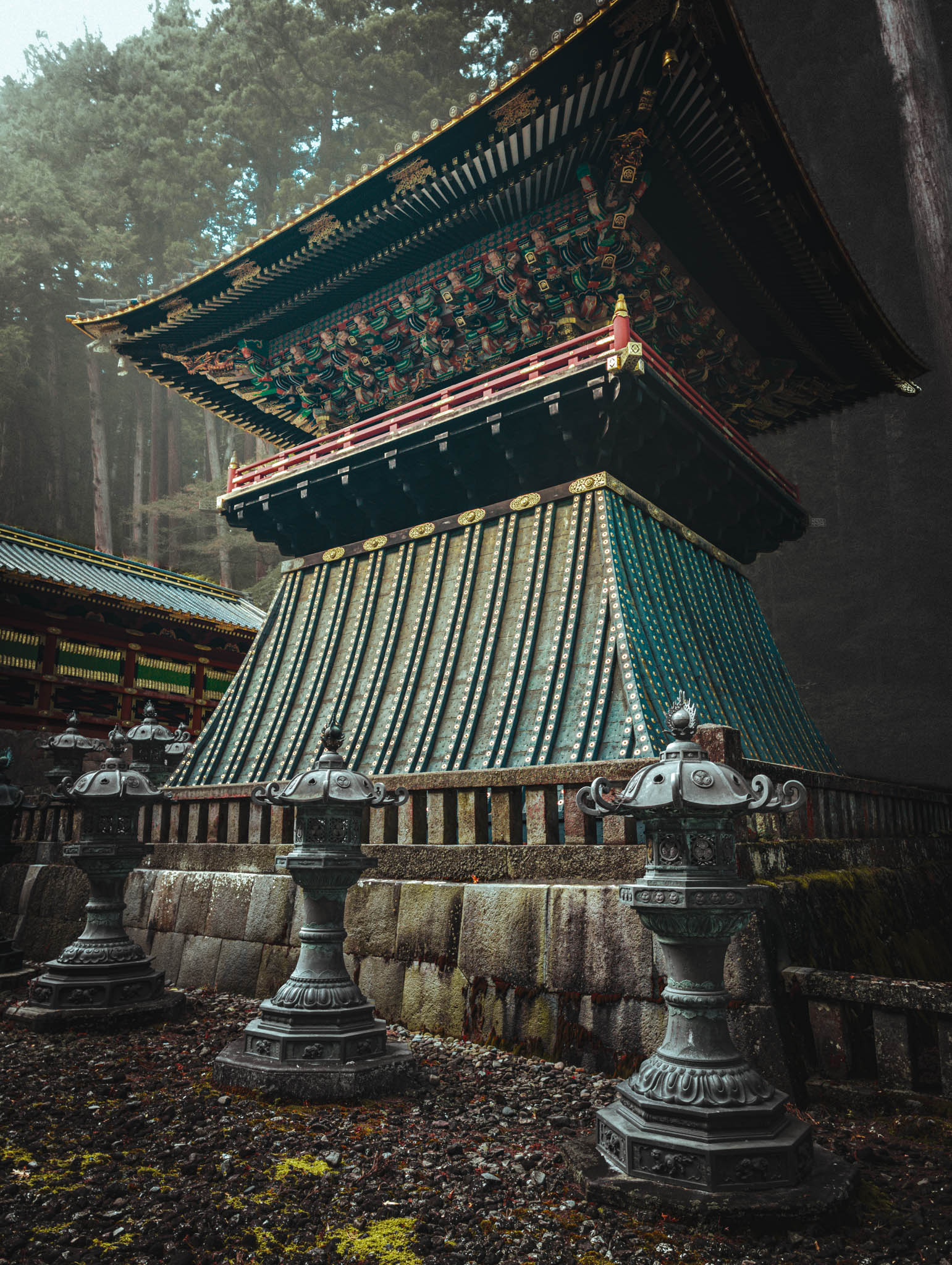
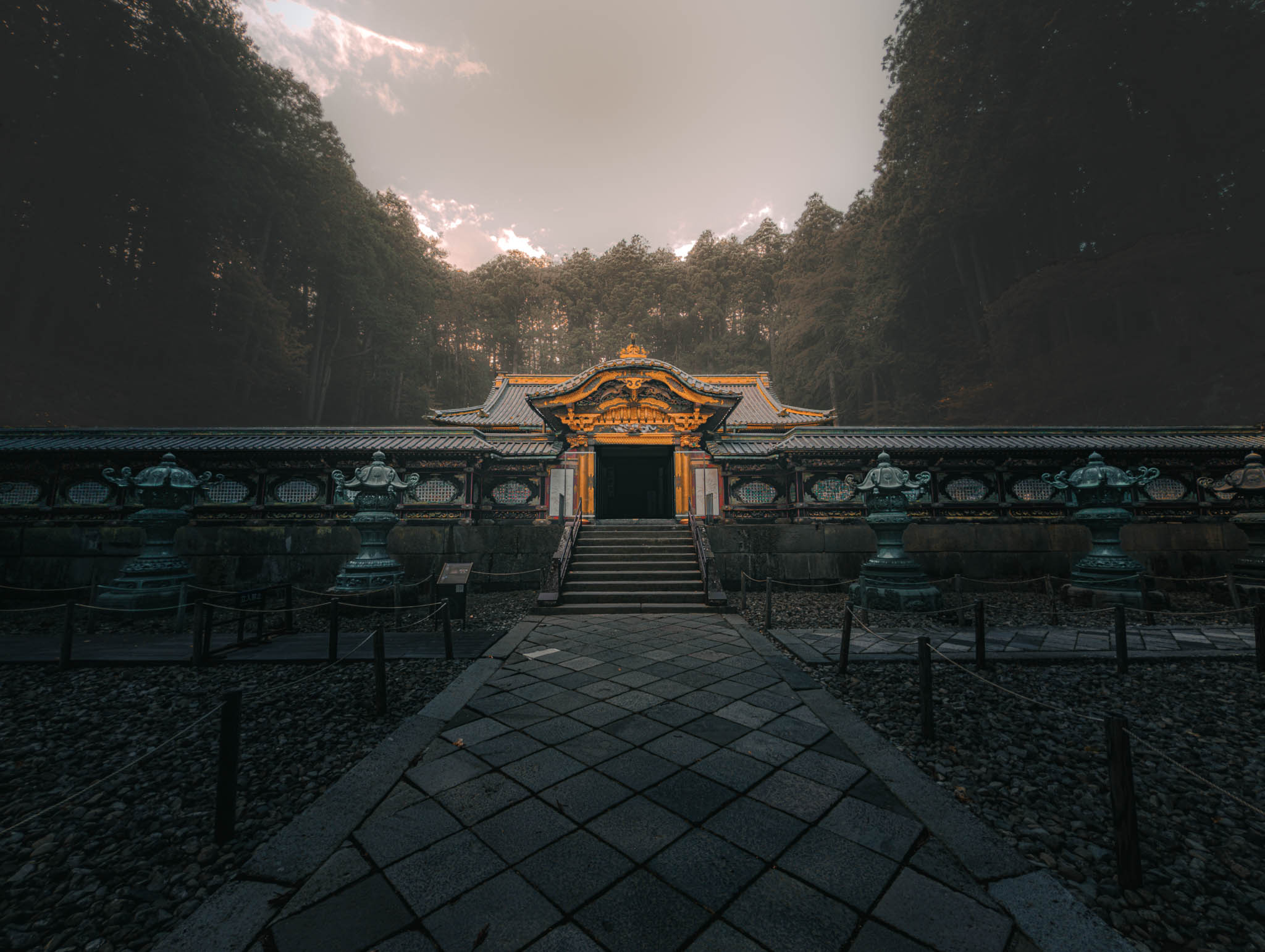
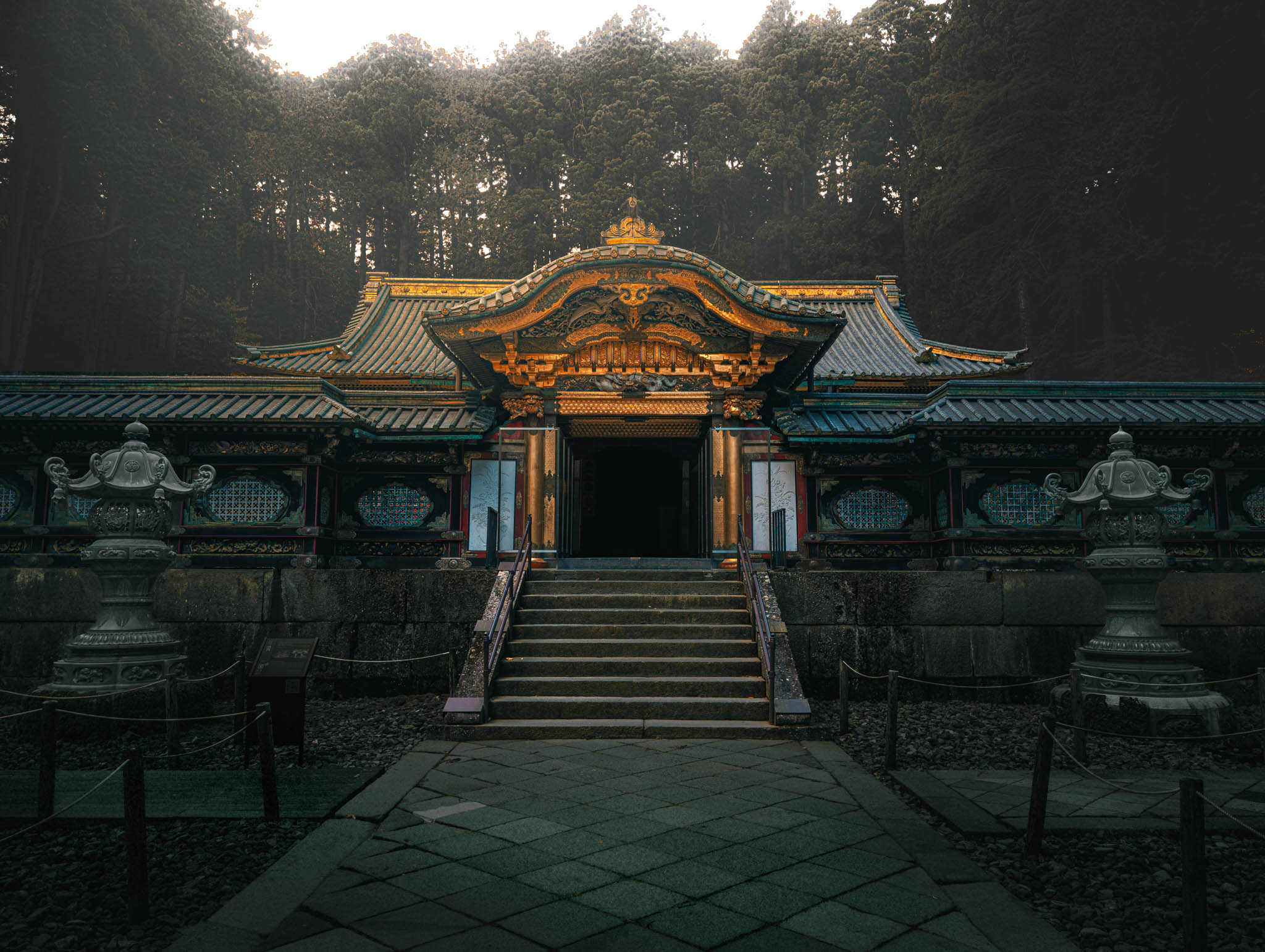
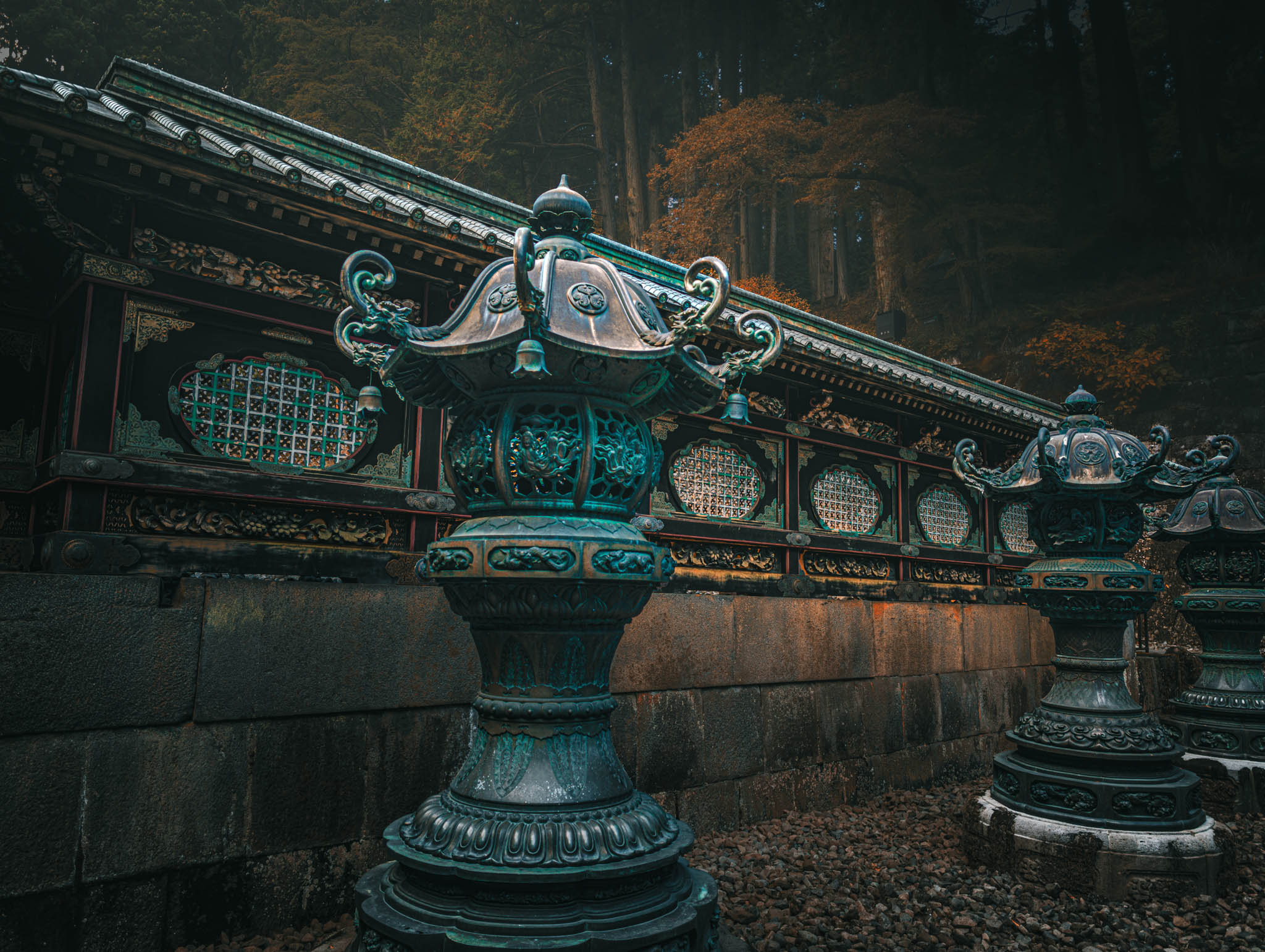
If my photos of Ieyasu’s Tosho-gu seem more fragmentary than usual, it’s because the place was crowded with tourists like a feudal-era totalitarian Disney World, and as usual (and largely involuntarily) my lens avoids humans. Taiyuin — officially 家光廟大猷院 Iemitsu-byo Taiyu-in, the nearby gongen-zukuri mortuary complex of grandson Iemitsu (1604-1651) — on the other hand, late in the day and a half hour before closing (kami apparently need their rest too) was largely deserted and so that sort of topical fragmentation is not as apparent to me in my images of the place. In fact, a sort of shadowy, almost macabre emptiness settled on the respectfully-less-ornate grandson’s shrine as I performed a sort of camera-in-hand speed run of the site.
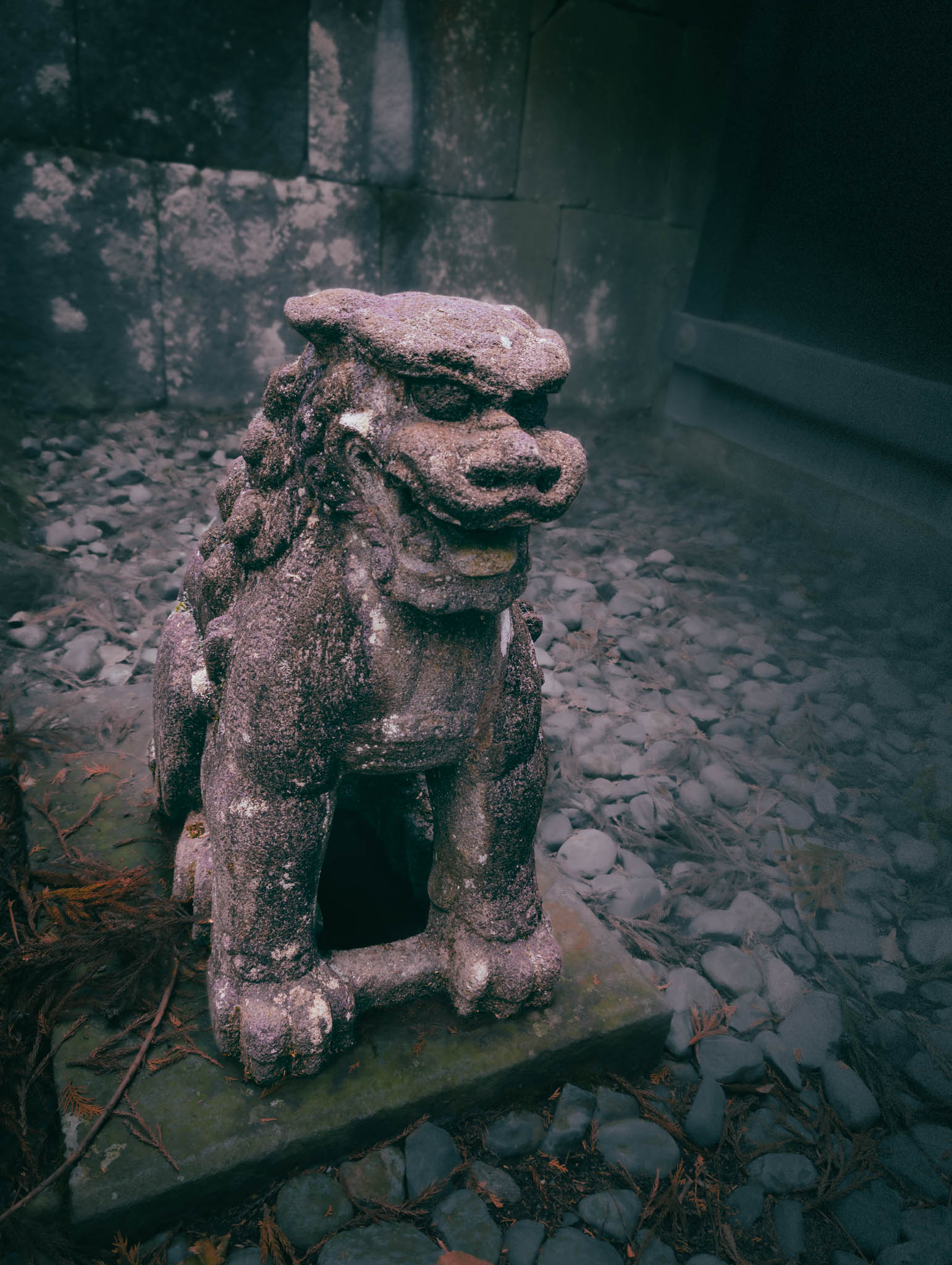
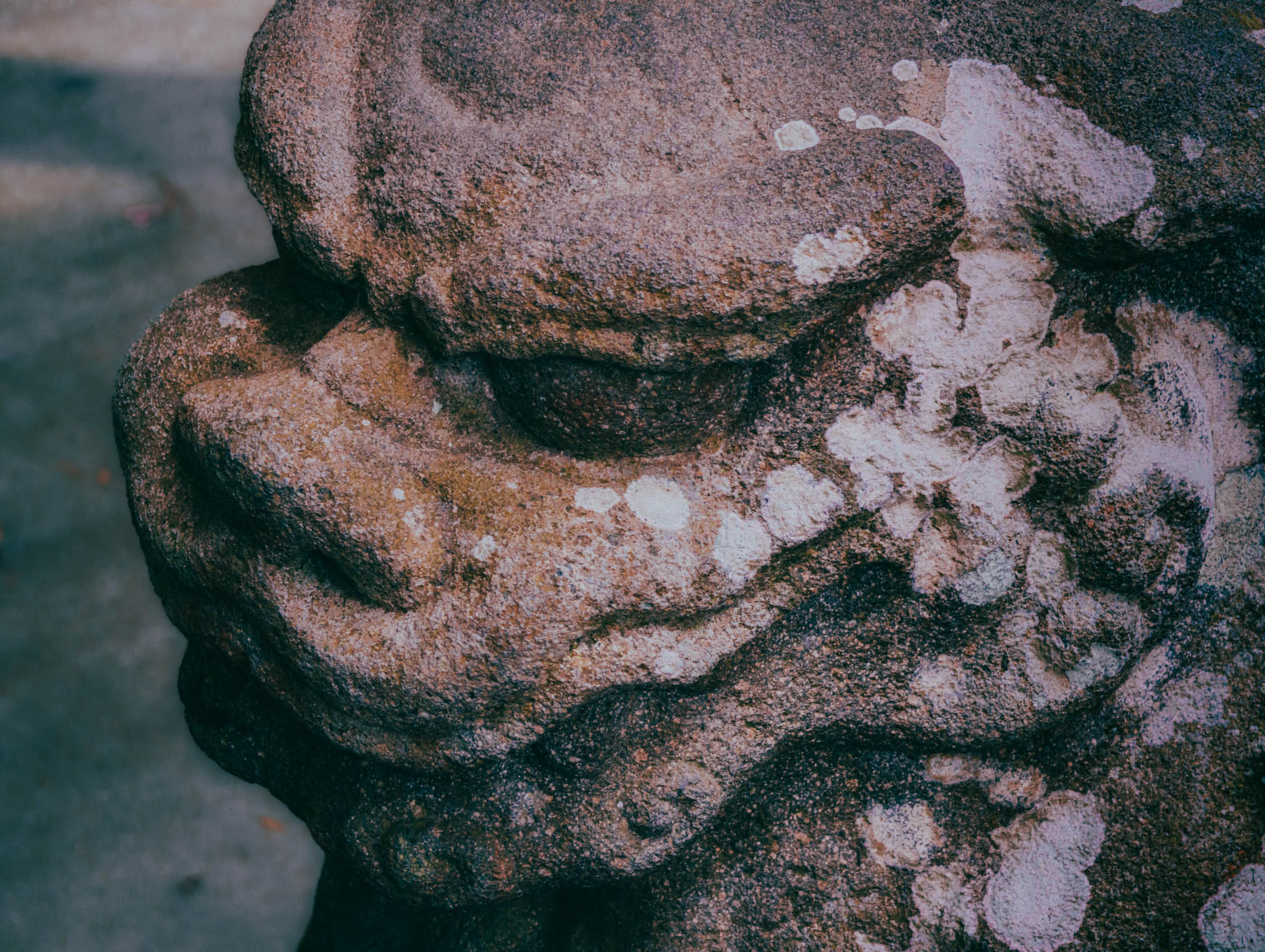
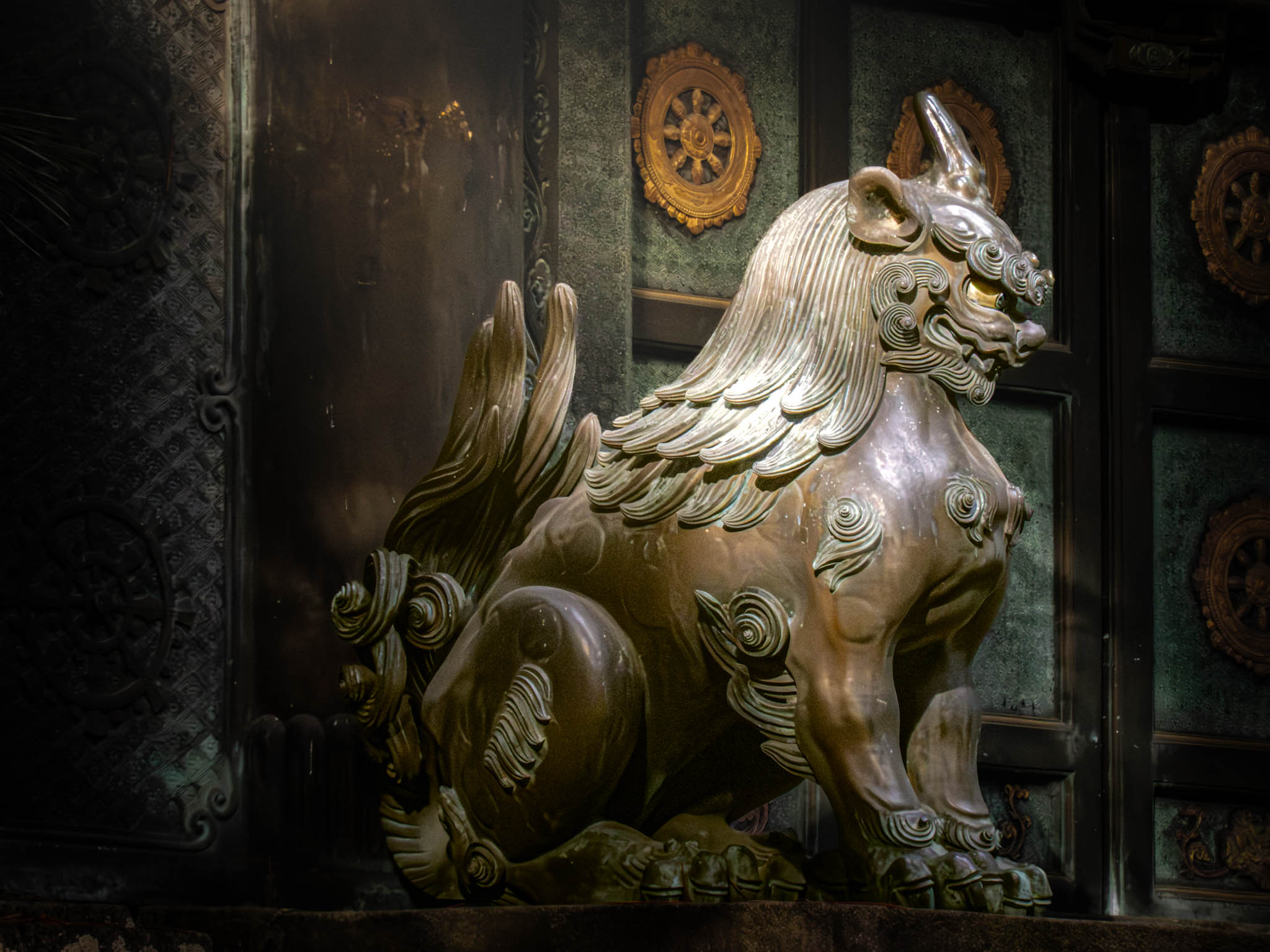
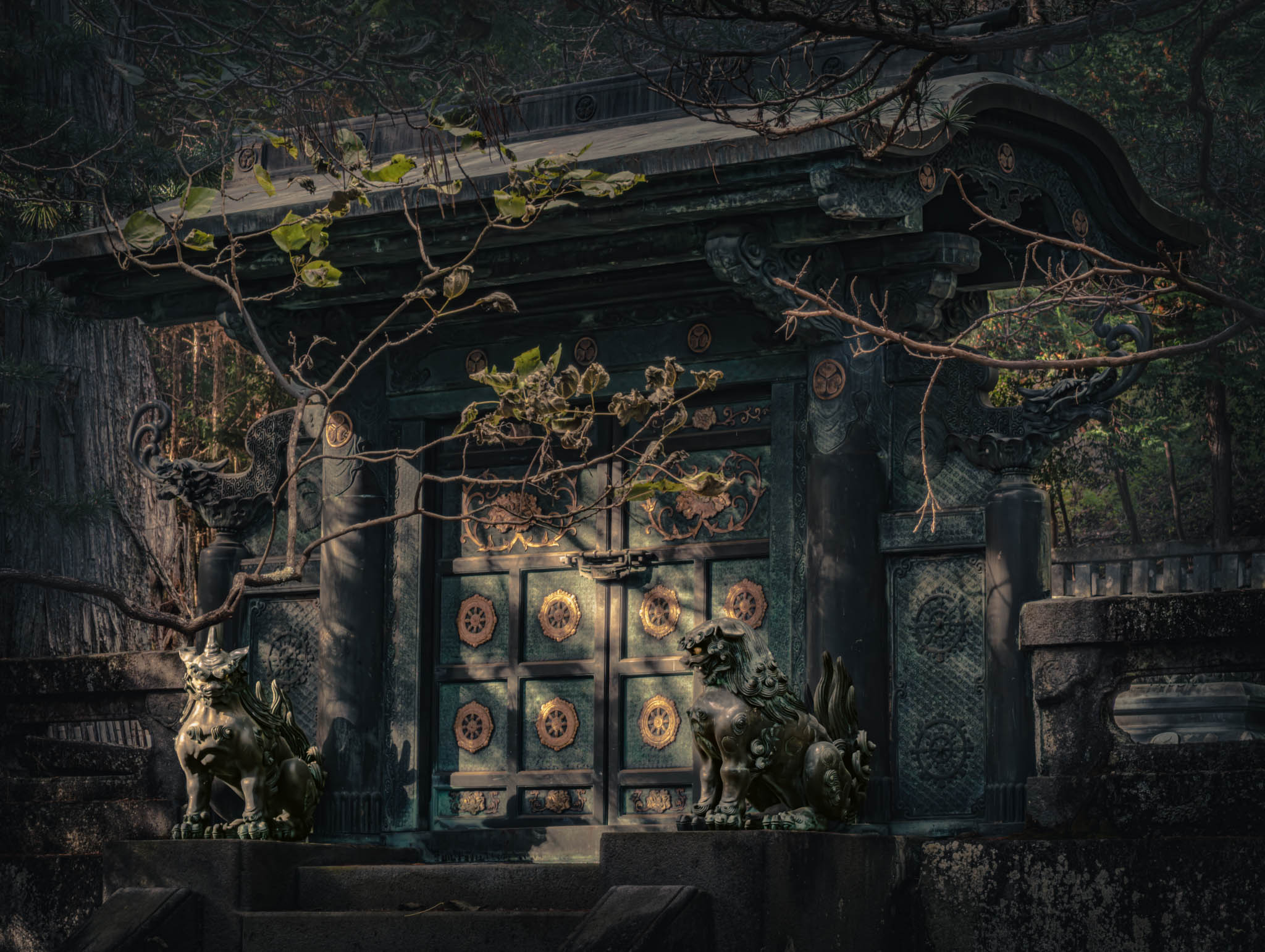
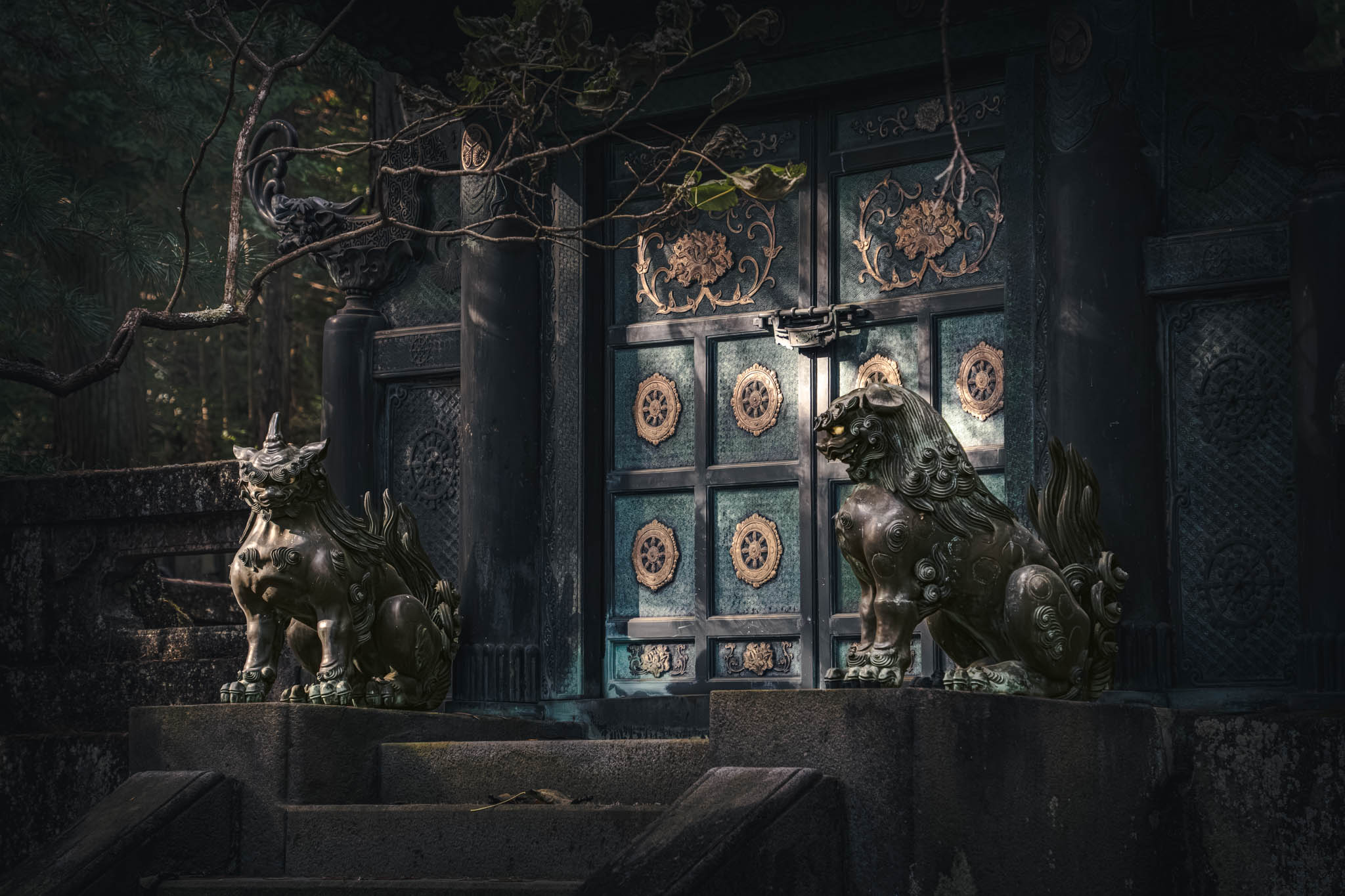
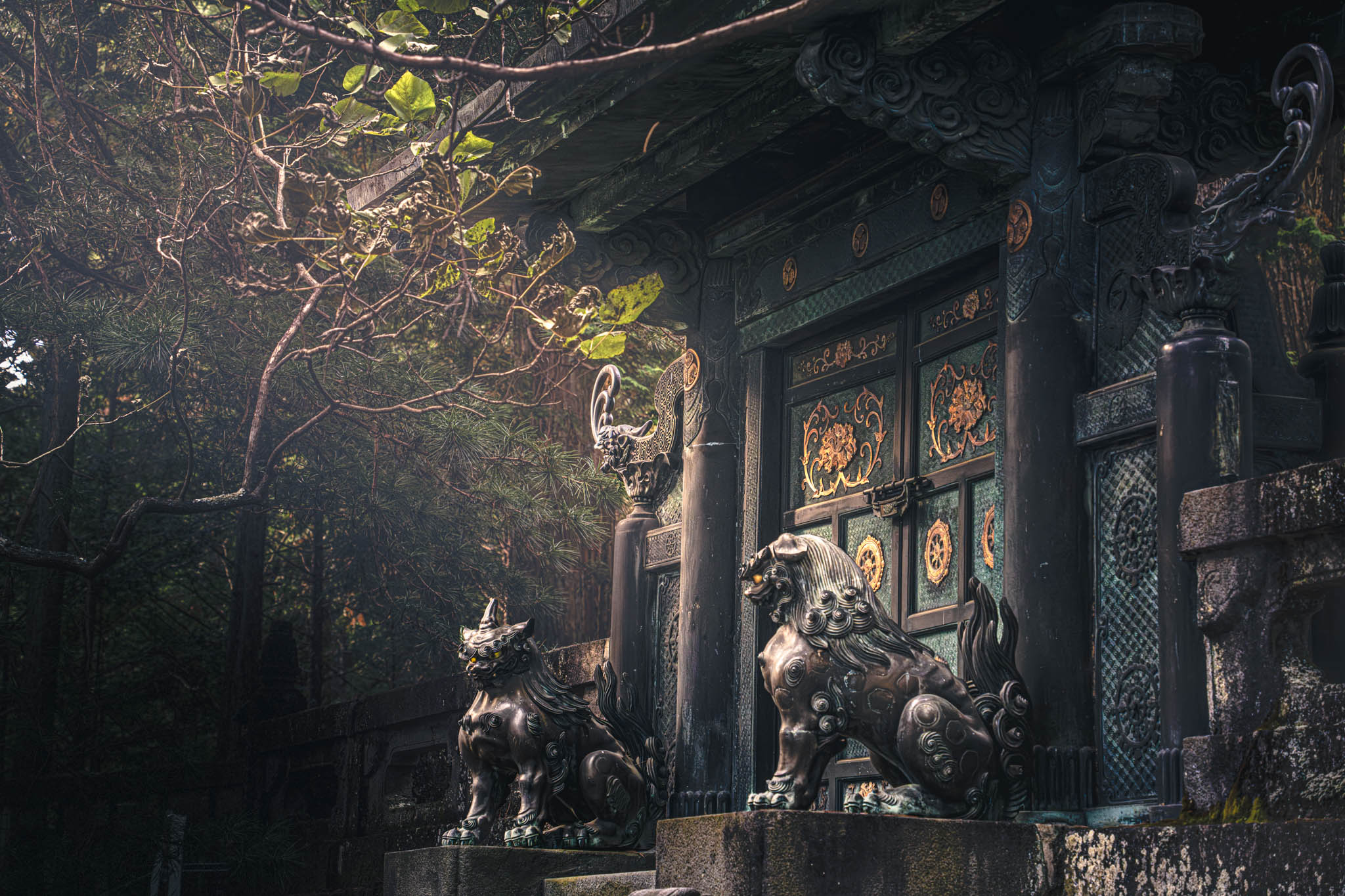
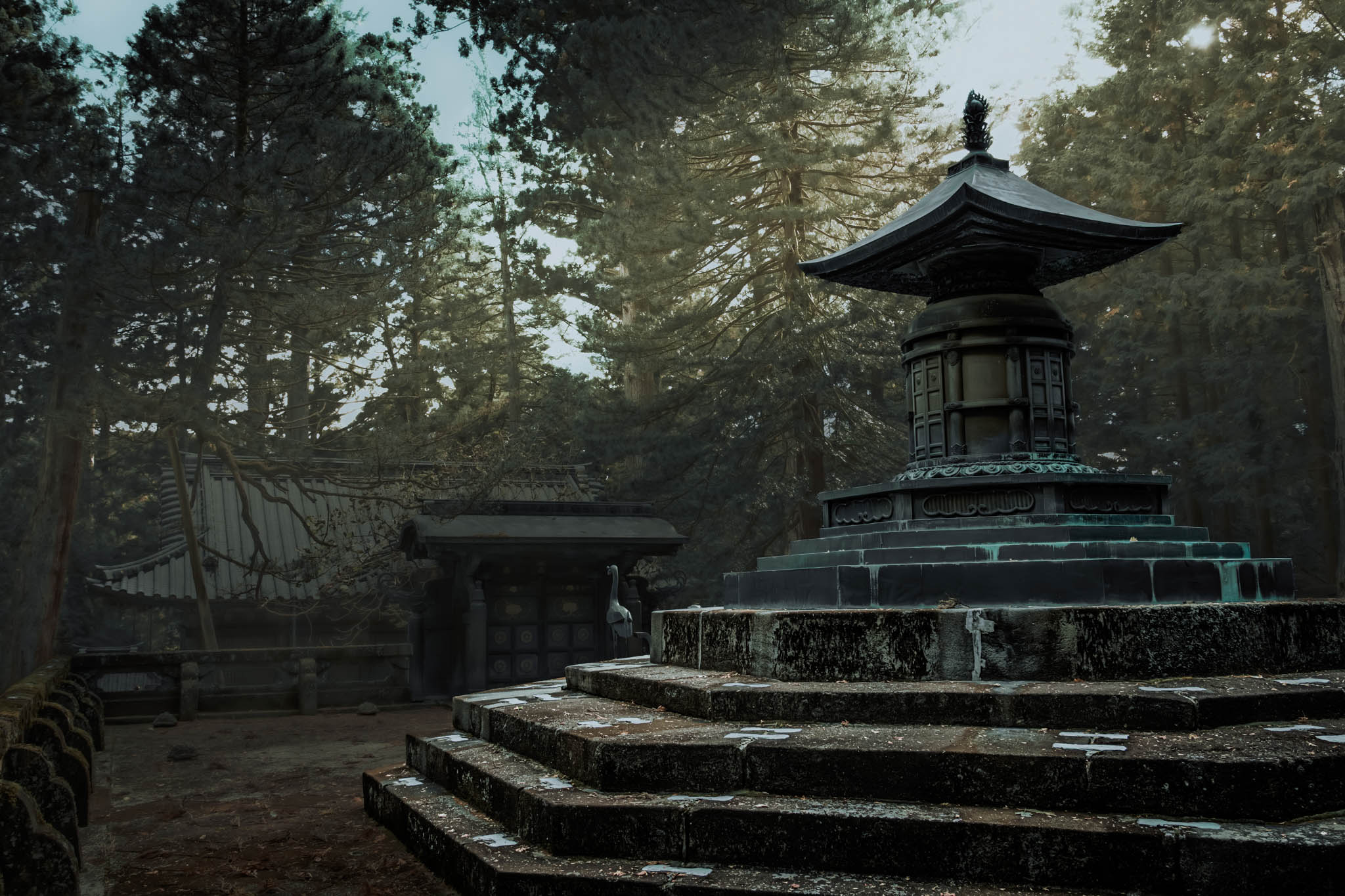
I’ve written elsewhere about a sort of recurrent delusion that I have experienced at various Shinto shrines, a sensation that ineffable and distinctly inhuman resident Presences impatiently resented my lowercase mortal presence. I was troubled by that sensation at the nearly-empty Taiyuin, but not at the more populated and popular shine of the Founder.
Gongen-zukuri shrines do not necessarily seem to enshrine gongen. Taiyuin does not enshrine third shogun Iemitsu as a gongen, even if it is managed by Rinno-ji, a Buddhist temple. In Shinto, certain of the dead (especially those who held in their lifetimes great power) are expressly regarded as kami, and grandson Iemitsu (who is credited with completing the political organization of the Bakufu permanent military government, massacring the rebellious Christian populace of southern Kyushu, and largely closing Japan to foreigners, as well as refurbishing the Tosho-gu to honor his grandfather) had plenty of power.
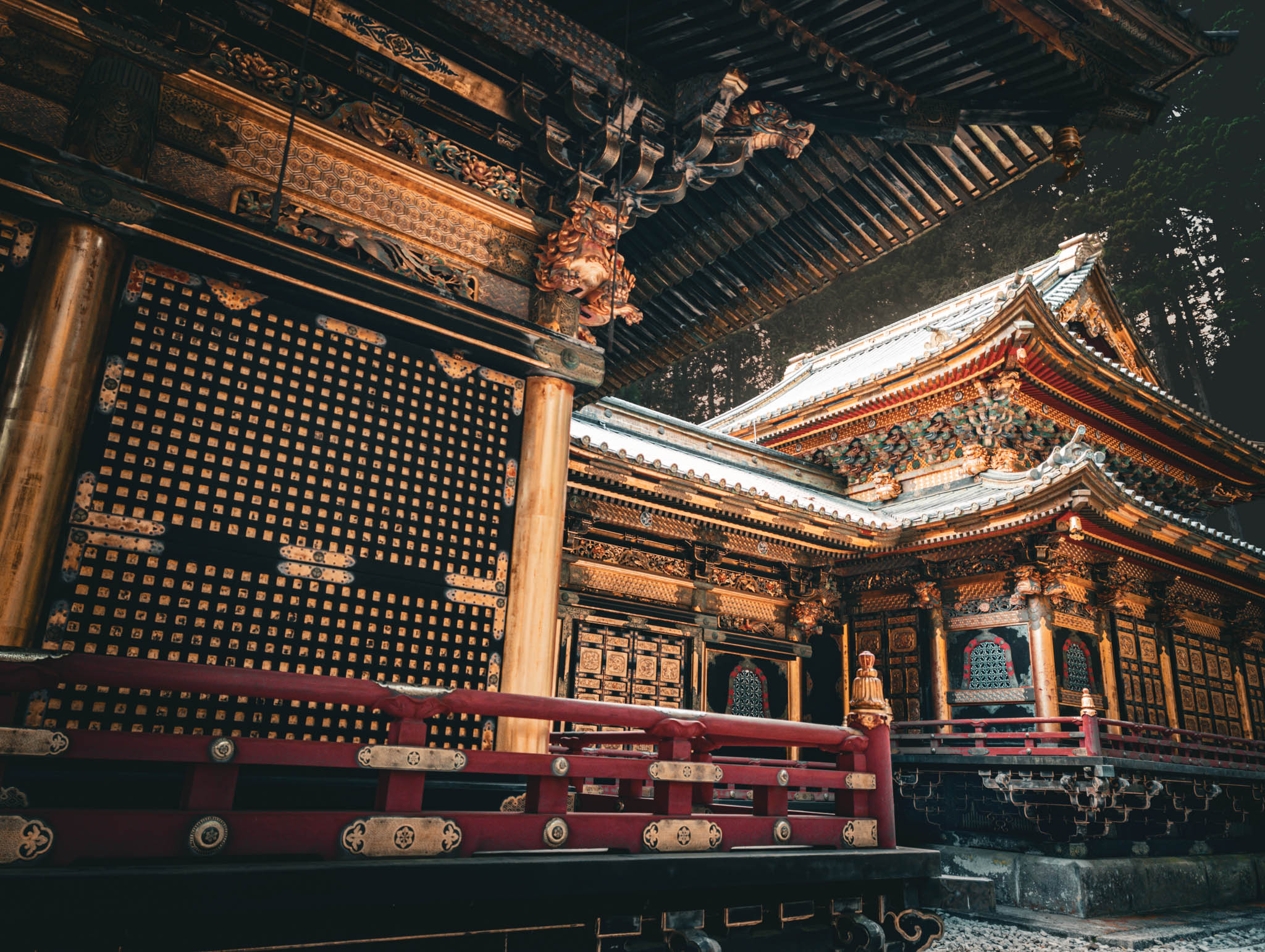
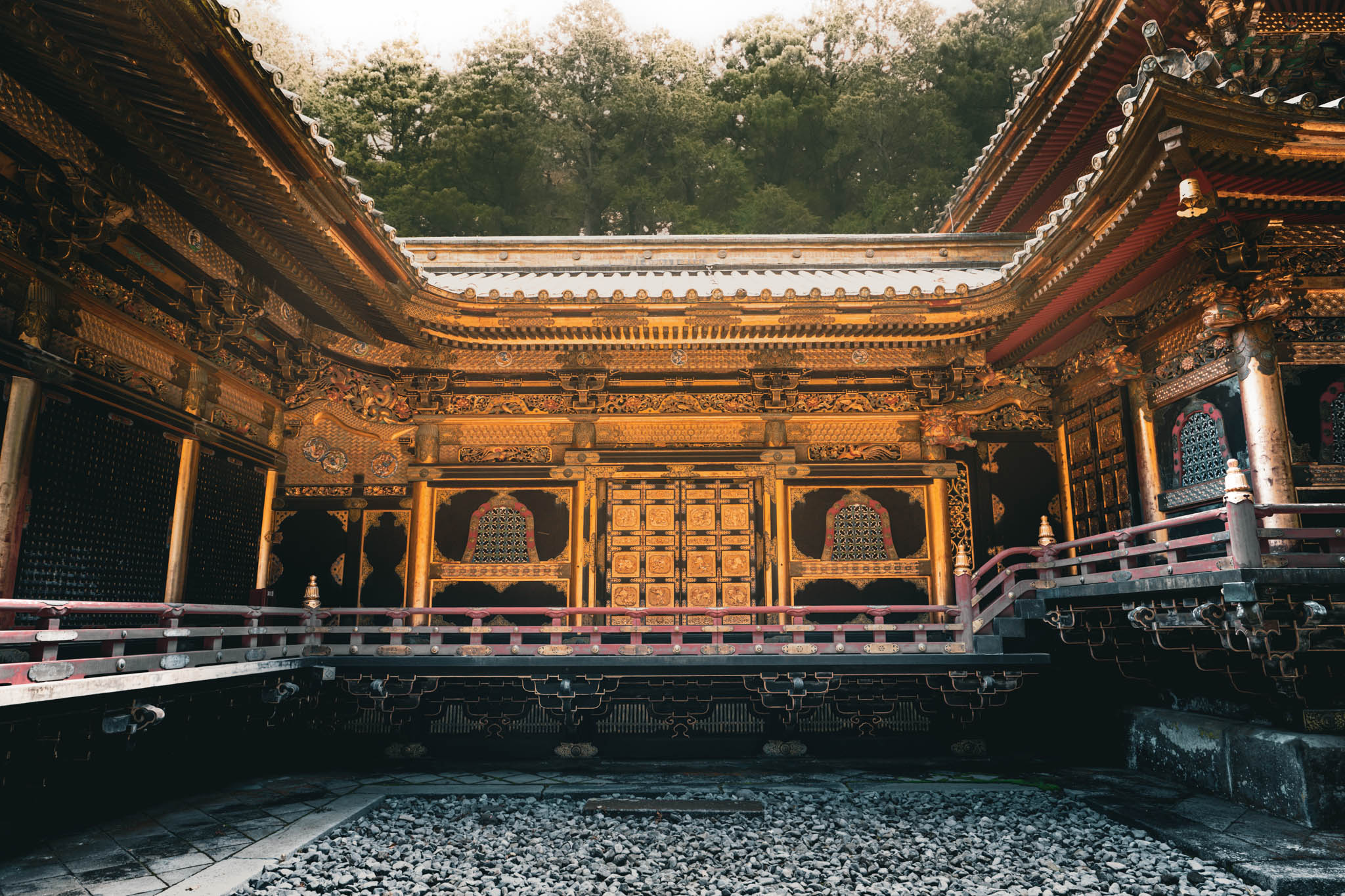
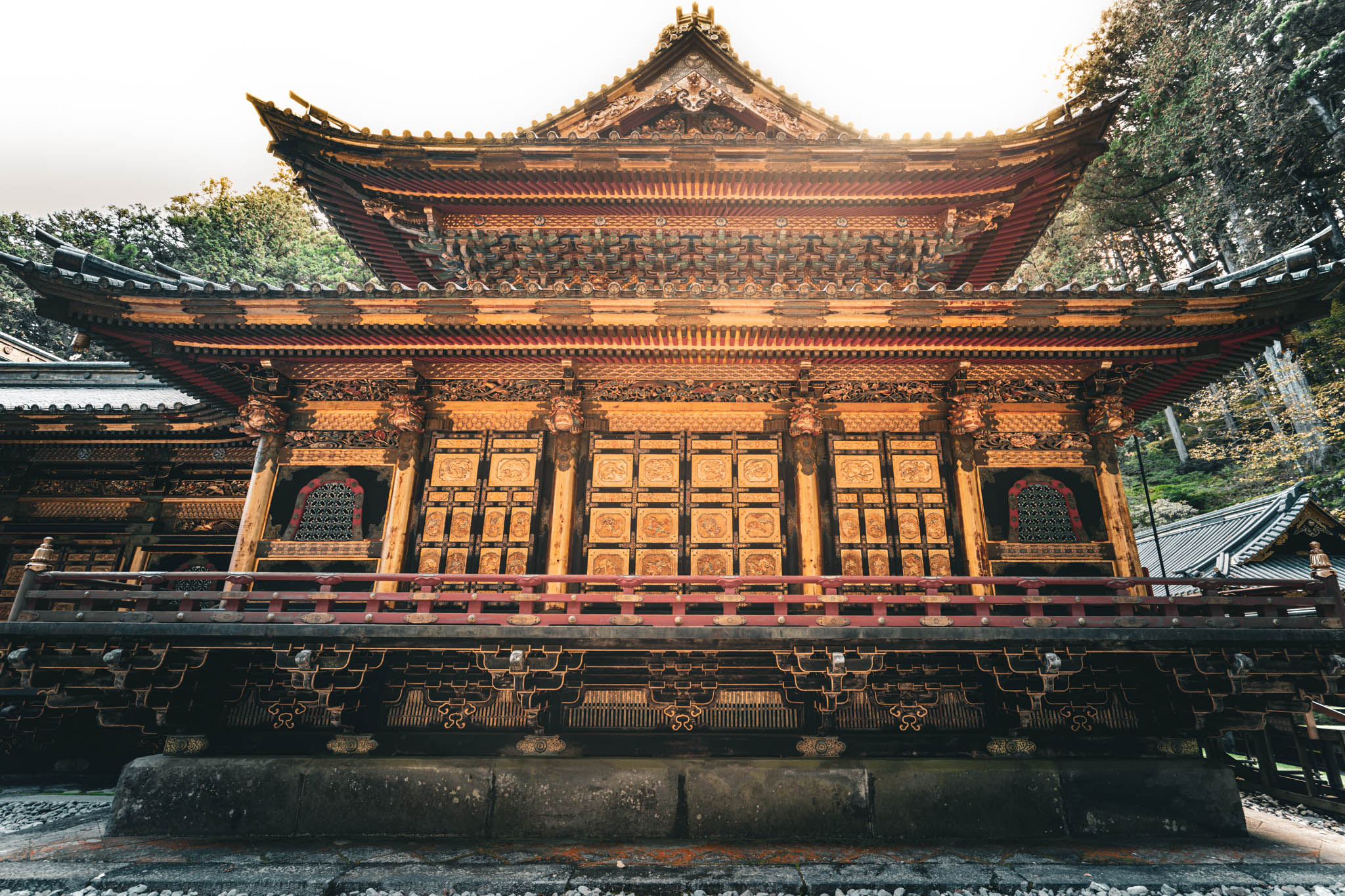
But as syncretic deification concepts go, the gongen notion does seem an upgrade: more of a rather foolproof situation for eternity than simple vague-kami-hood. And Ieyasu was reputably very, very fond of permanent, foolproof solutions when he still had a pulse. At the base of the Yomeimon gate of Nikko Tosho-gu are two life-sized seated sculptures of Ieyasu. The right-side sculpture — the shogun as an old man — inexplicably portrays the graying daimyo with a strange thousand-yard stare.
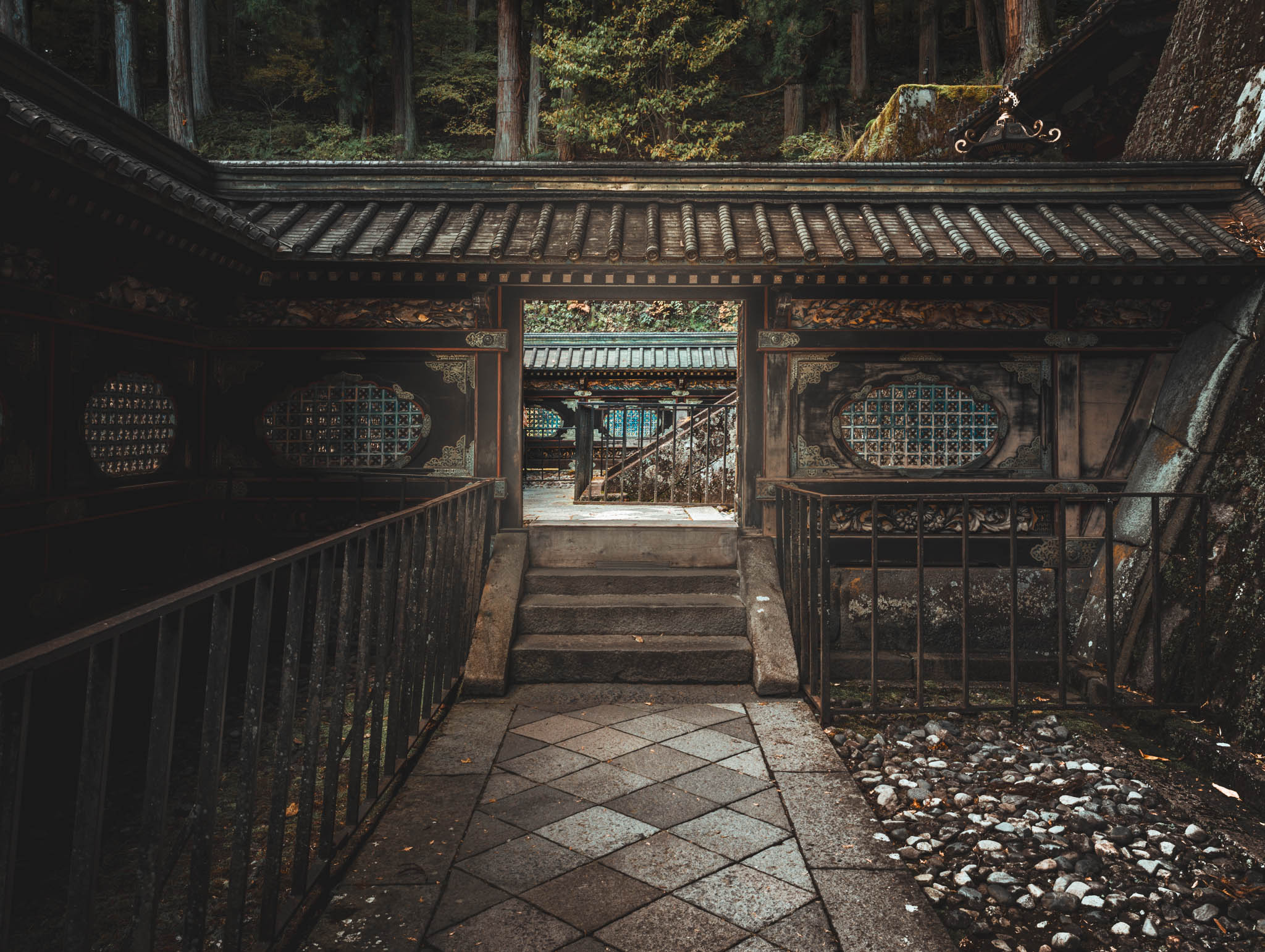
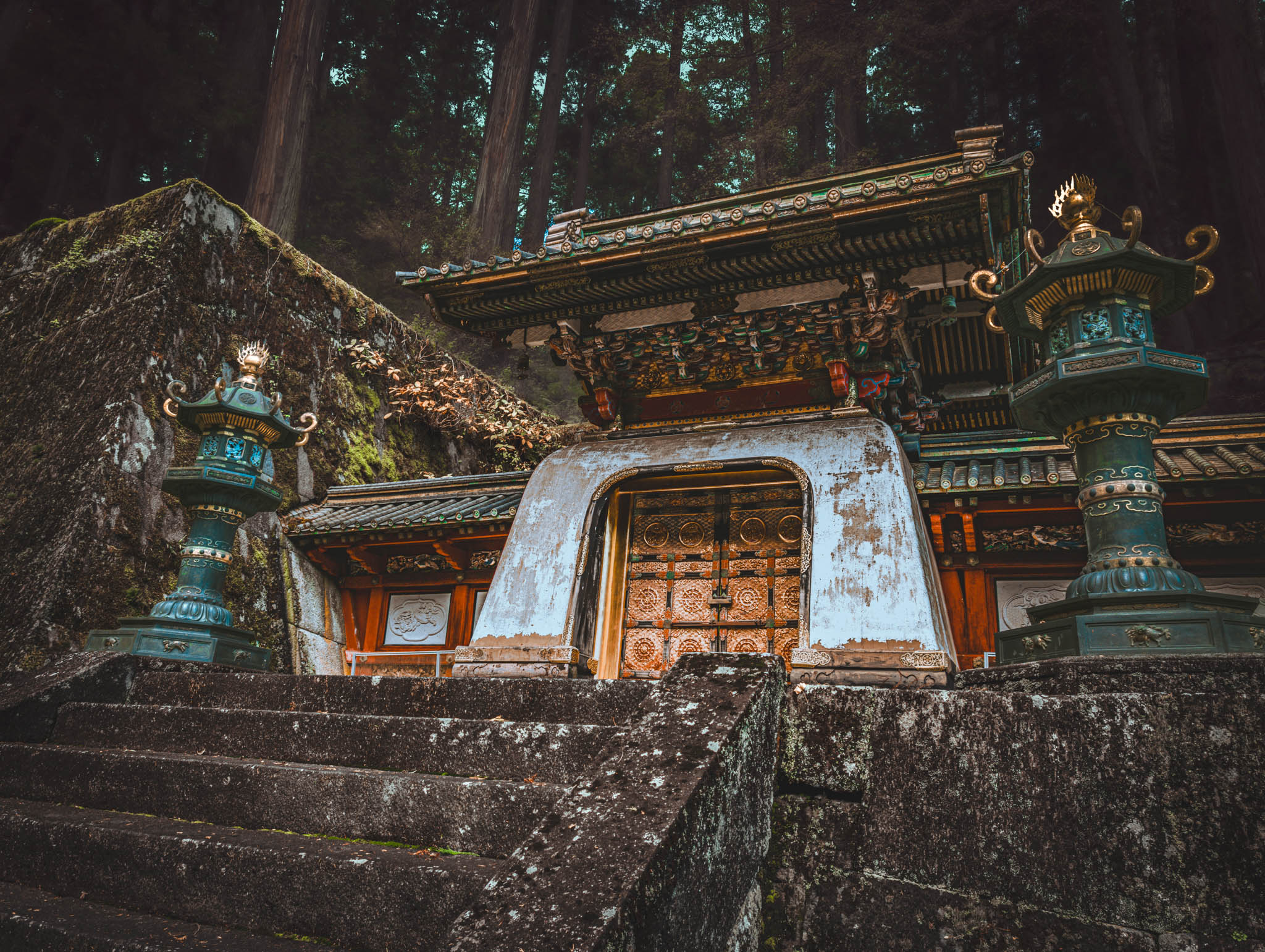
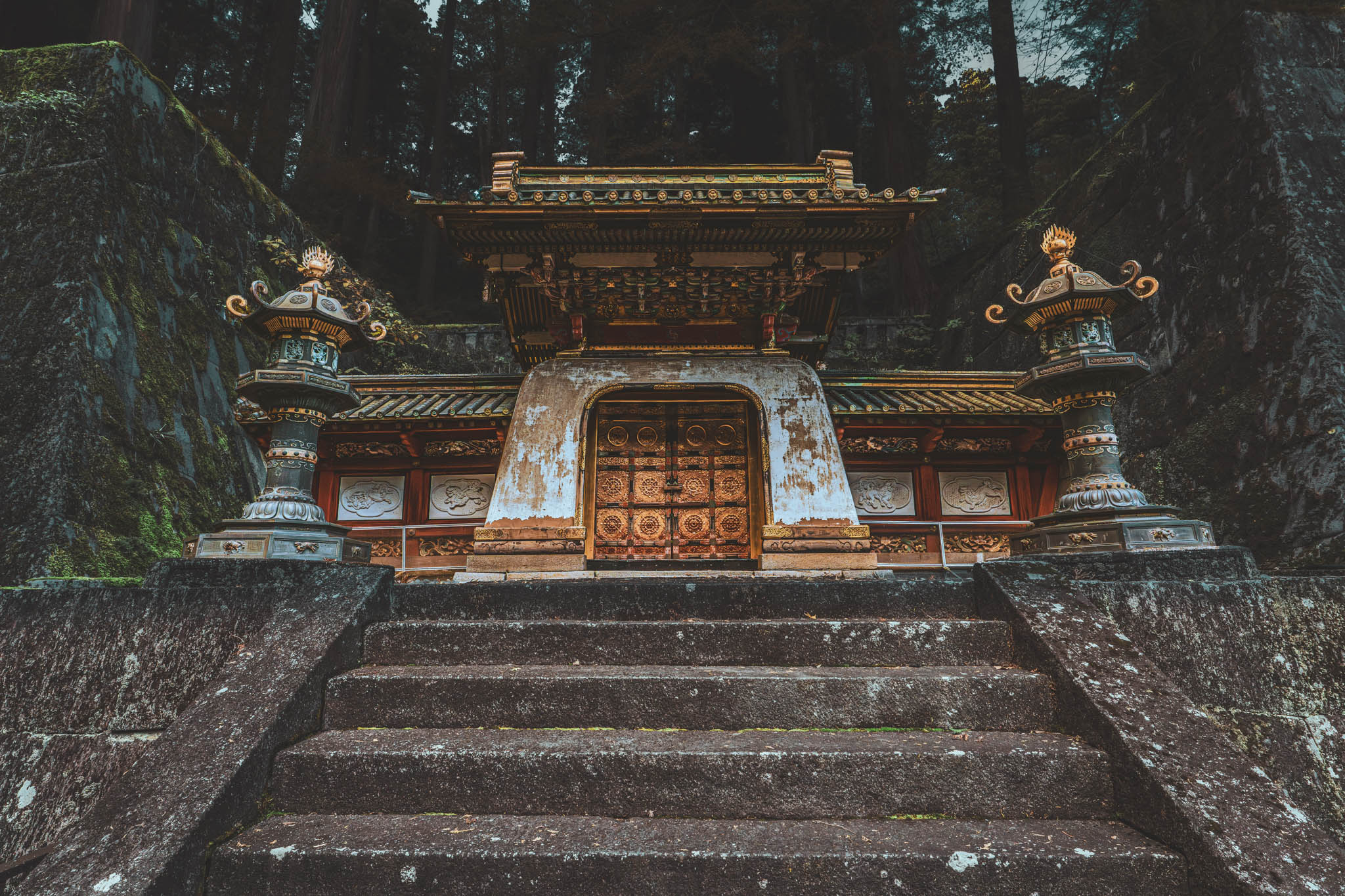
Now, the Tosho-gu does not seem as haunted as Taiyuin, except right there, at a principle entrance. I find myself thinking about Ieyasu’s stare. What is he looking at, these last four hundred years?
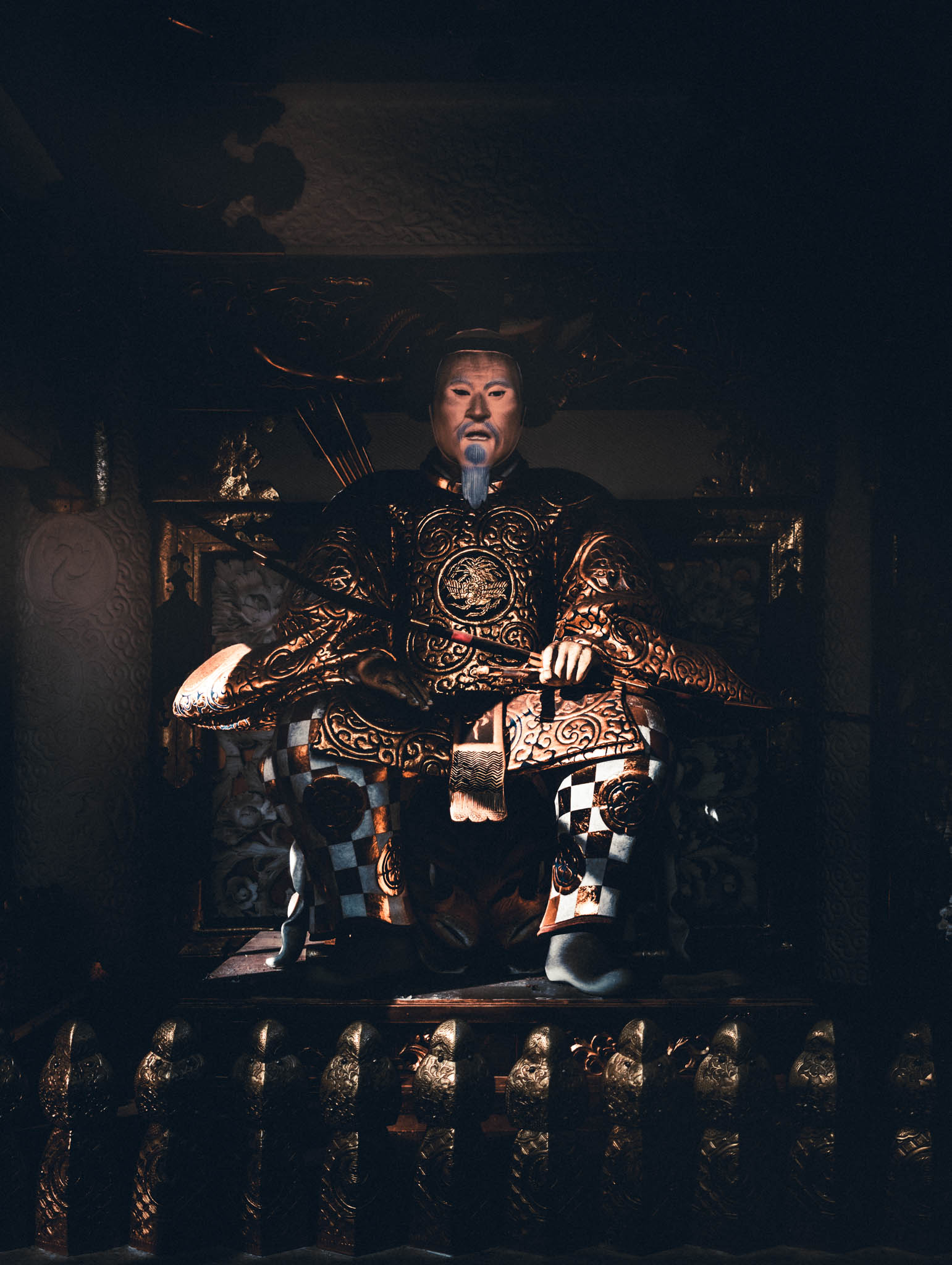
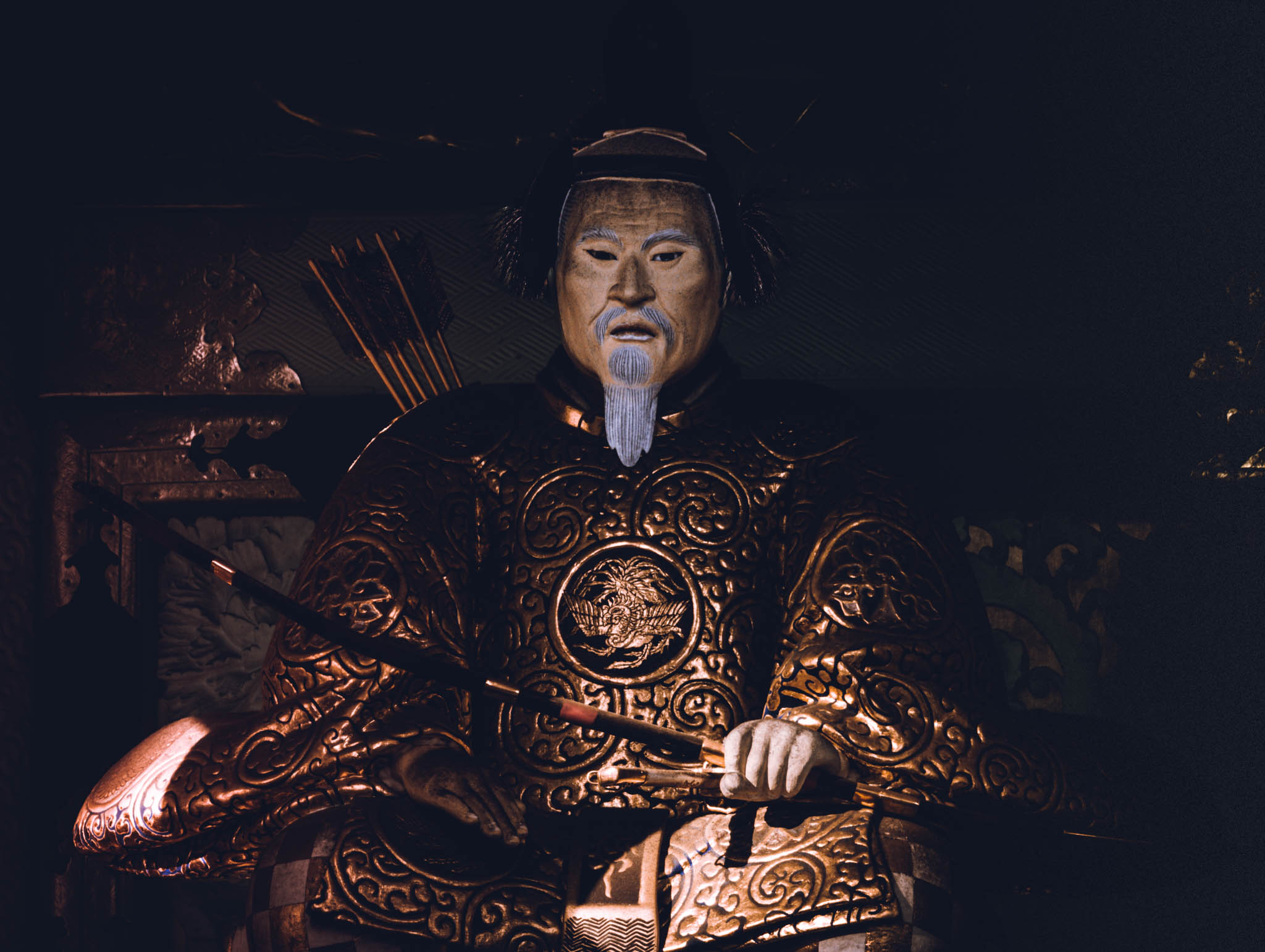
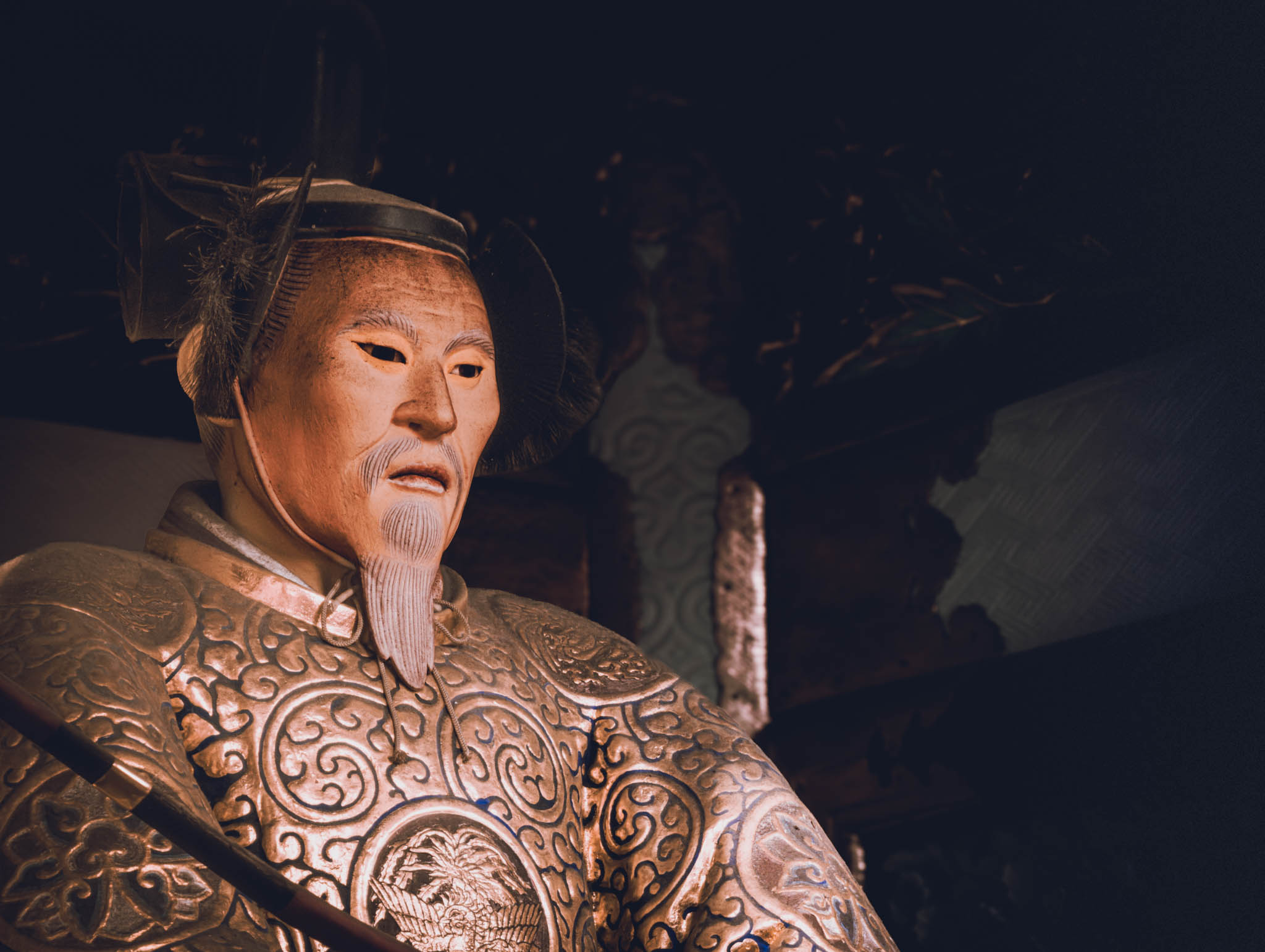
I find myself feeling oddly sympathetic…oddly, because Tokugawa Ieyasu was without a doubt one of the most successful of the most terrible people ever to live on the planet, his capability and occasional generosity more than compensated by astonishing cruelty.
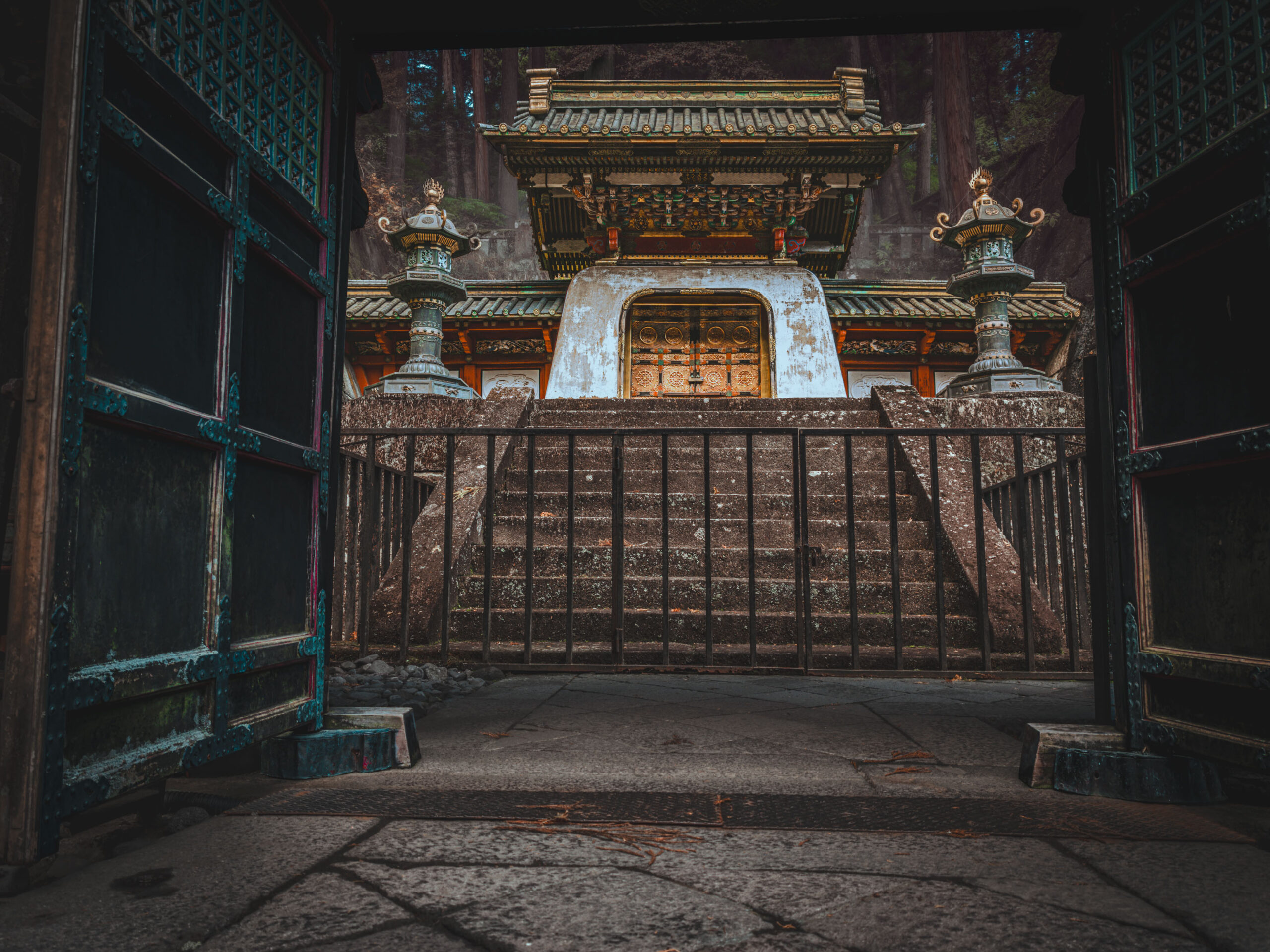
But still, I find myself concerned: What haunts the deified, immortal Shogun?