There’s a trope in Japanese photography that I generally think of as “Lafcadio Hearn-Land”: the ruined temple; the unweeded graveyard at twilight; the tottering memorials; the Jizo statue rain-washed faceless; the moss growing on the tiled roof; and so forth, gloomily. It’s imagery straight out of Hearn’s 1904 Kwaidan — or at least it is assumed so.
But that most famous collection of atmospheric Japanese ghost stories (I keep a copy on my phone) does not include any set in a ruined temple or its accompanying decaying cemetery, as far as I can tell. The closest Hearn comes to that scene in an honest-to-God-ghost-story is with his version of the story of Hoichi the Earless, in which the palace where the blind musician imagines he recites The Tale of the Heike is revealed to be the graveyard of the slaughtered Heike faction and his audience their restless revenants.
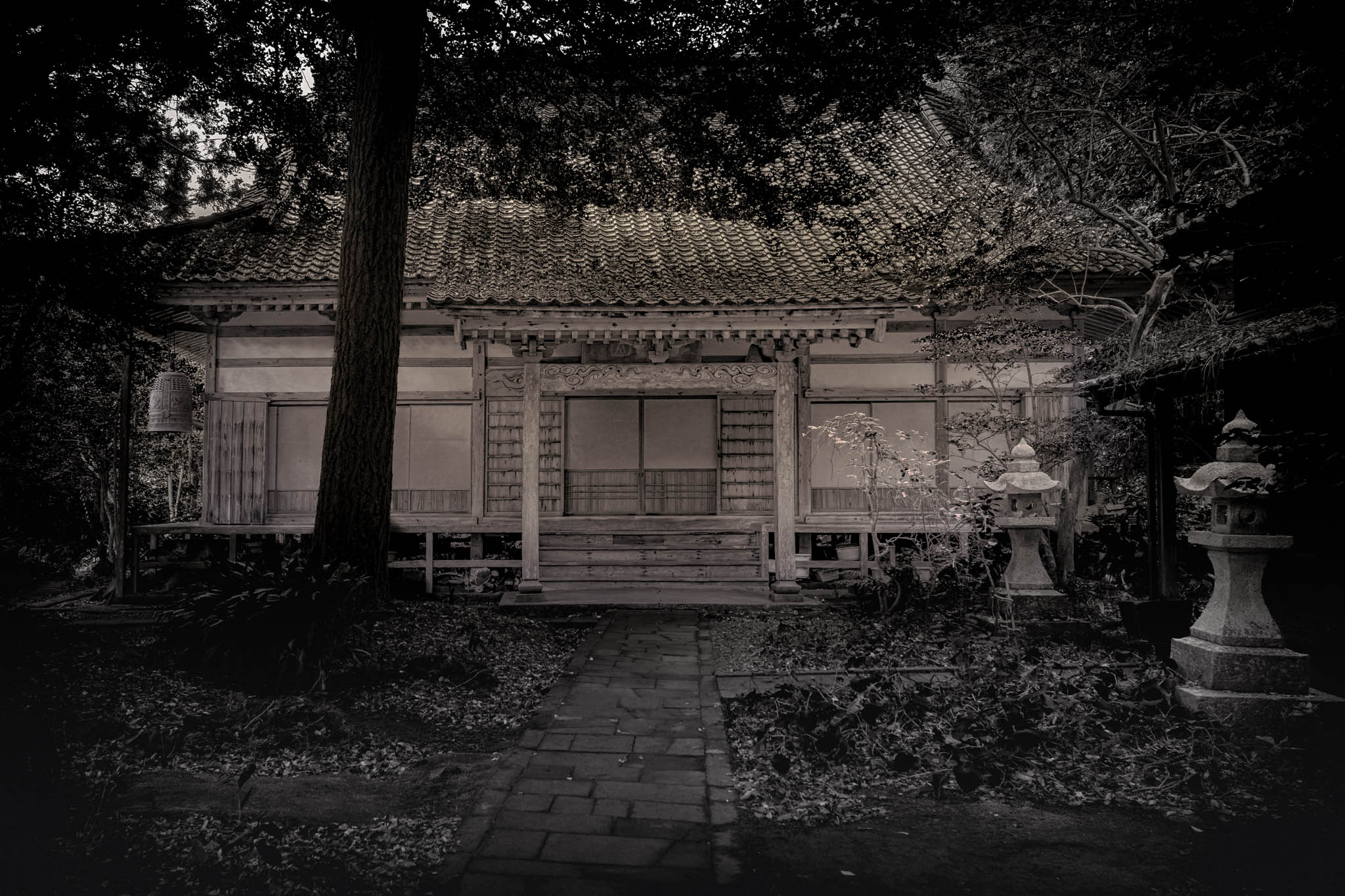
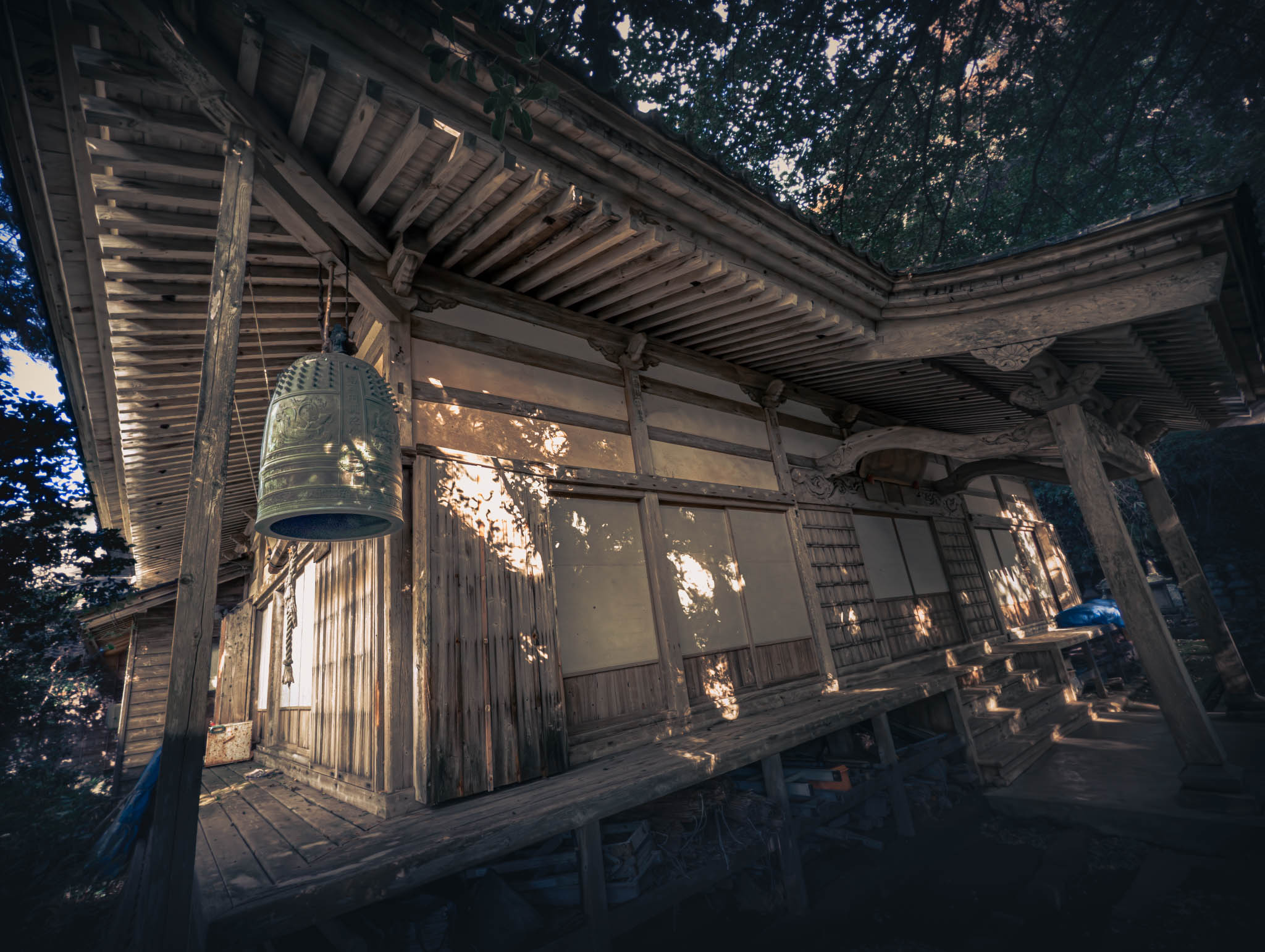
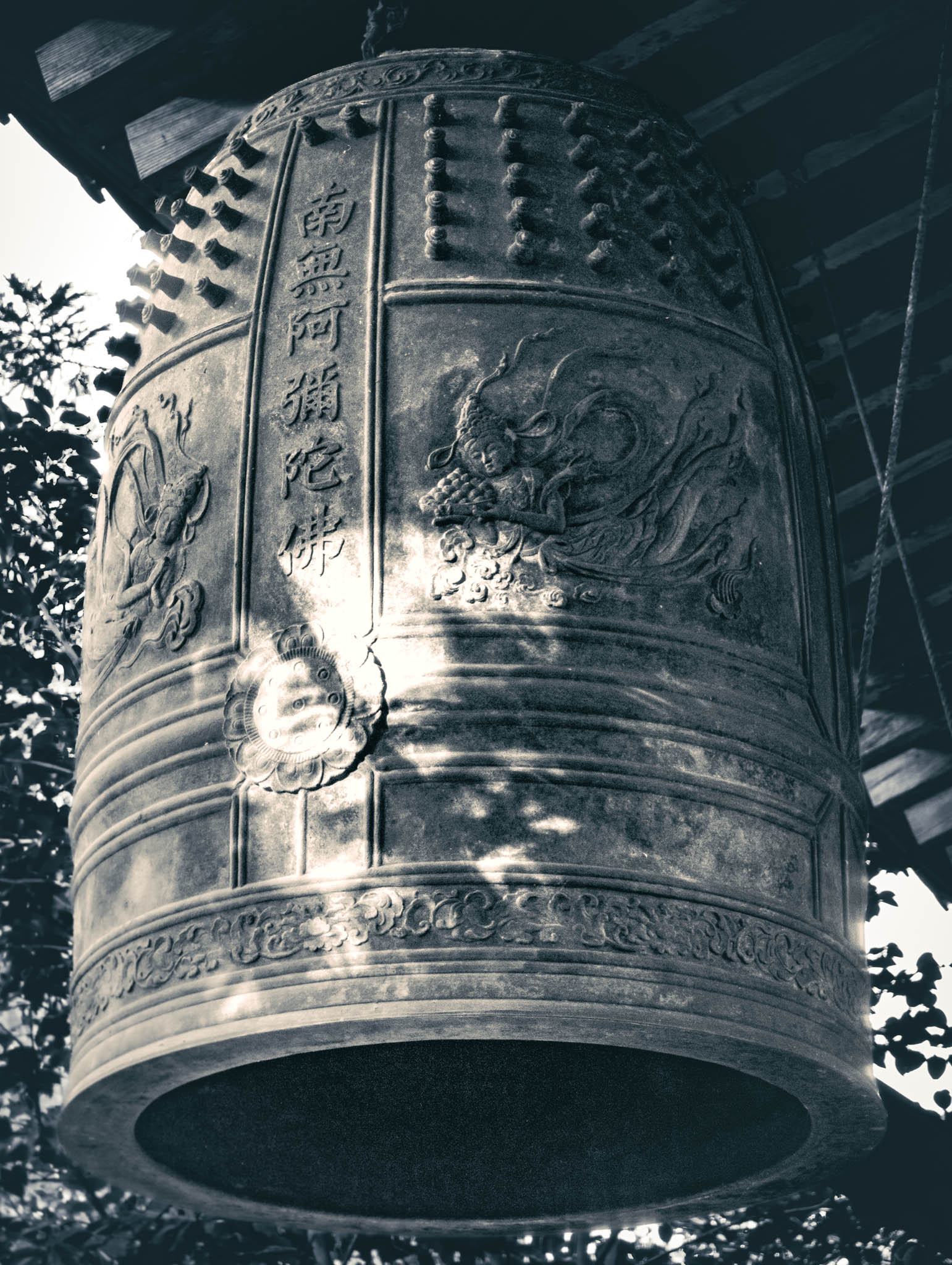
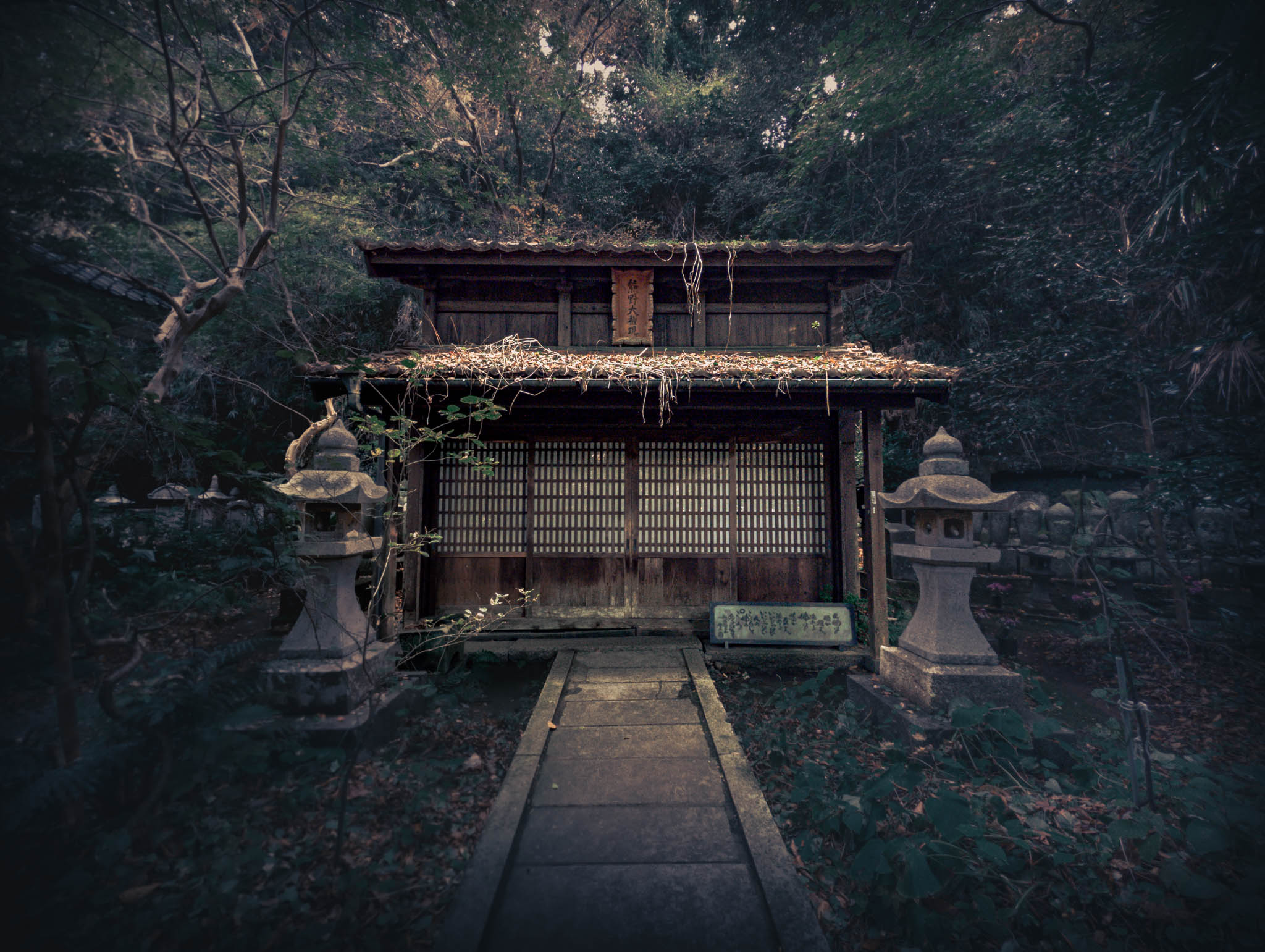
An old Buddhist graveyard (and by inference, a temple — although not necessarily an abandoned one since someone living presumably rings the bell) is described, rather evocatively, in Hearn’s essay Mosquitoes towards the end of the Kwaidan collection. In this piece he identifies his insect tormentors breeding in the funerary vessels as Jiki-ketsu-gaki, described elsewhere by Hearn as pretas or spirits “in that circle or state of torment called the World of Hungry Ghosts”, reincarnated in a petty blood-sucking form as karmic punishment for their greedy actions in a previous life. But he refuses to countenance the typical method of controlling mosquito infestations, which involves spraying a film of kerosene oil on the surface of any standing water.
…How could the religion which prohibits the taking of any life — even of invisible life — yield to such a mandate? Would filial piety even dream of consenting to obey such an order? And then to think of the cost, in labor and time, of putting kerosene oil, every seven days, into the millions of mizutamé, and the tens of millions of bamboo flower-cups, in the Tōkyō graveyards!… Impossible! To free the city from mosquitoes it would be necessary to demolish the ancient graveyards; — and that would signify the ruin of the Buddhist temples attached to them; — and that would mean the disparition of so many charming gardens, with their lotus-ponds and Sanscrit-lettered monuments and humpy bridges and holy groves and weirdly-smiling Buddhas! So the extermination of the Culex fasciatus would involve the destruction of the poetry of the ancestral cult, — surely too great a price to pay!…
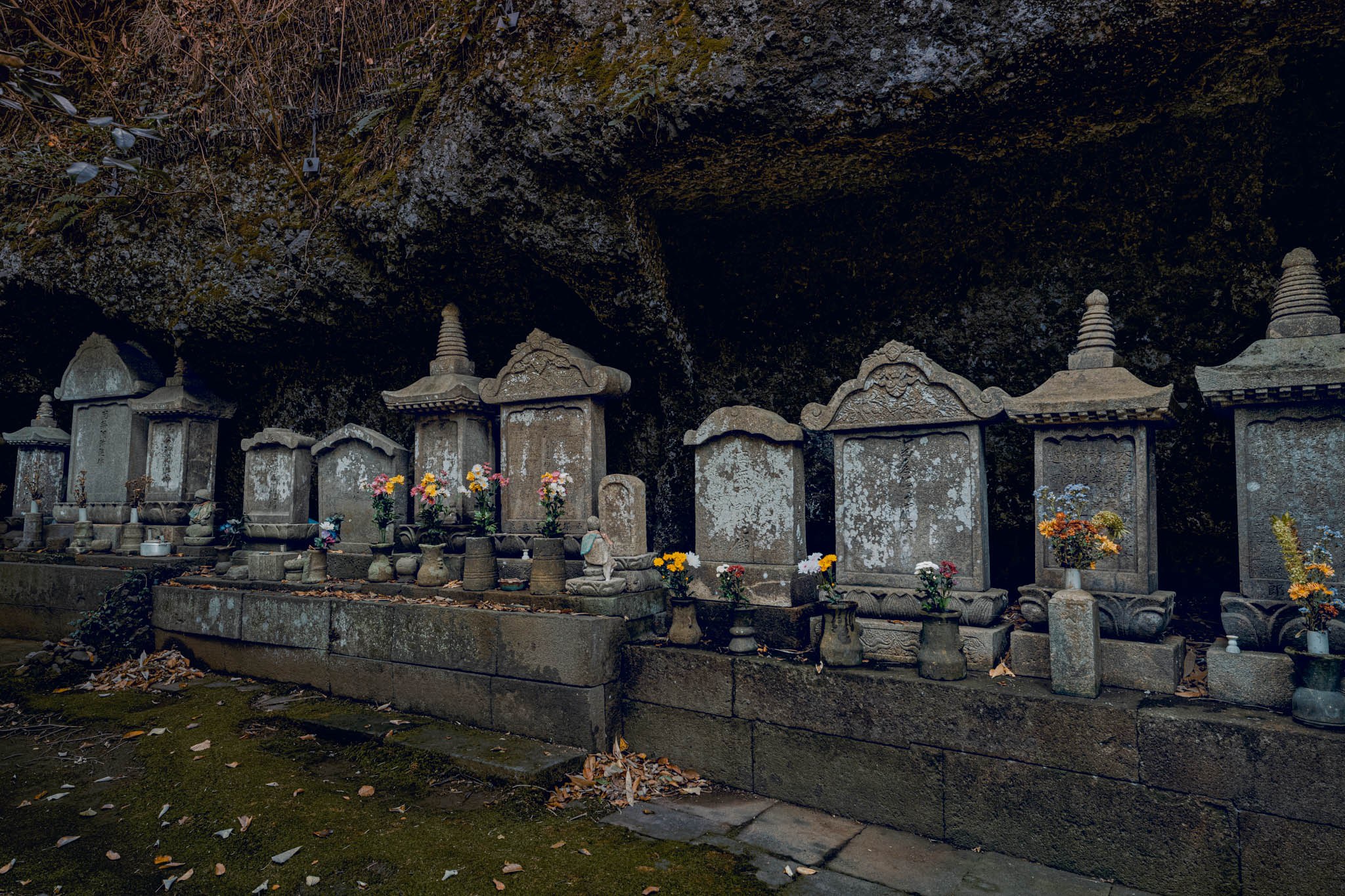
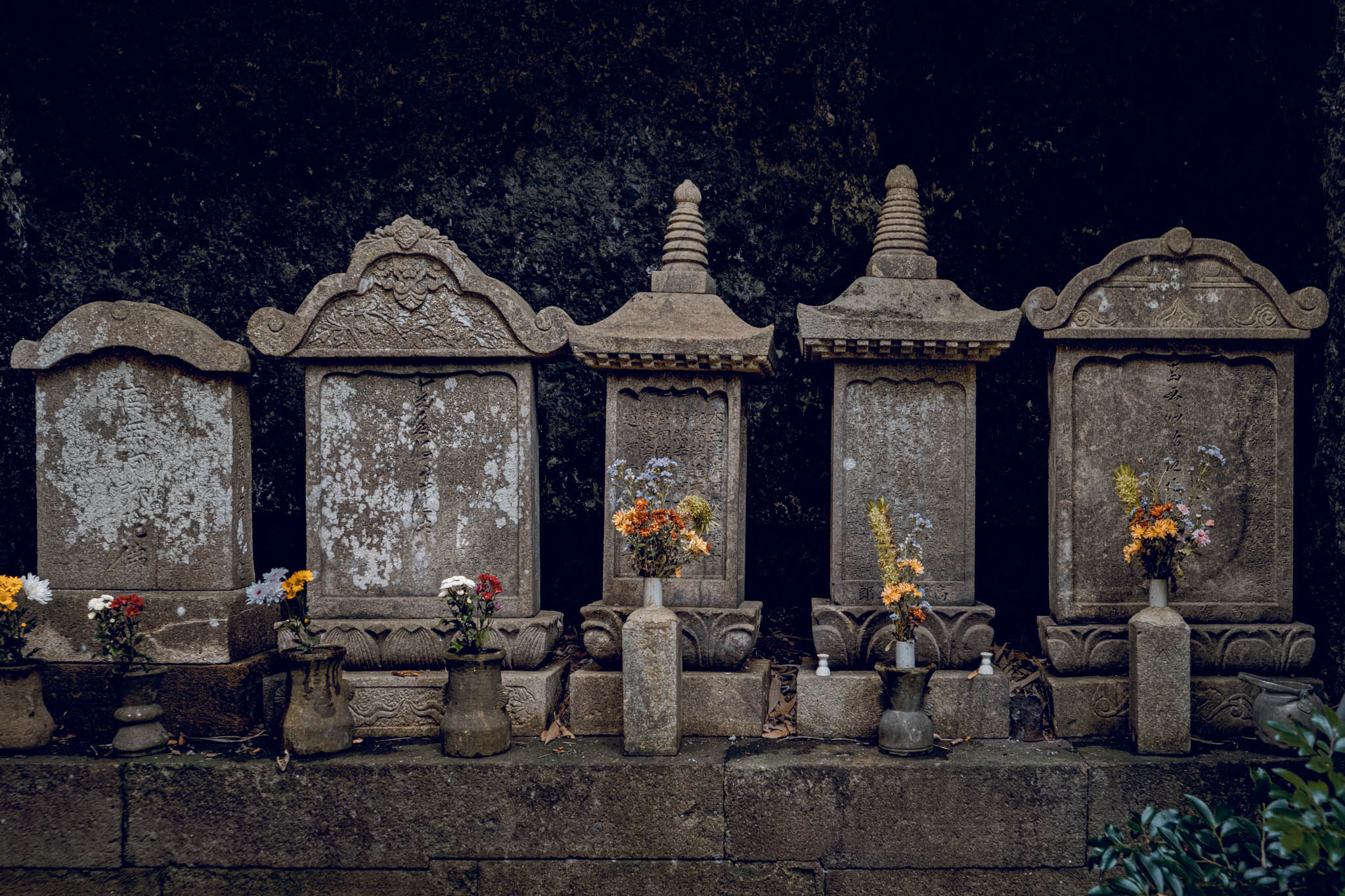
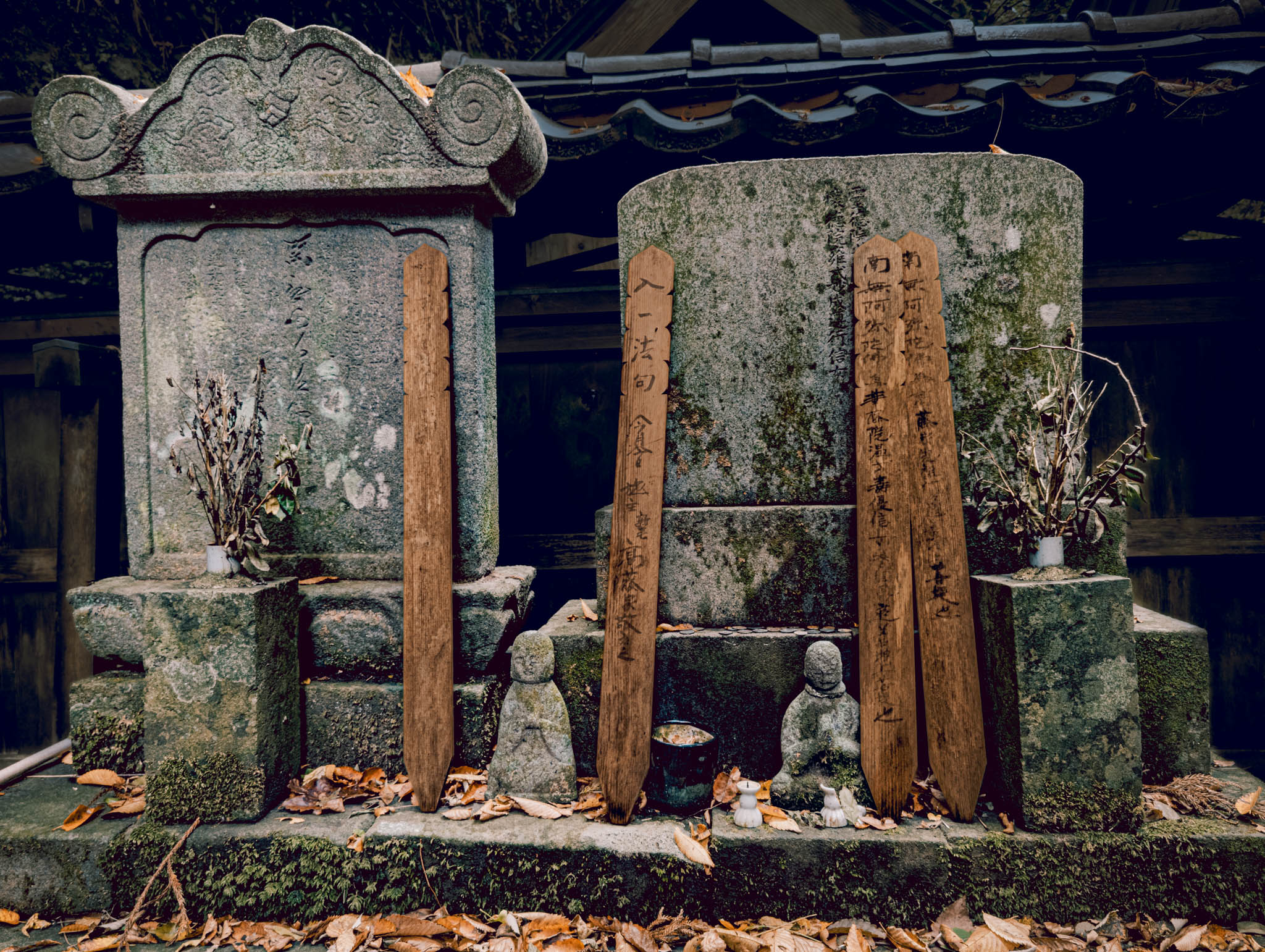
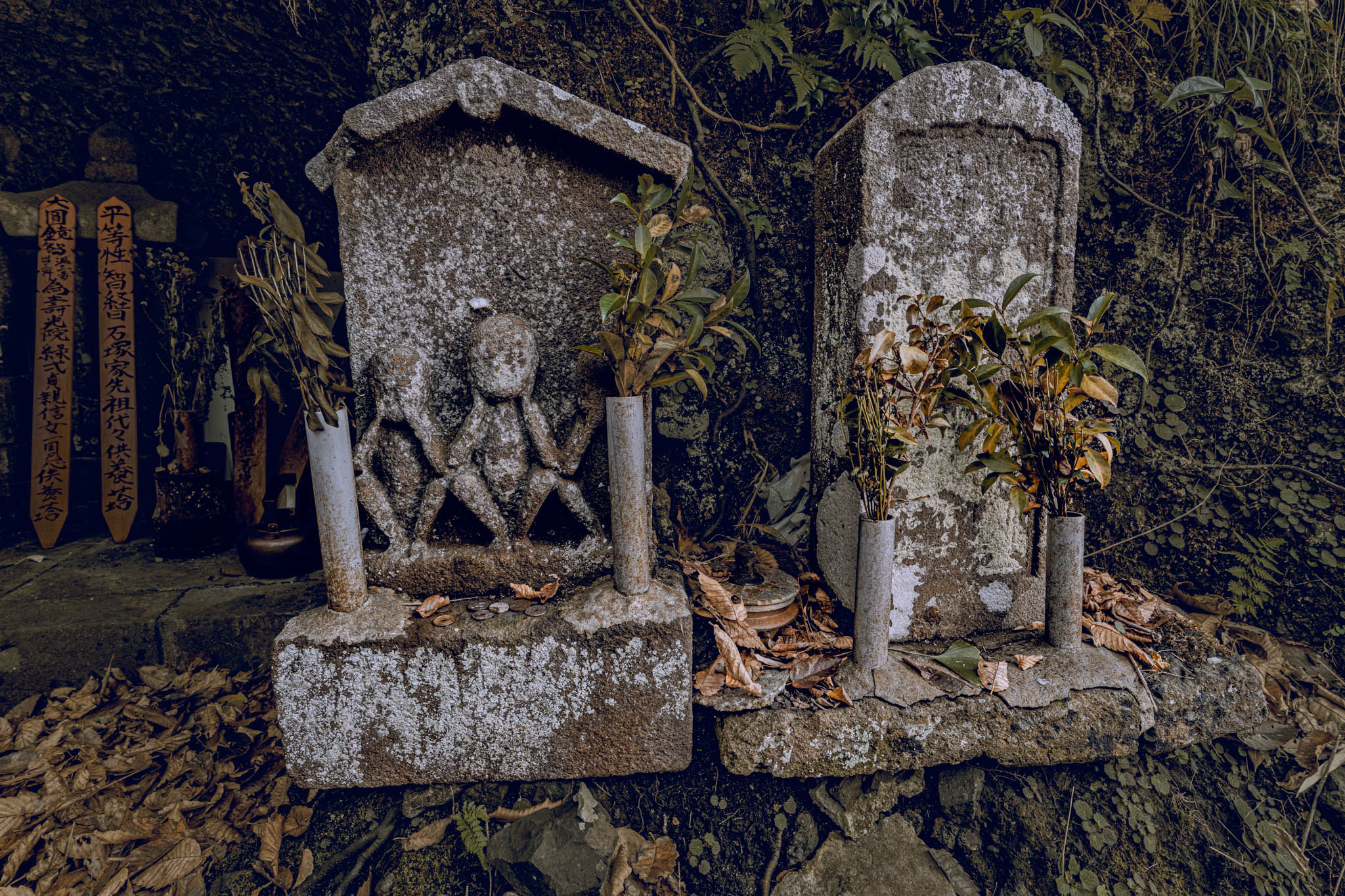
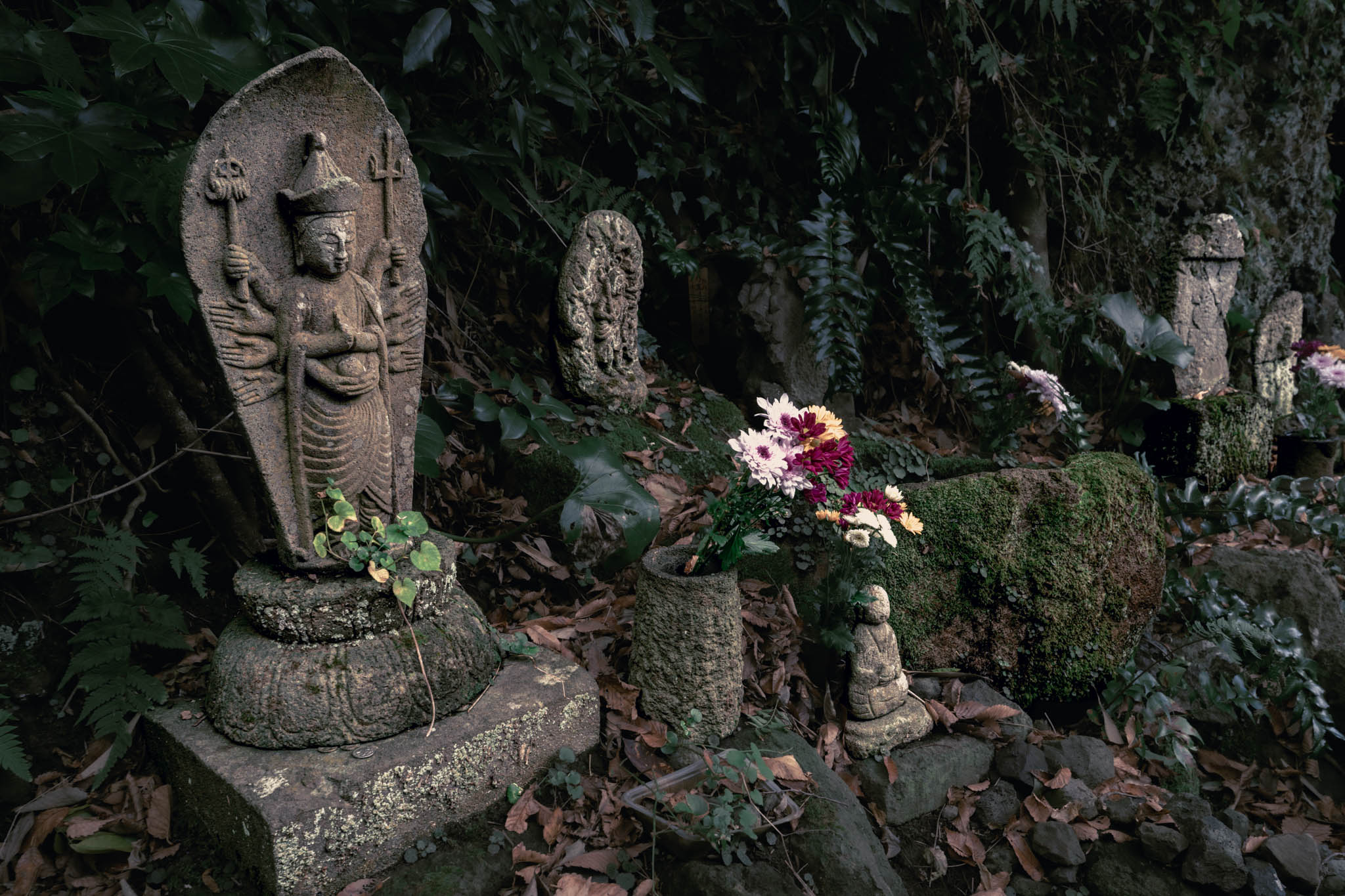
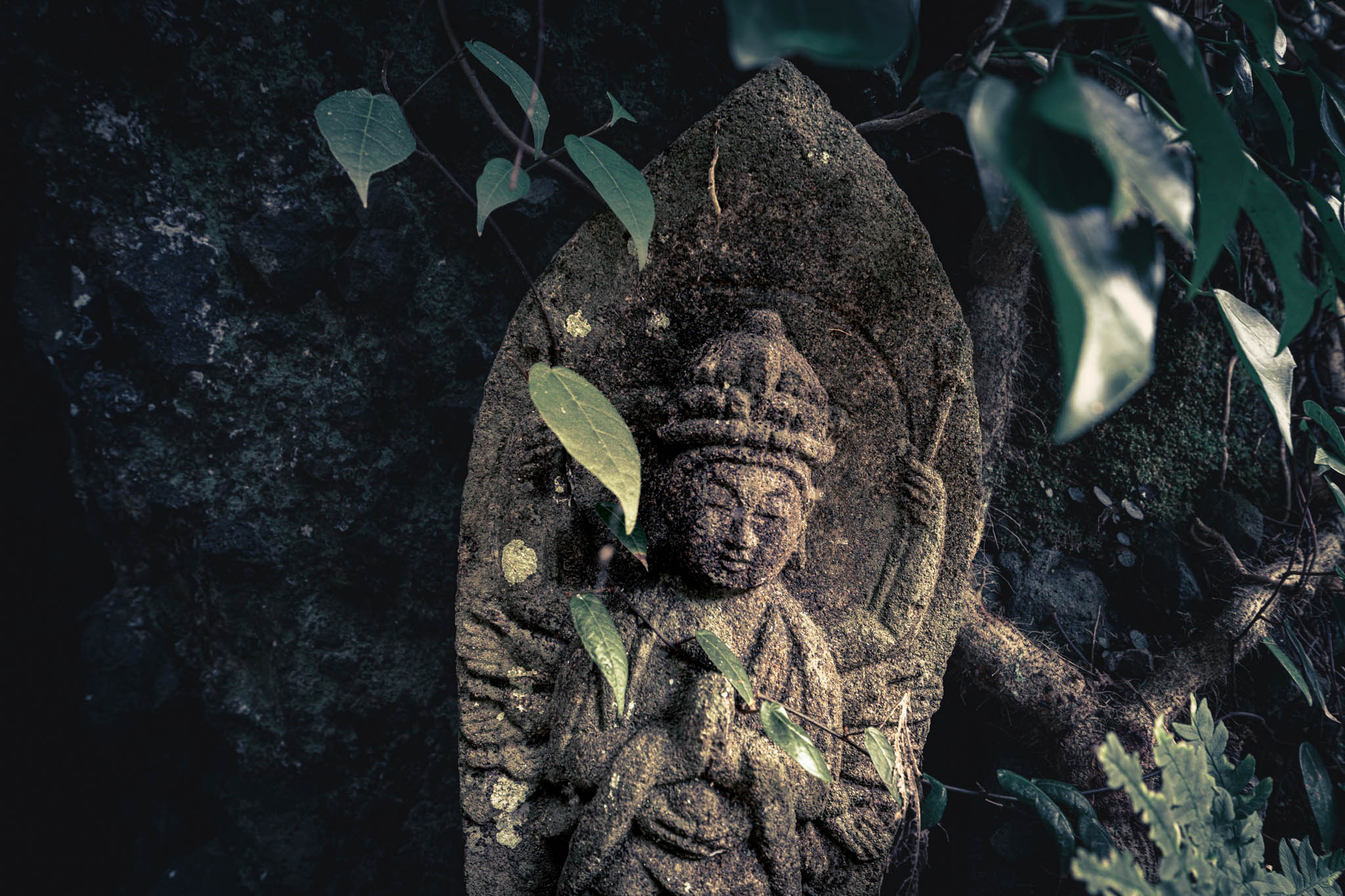
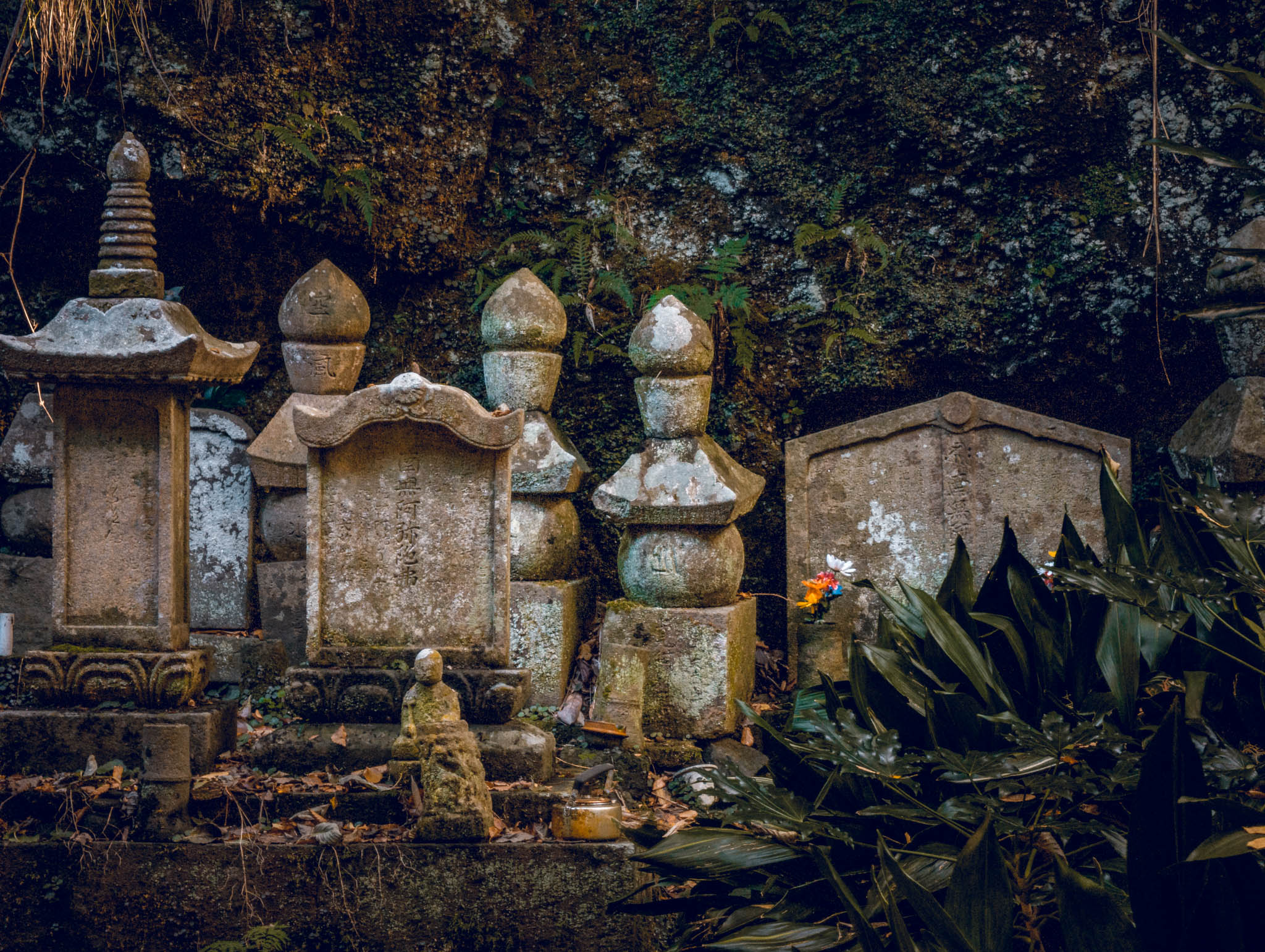
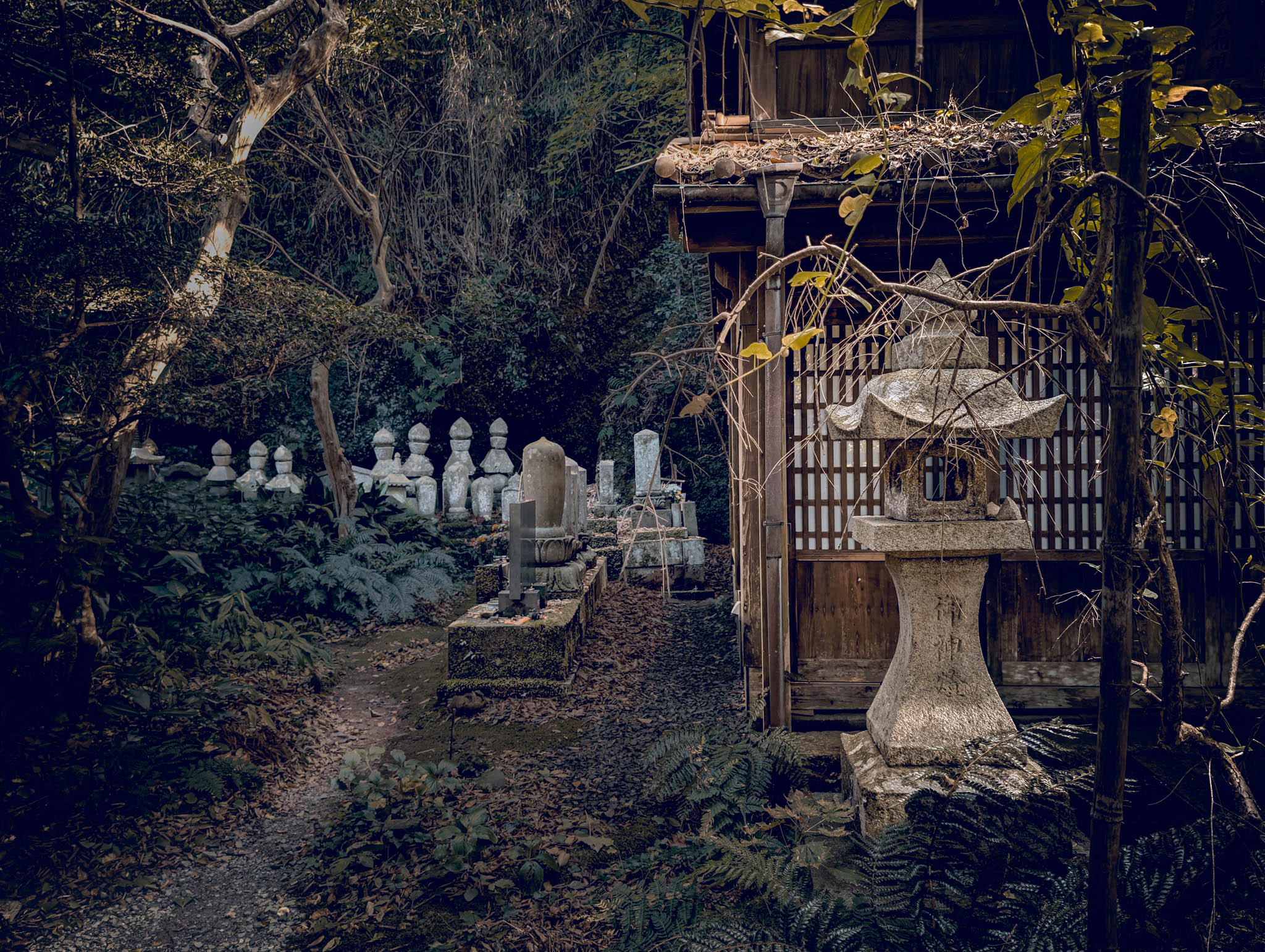
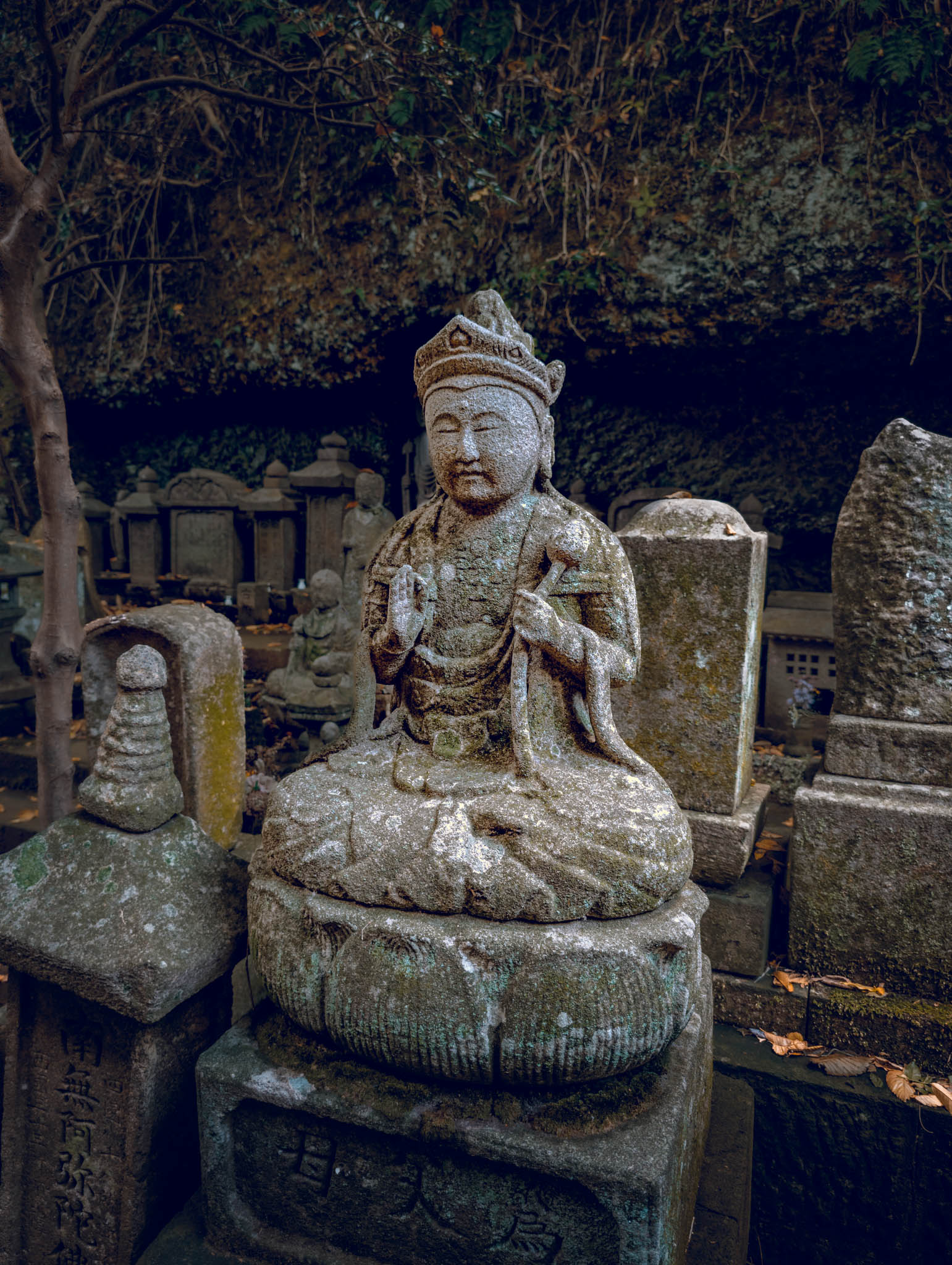
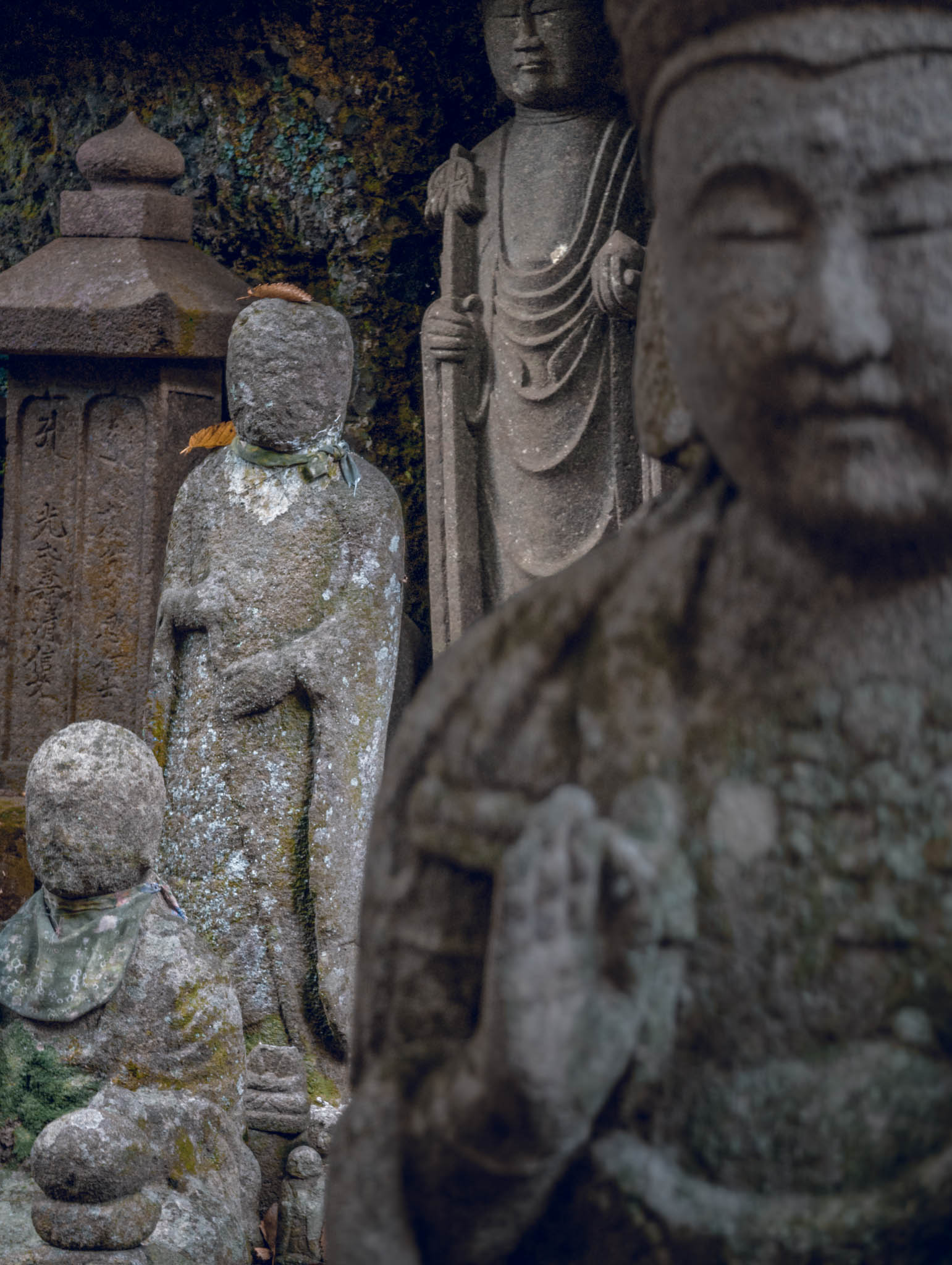
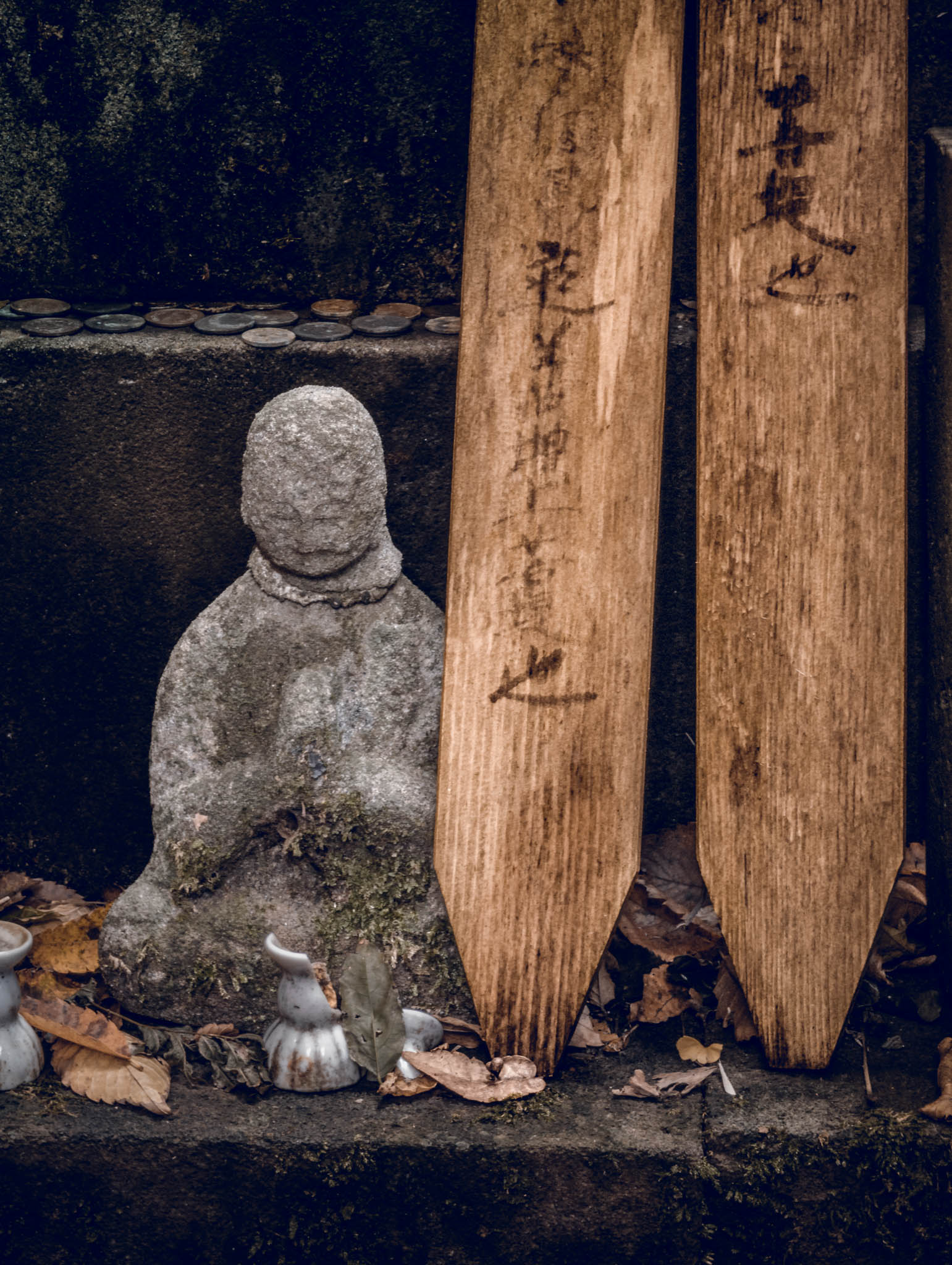
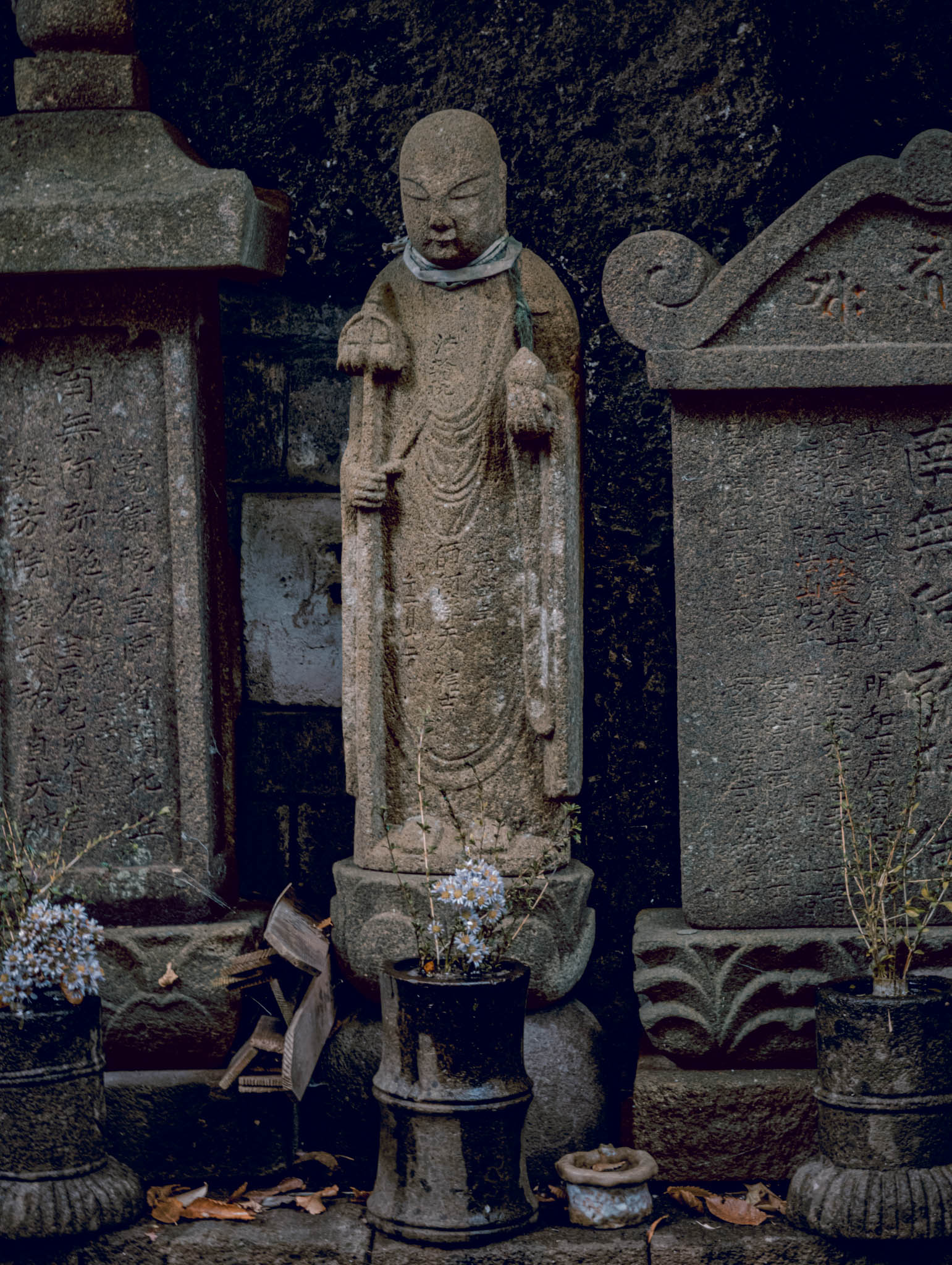
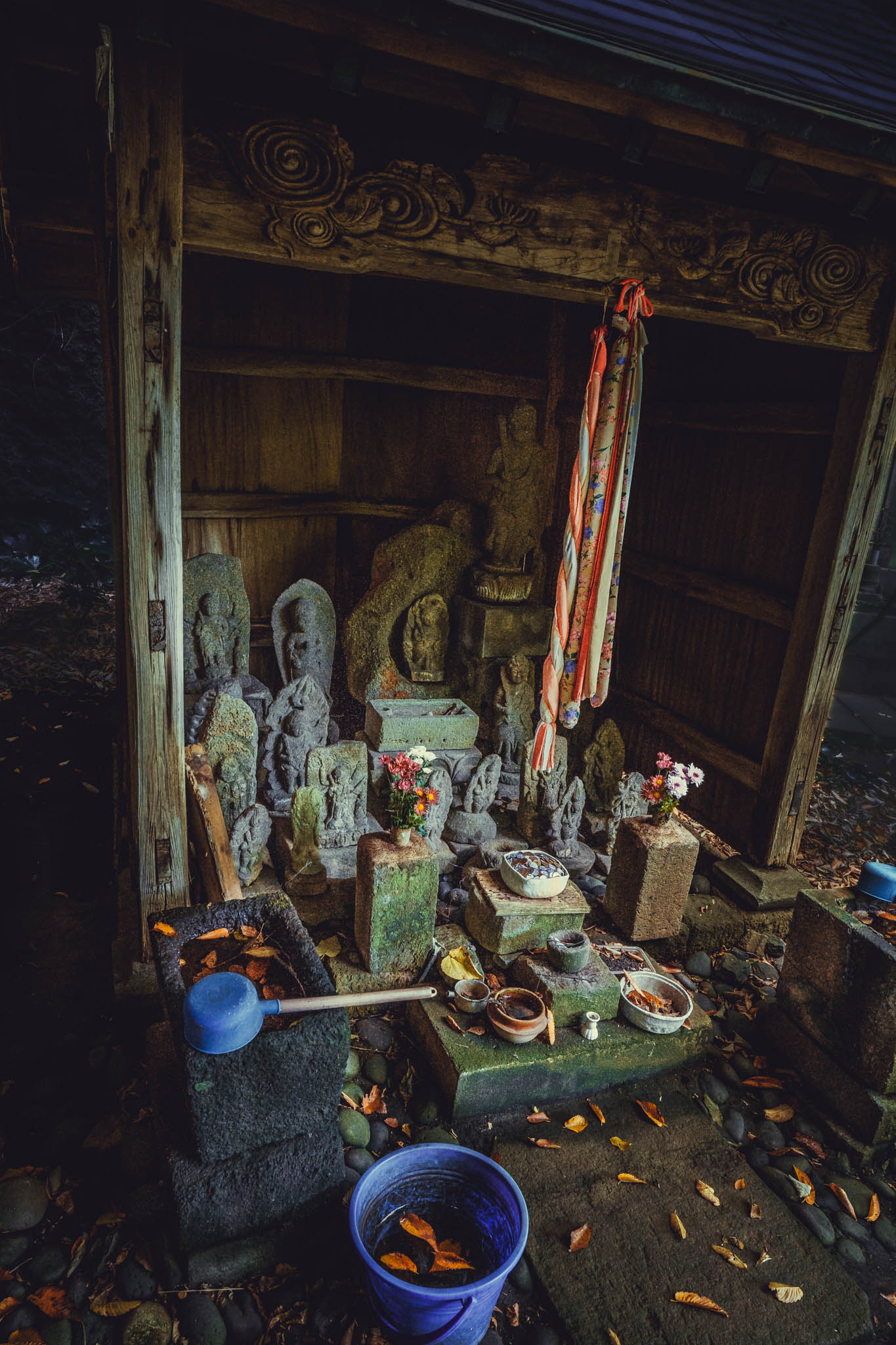
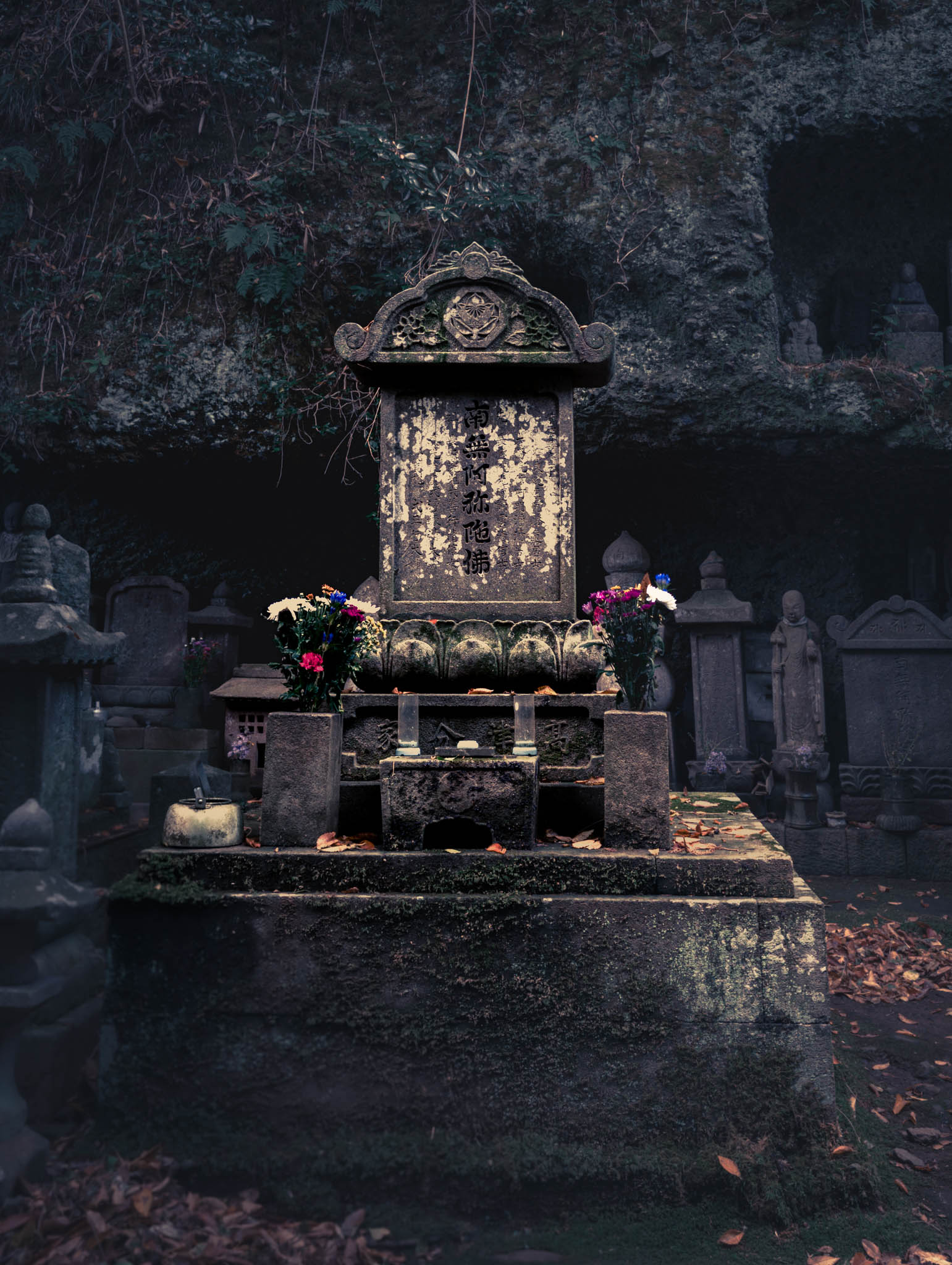
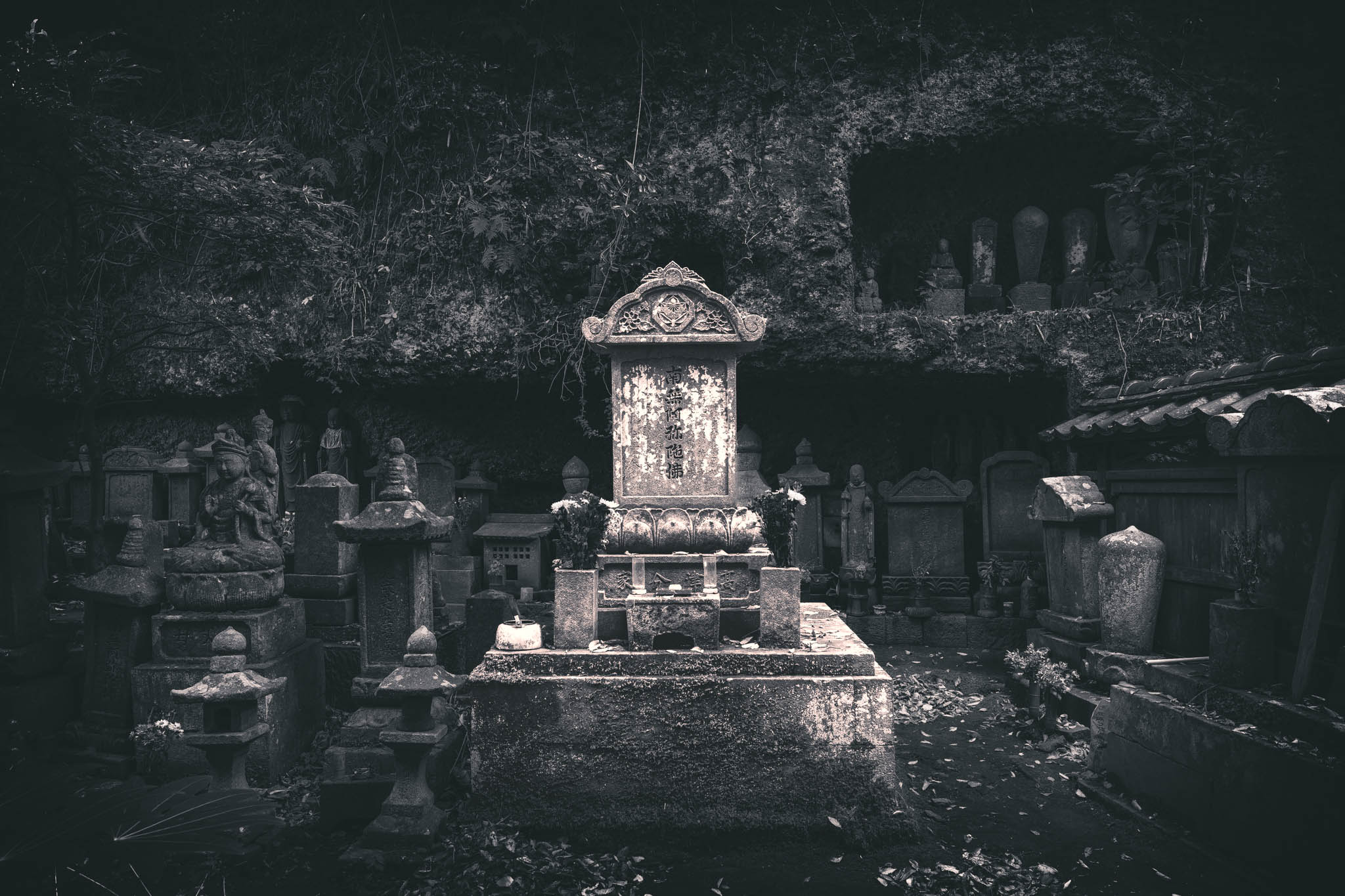
There are no mosquitos today in the odd graveyard of Shokoji, the old Jishū Buddhist temple past the Hakusan Shrine in the dark, forested narrow end of the surprisingly deep valley that holds the compact miniature-Venice-like village of Shukunegi on Sado Island. It’s late fall, and a little chilly, not the breeding season for hungry insects. The graveyard is also very compact, and multi-level, with additional monuments tucked into cavities carved above head-height in the near-vertical valley wall at the back. It’s not clear that is abandoned, entirely, either: many of the markers have fresh chrysanthemums and carnations in their vases and basins. While I am there, two polite village men in day-glo high-visibility vests nod at us, on their way to examine a tree branch that is hanging worryingly low over the temple eaves. But the precinct is almost abandoned: our guide, the generous historian Fujiko Maeda (who has an office at the tourist information center at the mouth of the valley) explains that there has been no resident Buddhist priest for years; at great expense a monk from elsewhere must be brought to perform any necessary funeral rites, since exequies are exclusively the provenance of Buddhism within the complex framework of religious traditions in Japan.
But Fujiko-san knows the sister of the late previous vicar, and she insists it is quite all right when she pulls open the sliding doors of the small Benten-shrine and then the larger hondo. Both buildings have begun to assume the aspect of an attic, basement, or garden shed, cluttered with stuff of the household that can’t be used but can’t be easily thrown away. No one knows what to do with the various accouterments, the ritual paraphernalia and sacred artifacts that apparently used to be positioned around the garan. So it has all been brought inside and piled on the tatami, somewhat precariously, in the corners and against the walls, until the day when a new priest revitalizes the place. (That doesn’t seem likely; Shukunegi, like all of Sado and much of Japan once you get away from the great southern and eastern cities of Honshu, is increasingly depopulated.)
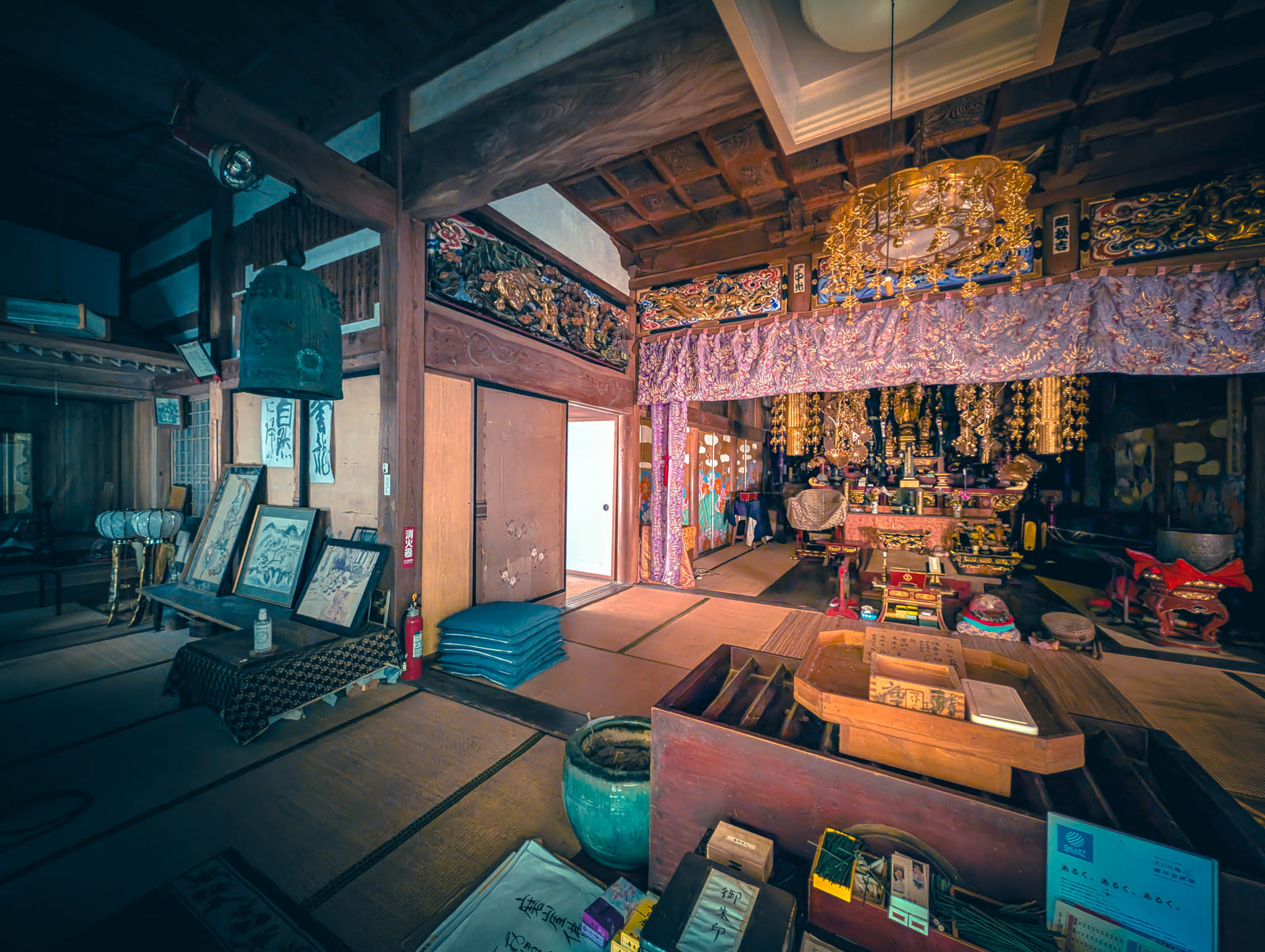
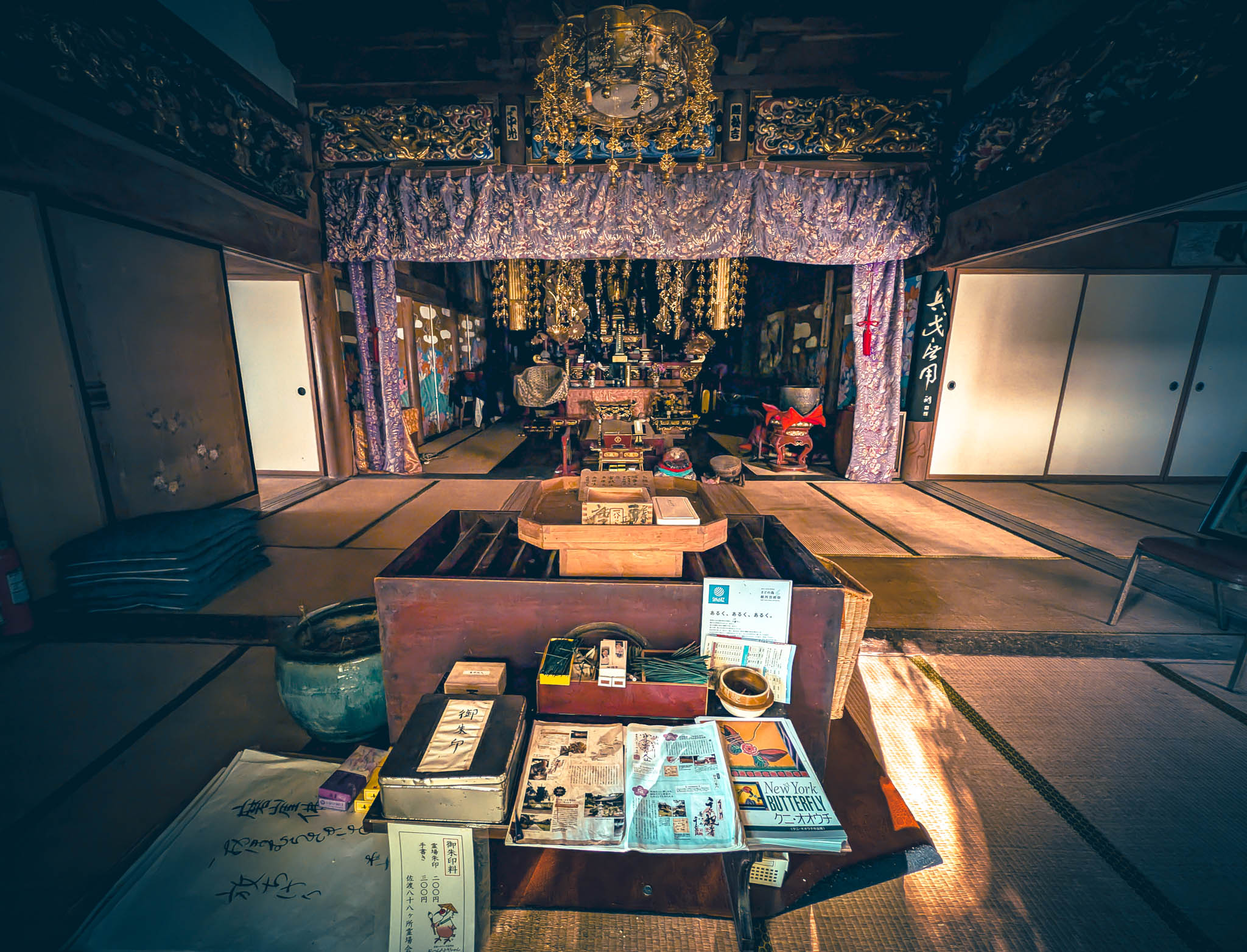
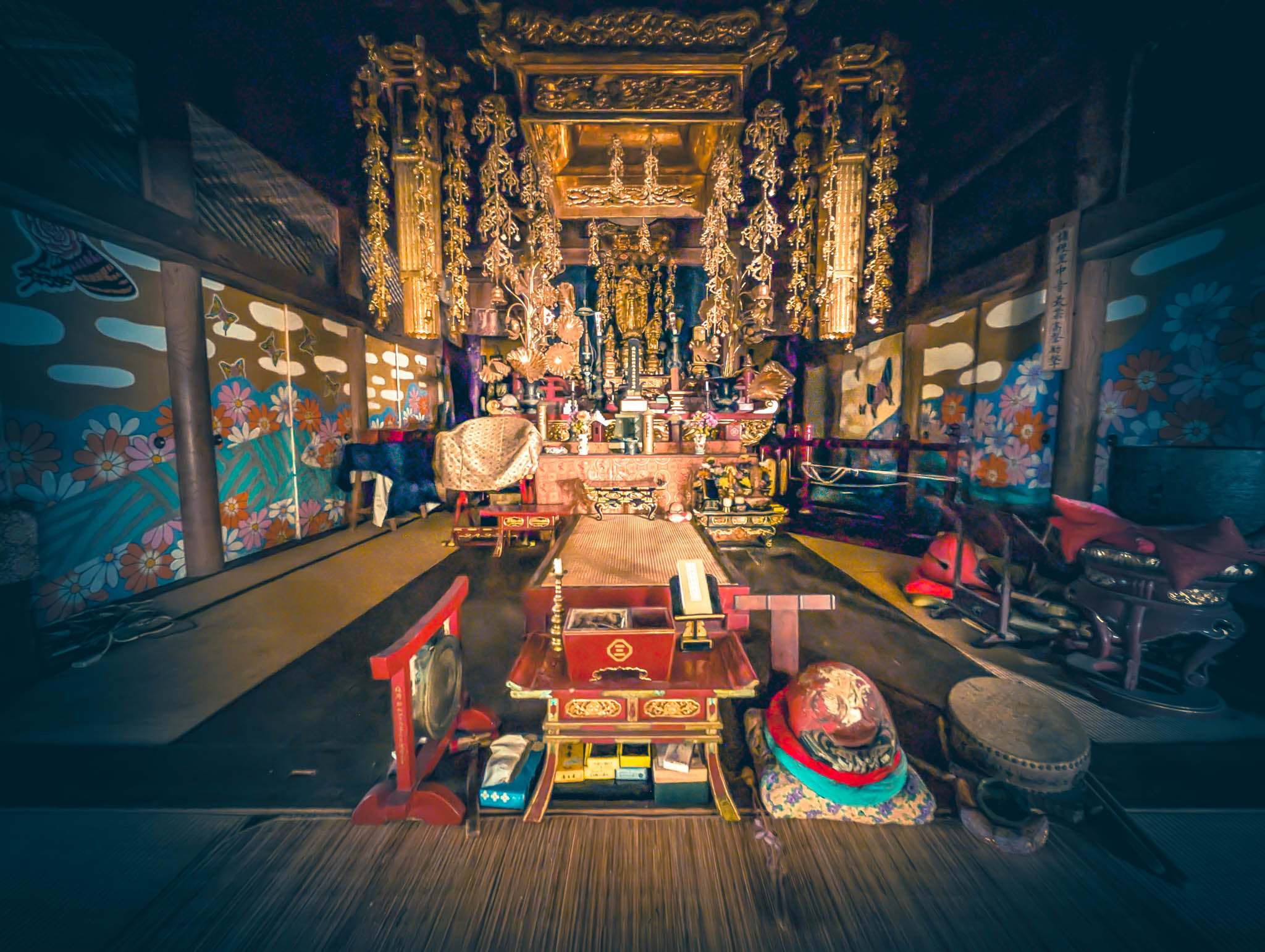
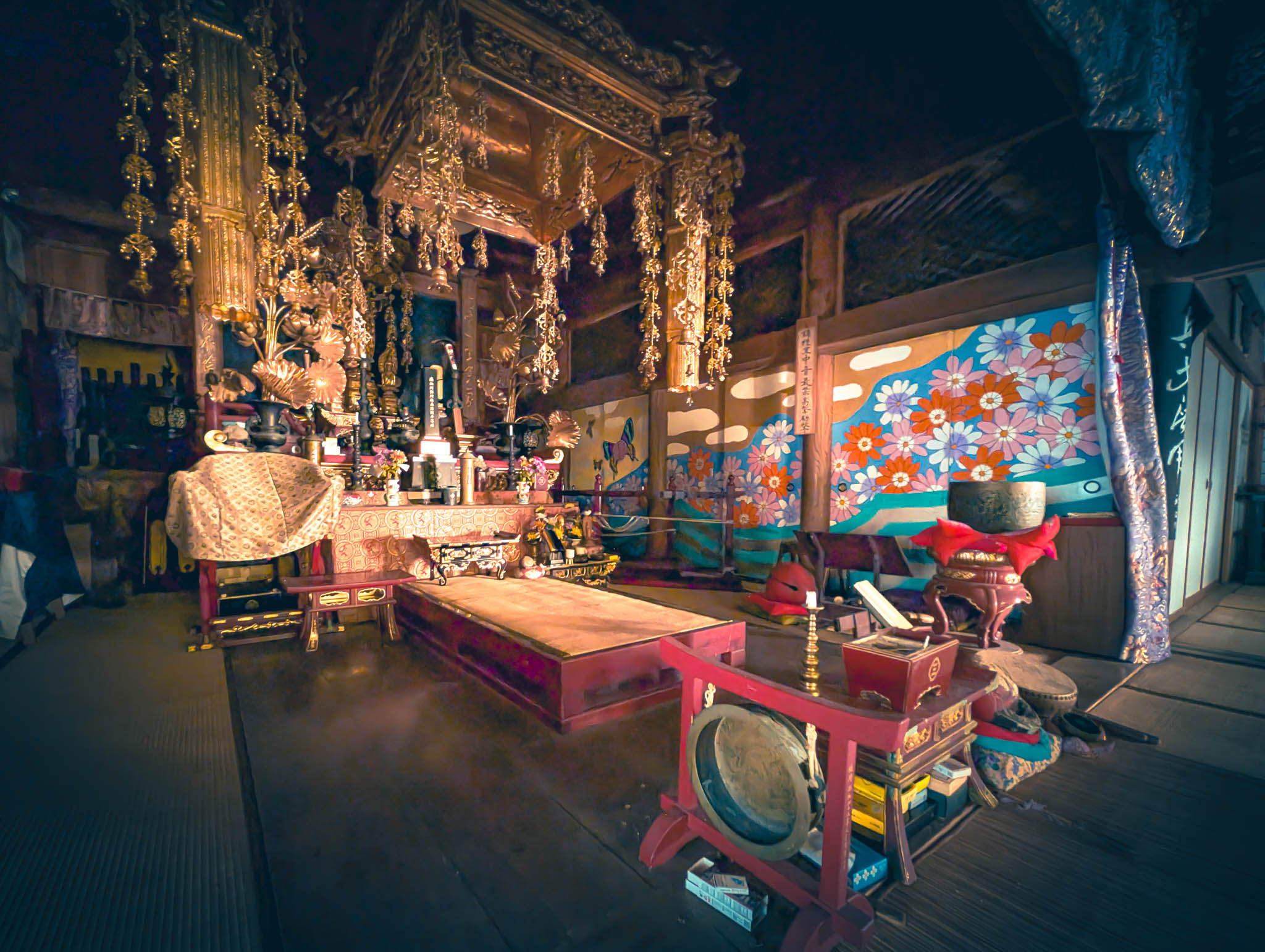
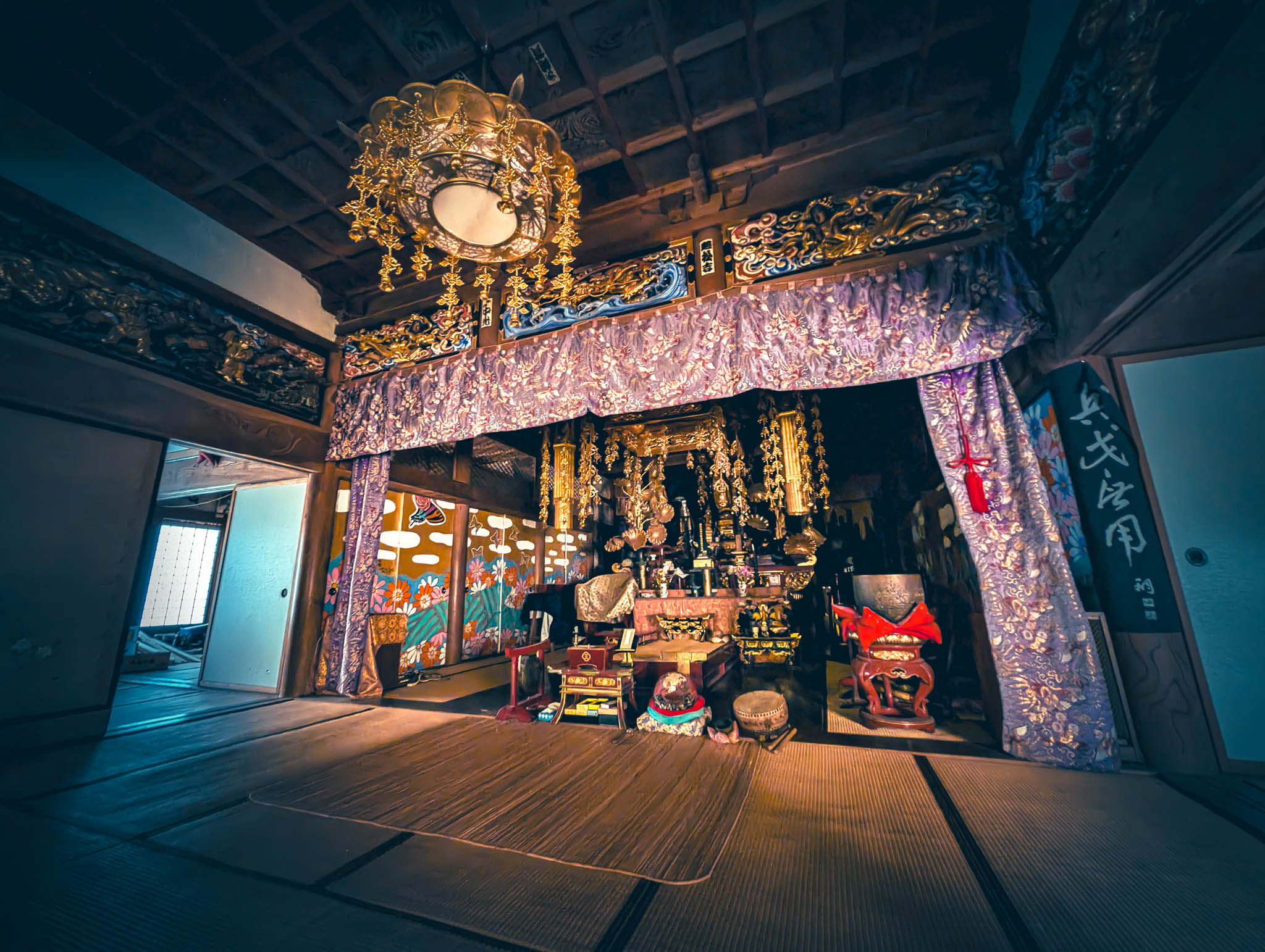
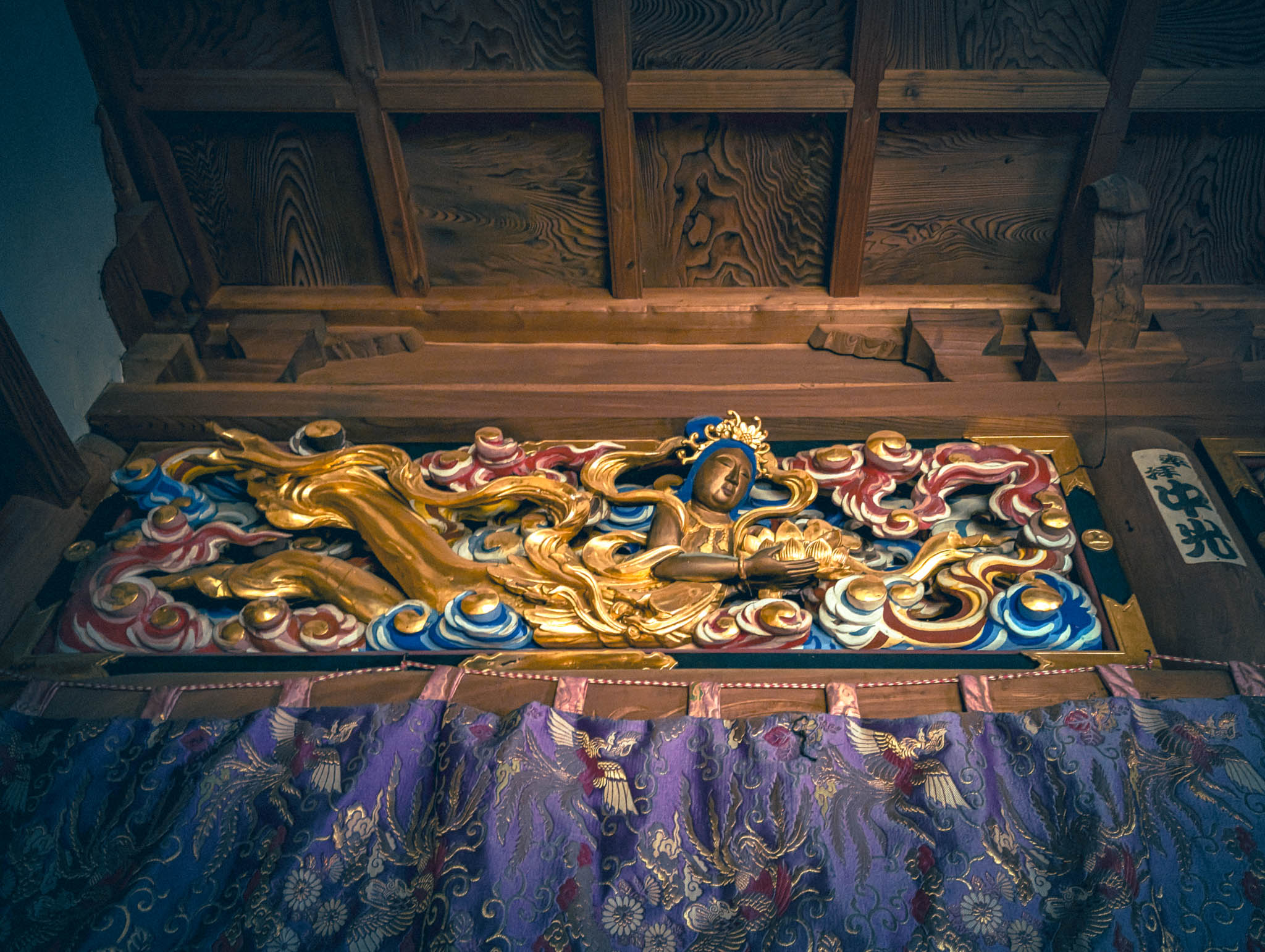
Despite the disorder, I frantically photograph everything, engaging feverishly in the Lafcadio Hearn-Land trope. Tonight, examining the images, it has occurred to me why: Hearn gets it, and he does provide an answer to the question concerning the appeal of such things — even if the mosquitoes aren’t present at this time of year.
Lafcadio concludes, in Mosquitoes:
Besides, I should like, when my time comes, to be laid away in some Buddhist graveyard of the ancient kind — so that my ghostly company should be ancient, caring nothing for the fashions and the changes and the disintegrations of Meiji. That old cemetery behind my garden would be a suitable place. Everything there is beautiful with a beauty of exceeding and startling queerness; each tree and stone has been shaped by some old, old ideal which no longer exists in any living brain; even the shadows are not of this time and sun, but of a world forgotten, that never knew steam or electricity or magnetism or — kerosene oil! Also in the boom of the big bell there is a quaintness of tone which wakens feelings, so strangely far-away from all the nineteenth-century part of me, that the faint blind stirrings of them make me afraid, — deliciously afraid. Never do I hear that billowing peal but I become aware of a striving and a fluttering in the abyssal part of my ghost, — a sensation as of memories struggling to reach the light beyond the obscurations of a million million deaths and births. I hope to remain within hearing of that bell… And, considering the possibility of being doomed to the state of a Jiki-ketsu-gaki, I want to have my chance of being reborn in some bamboo flower-cup, or mizutame, whence I might issue softly, singing my thin and pungent song, to bite some people that I know.
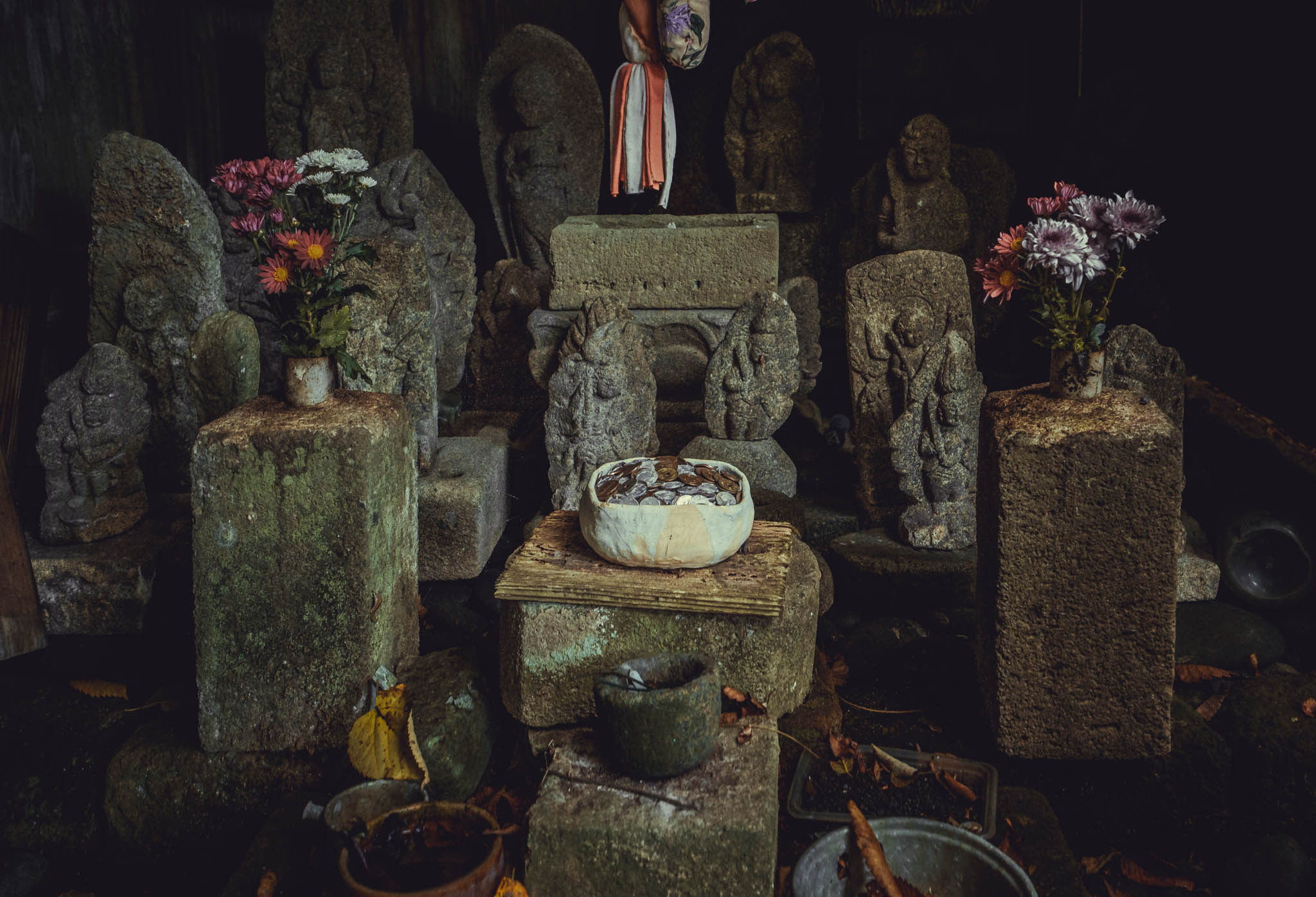
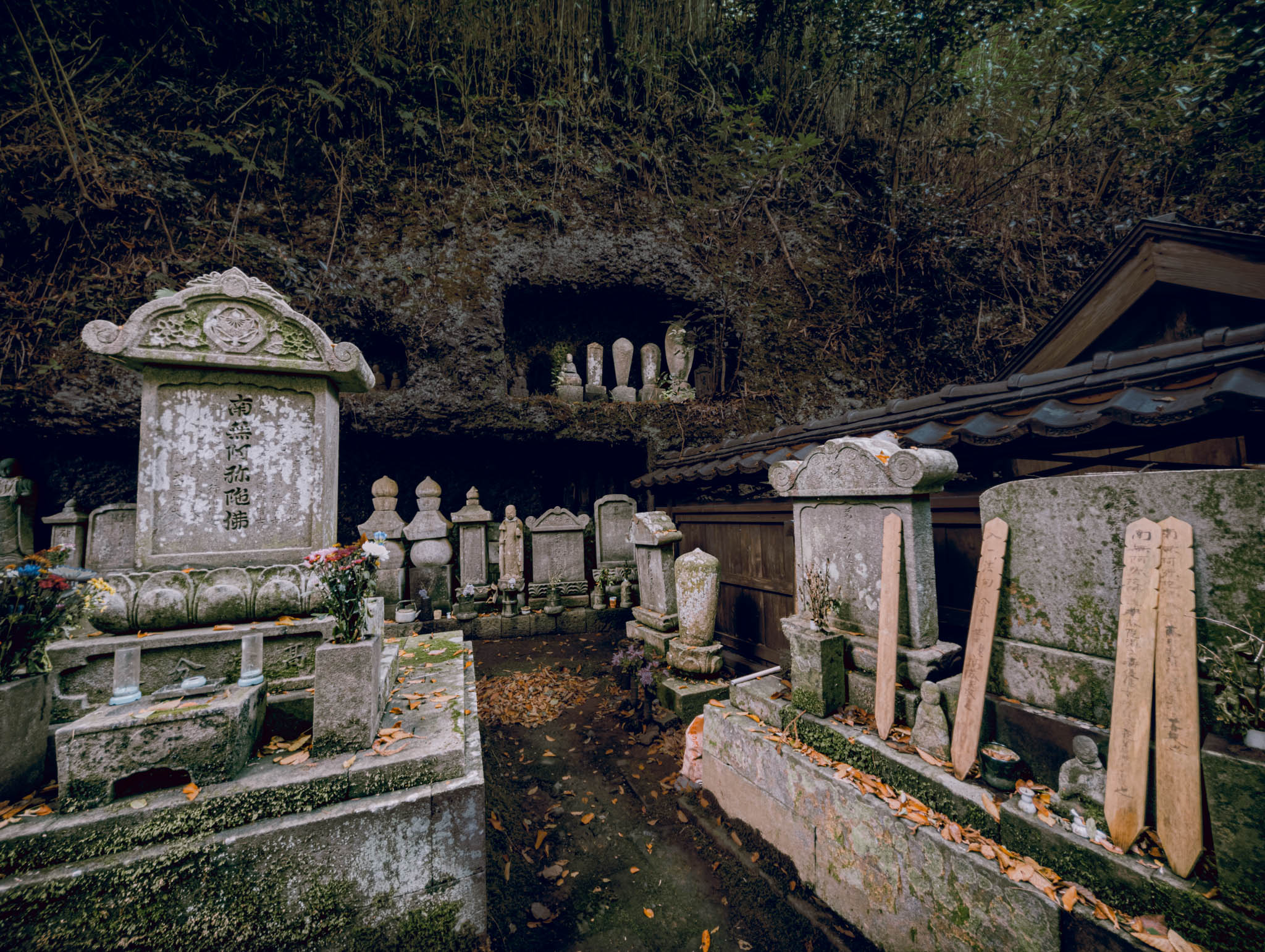
Hearn was only 54, younger than I am now, when in 1904 his time came. Next time I am in Tokyo, I must remember to stop by his gravesite in Zōshigaya Cemetery and burn some incense.