It is probably only natural given my personality and interests, that of the various Japanese dramatic arts I should find myself most attracted to 能 (Nō) — the austere, otherworldly entertainment of the military aristocracy of the shogunates.
The two-act individual Nō piece, centered on an unexpected denouement with supernatural connotations — the shite protagonist from Act One revealed to be the ghost of a betrayed warrior or a demonic revenant of a wronged woman, or something along those lines, in Act Two — is really more of a study of a particular emotion than a narration along a particular theme. I could write here that I see an analogy between Nō and the way in which I approach architecture.
But the truth is, a fastidious study on my part of Nōgaku (as well as its cultural and material) paraphernalia would probably constitute an ideal example of a Lewisism — a pointless, eccentric if not altogether macabre whim, doggedly pursued to the (very likely bitter) end.
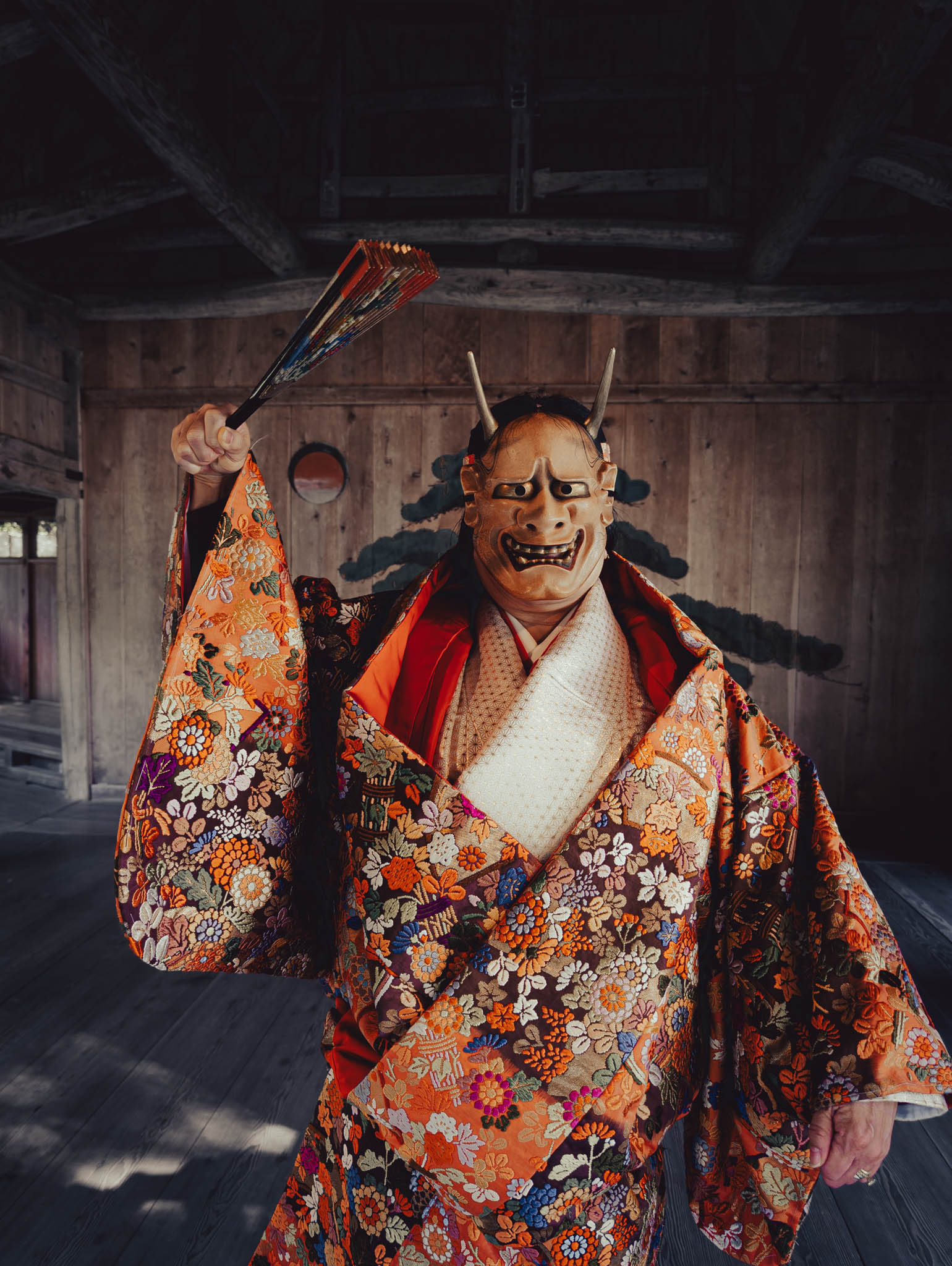
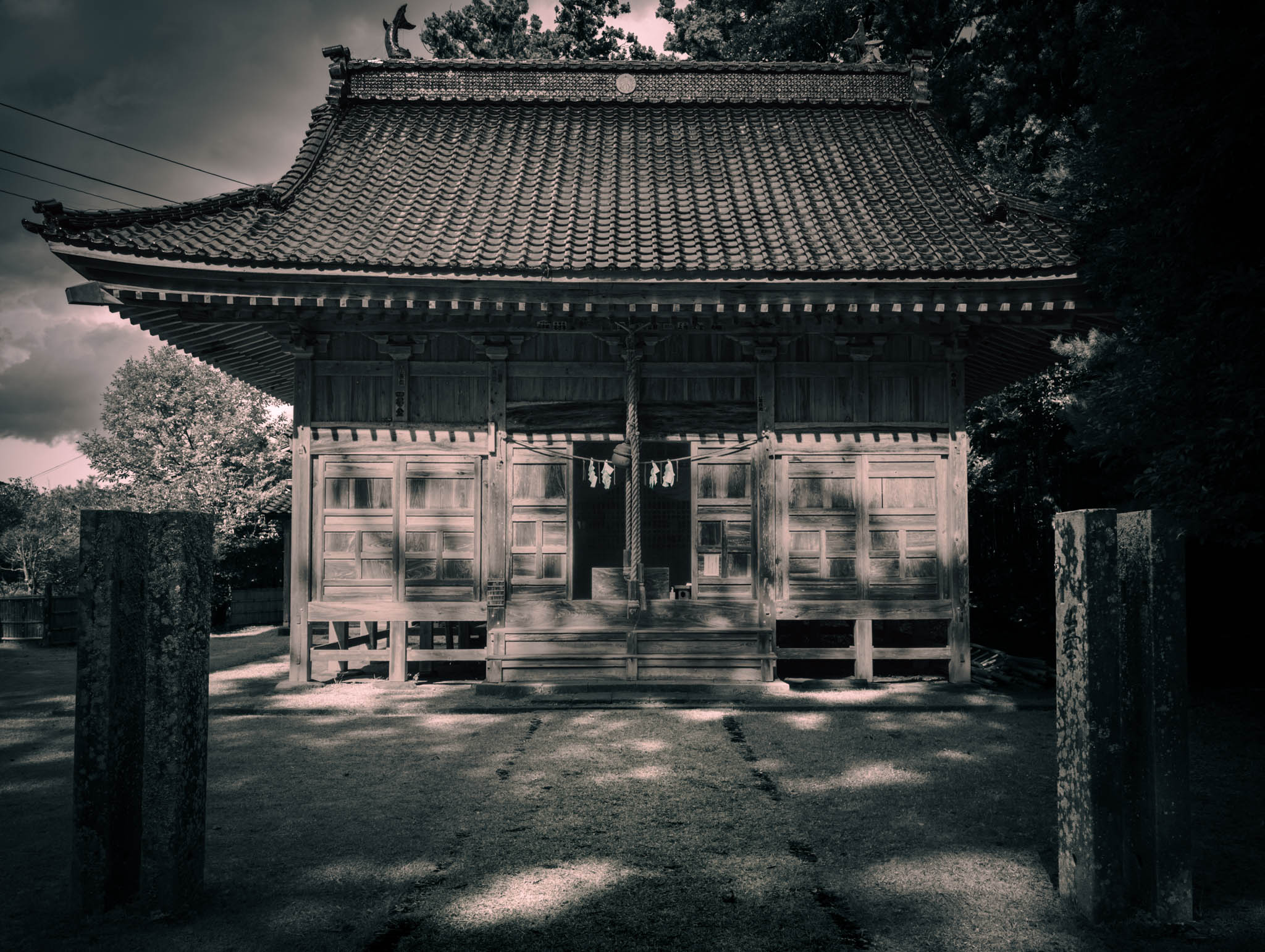
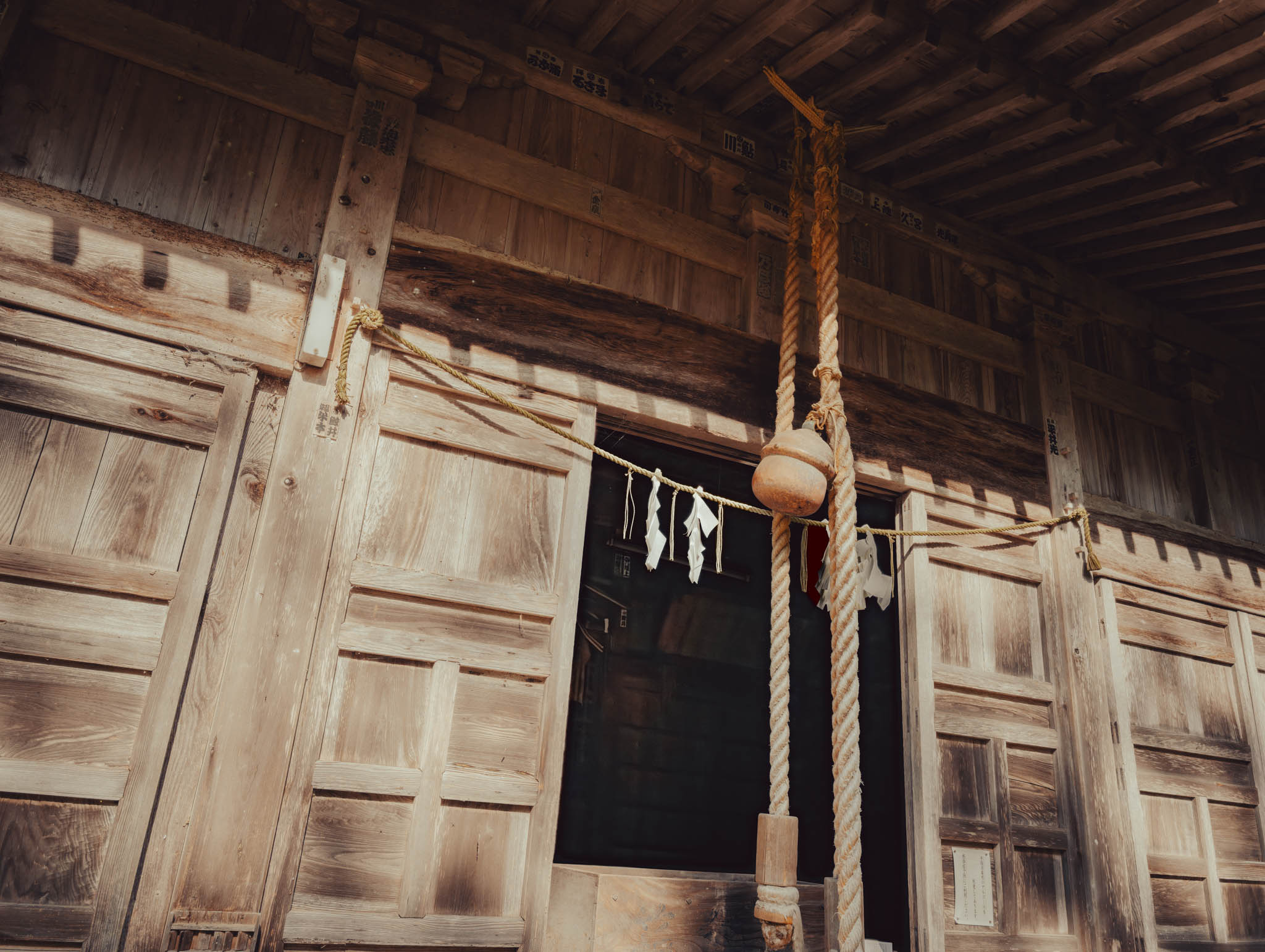
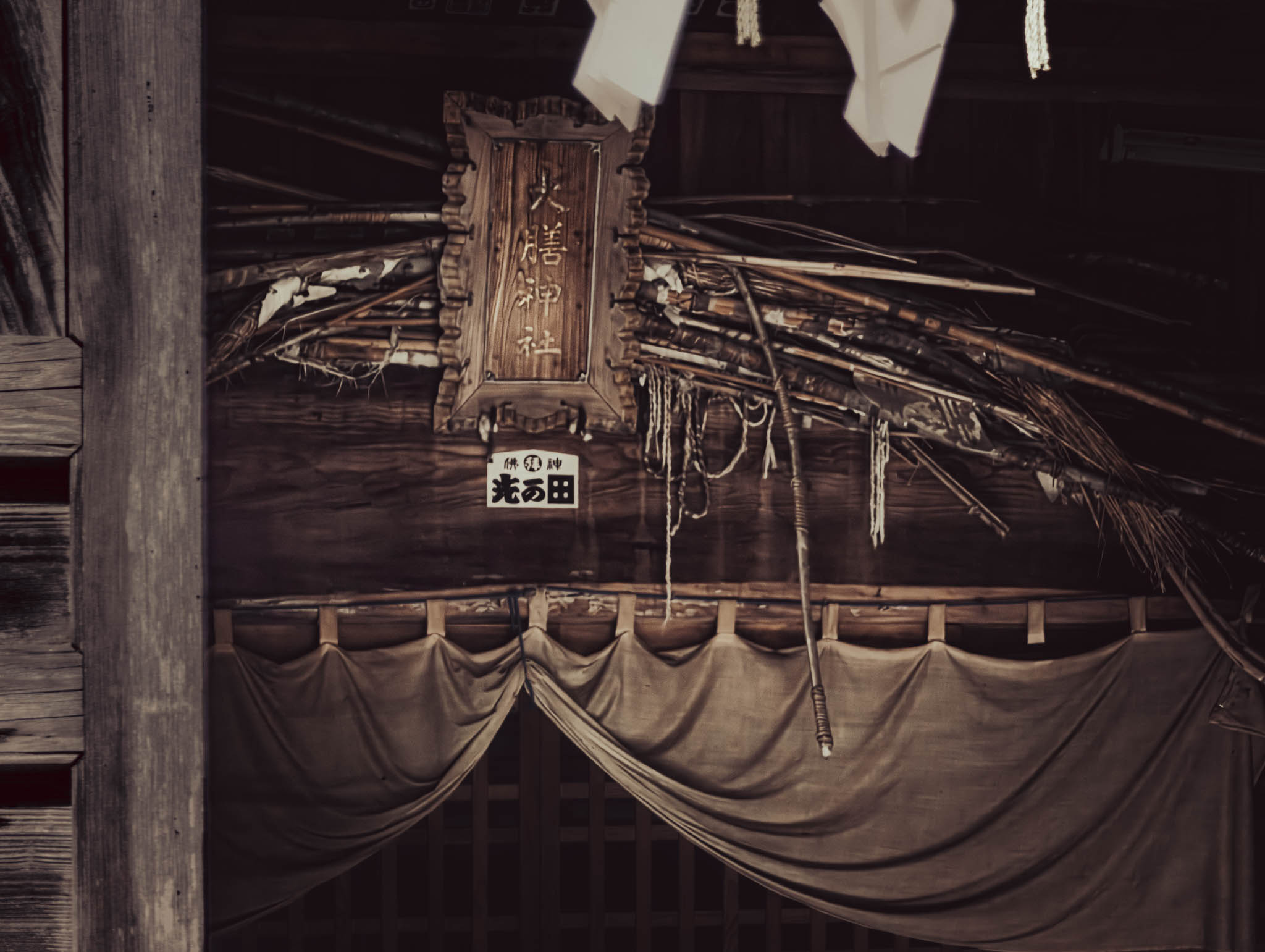
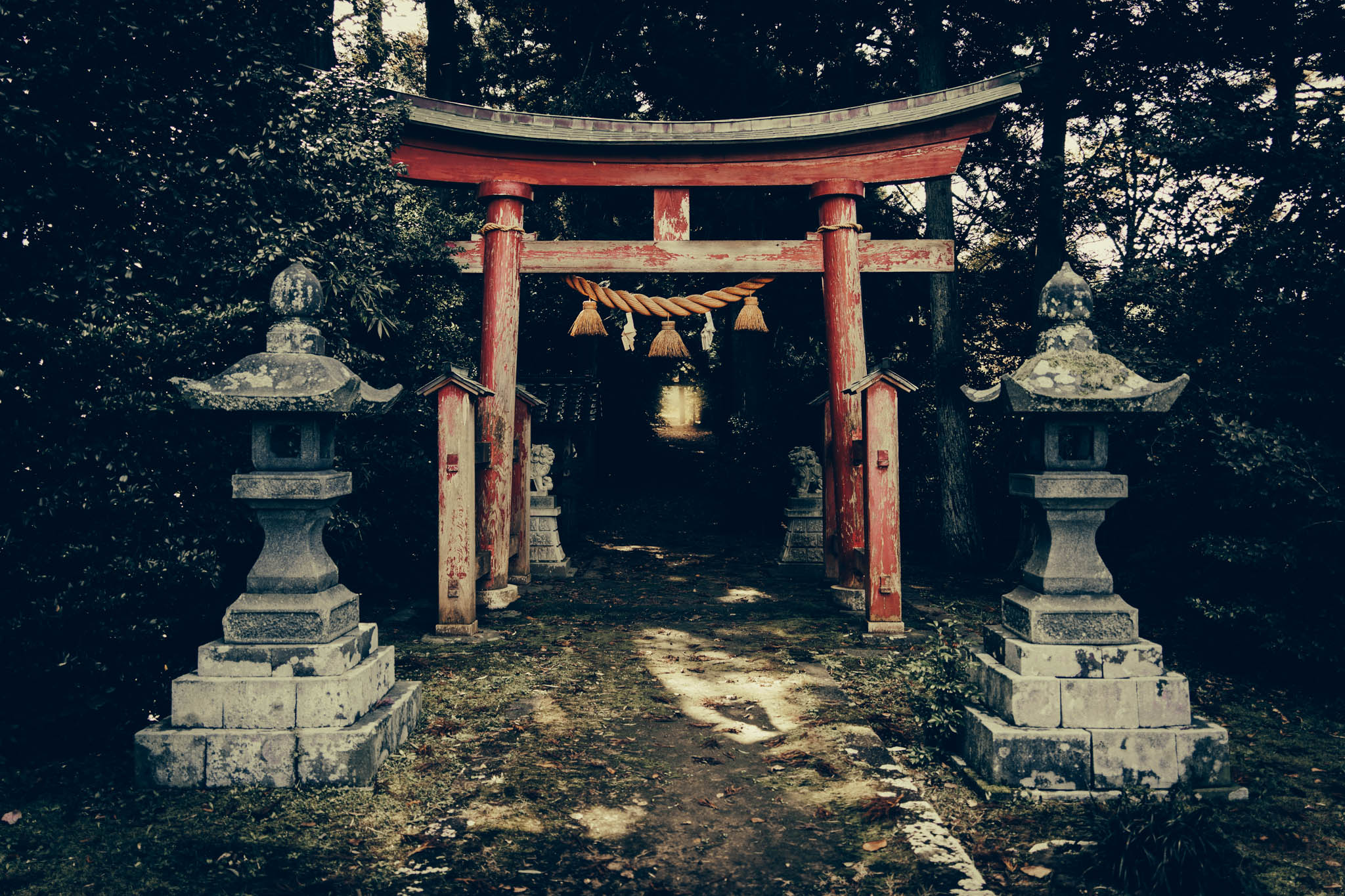
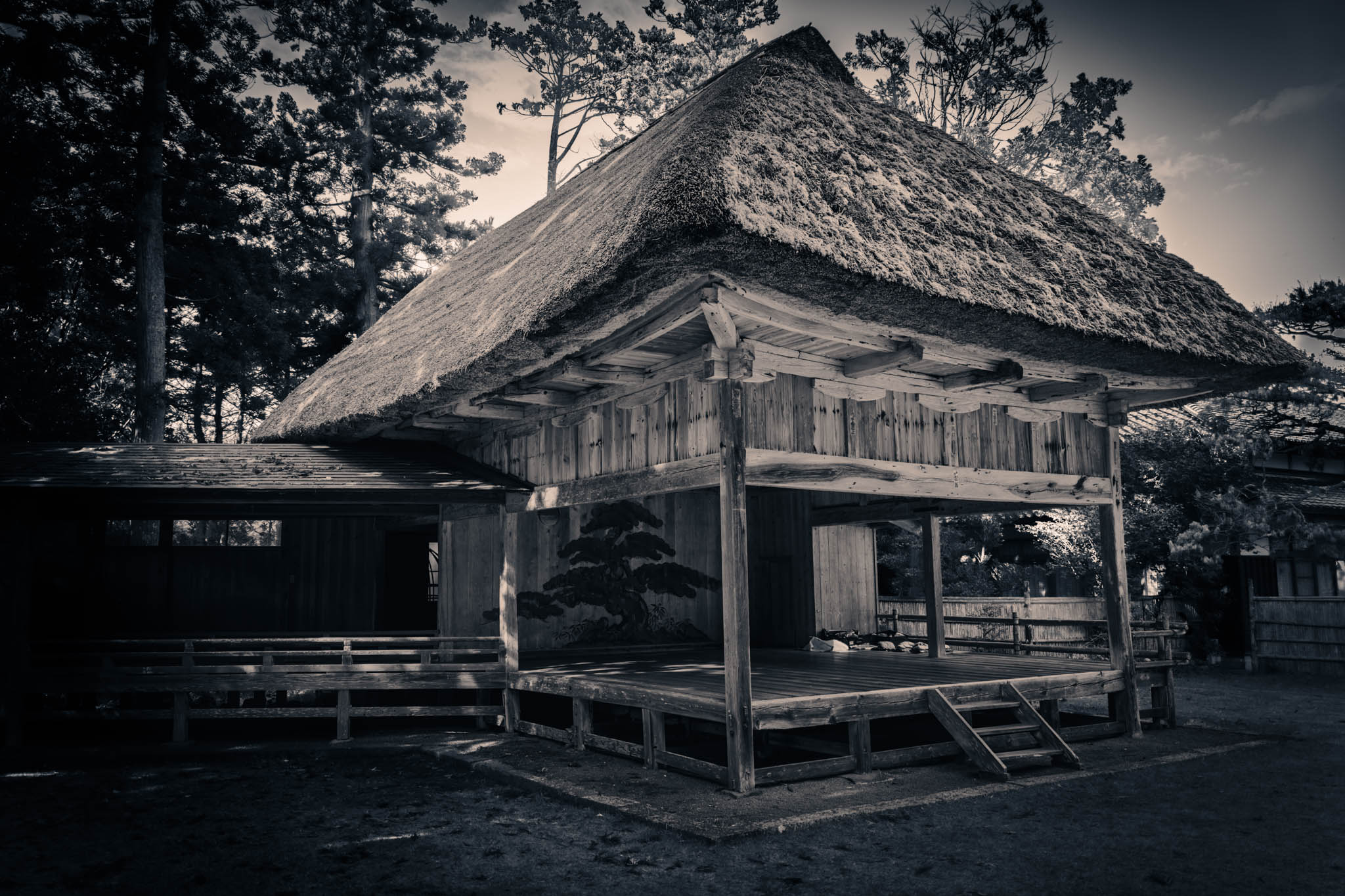
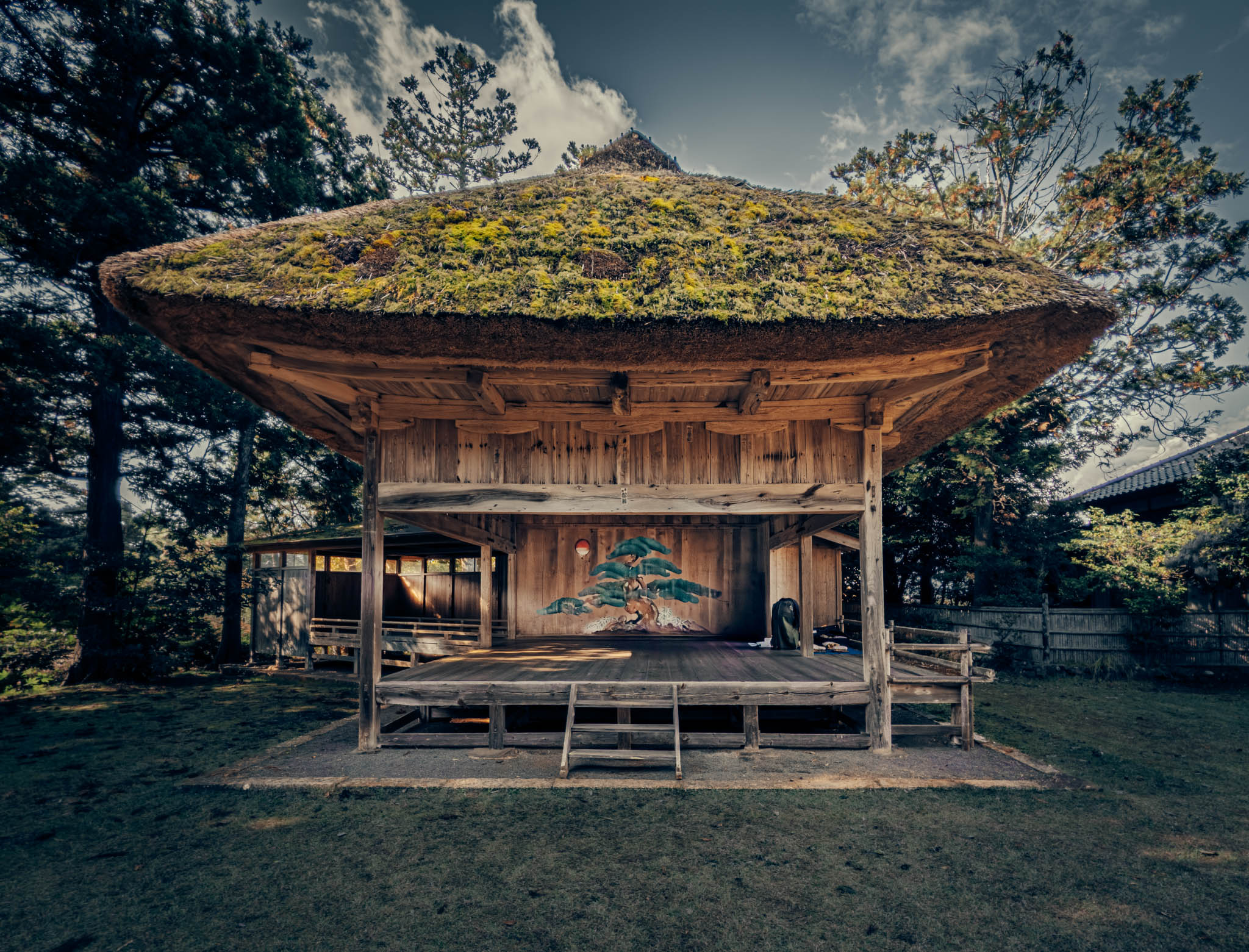
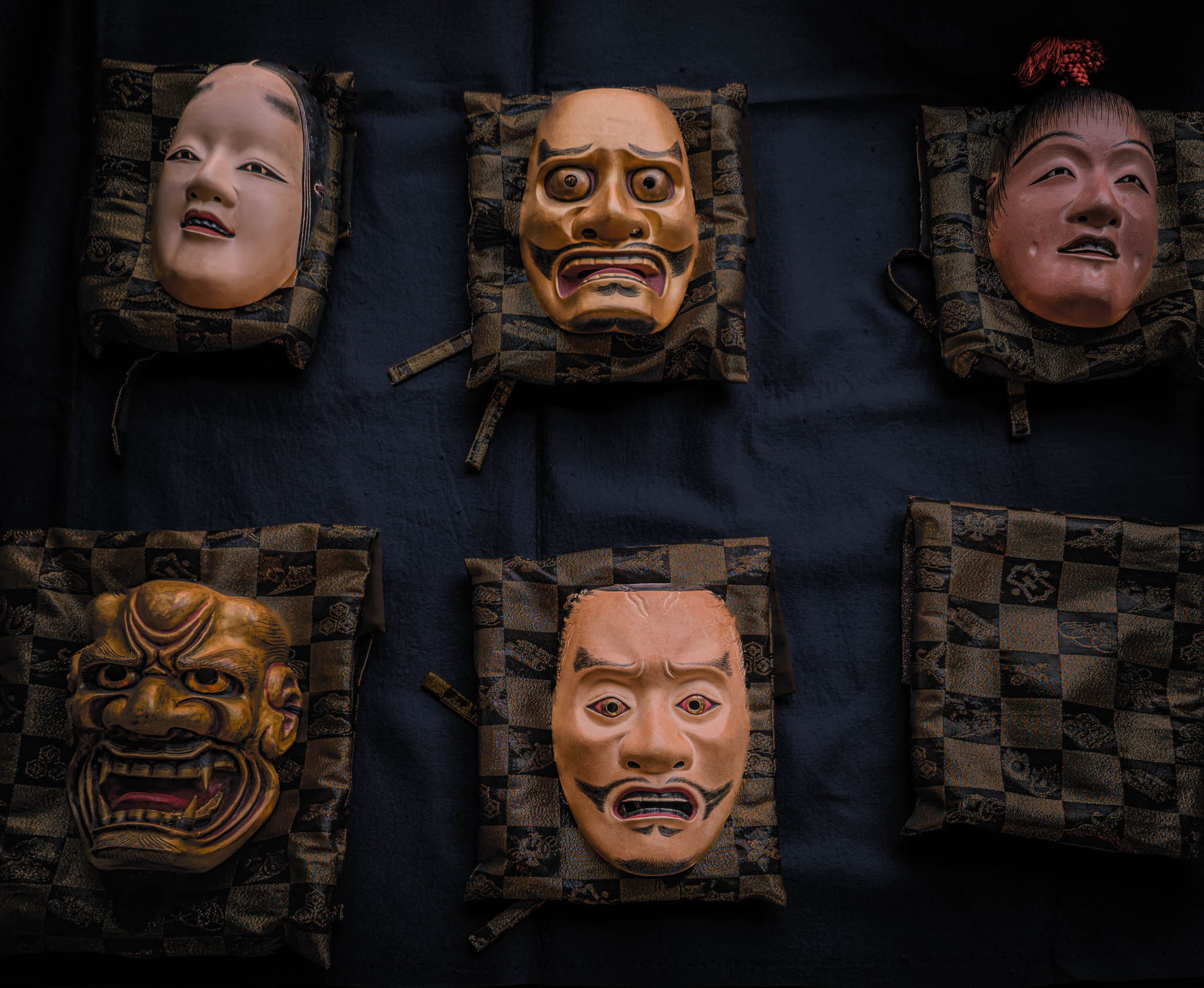
We didn’t really have time for that today on Sado, which happens to be the only place in modern Japan where Nō is still pursued as a sort of popular amateur theater as opposed to the rarified production of a particular pedigreed Iemoto-system “school”. But thanks to Atlas Obscura, we found ourselves for a few hours at the 大膳神社 “Daizen Shrine” — dedicated to the kami of food as well as Suketomo Hino (a counselor of defeated Emperor Go-Daigo exiled to Sado in the early 14th century) and the priest Daizenbo (who was executed for enabling the escape of the Suketomo’s son), ah! Japan and its epic history! — which also adjoins an ancient thatch-roofed Nō stage last rebuilt in 1846. That makes it, supposedly, the oldest on Sado. The enthusiastic Nōgaku sensei (a local farmer, in everyday life) brought a box of antique Nō masks and other props, for a quick and confusing lesson in Nō performance.
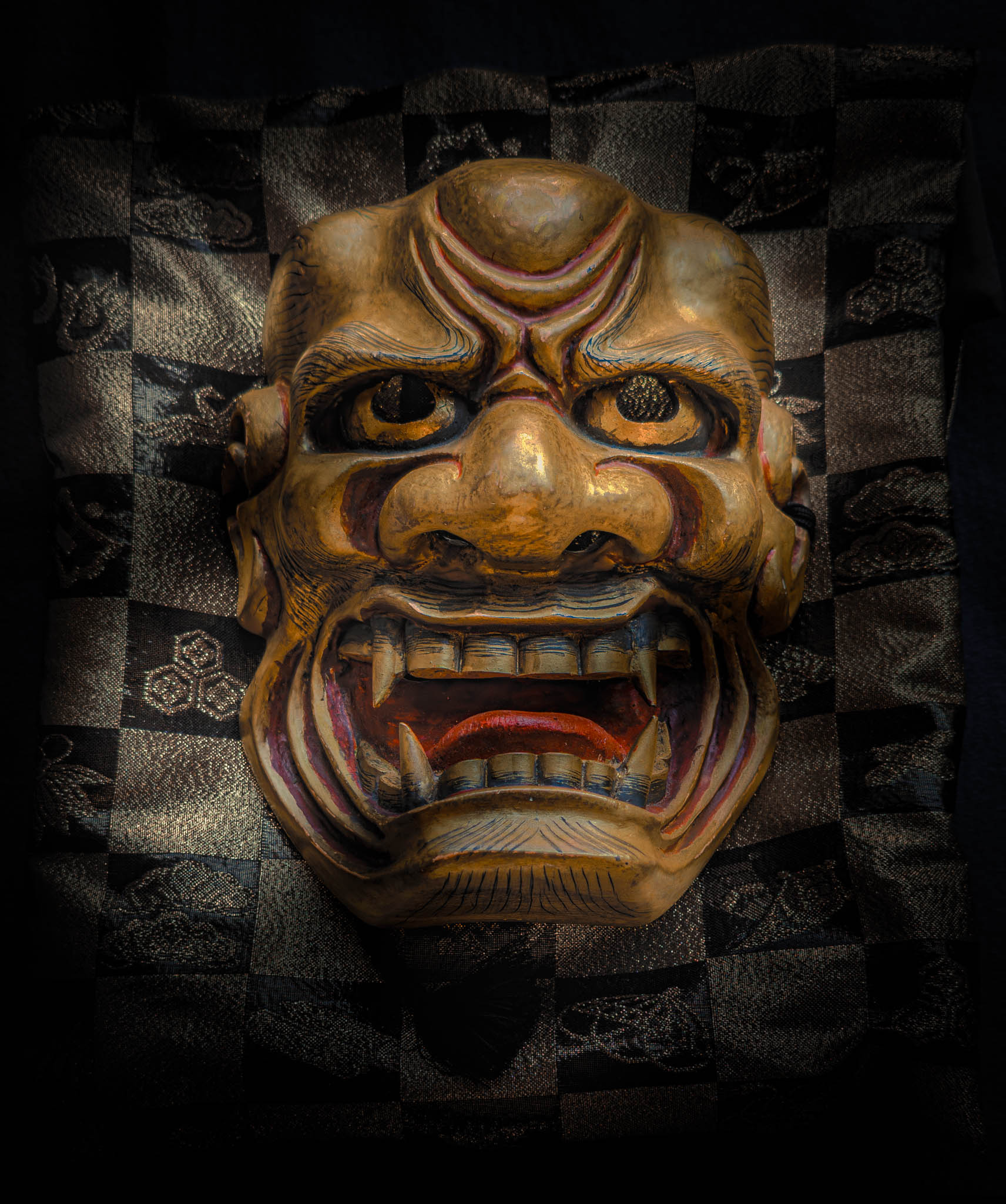
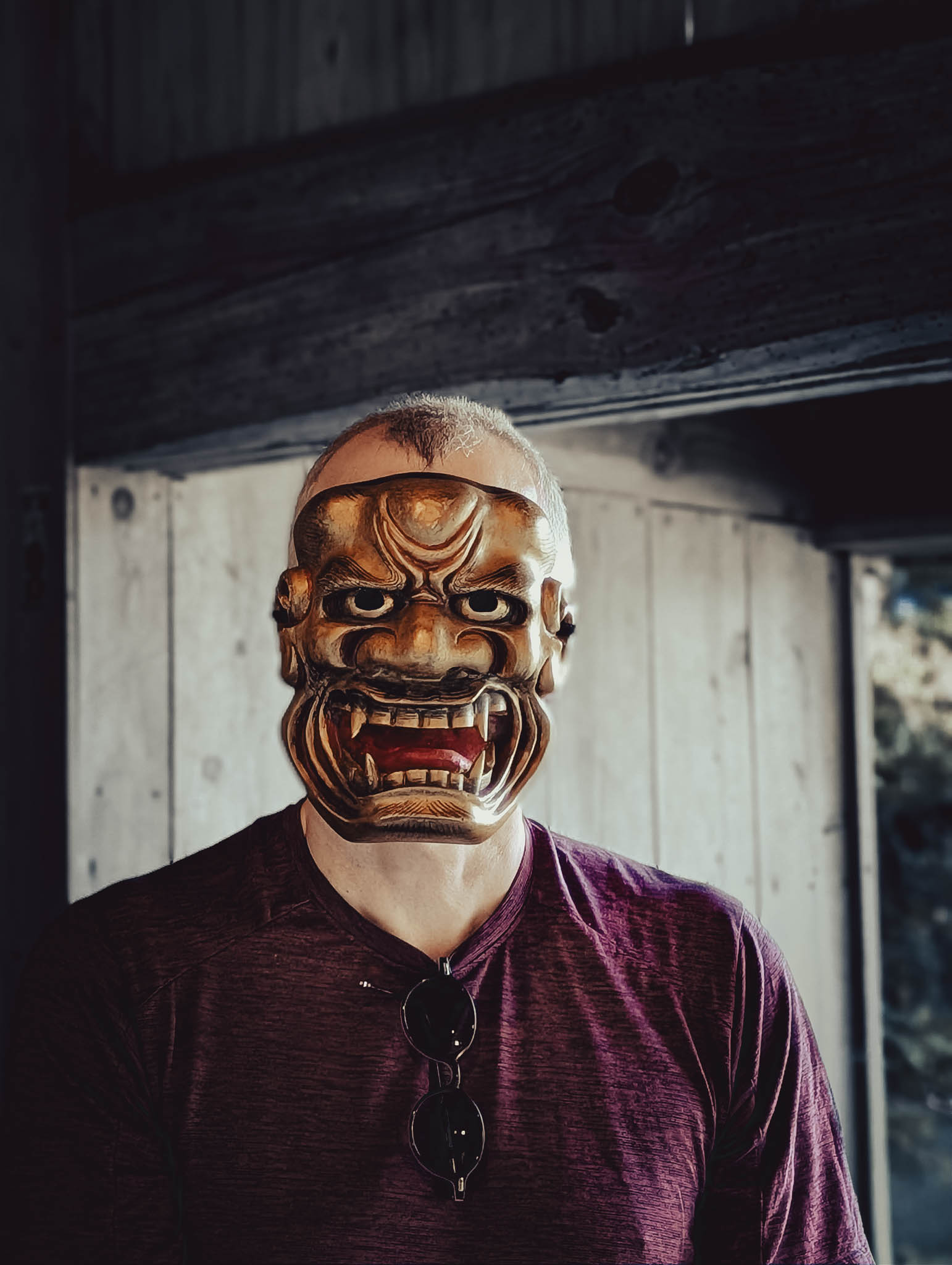
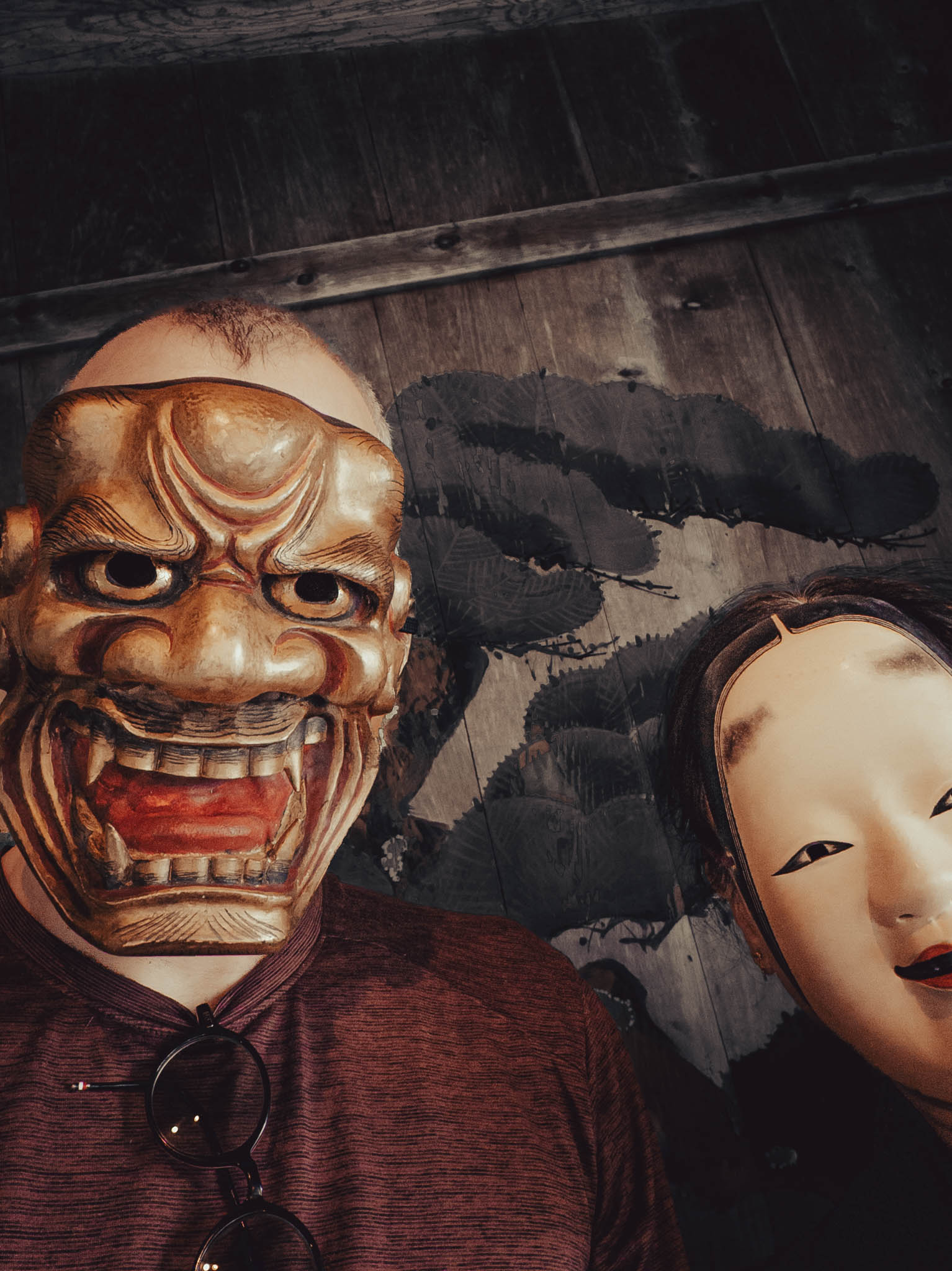
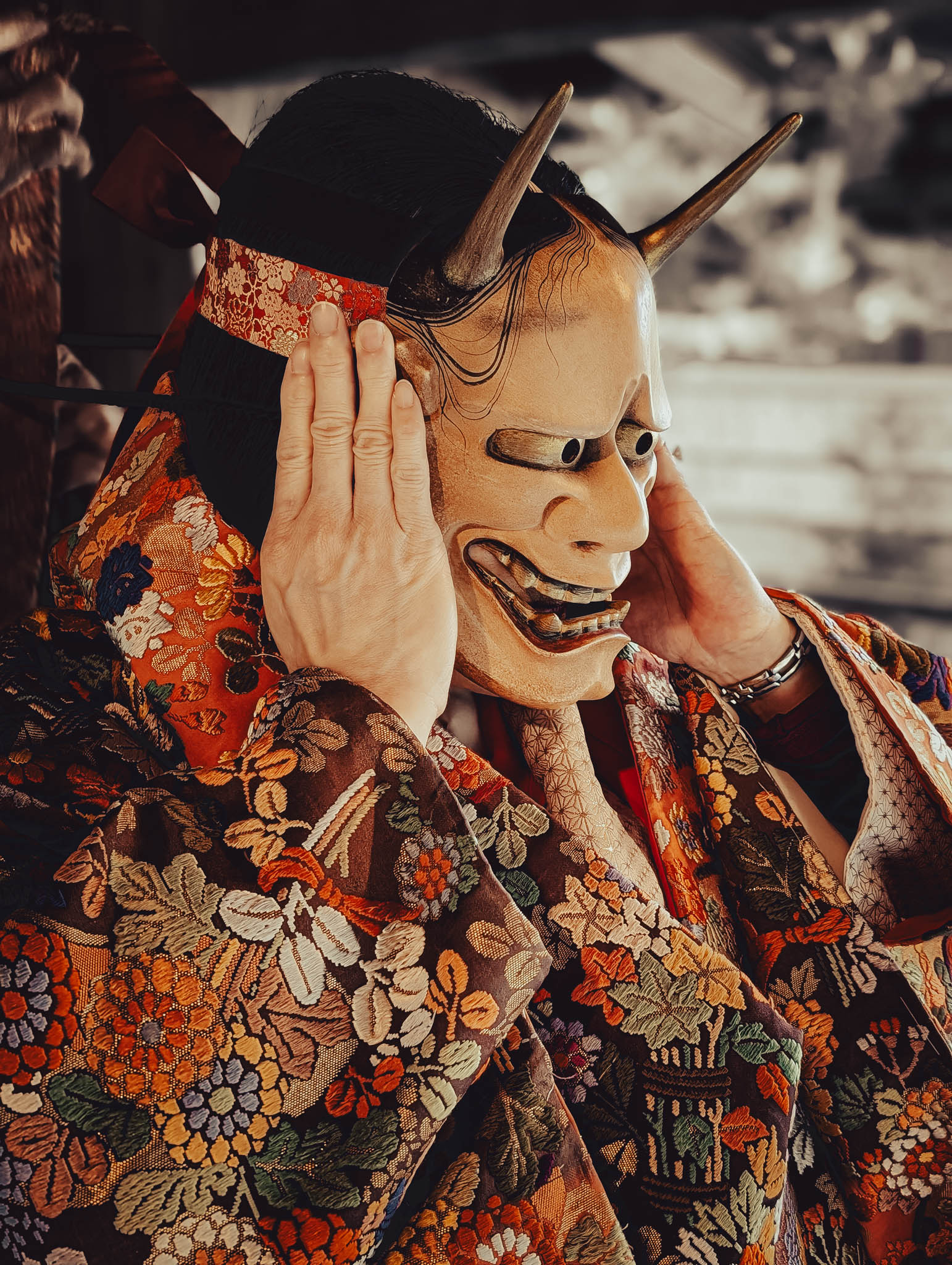
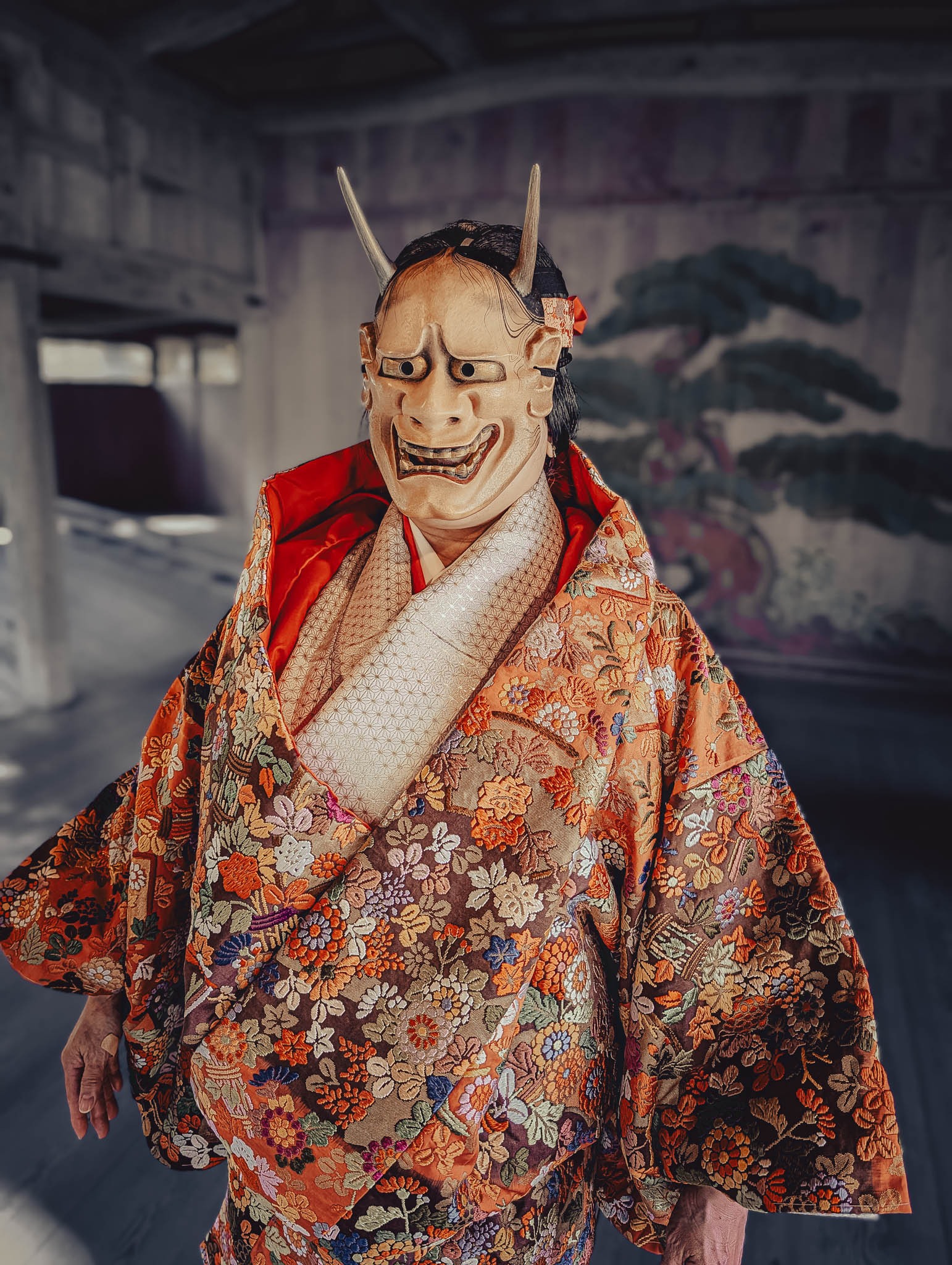
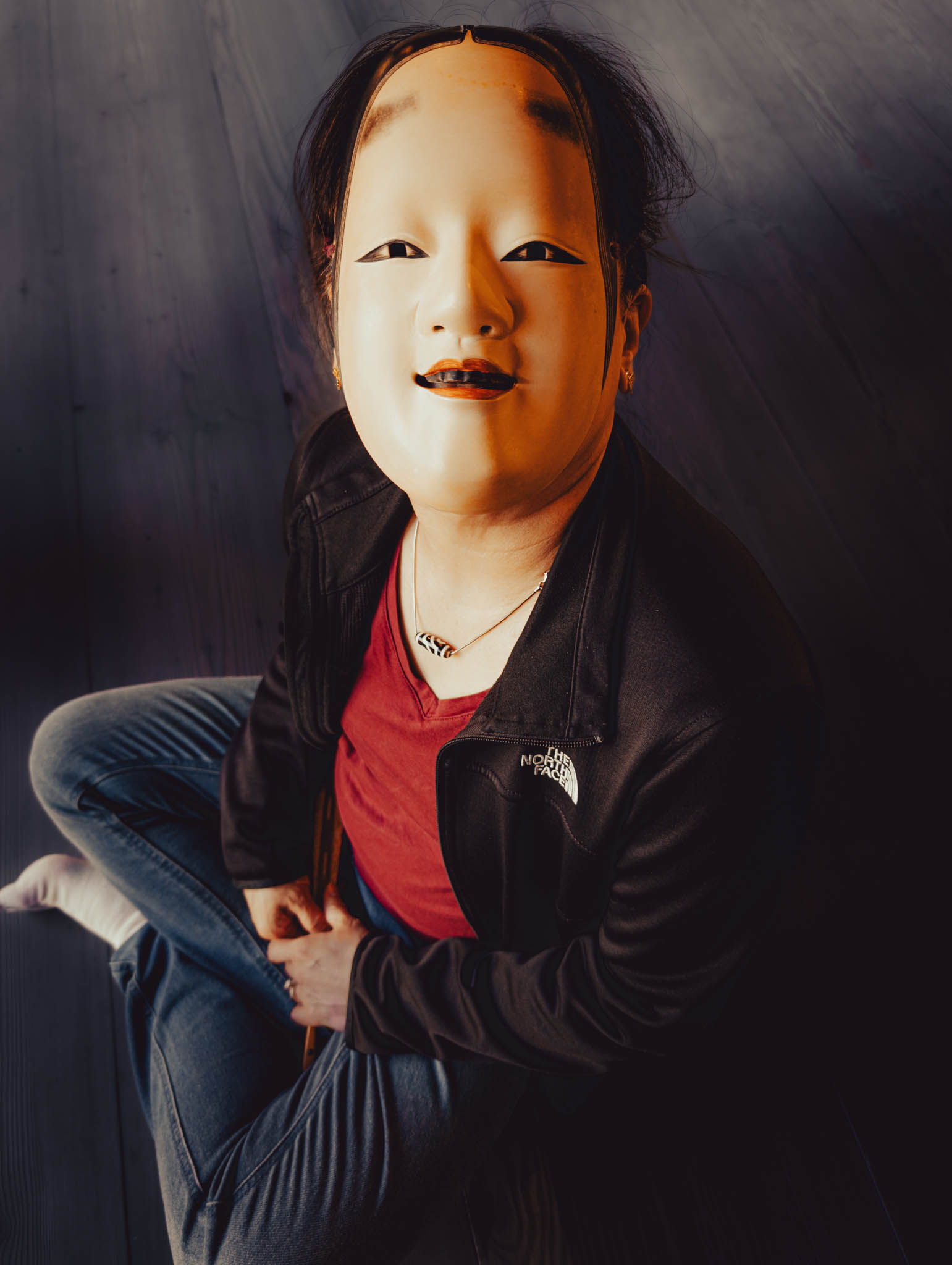
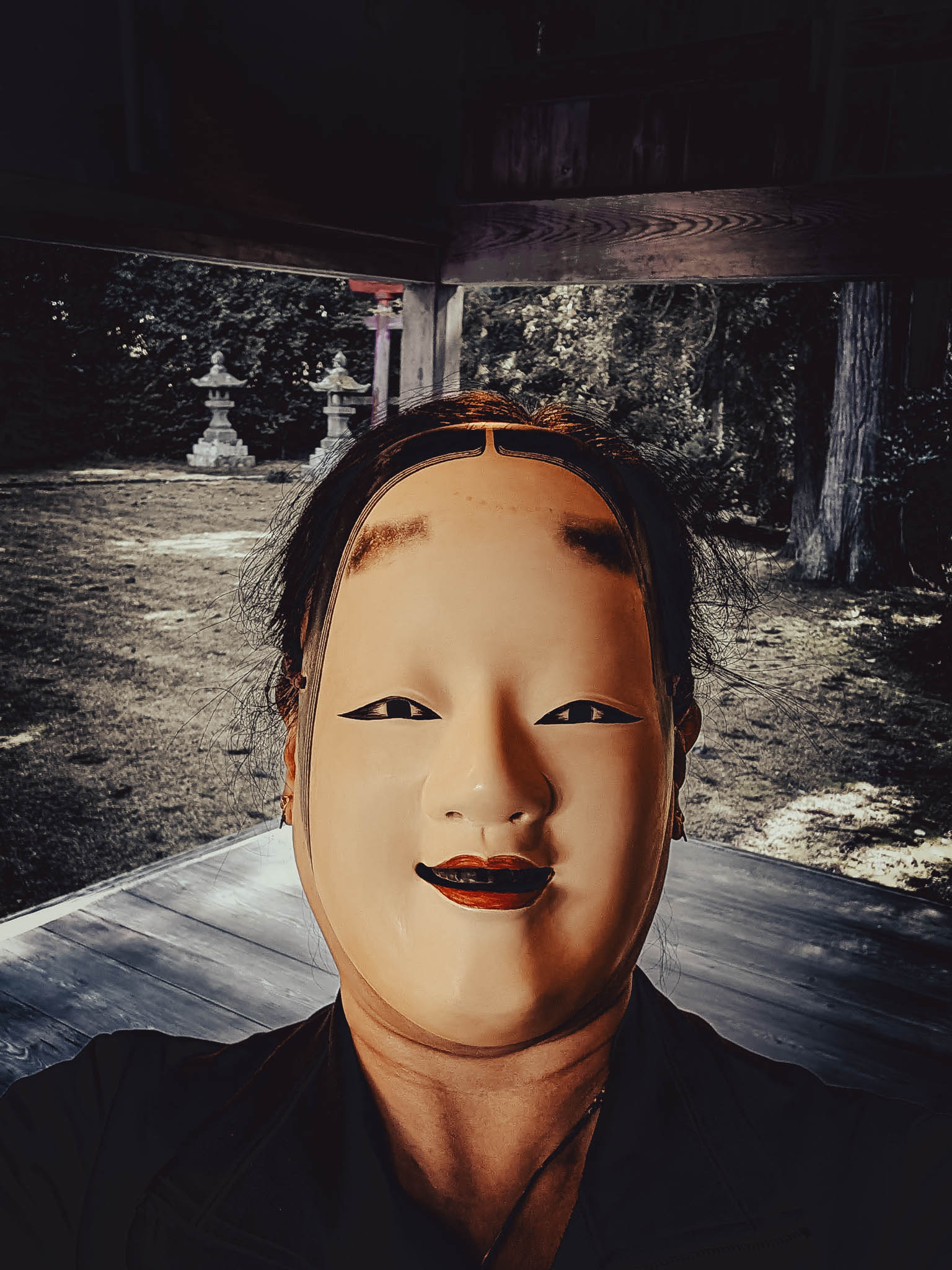
What did I learn? That my Japanese is even worse than I imagined. Also, that one can’t really see while wearing a Nō-men. Furthermore, I noted that the masks are substantially smaller than the average human face. Part of their eeriness must be derived from their very obvious mask-nature: the bulging jowls, forehead, and neck of the actor wearing the disguise are inescapable — and somehow squishy in their unnerving revelation.
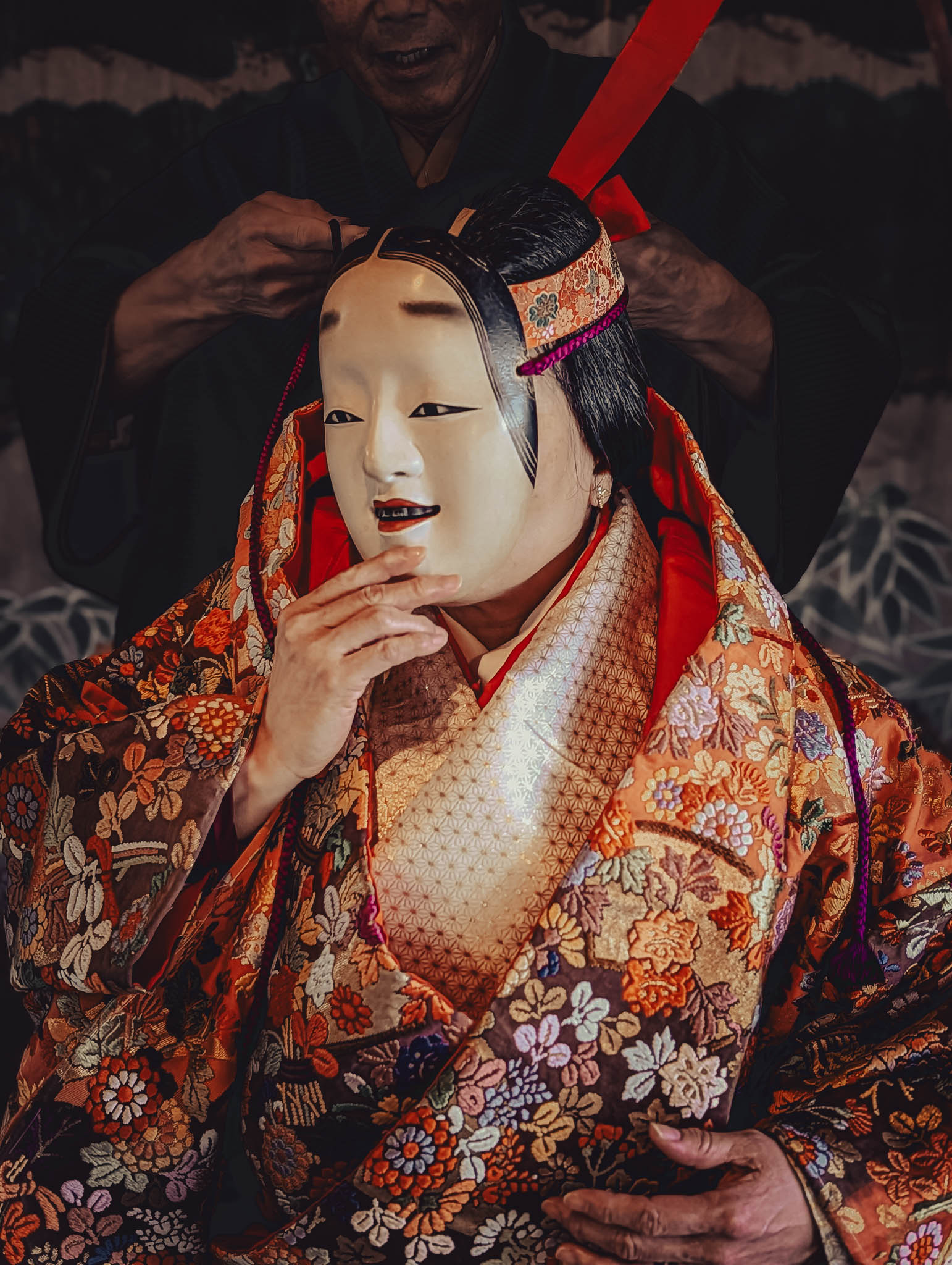
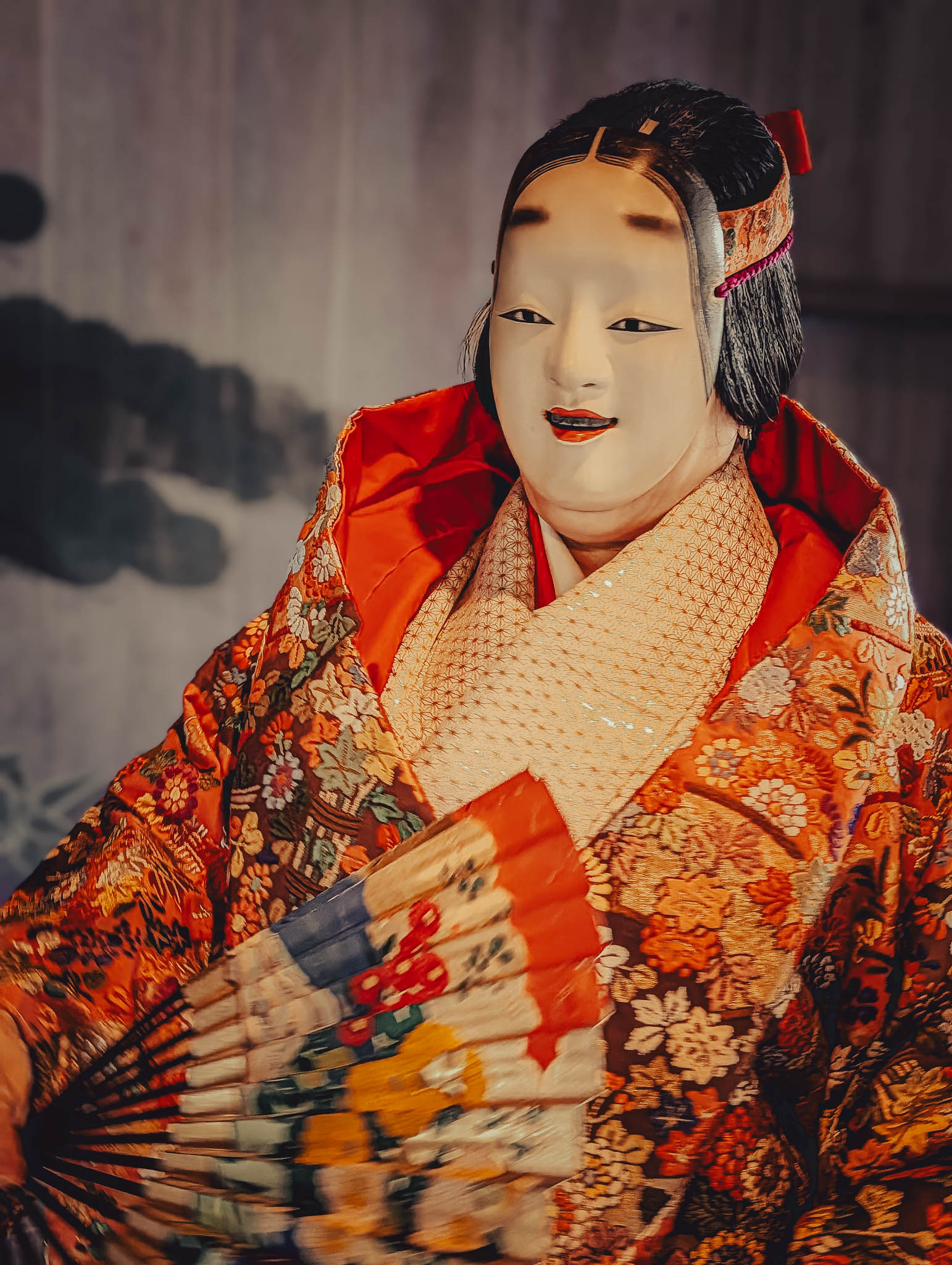
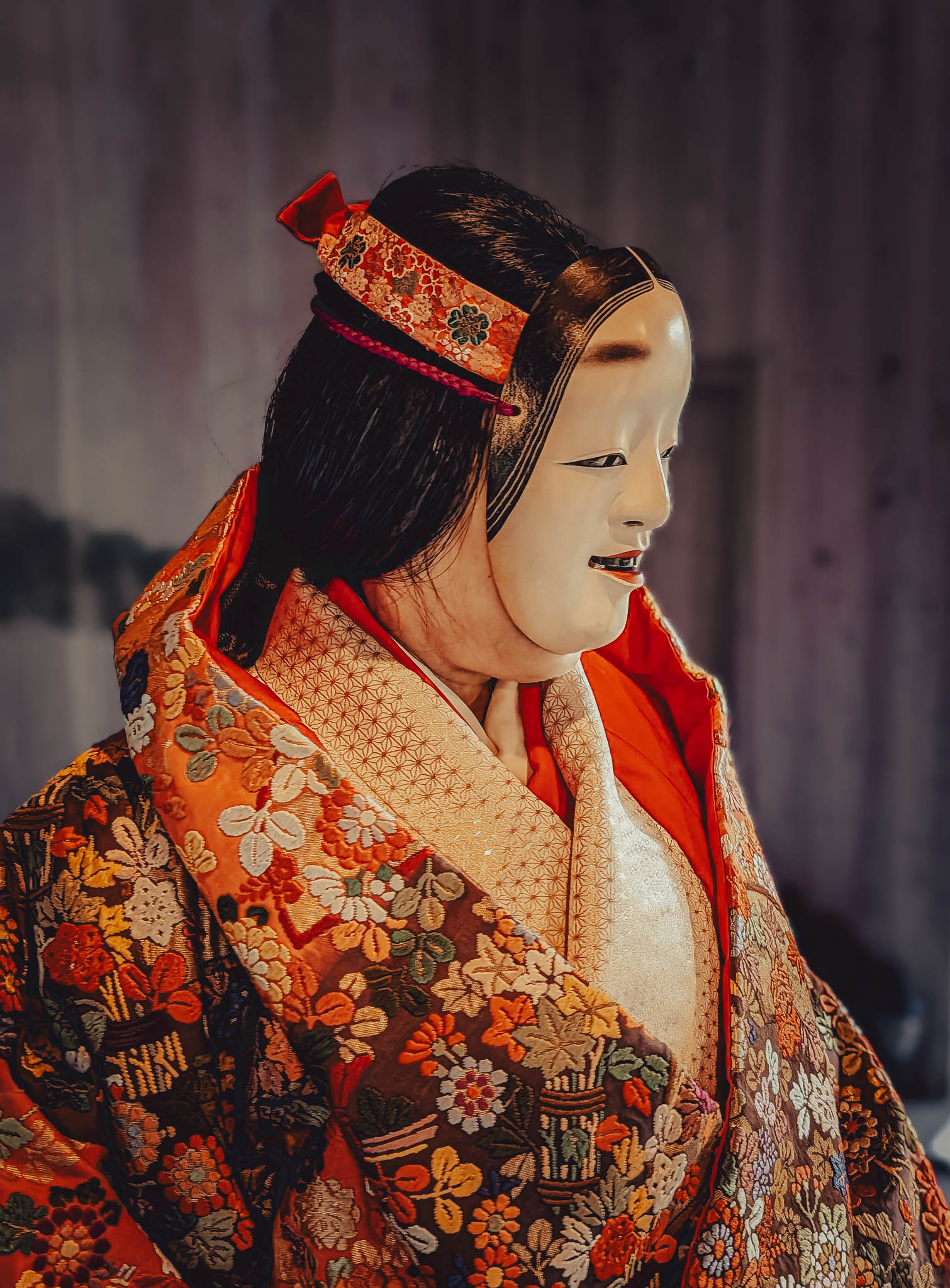
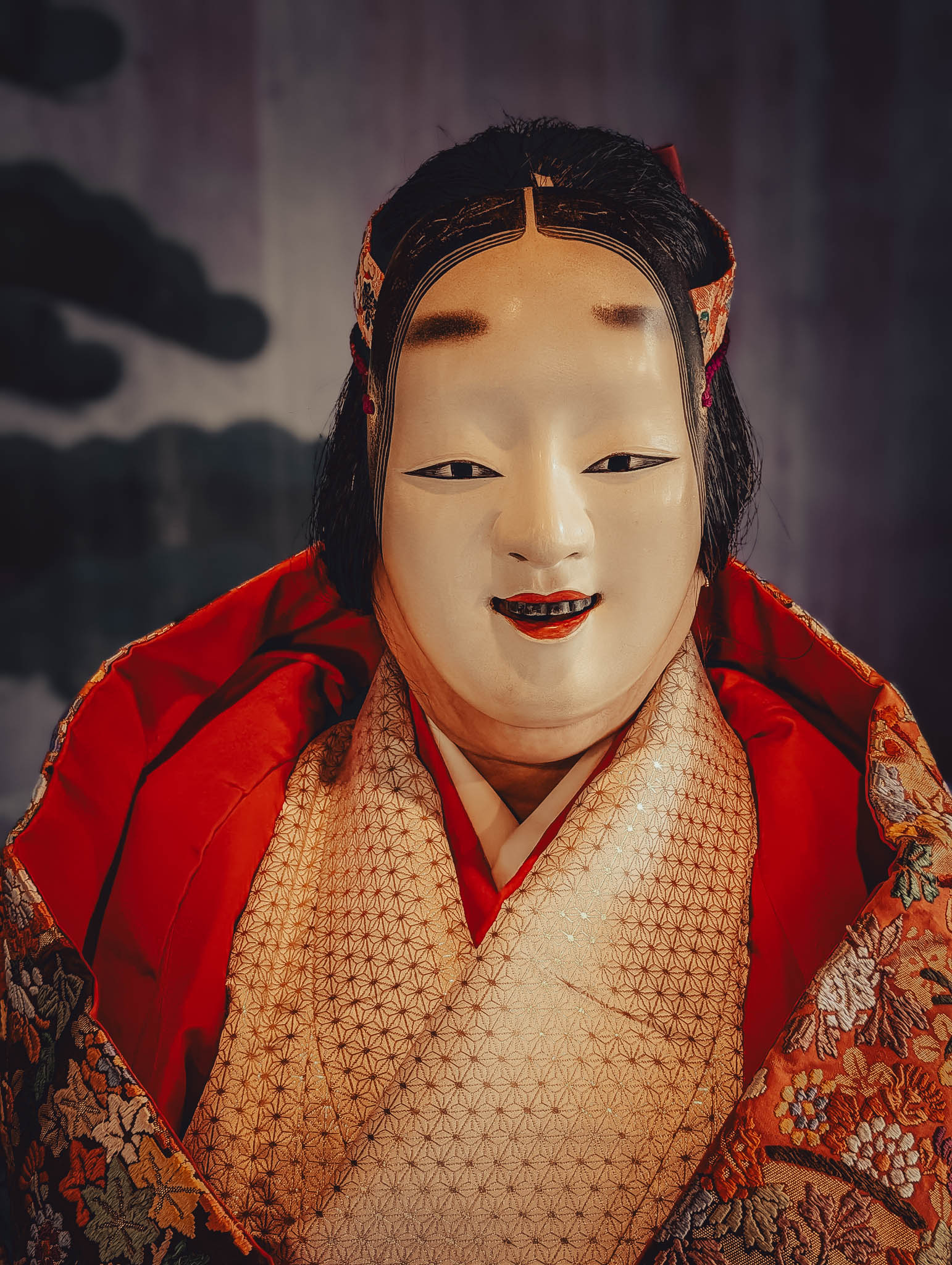
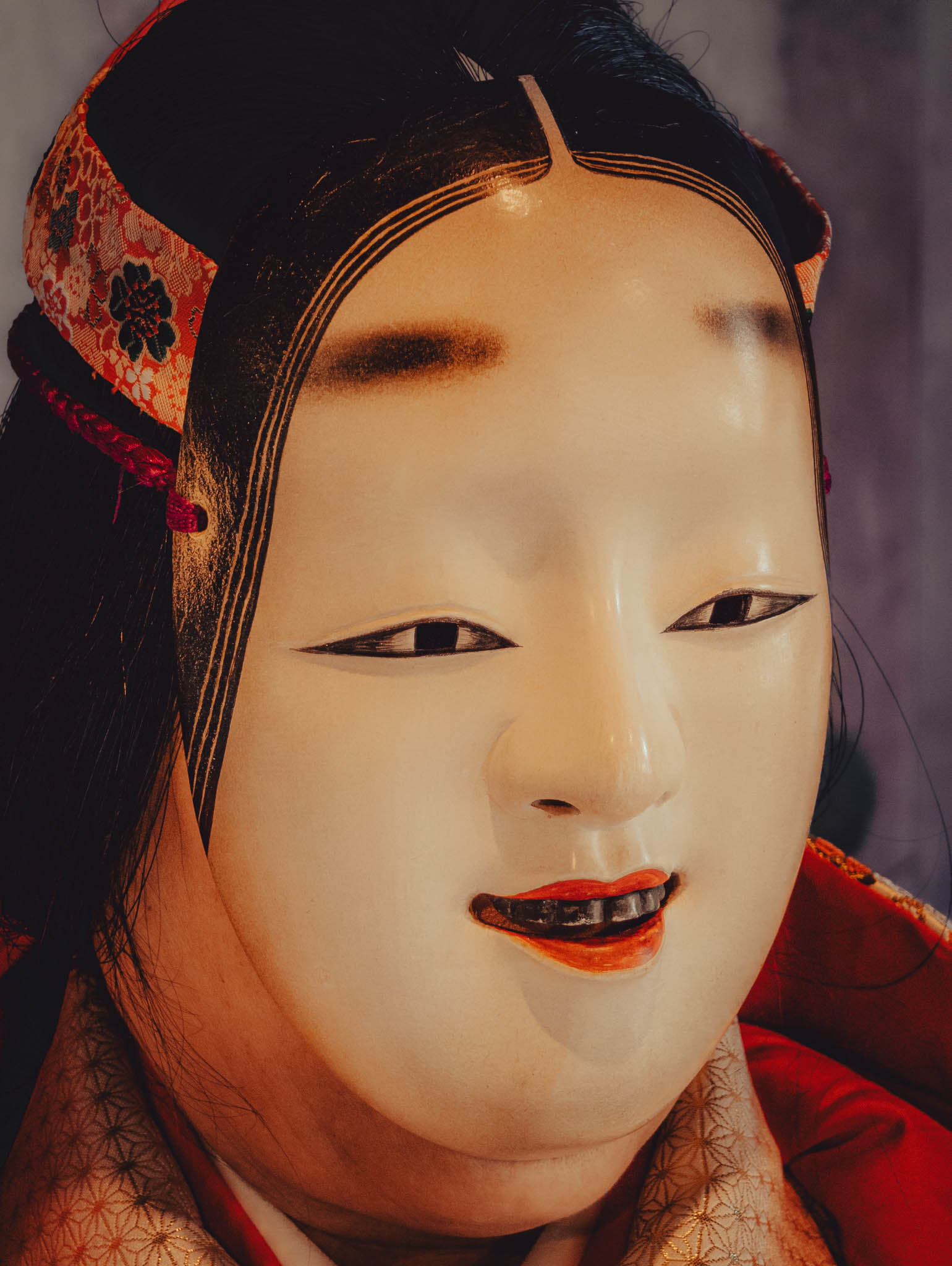
I found myself wondering — as I studied my smartphone selfie-mode image, as well as the masked visages of my fellow students — if behind the gilded and painted hinoki wood was anything like a real human face. More likely one would find a Studio Ghibli monster.
Tonight I looked up the roles and meanings associated with the various masks we wore. Sensei had allowed us to choose. I selected a fierce golden Shishiguchi (獅子口, “lion’s mouth”). It’s not bad to find oneself representing the messenger or steed of a bodhisattva, the vehicle of enlightenment. But my companions’ choices had more ominous implications.