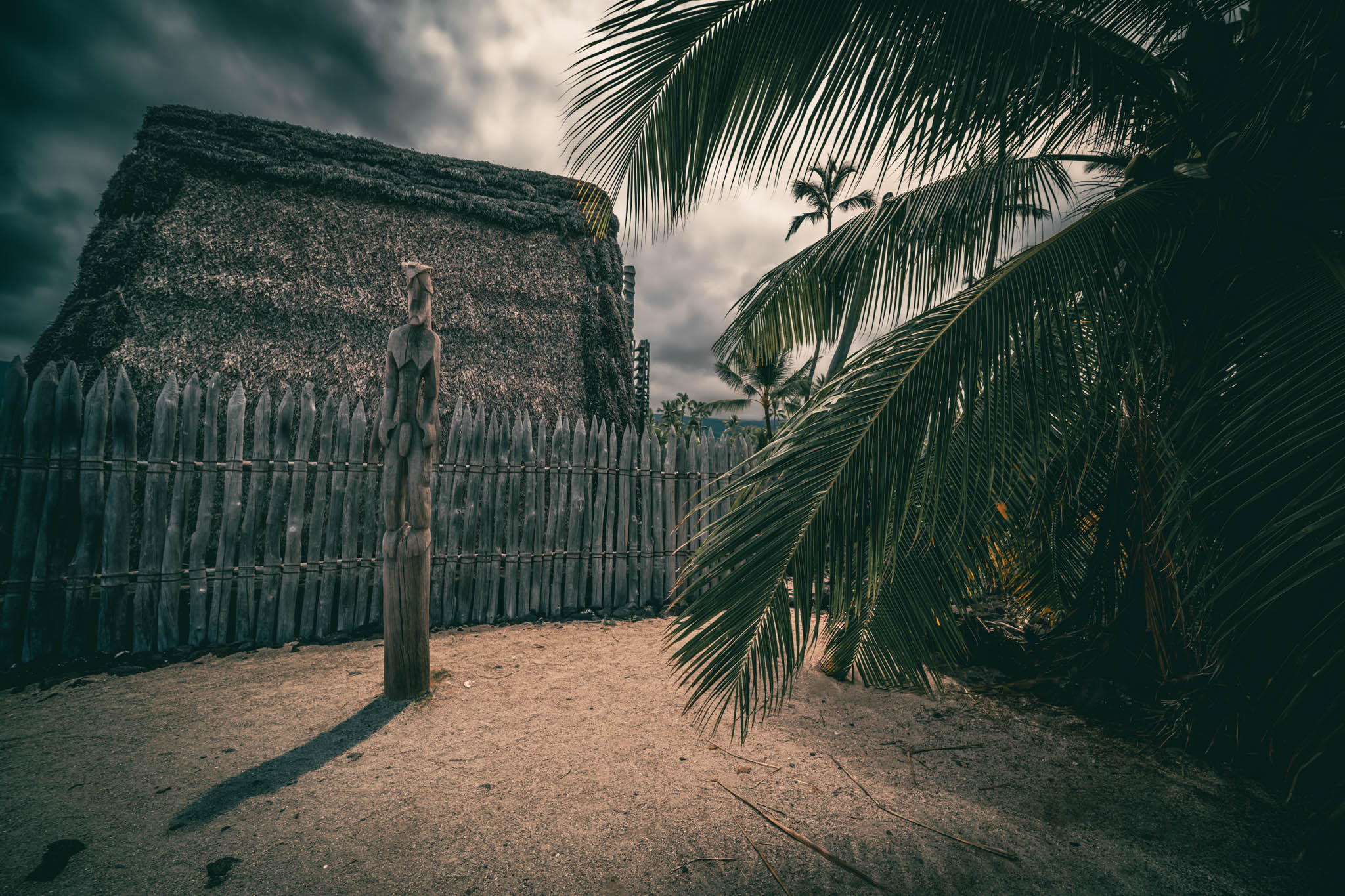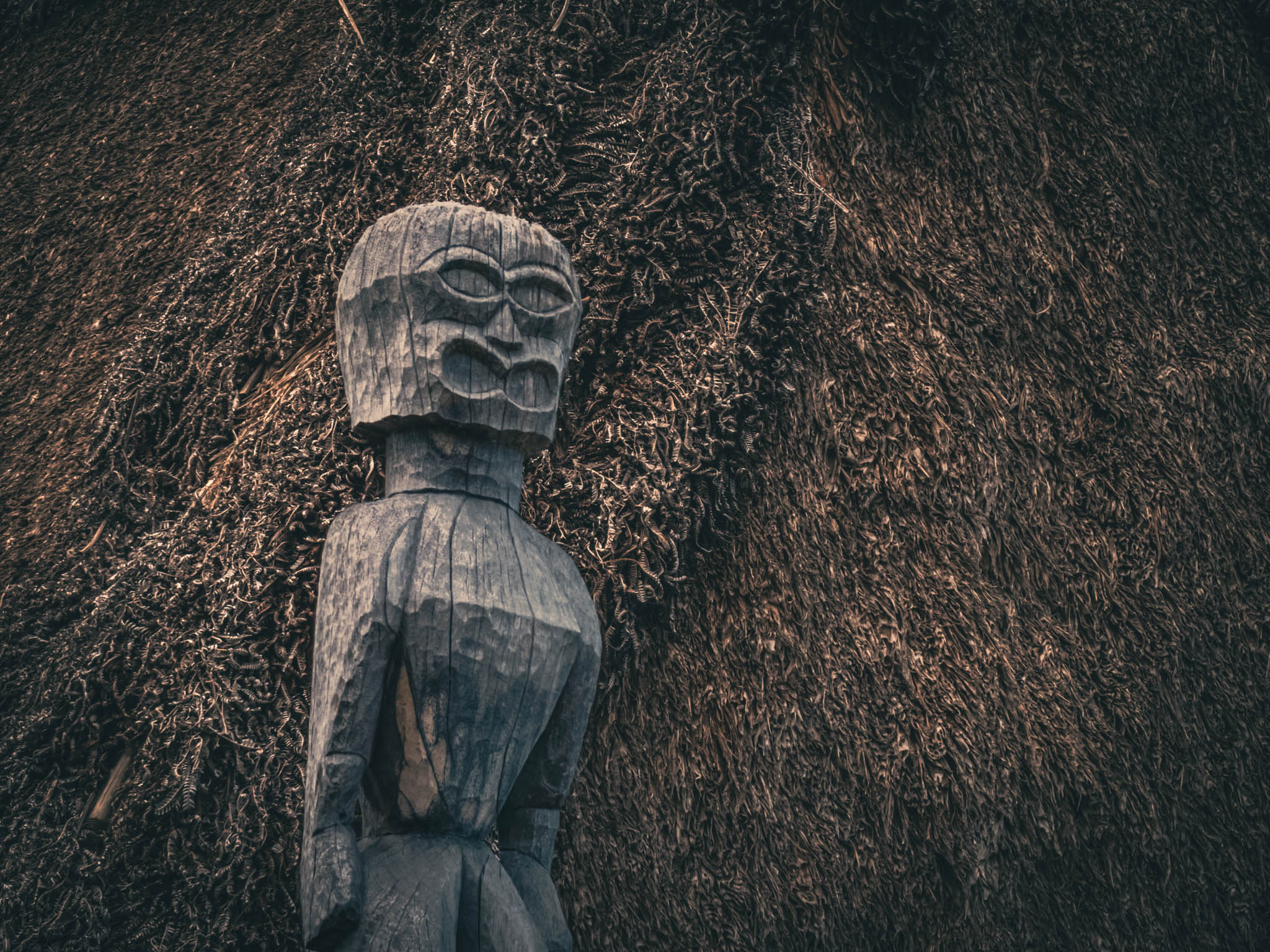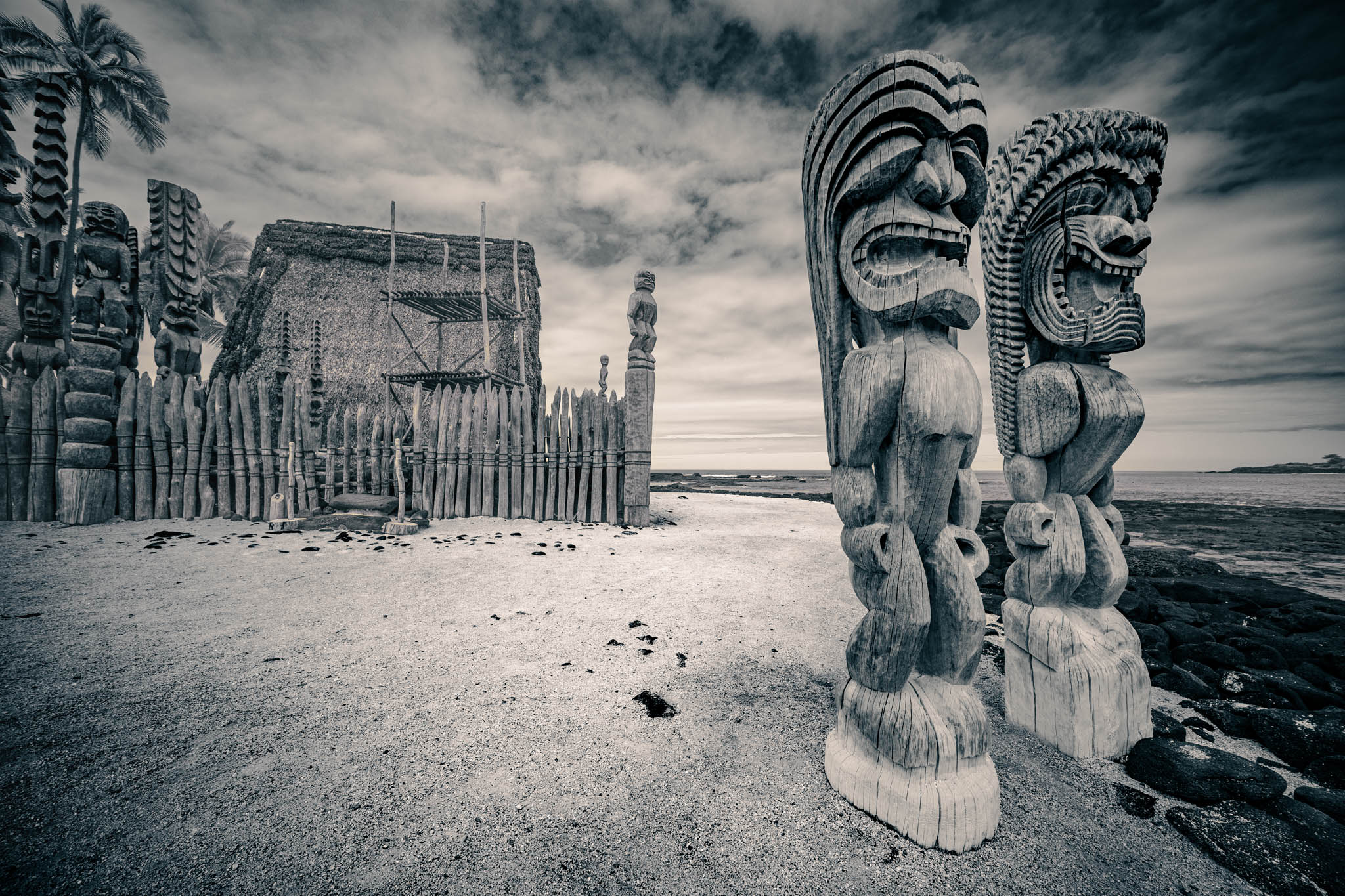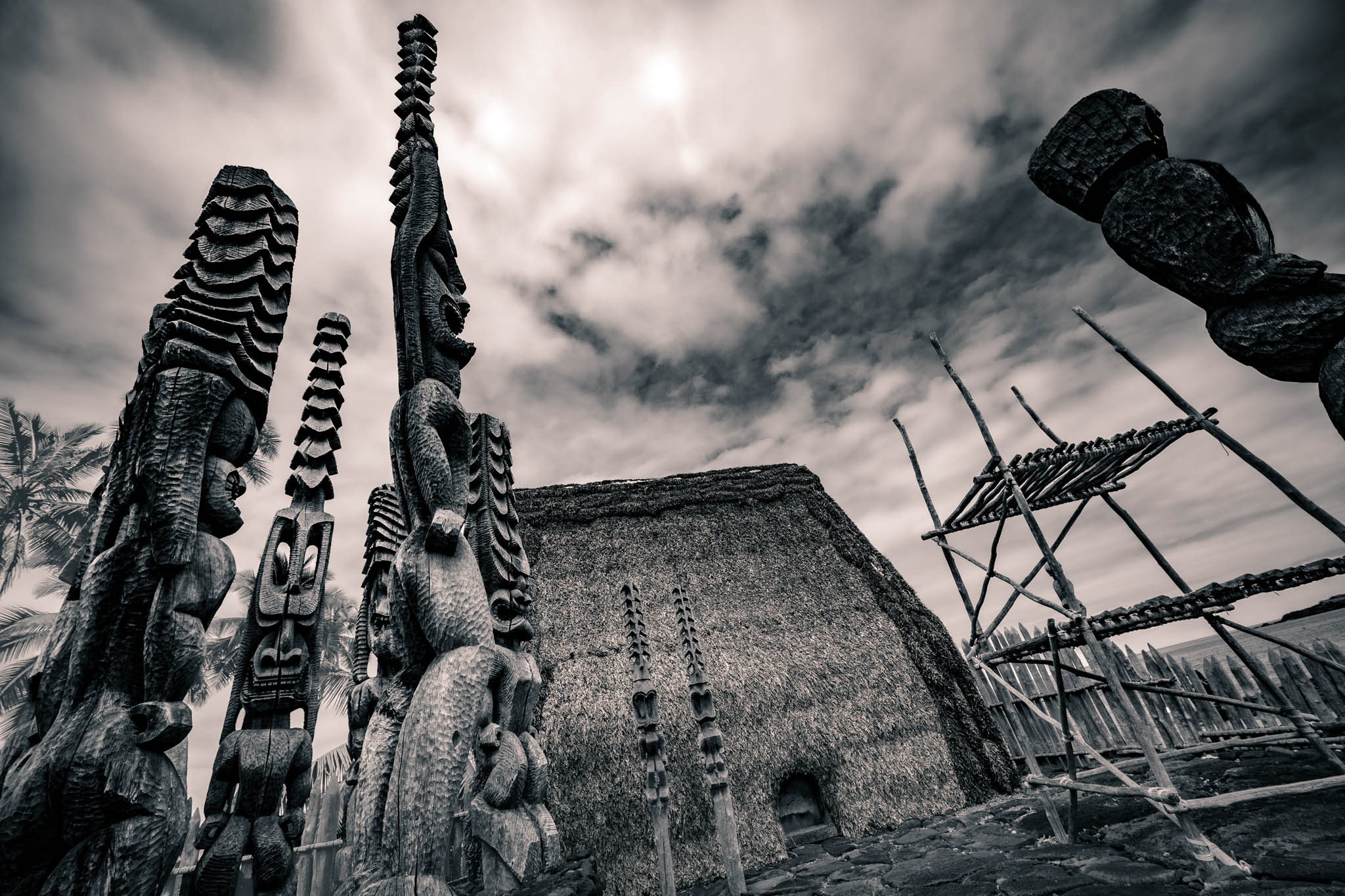
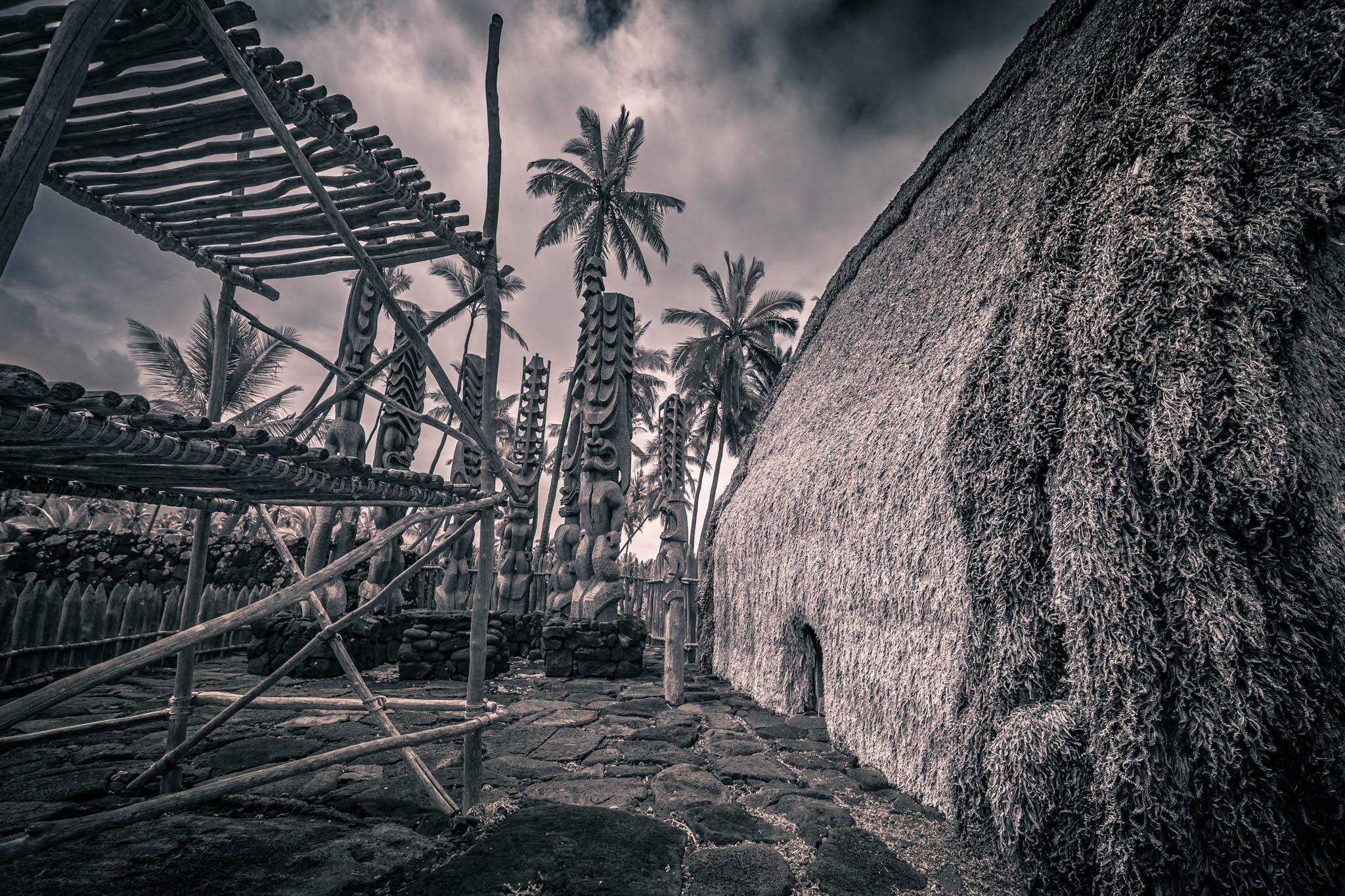
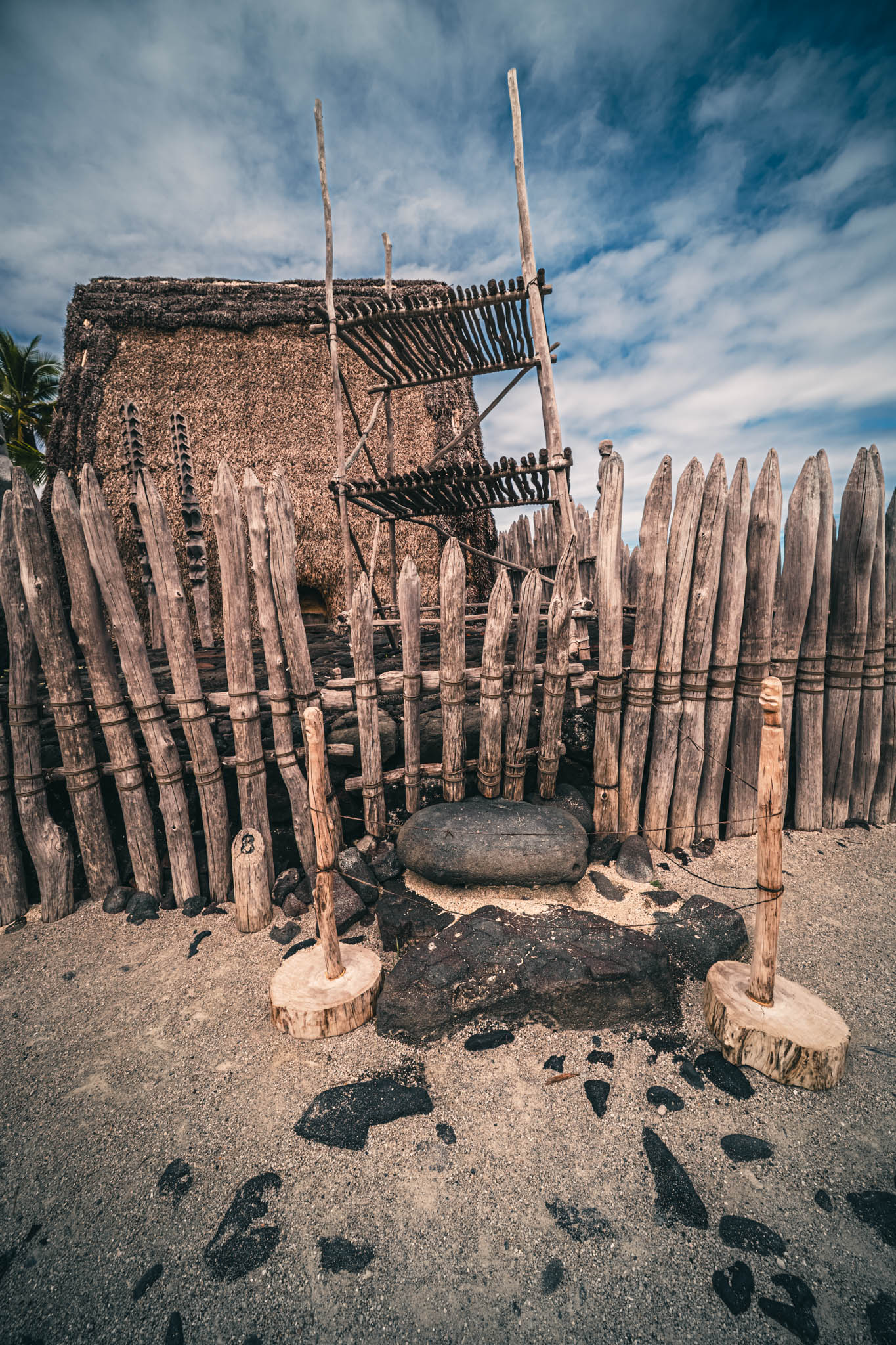
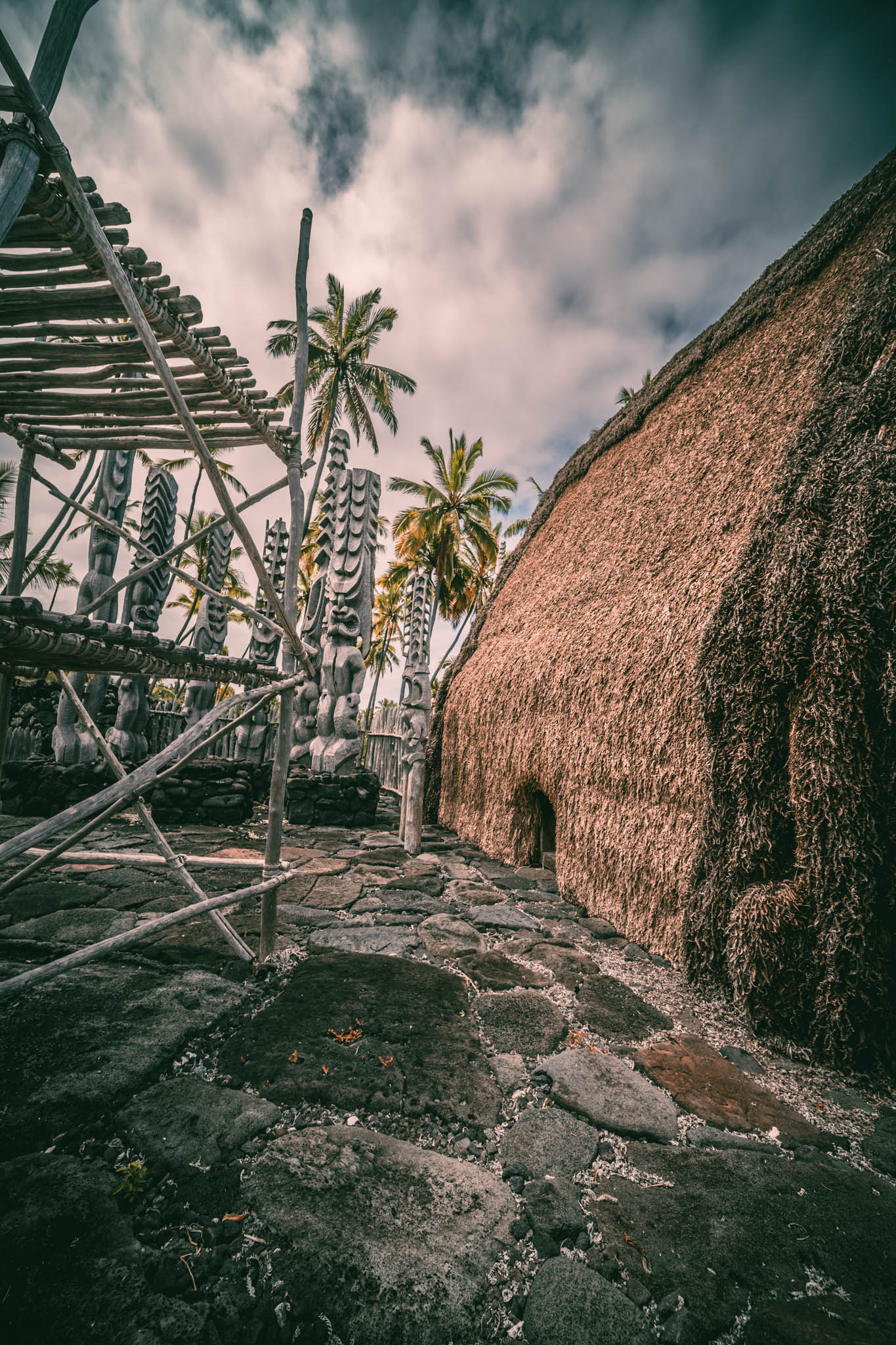
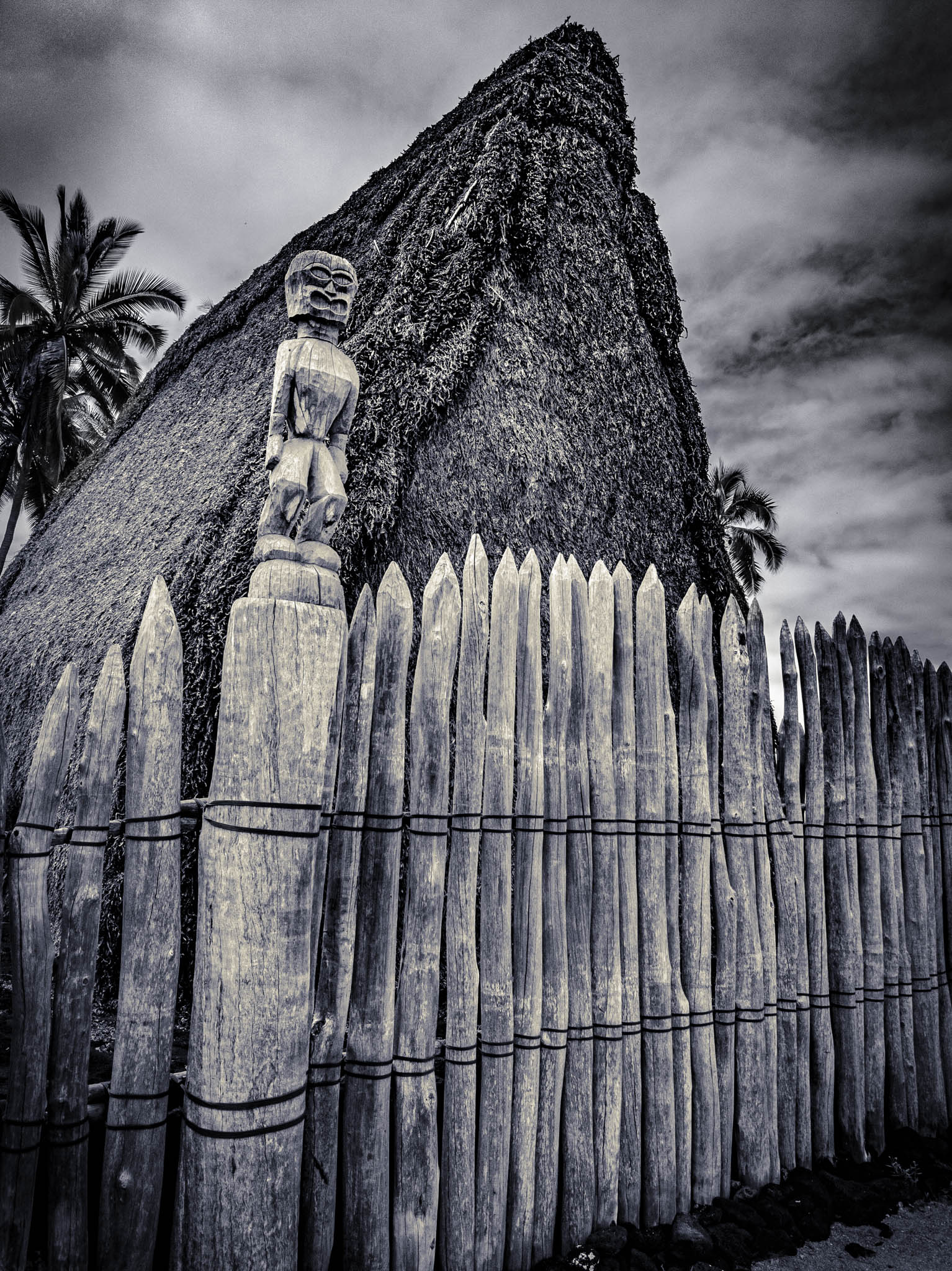
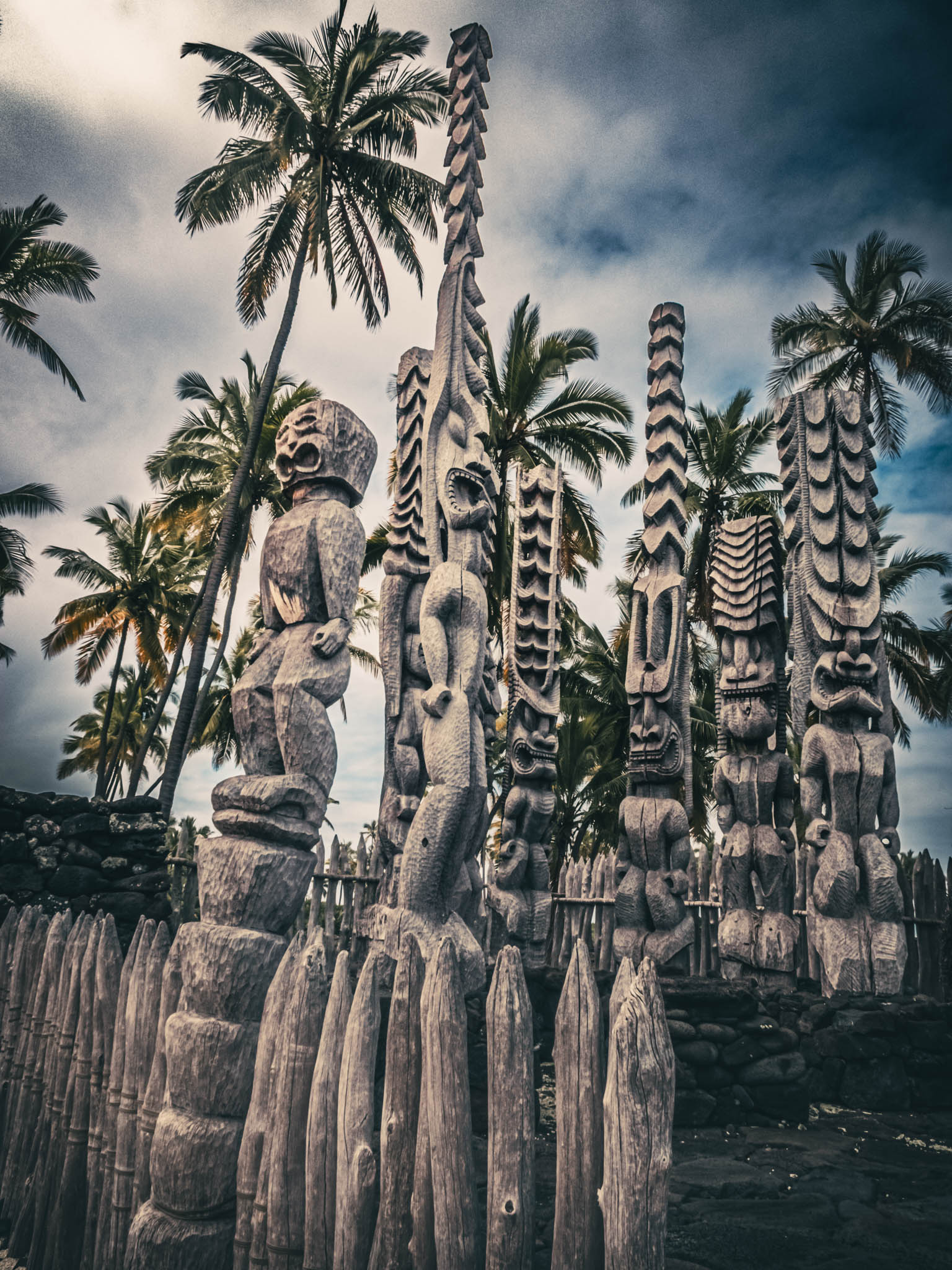
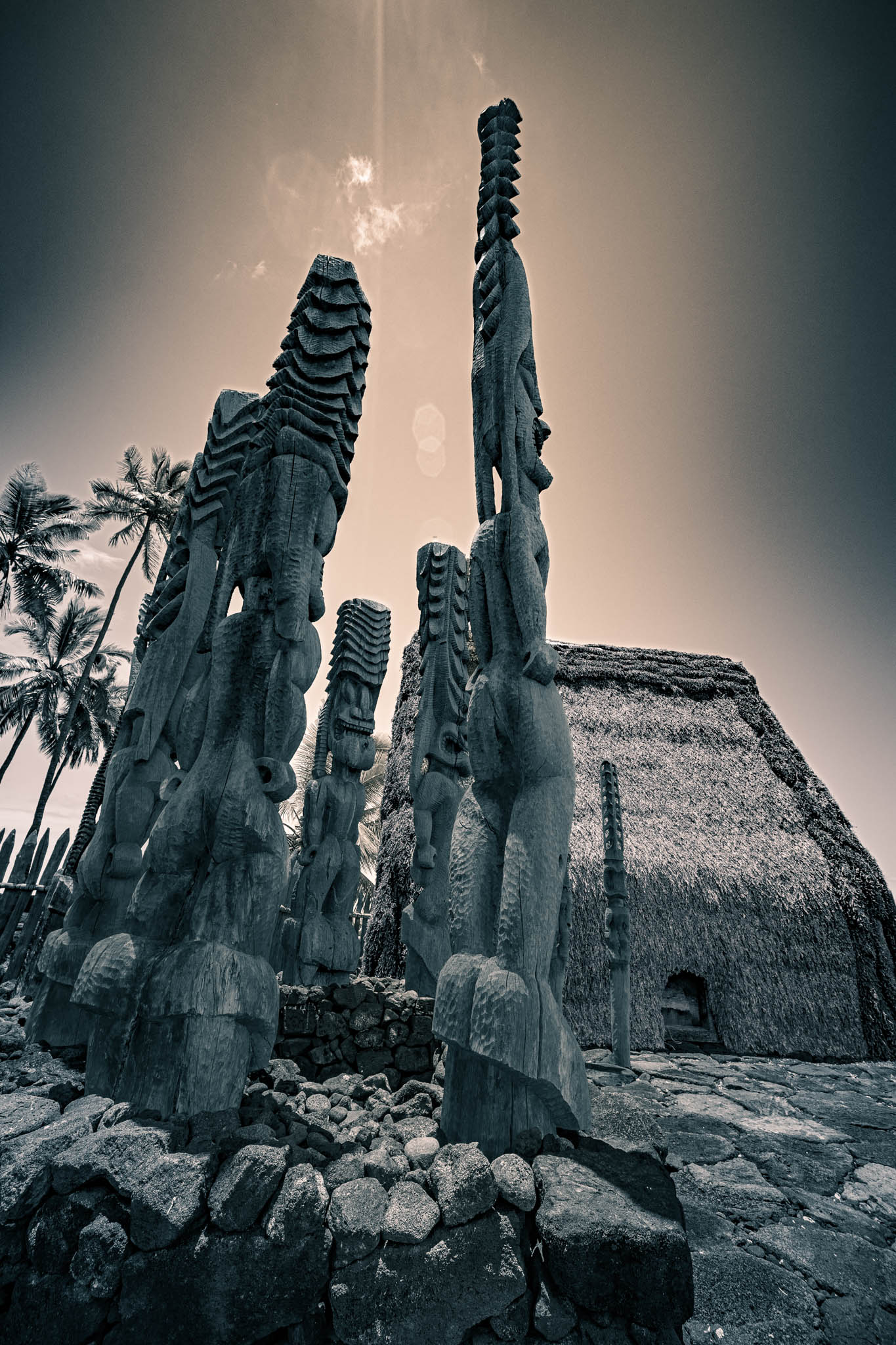
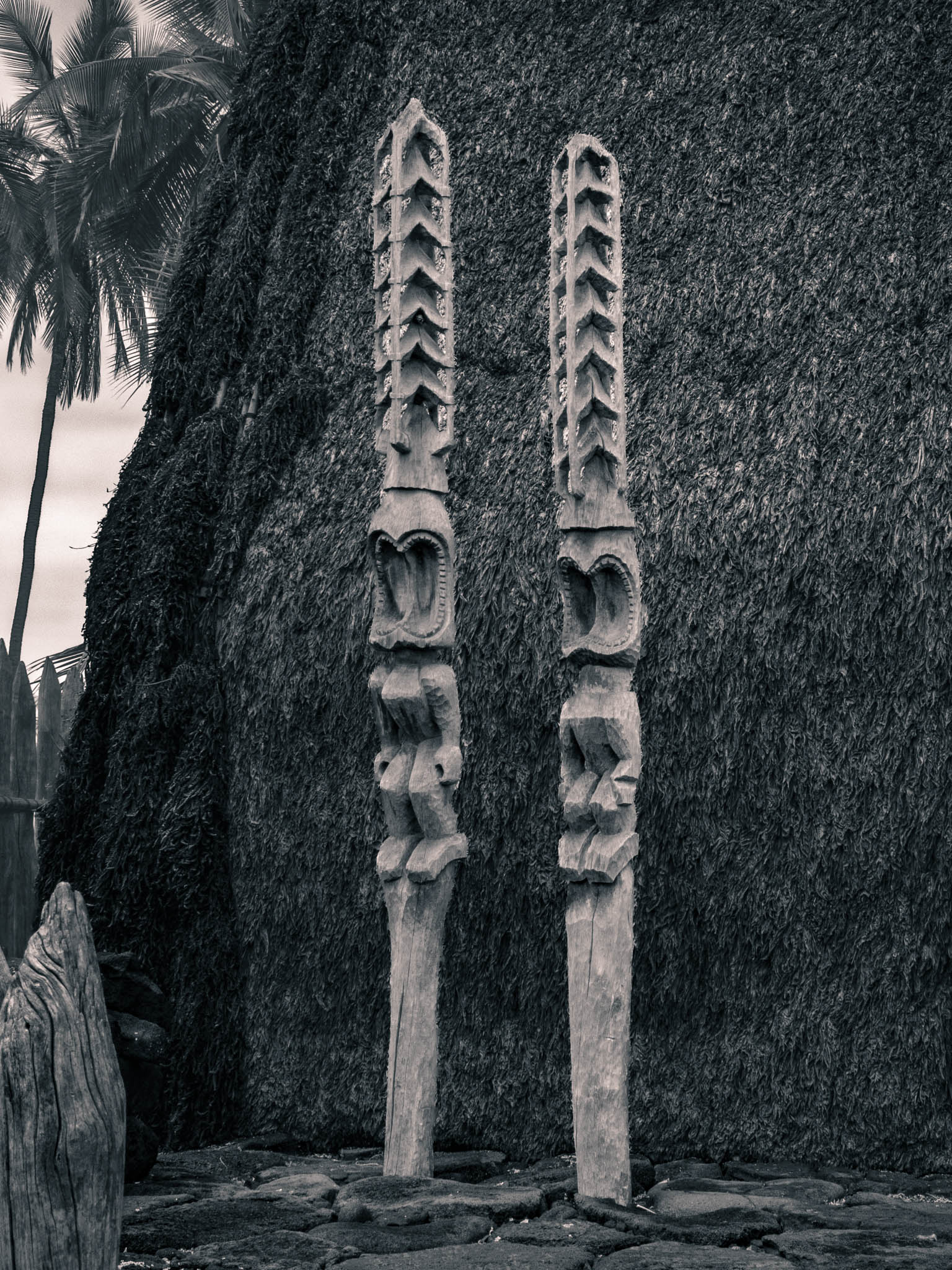
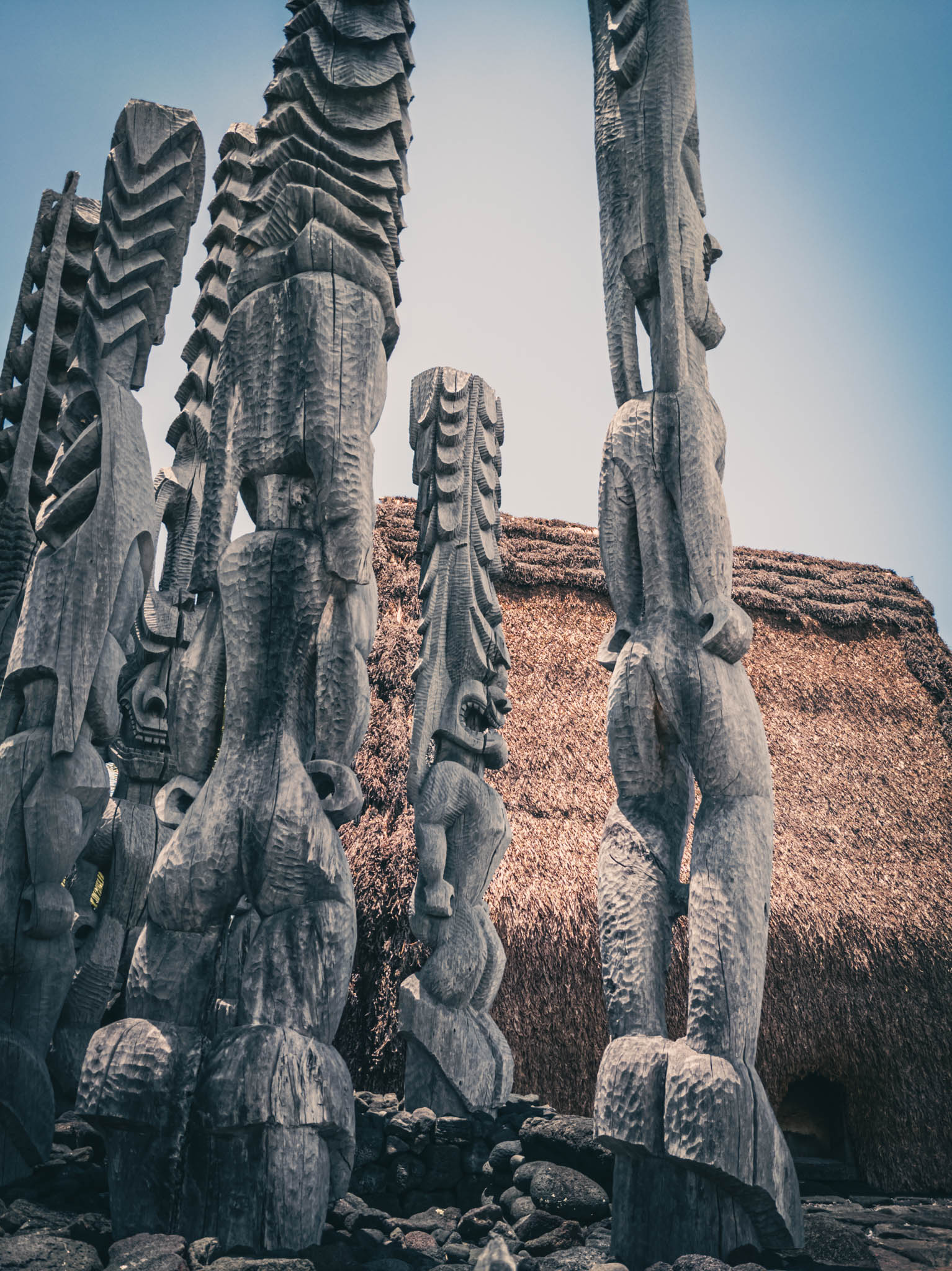
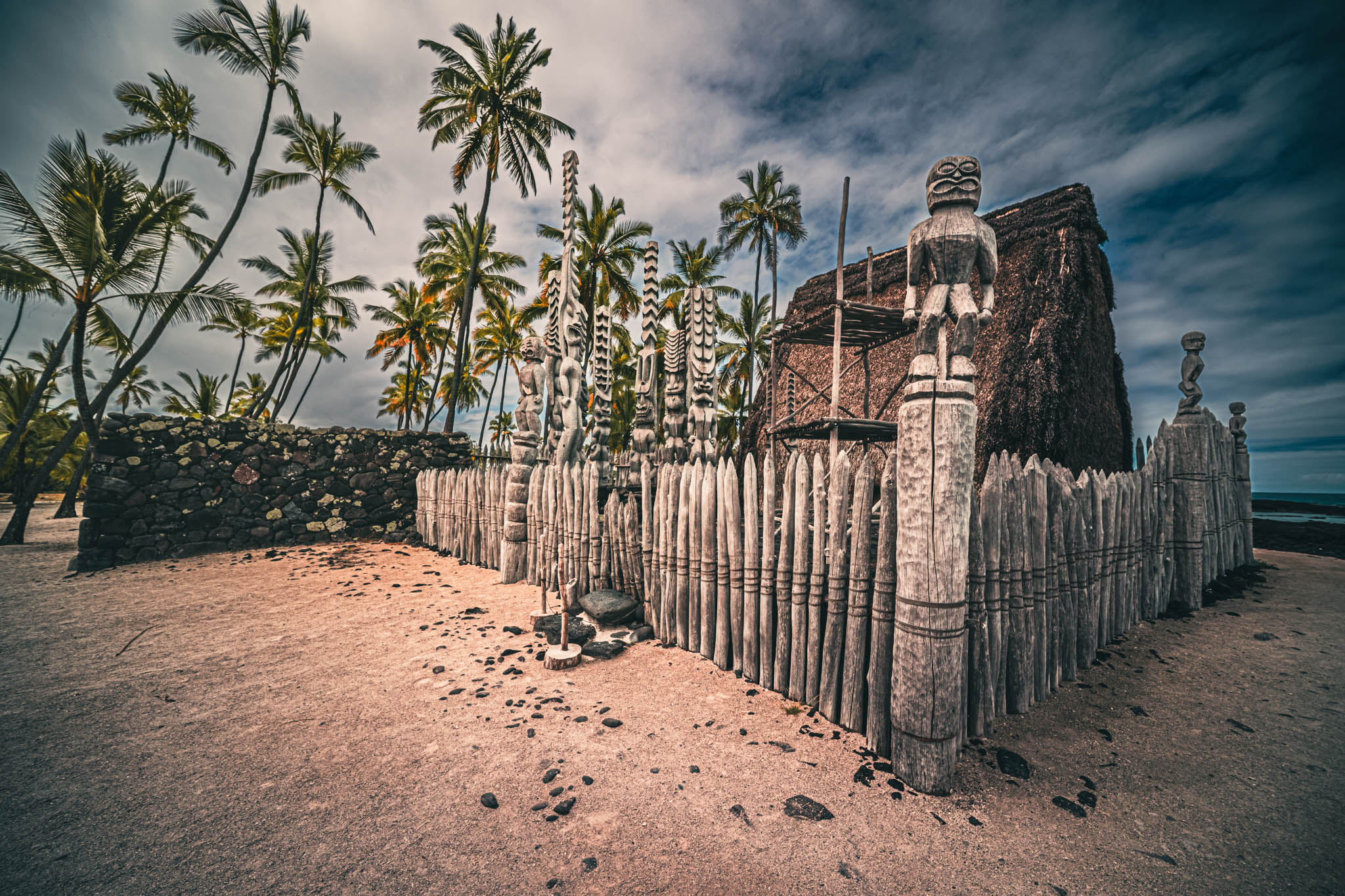
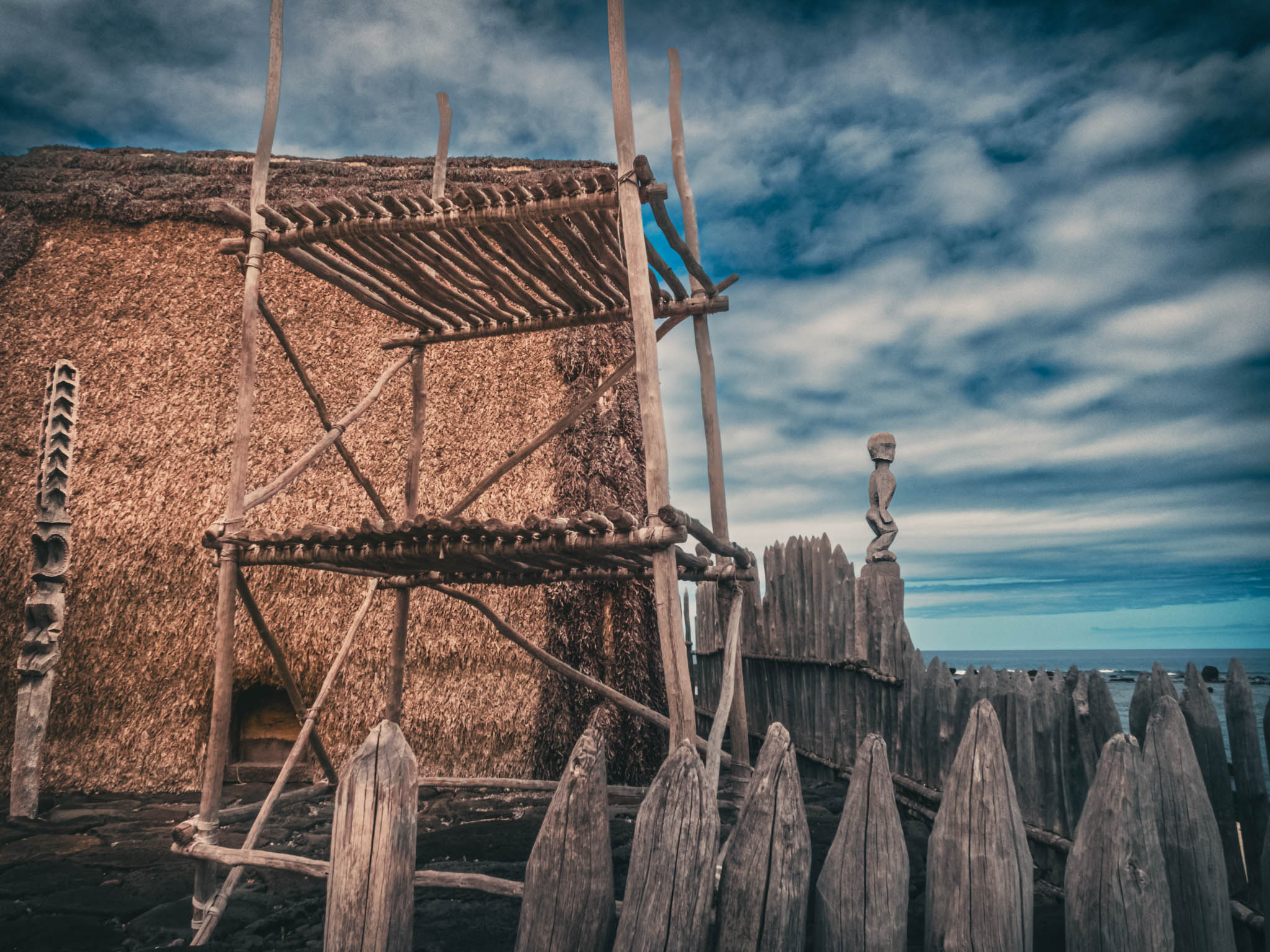
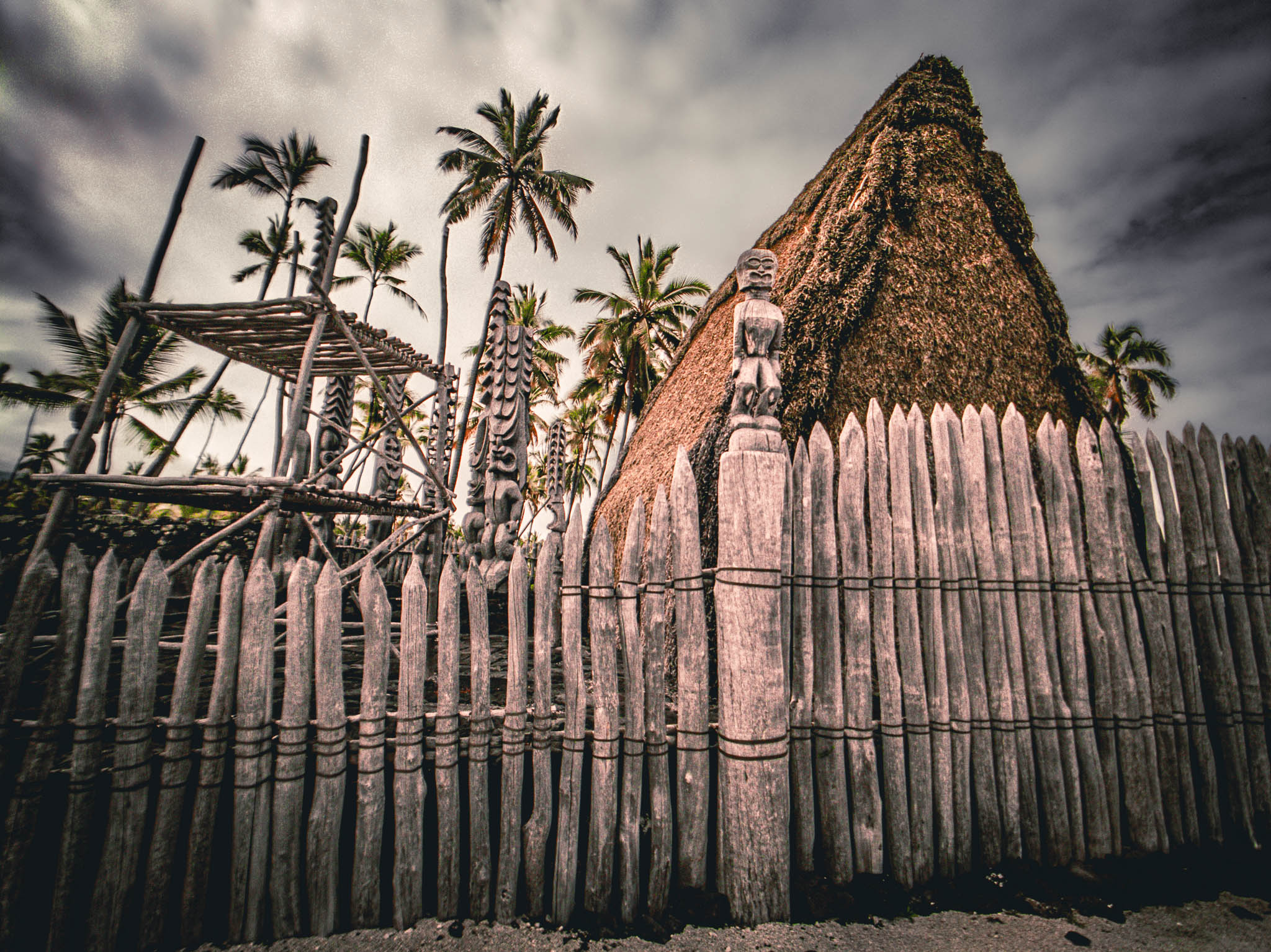
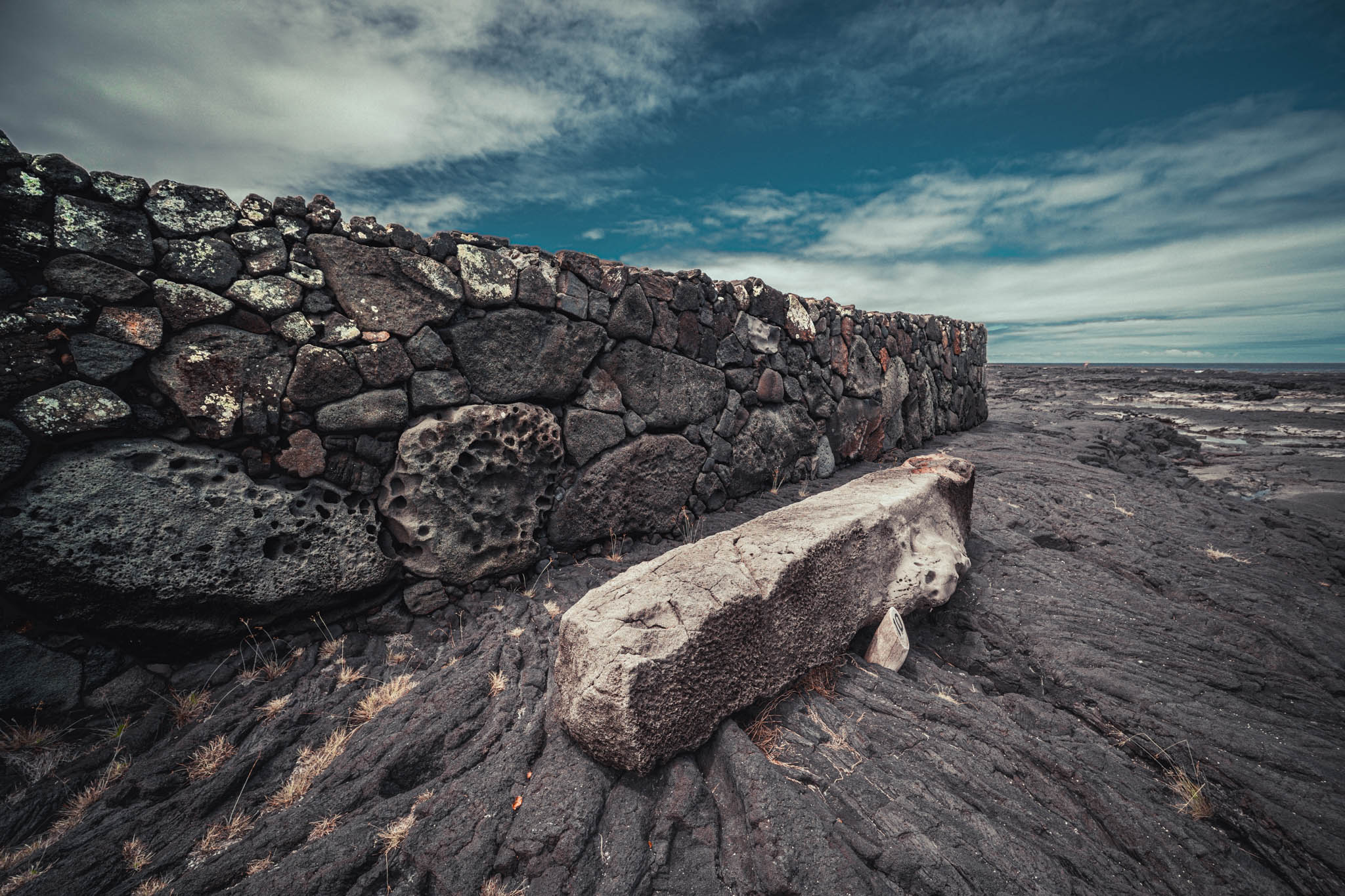
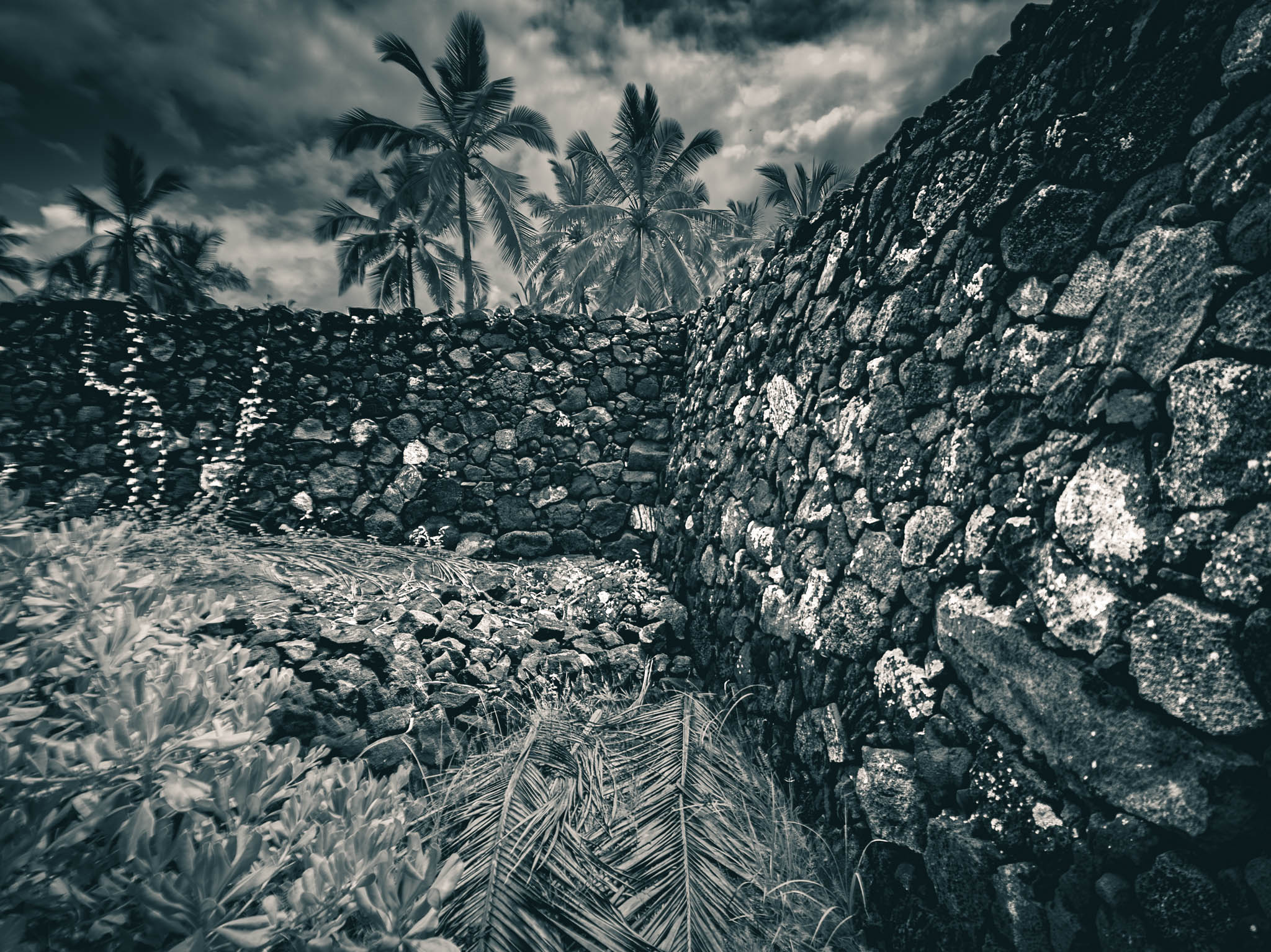
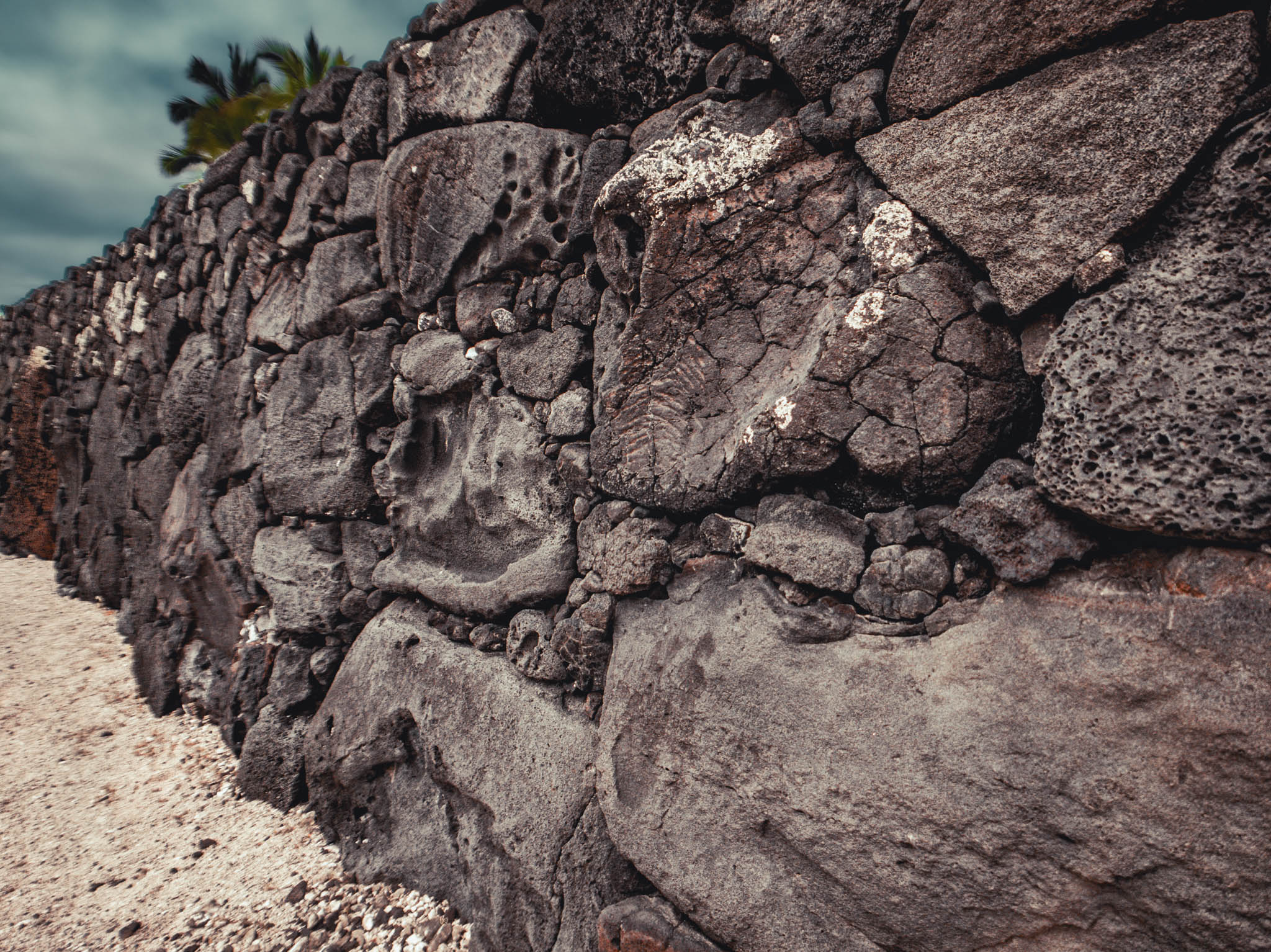
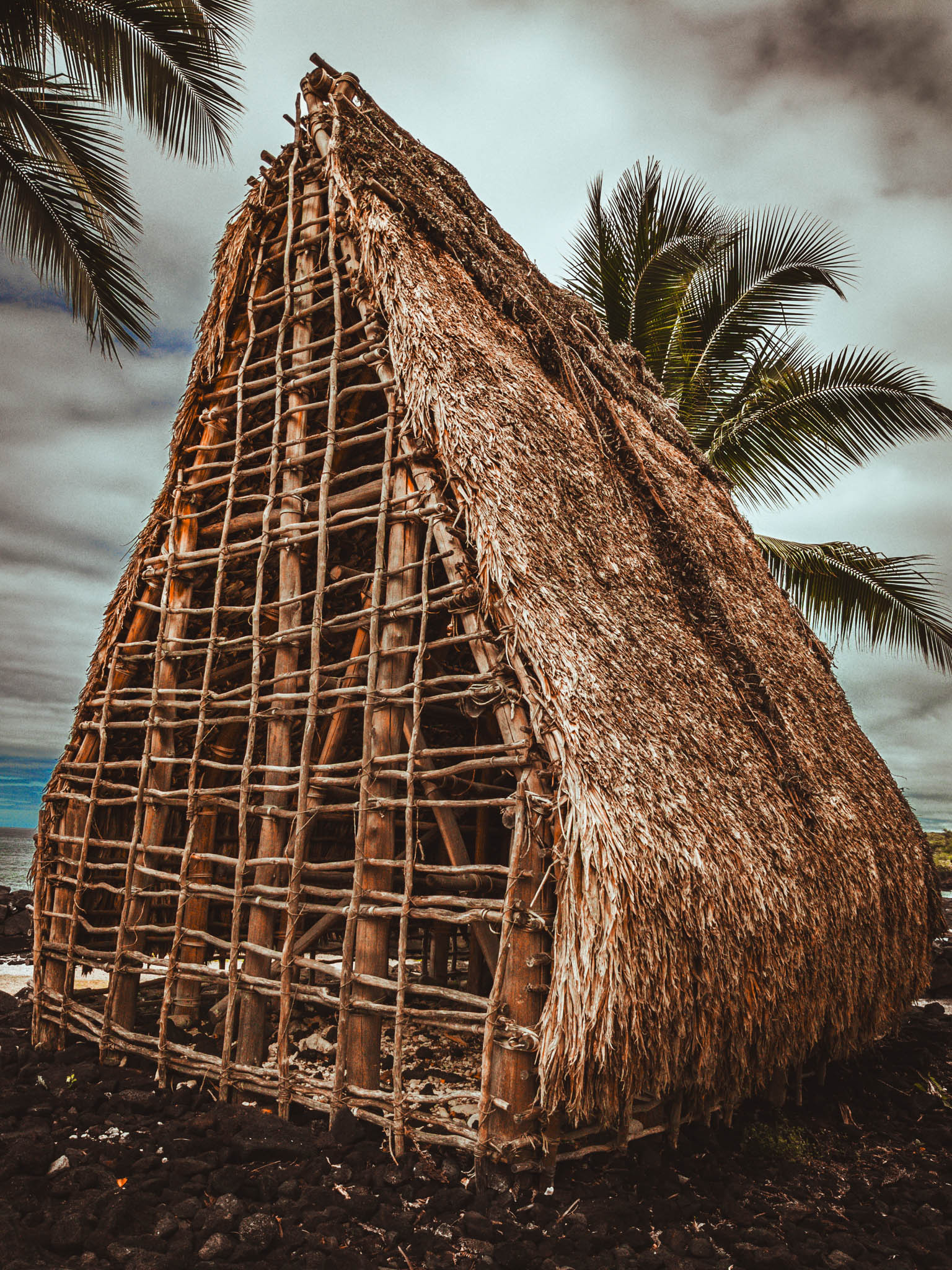
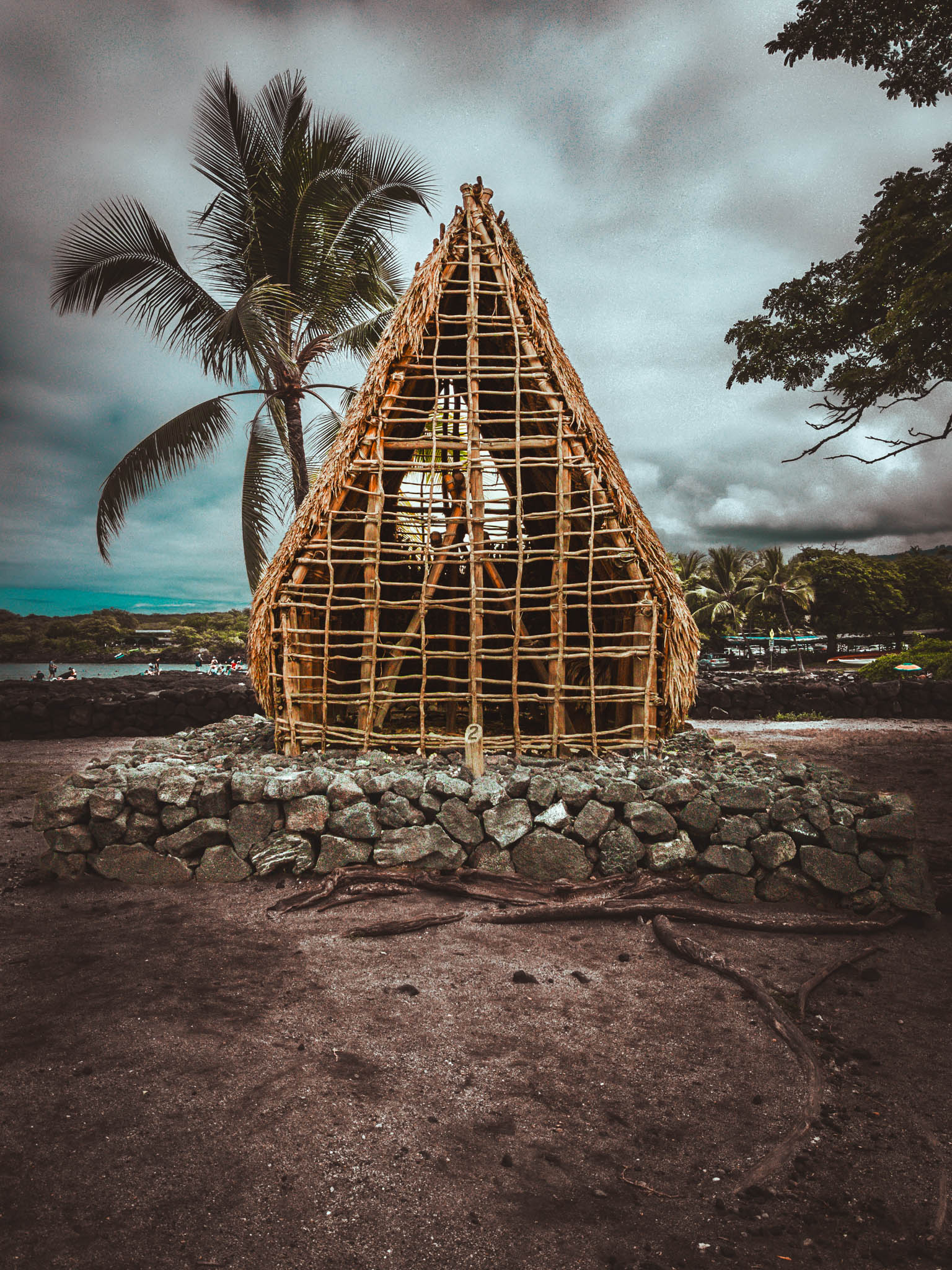
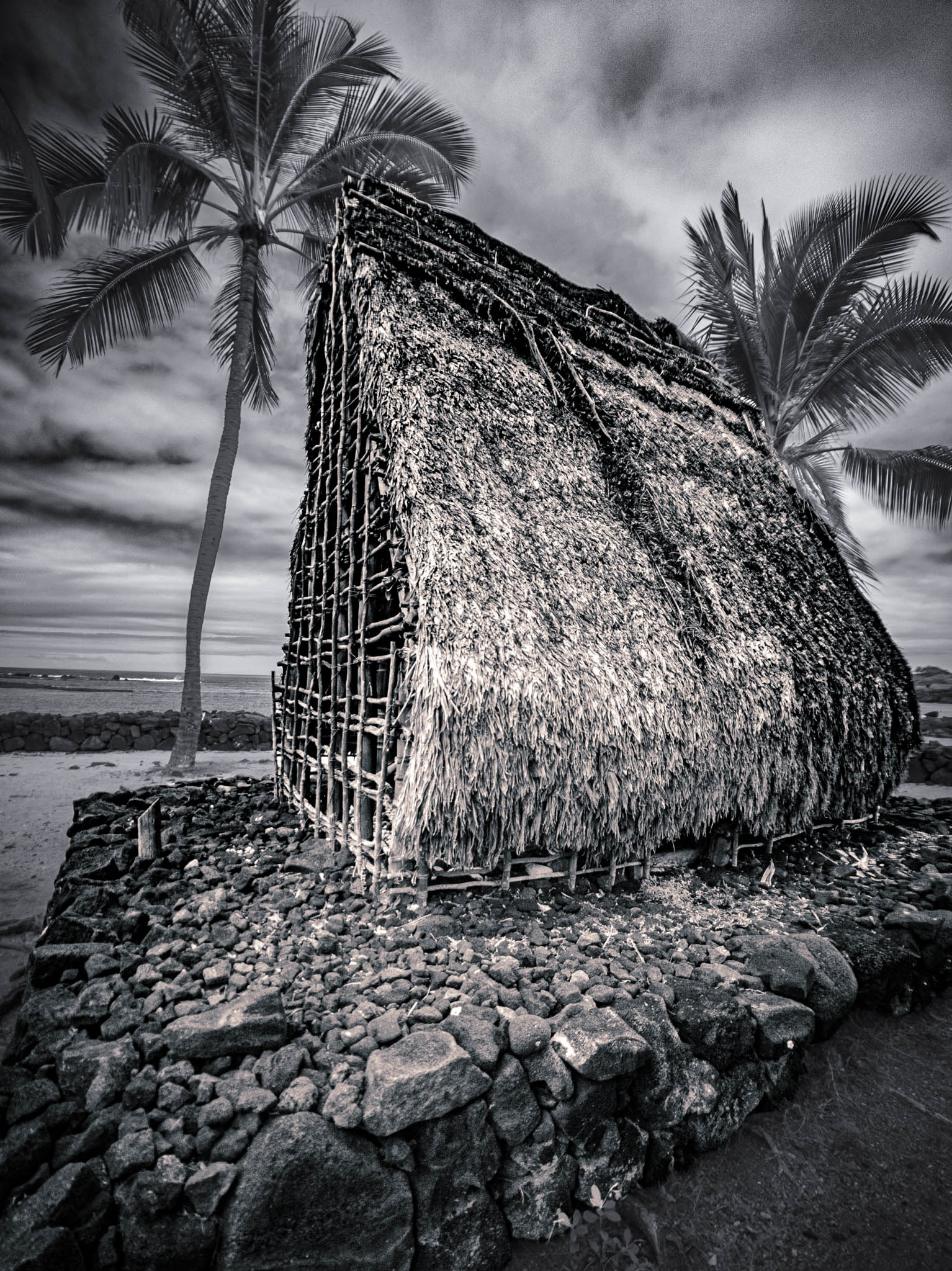
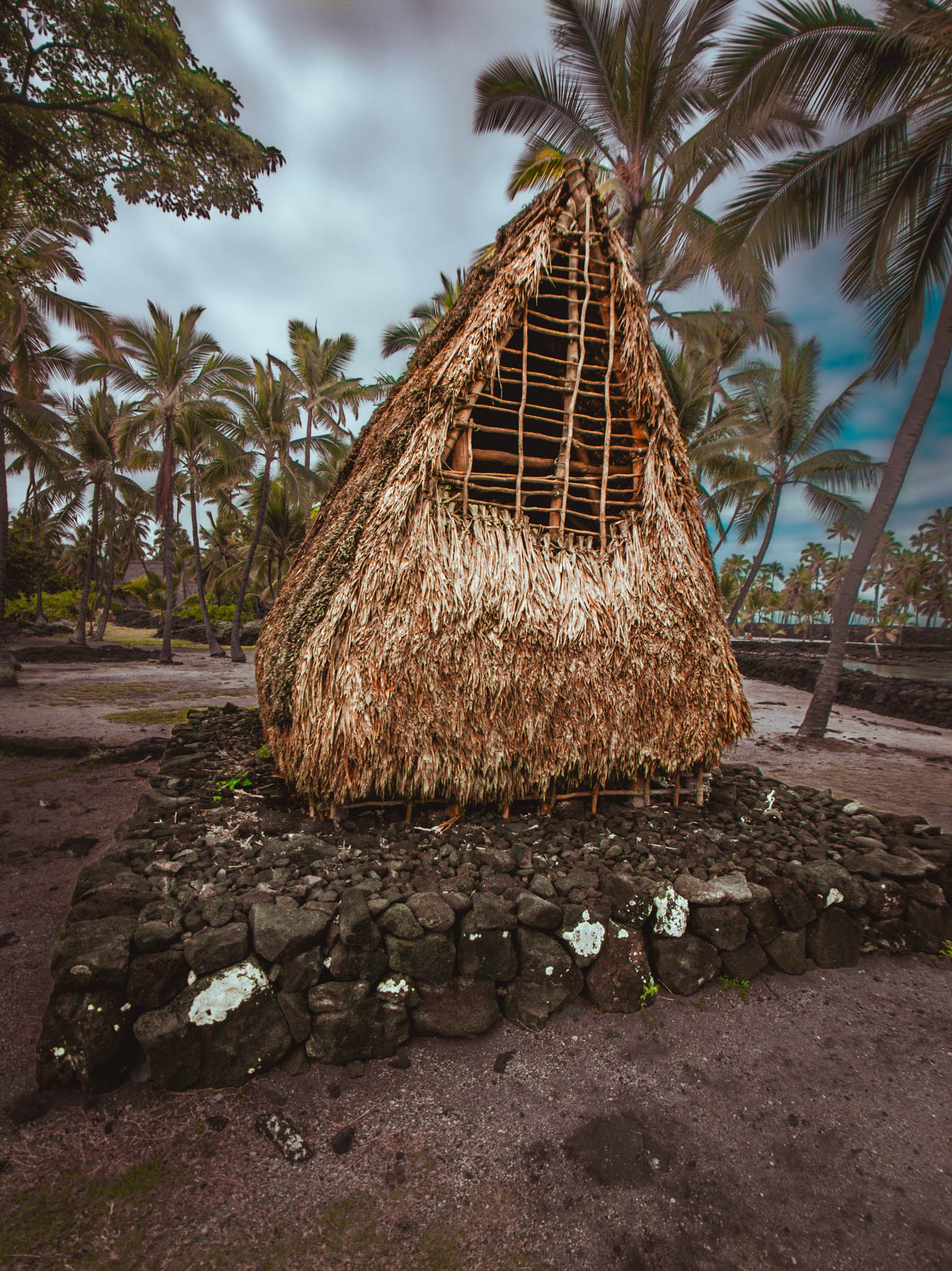
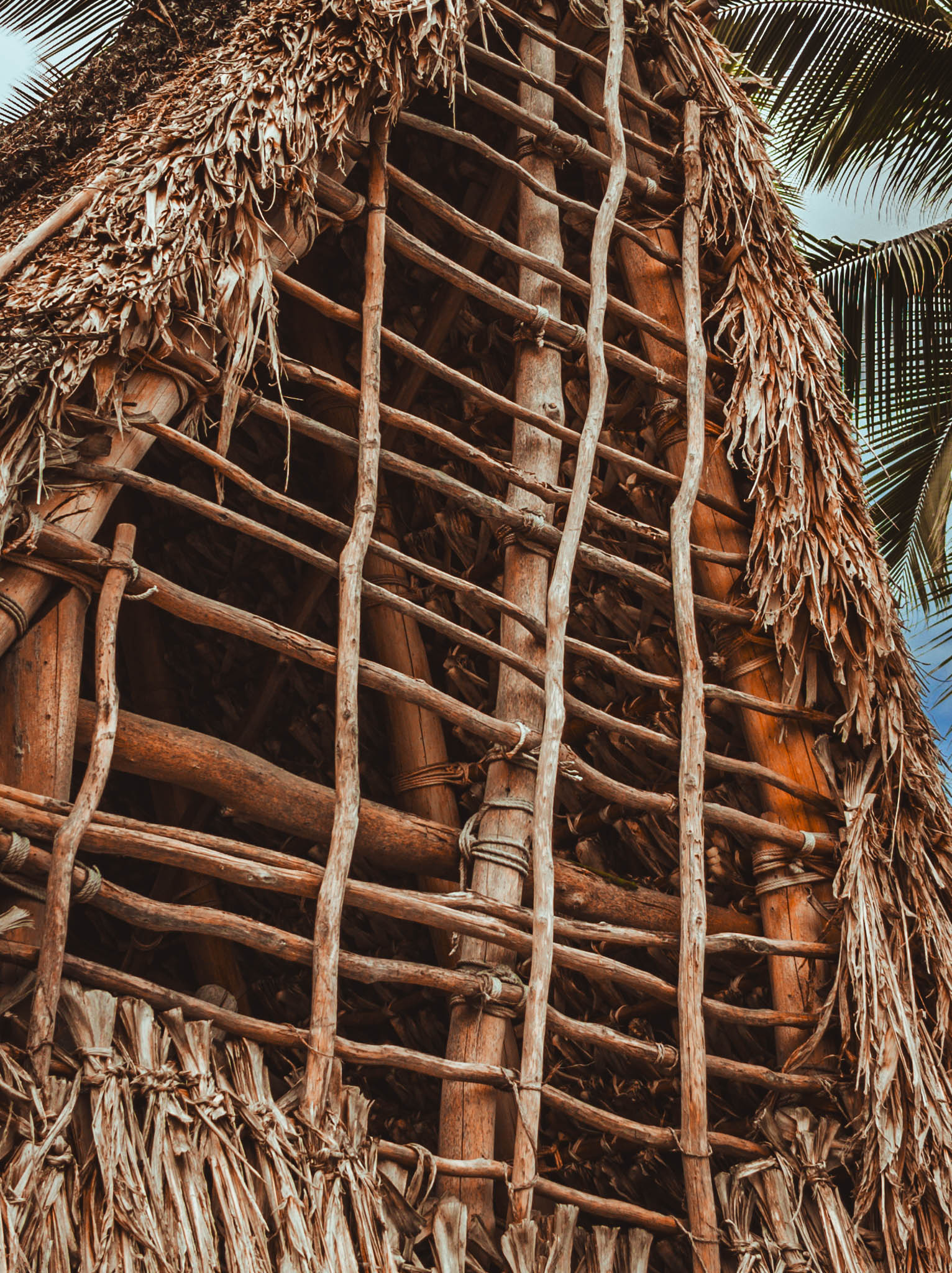
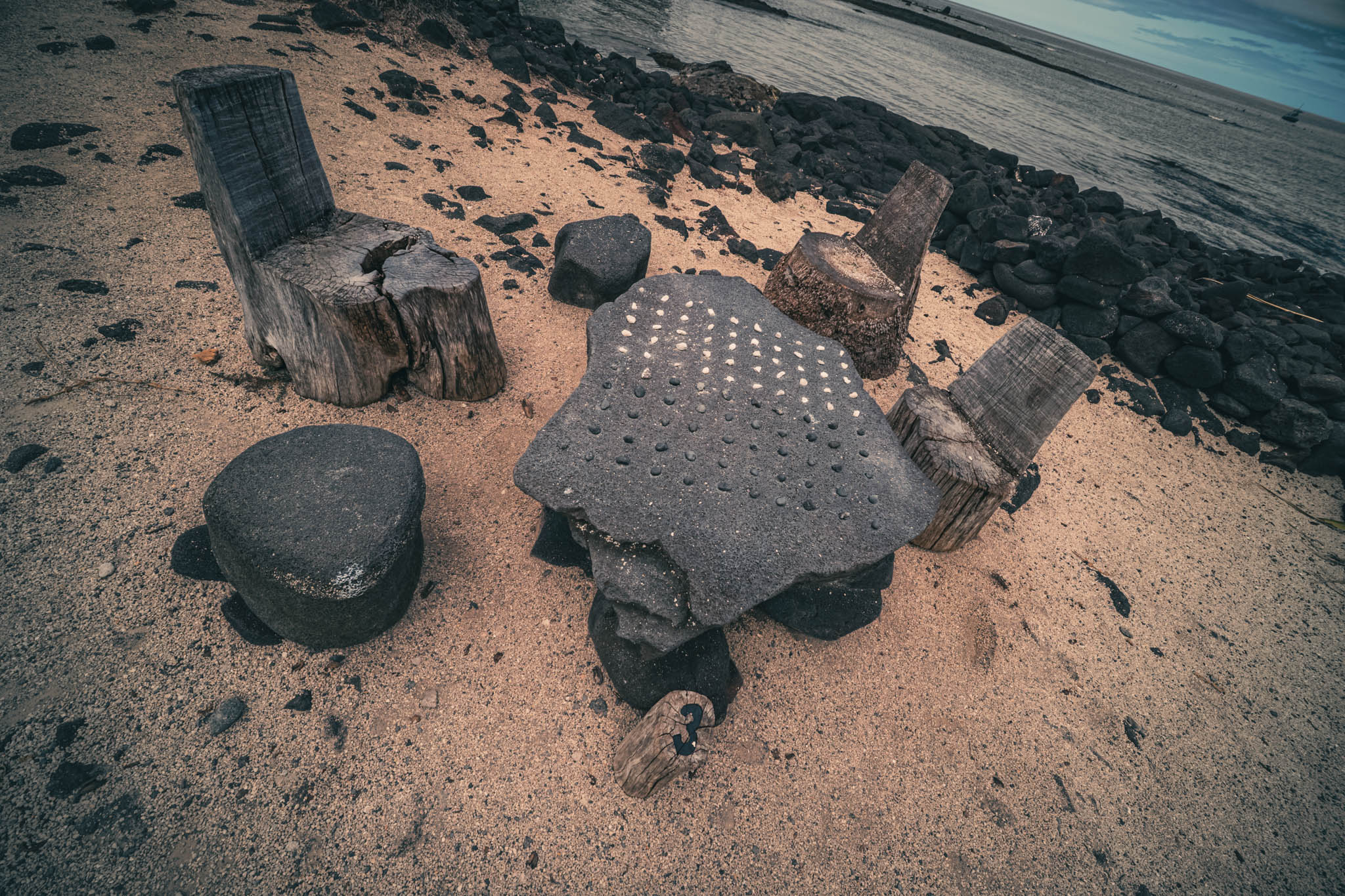
I visited the Pu’uhonua O Honaunau National Historical Park <link> for the first time and all too briefly almost ten years ago. So I was looking forward, this morning, to a second and longer opportunity to study and of course photograph the unworldly structures and artifacts that dot the lava shelf. It’s a great place to indulge in the utter strangeness of the past, which is an activity I can never resist.
But not far before the turnoff towards the Pu’uhonua, I drove past a pair of protestors, sitting in the hot Hawaiian sun on folding beach chairs by the side of Keala O Keawe Road at the margin of a crumbling loop of tarmac presumably designated as a pull-off for slow-moving, traffic-impeding vehicles (although there was no apparent traffic ahead or behind our vehicle today).
The protesters were both very old, very white — haole — but clearly loyal adherents to a relatively recent political movement. One was wearing that red baseball cap so prized by the former President’s “MAKE AMERICA GREAT AGAIN” followers. And looming next to these wilting superannuated zealots was a surprisingly substantial scaffold or shopping stand-like structure supporting posters and mounted with various banners and flags. There were signs declaring COVID to be FAKE, that the CDC was composed of TYRANTS, that VACCINES ARE MURDER, and of course that TRUMP WON. There were United States flags (upside-down, indicating distress) and snaky Gadsden flags in varying tints of yellow.
Present too were examples of the state flag of Hawaii (which is of course the same flag once flown by Kamehameha’s Kingdom, though also displayed in the “inverted” upside-down position here). Most surprising of all, there was at least one instance of the controversial and probably non-historical “Kānaka Maoli” flag, depicting a Native chief’s standard crossed by a pair of paddles, on a green shield superimposed over green, red, and yellow horizontal stripes.
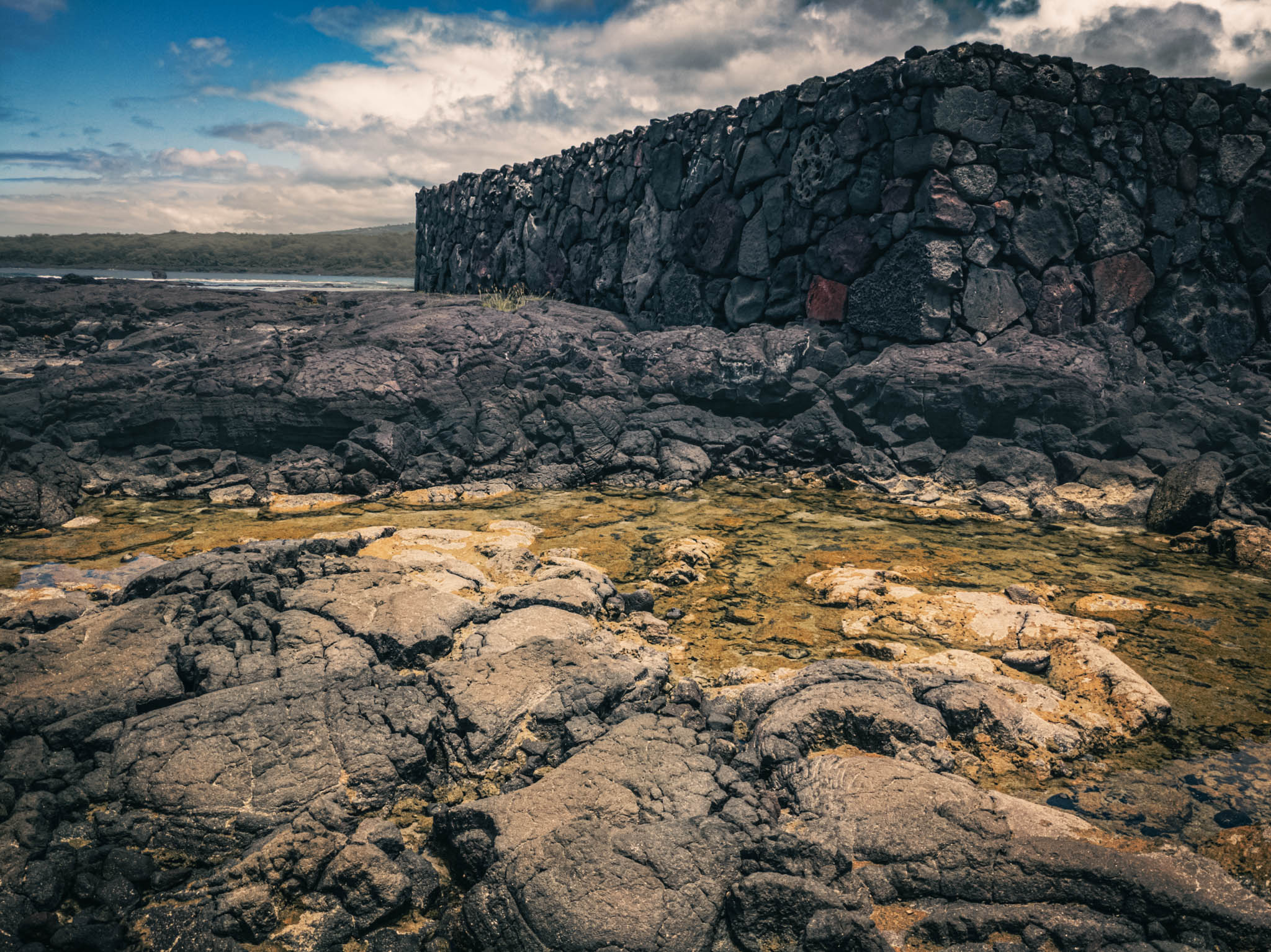
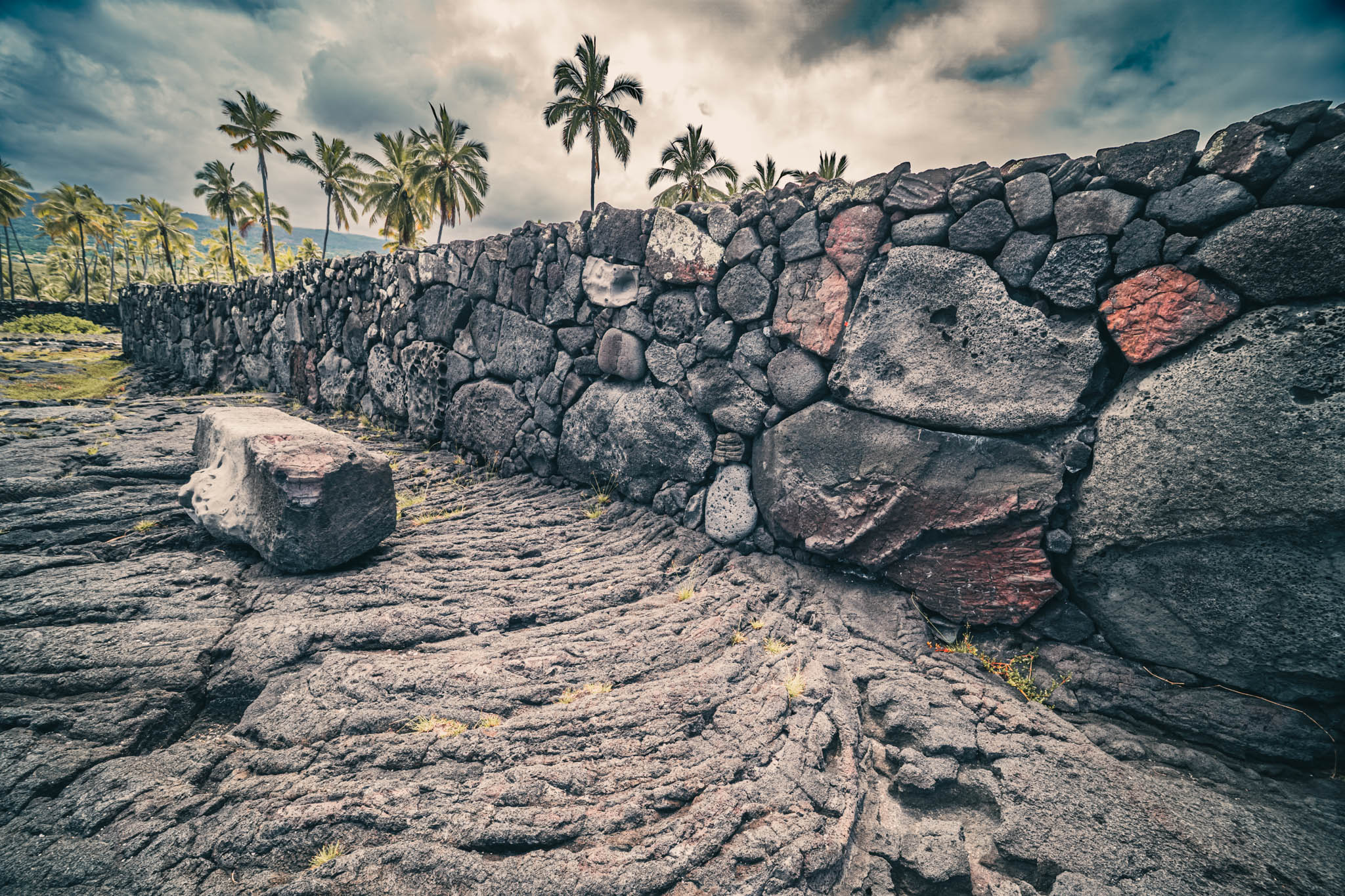
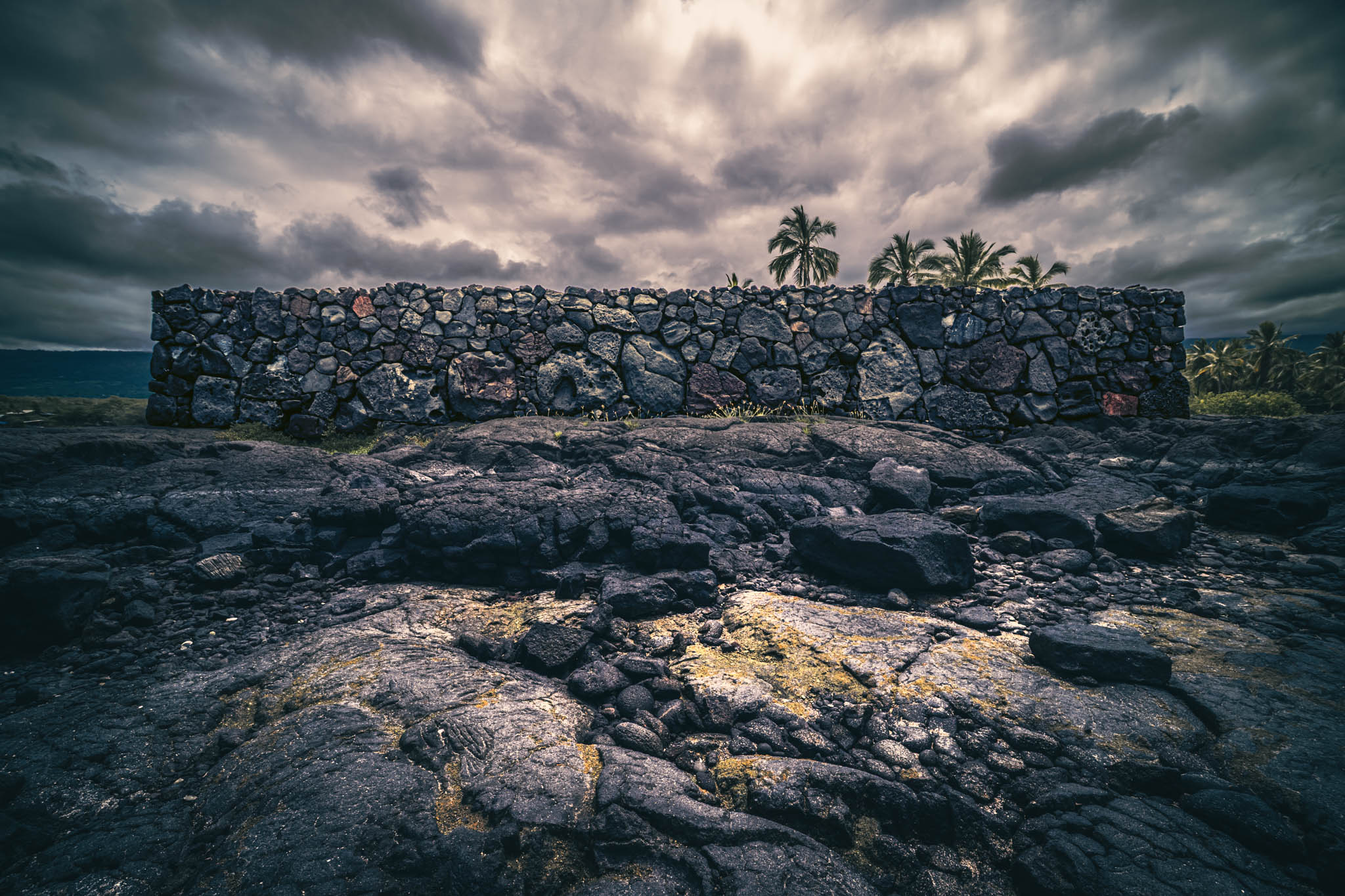
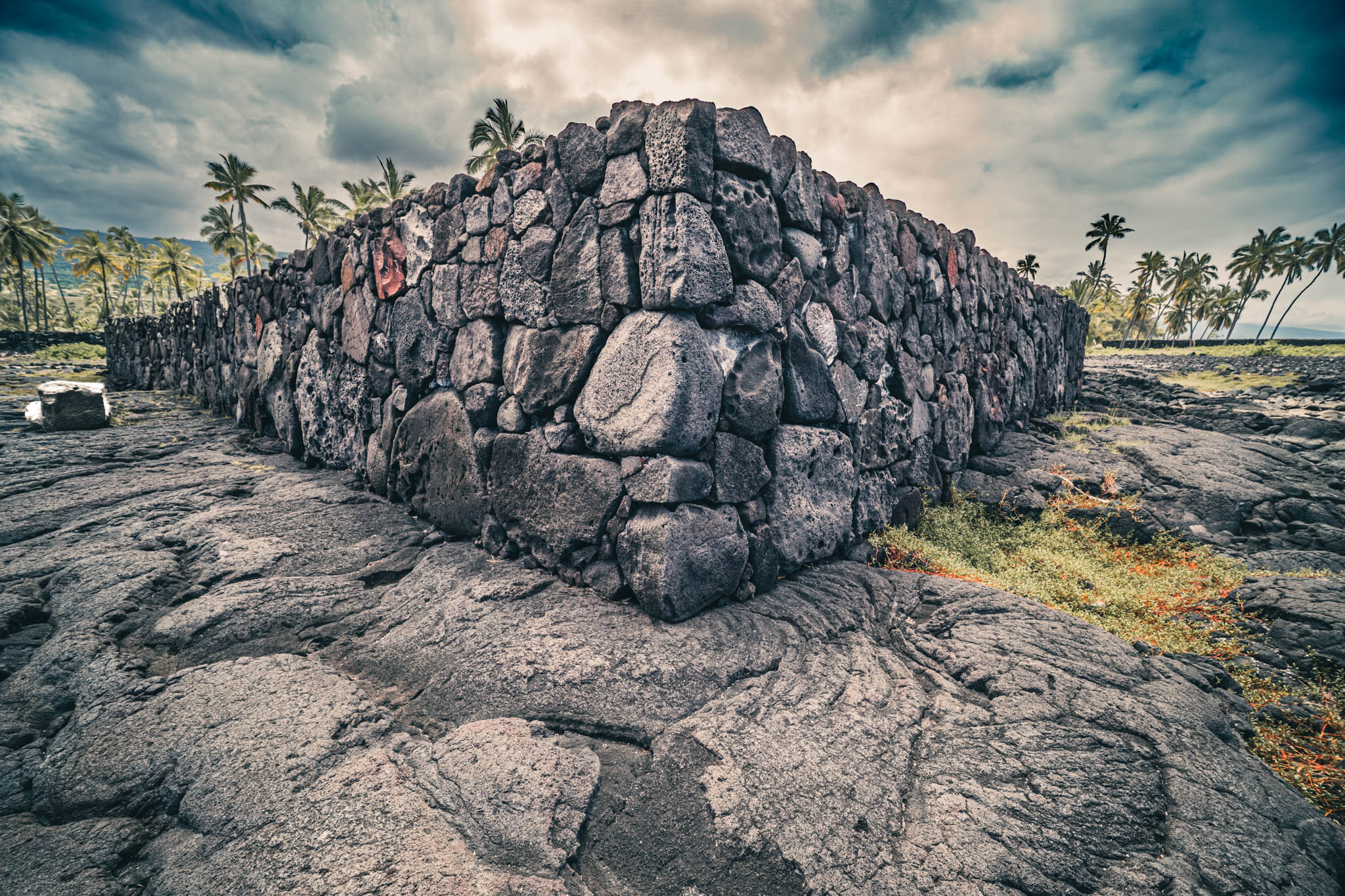
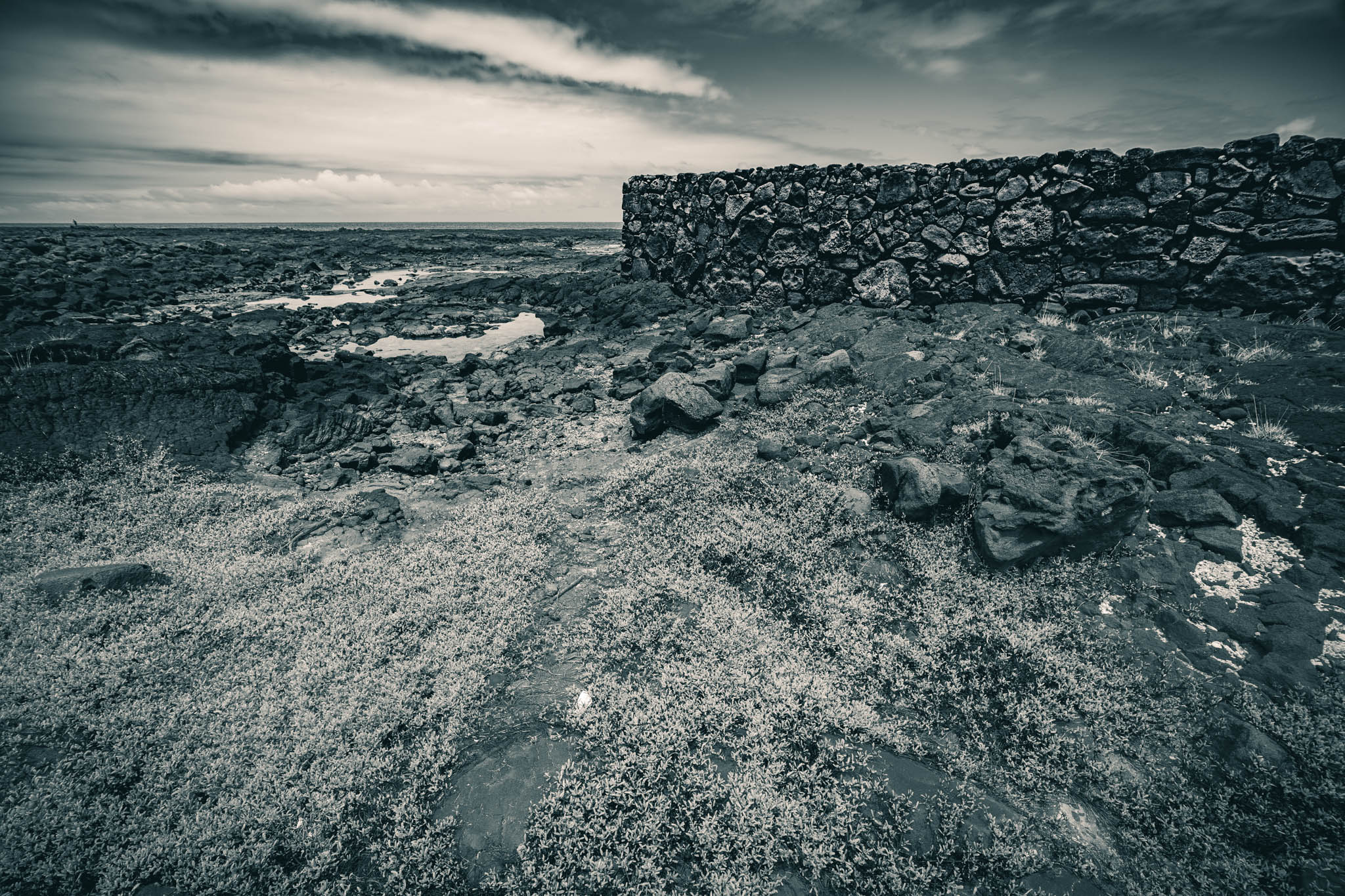
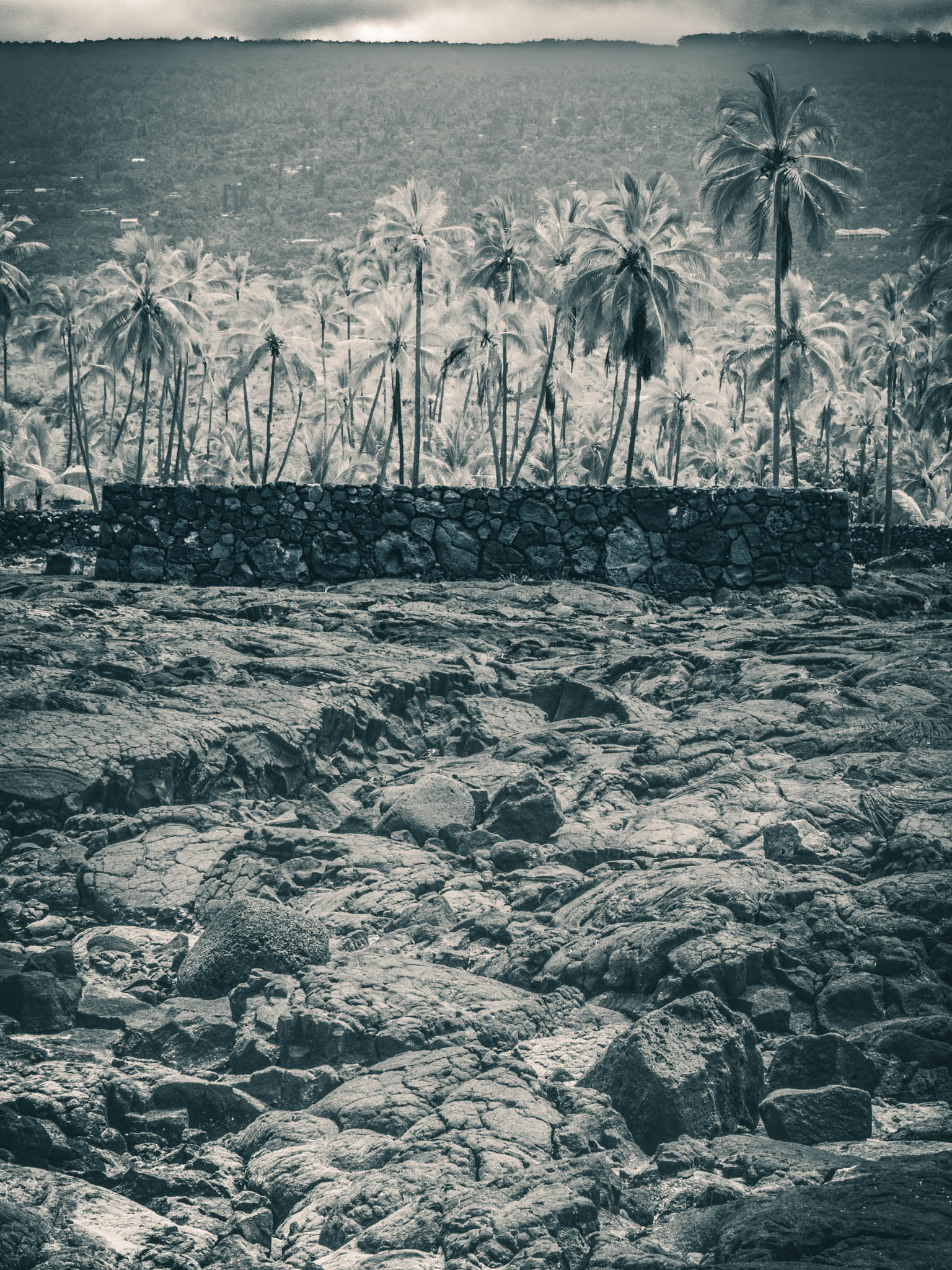
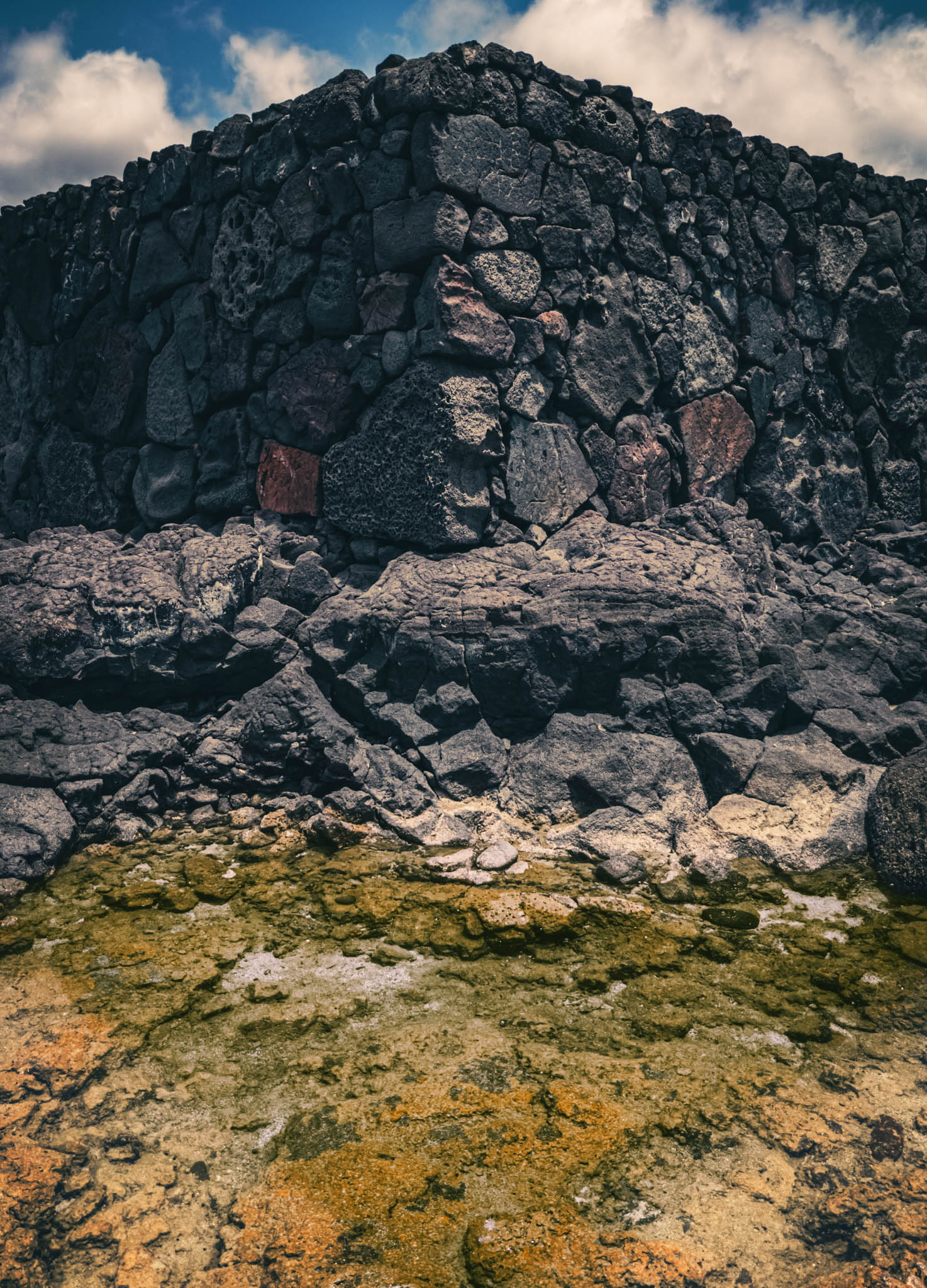
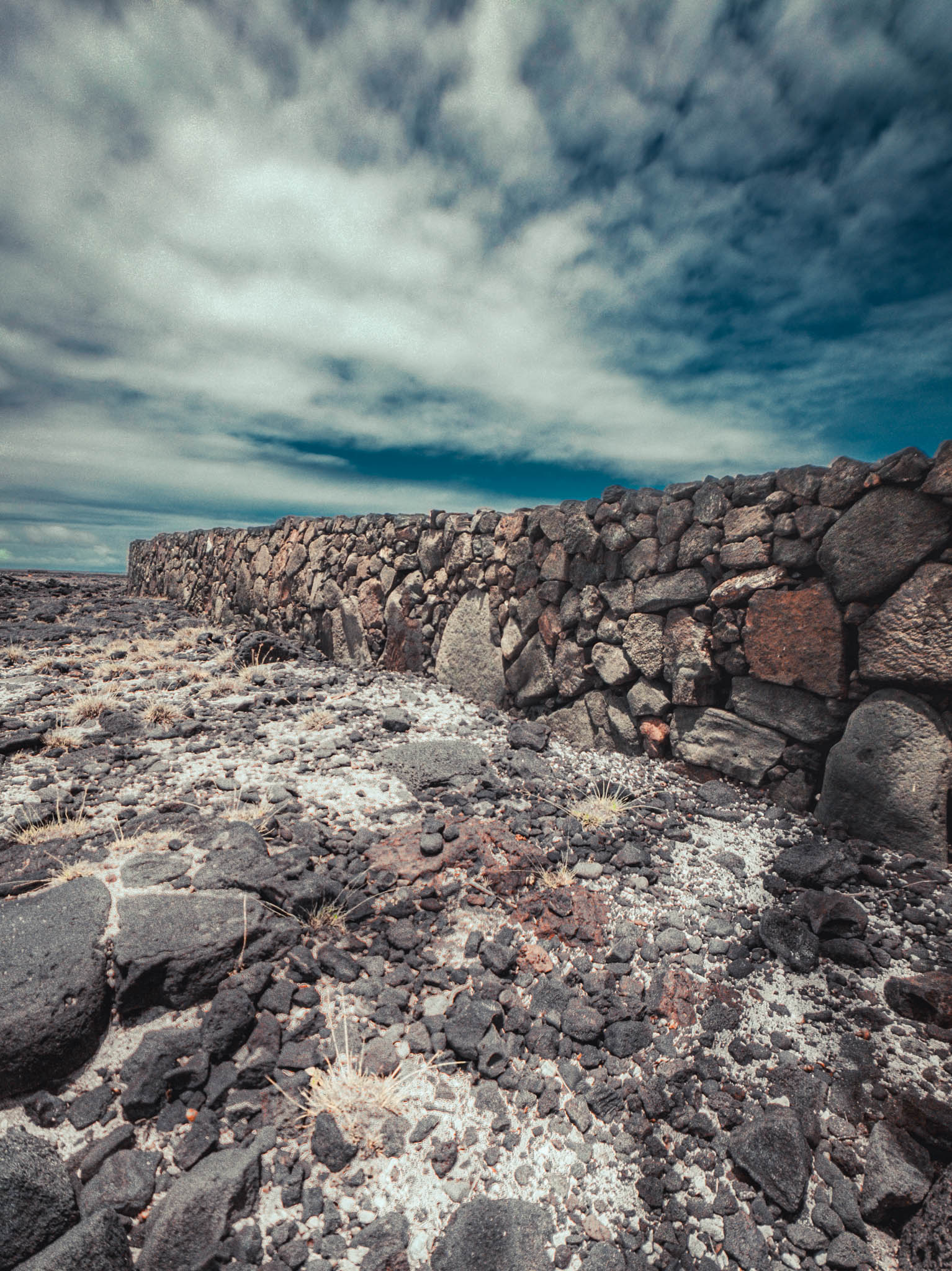
I took this in, all in one moment, as I drove slowly past while watching for the turn-off to the historic site’s parking lot.
It’s sort of a trope of twentieth-century, adventurous, culture-oriented travelogues (say, by William Dalrymple or Colin Thubron or — even earlier — by Owen Lattimore) to dutifully highlight the basic naivety, the logical inconsistencies and cultural misappropriations (or simple cultural misapprehensions) of the somewhat insular locals the authors meet in the exotic, historic, but somewhat forgotten areas they traverse with such difficulties. I’m thinking about Dalrymple’s description of the devout Orthodox monk in a semi-abandoned ancient monastery in Turkey, so delighted by a cheap plastic “holographic Jesus” knick-knack that he had purchased during his once-in-a-lifetime visit to New York City. Or of Lattimore’s account of a jovial revanchist Manchu official in a forgotten Xinjiang hill-town dutifully applying to his chronic carbuncle some medicine gifted to him by a previous visitor from the West — a supposedly-powerful ointment that the author observed was nothing more than basic hair pomade.
I am addicted to this sort of book. I generally find these anecdotes charming. Or at least interesting but distressing, if the accounts include an element of tragedy resulting from the flaws in someone’s or some group’s belief system. But I can’t help but wonder: is this trope of the genre so popular because the authors are implying that the subjects of these accounts with their incomplete and contradictory world-views are essentially bumpkins or provincial rubes? Is that why I enjoy them — no matter the consequences of the self-contradictions, of the fatal flaws in the de facto metaphysics — because the anecdotes of these isolated people burnish my own gloating sense of supposed cultural and intellectual superiority?
I can’t help but wonder if under certain circumstances, under the right line of questioning, I myself — and any or all human beings — might also be revealed to be a purblind, uncultured bumpkin — a provincial rube.
Anyway: through marriage I have relatives who have some Native Hawaiian ancestry, and haole that I am I have never felt comfortable (or felt like making them uncomfortable) discussing in detail the strains of the Hawaiian separatist movement — or movements — with which they seem to hold some sympathy. But over the years I have come to understand that those two Hawaiian flags — the inverted Kingdom one and the Kānaka Maoli one — suggest rather distinct separatist agendas. It seems to me that the inverted Kingdom of Hawaii flag (which is derived from the Union ensign of the British Empire that Kamehameha and his descendants admired) is the rallying symbol for those who would return the islands to their status before the fateful year of 1893 when conniving Americans overthrew the Hawaiian government, which at the time was a sort of semi-constitutional monarchy based on European notions. And never mind the questionable behavior of the second-to-last monarch Kalākaua, which included an attempt to corner the Hawaiian market for addictive opium. And apparently an effort to forestall American colonization by marrying off his daughter and royal heir to the eldest son of the recently-restored (and quite disconcerted) Meiji Emperor of Japan.
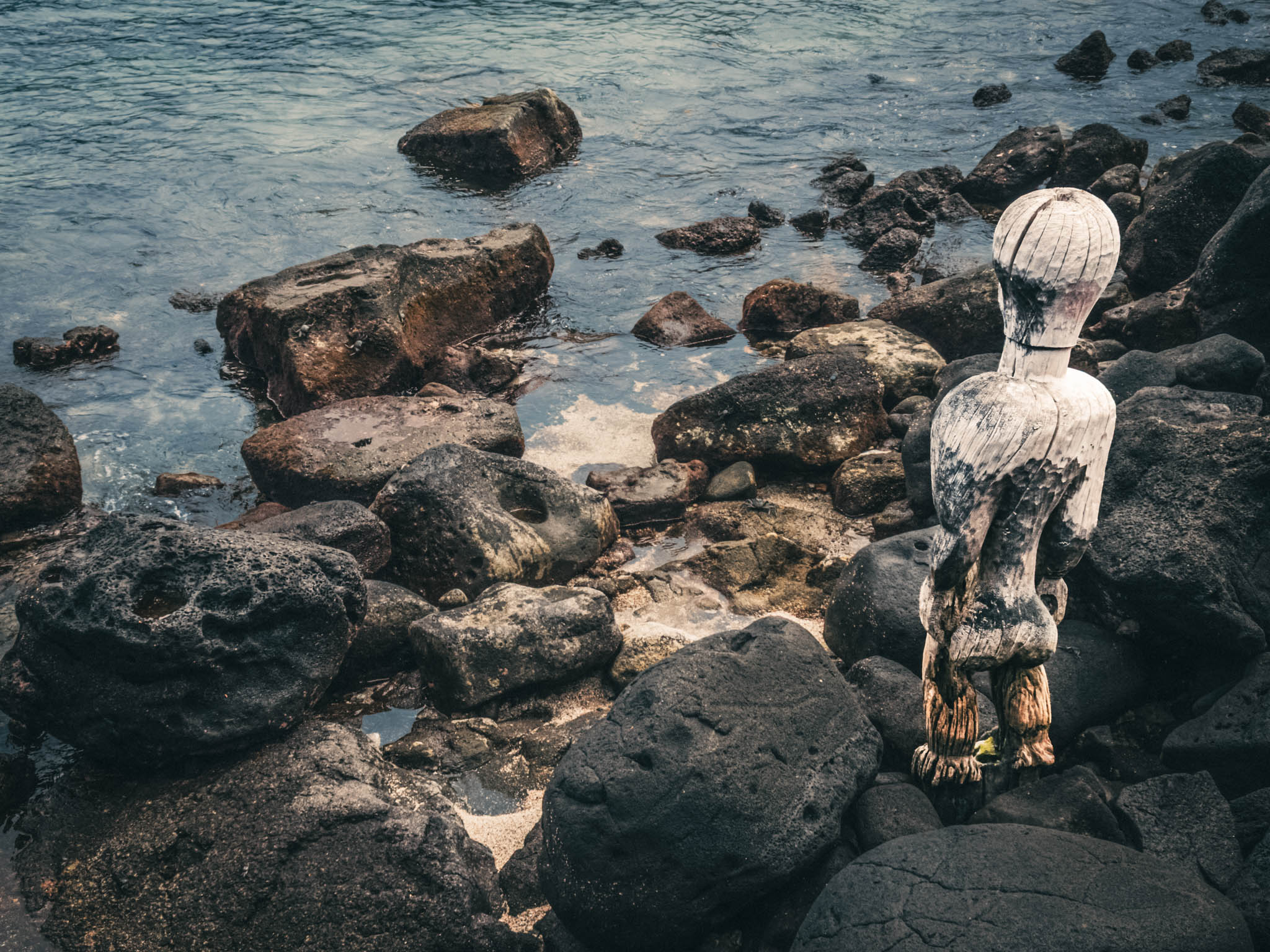
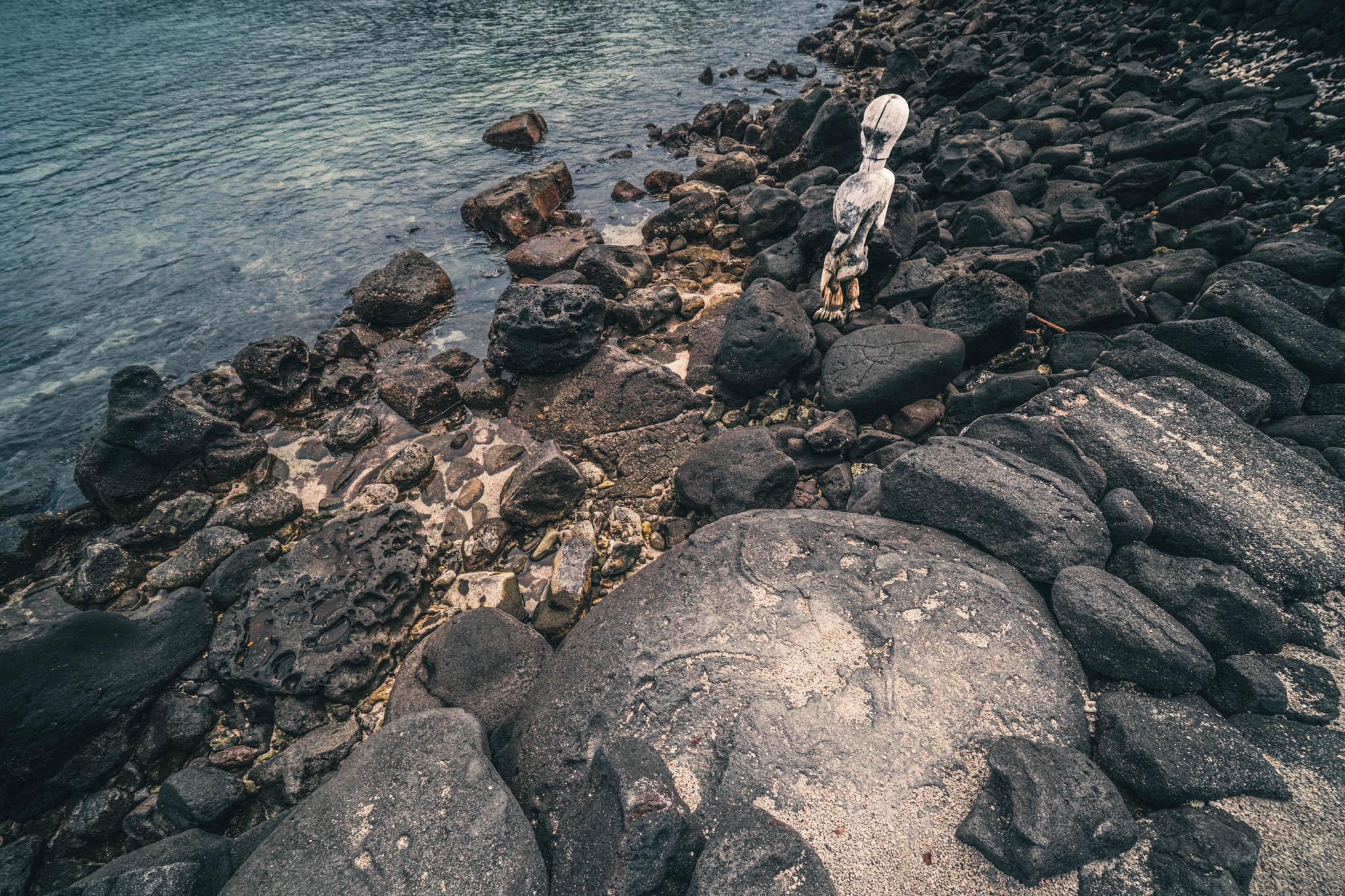
Those who fly the “Kānaka Maoli” flag seem to have a somewhat different aim. Kānaka maoli means “true people” in the Hawaiian language, and even though elsewhere it seems to simply be the equivalent of “Native Hawaiian” in this context it can probably be taken to have all the threatening implications one could read into that term. The goal is to return the islands to the conditions that prevailed before Kamehameha the Great unified the archipelago under his rule in 1810 with the assistance of a pair of captured American “advisors” and the seized cannon-armed brig Fair American. It was the European-styled monarchy developed by Kamehameha and his heirs that (according to this faction of separatists) led to the diminished condition of Native Hawaiian civilization, as well as the historic influx of haole and ultimately annexation by the United States. But does this return to pre-Kingdom Hawaii include the squabbling aliʻi feudal aristocracy, obsessed with war and genealogy; the theocratic police-state of the kanawai system which summarily punished all transgressions, criminal or religious, with death; the rigid traditional Hawaiian caste scheme, which consigned most to the rank of toiling makaʻainana (commoners) or much-abused kauwa (slaves); and last-but-not-least, the always-hungry deities that demanded human sacrifice at luakini heiau?
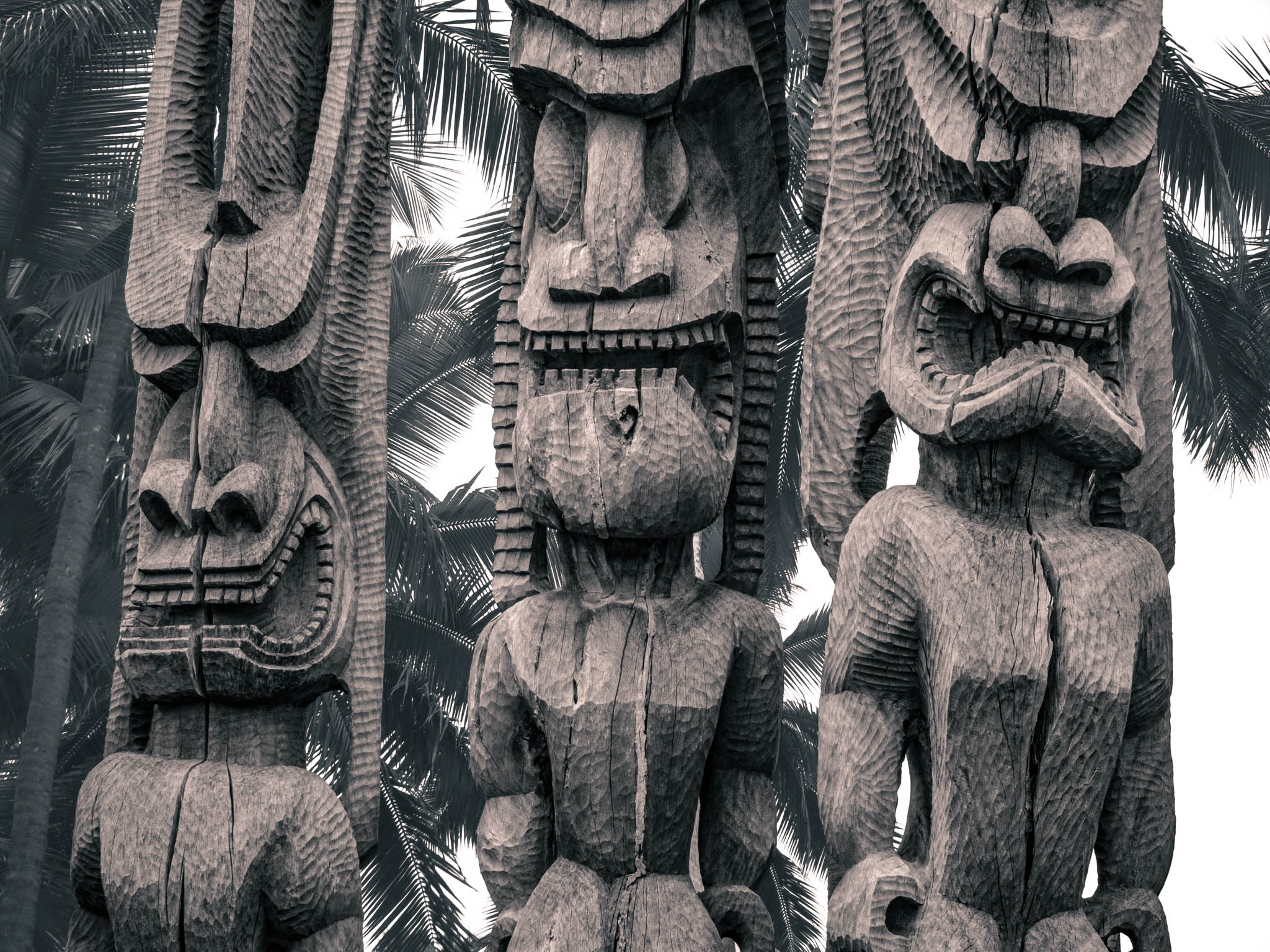
Would this restoration also necessitate the reinstitution of pu’uhonua (such as once existed where the park is now), to give poor commoners who broke kapu (for instance, by eating a prescribed fruit, say a banana, at the wrong time, or perhaps by inadvertently allowing their polluting shadow to fall across a particularly exalted ali’i chieftain) a chance to escape execution by slow strangulation followed by ritual butchery at the holehole stone?
If it doesn’t include all those things, are the separatists actually restoring what they claim to want to restore? Or perhaps the end goal is just another authoritarian ethnostate (which — come to think of it — is an objective shared in concept if not specifics with much of the MAGA crowd and conservative regimes everywhere).
Uncomfortable questions, to be sure.
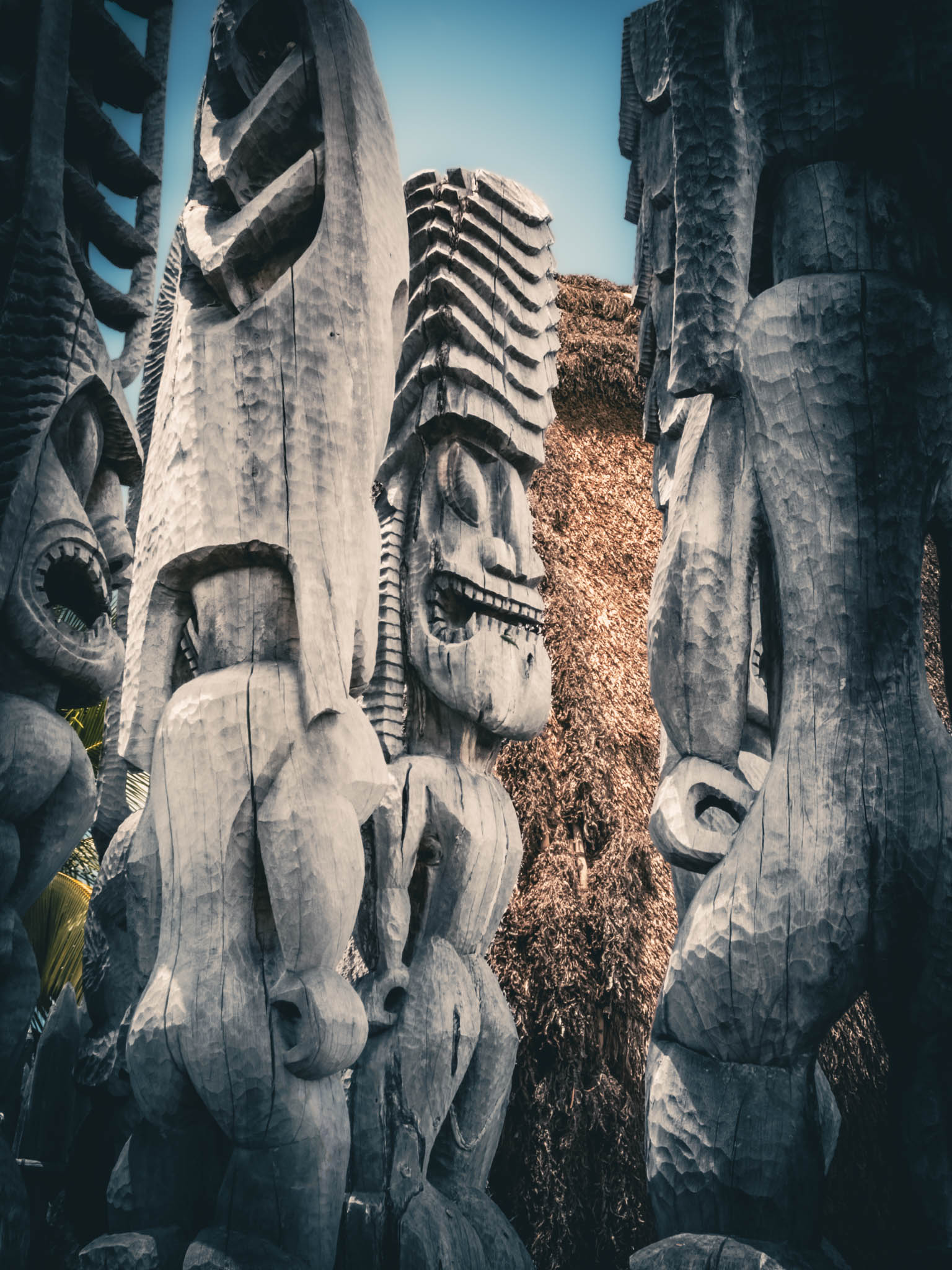
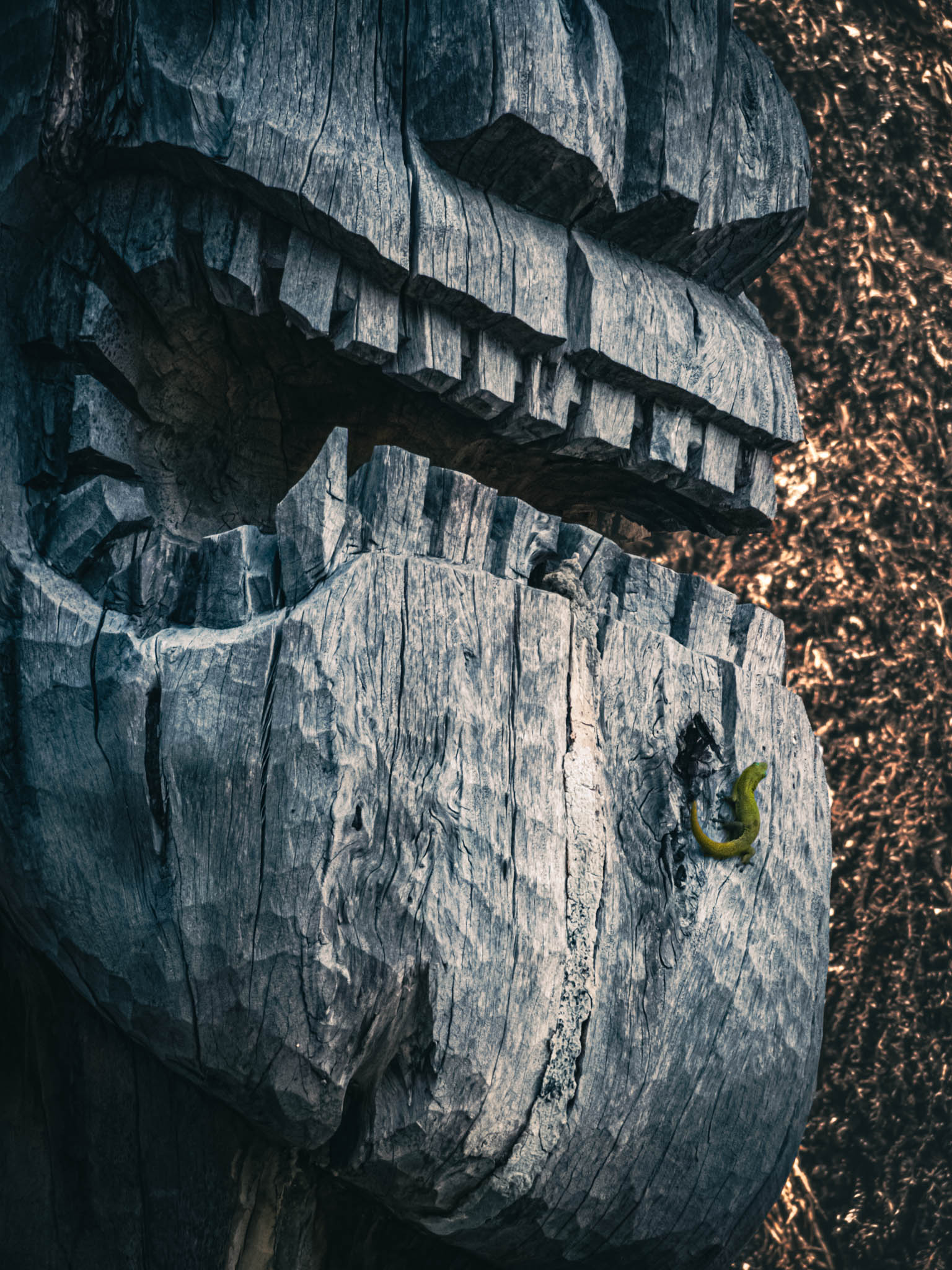
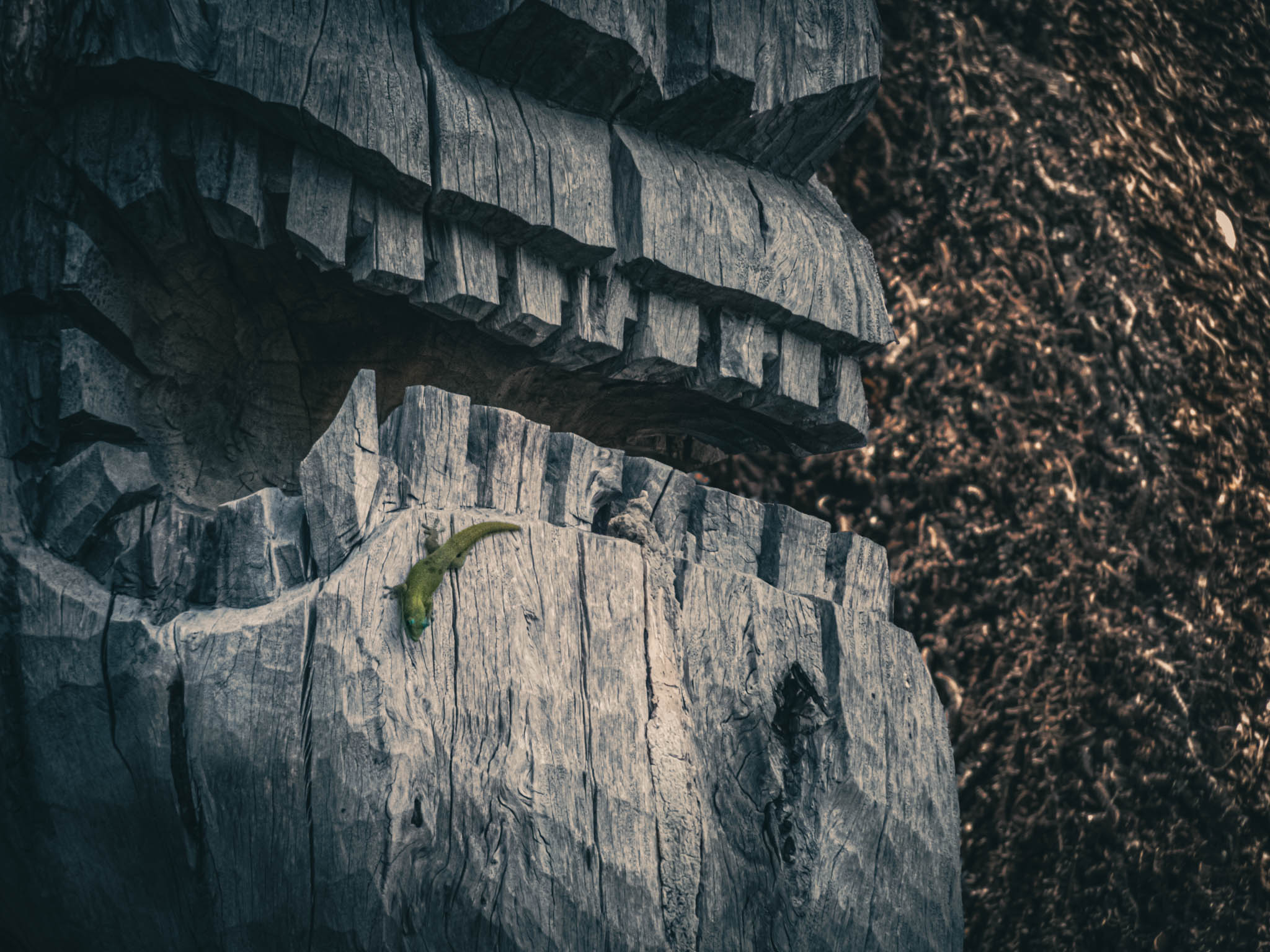
Both strains of Hawaiian separatism seem to implicitly entail a thorough application of that very twentieth-century social practice, ethnic cleansing. The haole of the island chain as currently populated — the whites as well as other interlopers from the mainland — are right out, in other words. But how does that square with MAGA, which as a political movement if nothing else has been consistent in its assertion of an American absolute — a specifically white and Christian imperial American primacy in all matters cultural, political, and territorial?
If I was a travel writer and not just an over-educated architect with strange tastes on vacation with too much camera equipment, and if I stopped to talk with them I am sure I would find a place for these haole MAGA protesters in their cheap “aloha” shirts somewhere on the interesting but distressing end of the continuum of travelogue anecdotes concerning provincial rubes. As naivety and cultural misapprehension go, this sort of thing is much less charming than a plastic holographic savior or Brylcreem mistaken for topical antiseptic.
But I am not a travel writer, just that odd guy on holiday who needs to drop his family off at the cove to do some snorkeling while he spends the next few hours photographing piles of rock and odd collections of statuary.
And in practice I have little patience for the fatuous and bigoted.
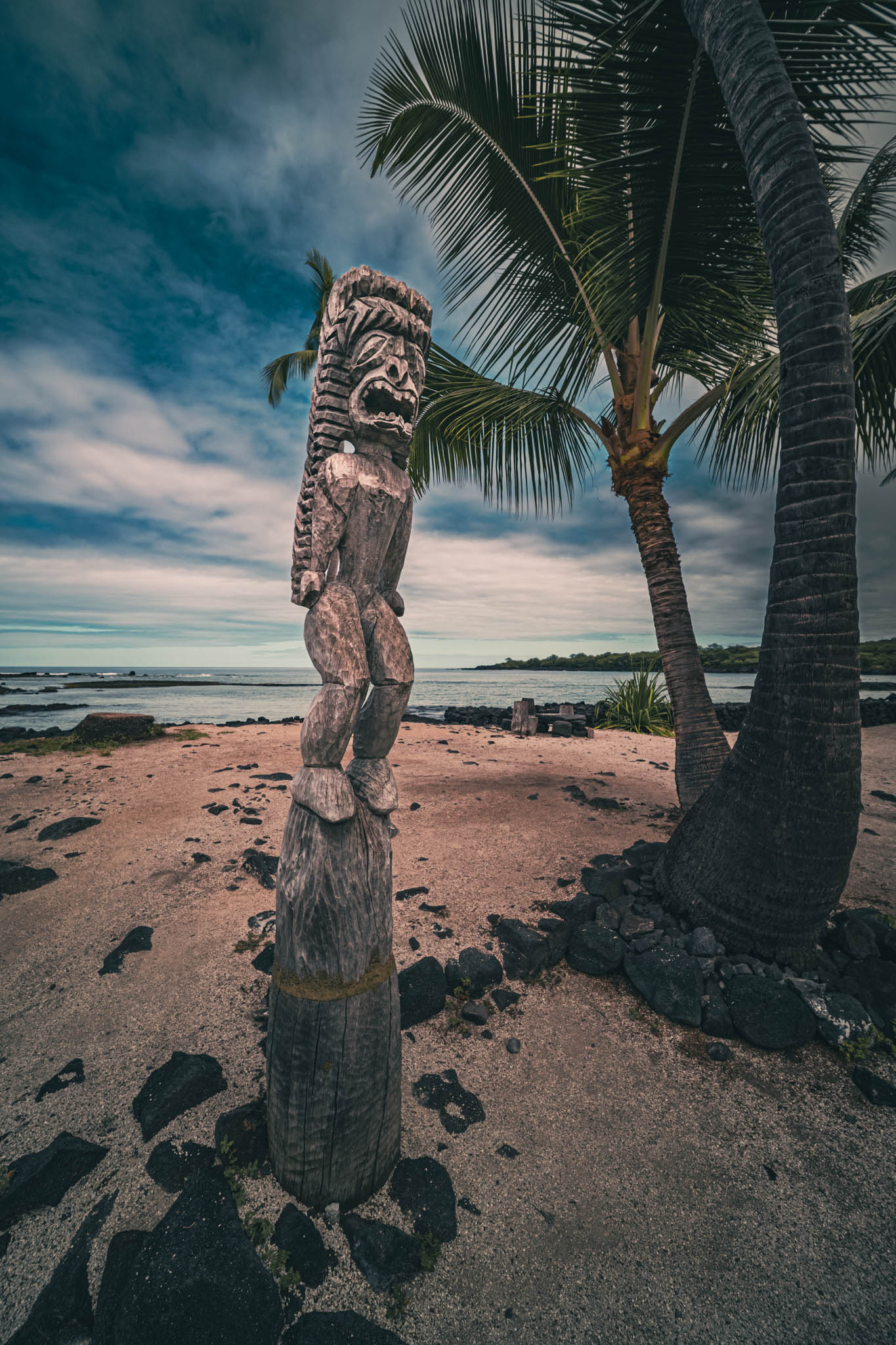
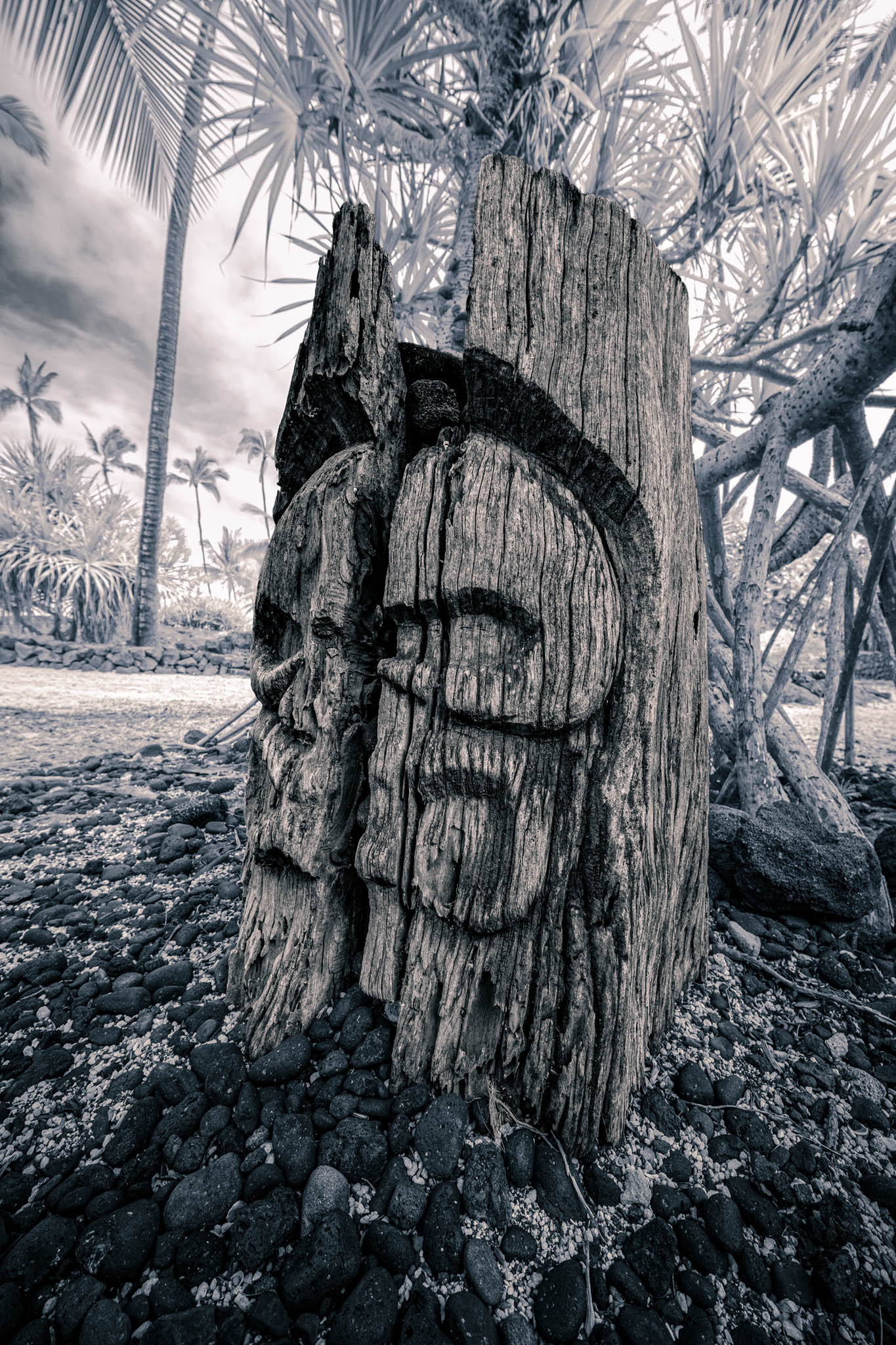
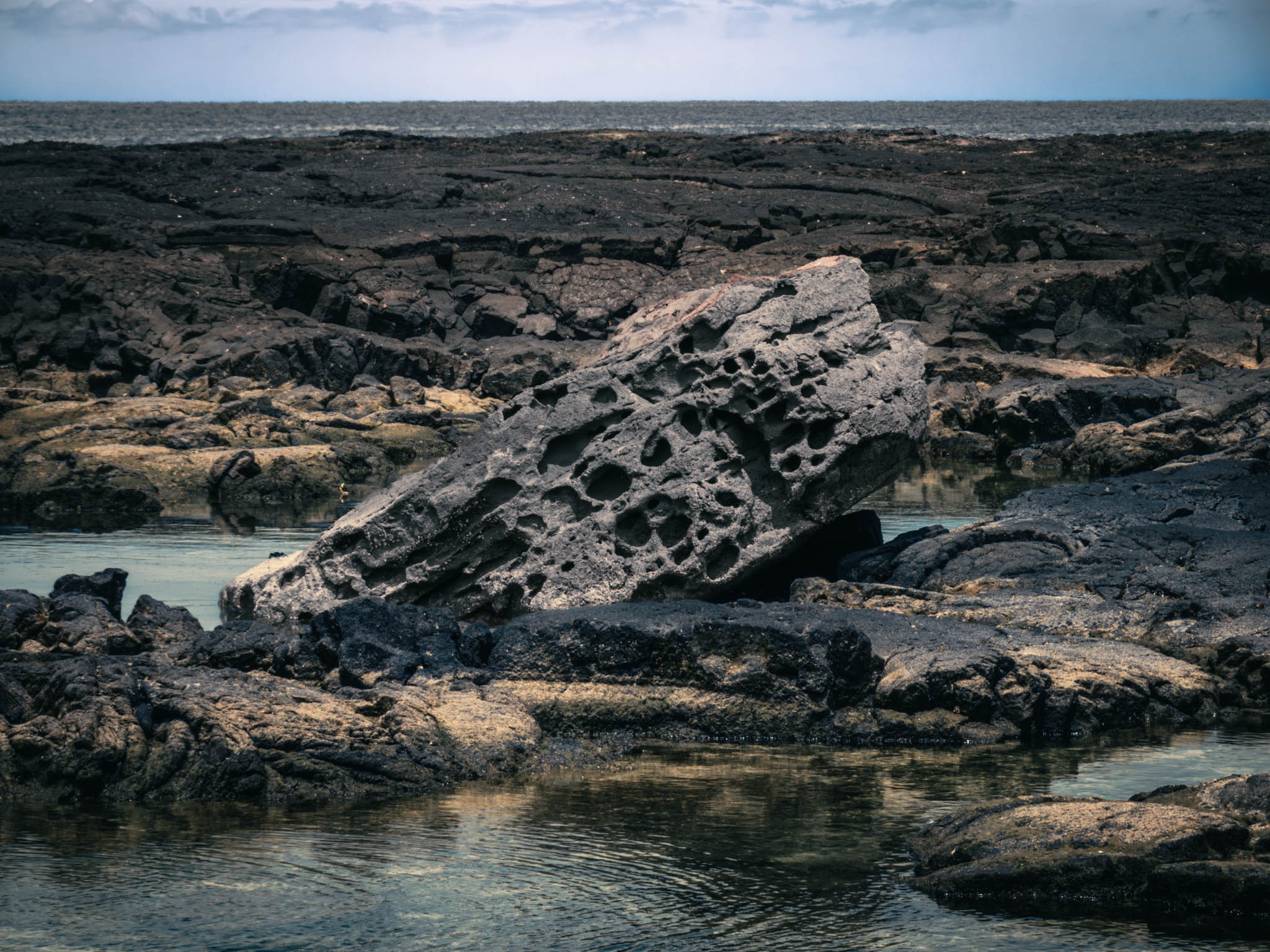
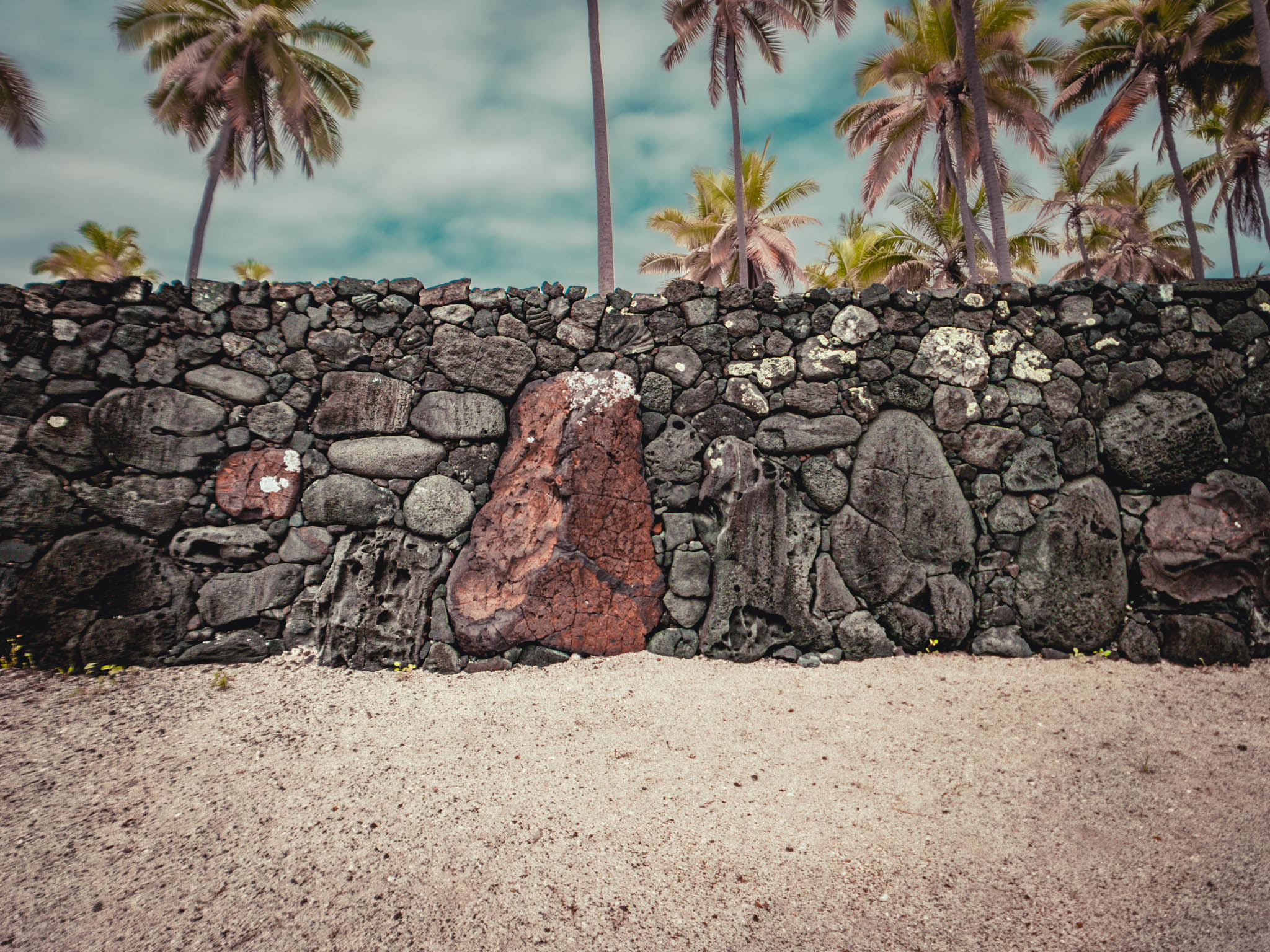
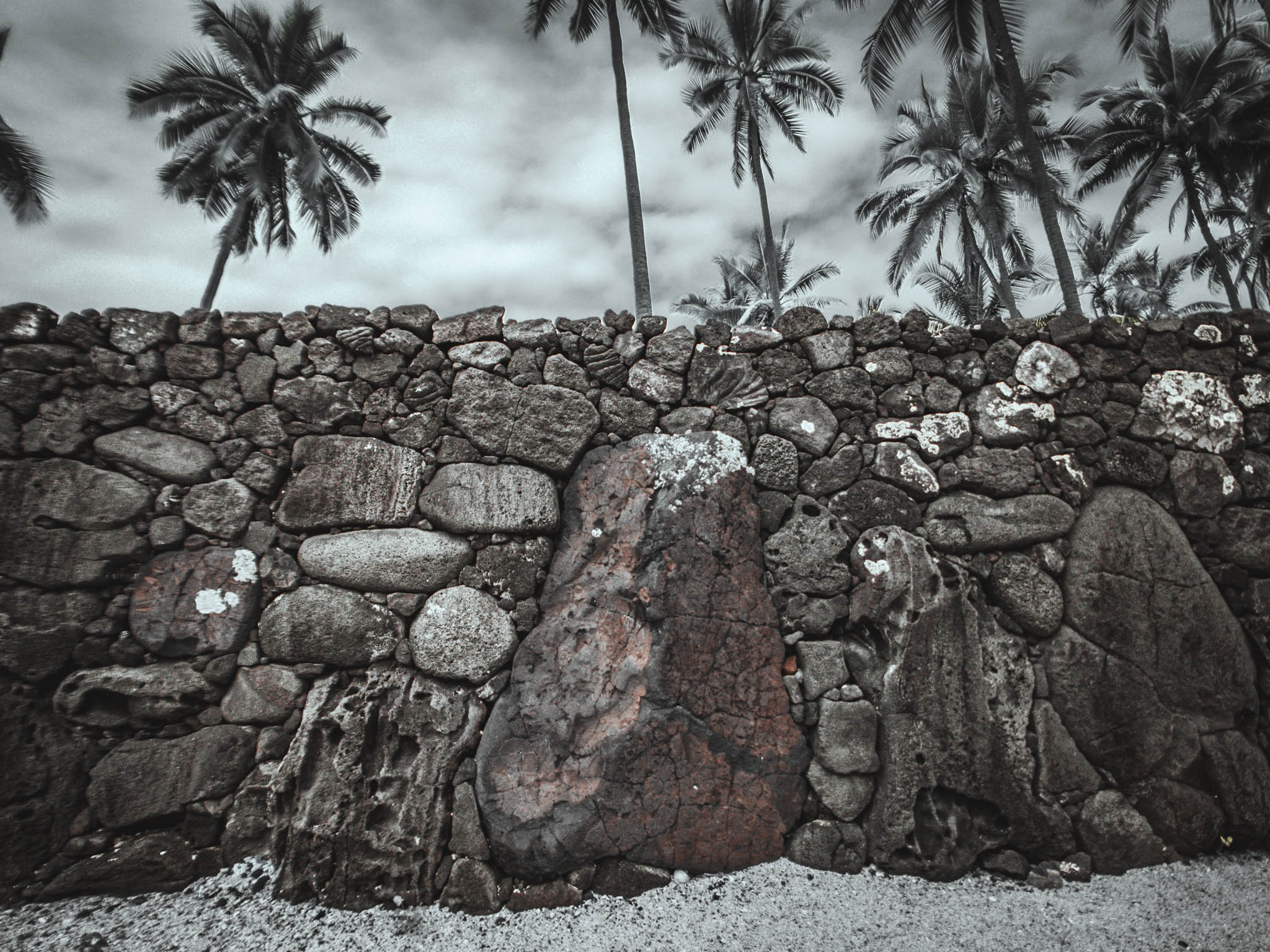
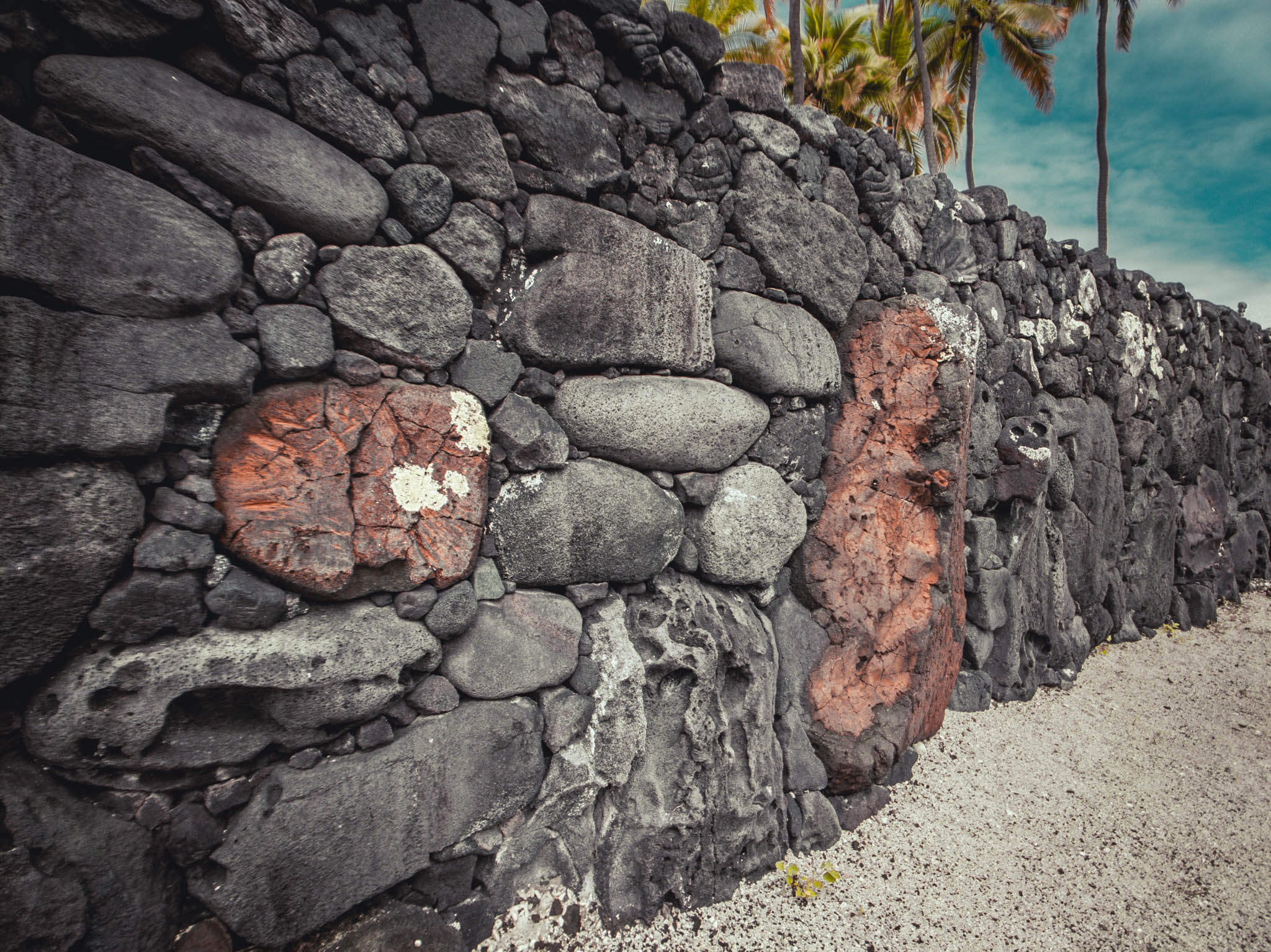
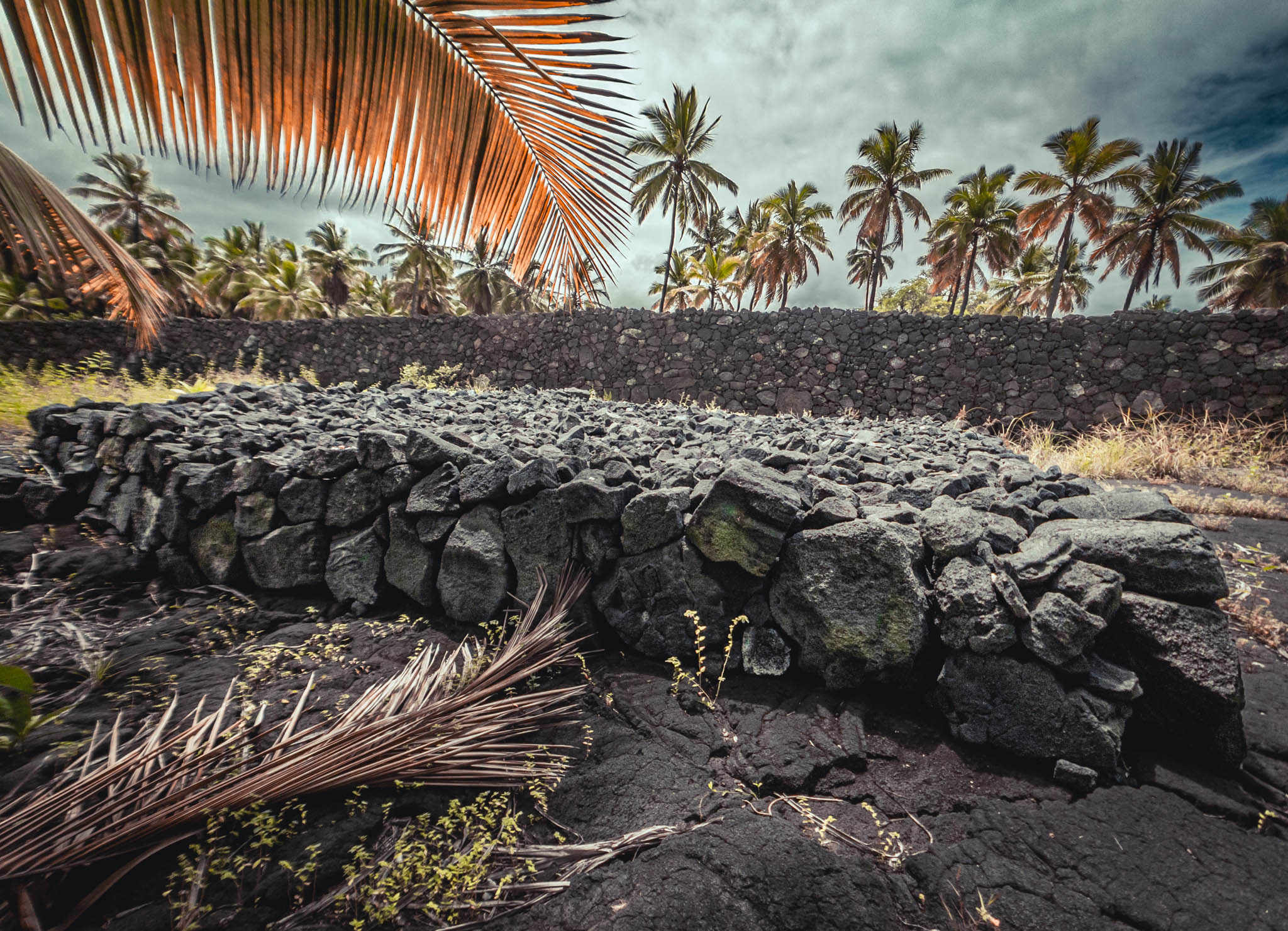
Still, walking among the fishponds and the heiau of the Pu’uhonua, restored to some anthropologist’s educational approximation of its pre-Kingdom appearance and oddly empty of other tourists (perhaps as a lingering result of the pandemic), I couldn’t help but be troubled all afternoon by that brief glimpse of a MAGA-Hawaiian Separatist conflation. Of course I am thinking about this while wandering about a place where ancient people fled to avoid being gruesomely dispatched for the crime-sin of being taller than a great chief and coming within his sight, or some other equally-ridiculous peccadillo. And this is the particular version of Hawaii — or maybe America — that someone wants to MAKE GREAT AGAIN?
A few hours later I found myself slightly relieved — after I had checked the NPS gift shop for desirable Ancient Hawaiian-themed gewgaws, gathered my sunburnt kids and finally departed for our resort — to discover that the protest “stand” on Keala O Keawe was closed for the evening. The scaffolding was denuded of slogans and banners. The beach chairs had been folded away. And those MAGA oldsters, after presumably a long day of sweaty wrestling with cognitive dissonance in the tropical heat, had retreated to their sad haole lairs.