Today I’m looking for a particular black bird — The Raven in fact. The Raven is or was named Grip, and it belonged in life to Charles Dickens (or perhaps he belonged to it, because ravens, you know.) Anyway, yes, that Charles Dickens, creator of Great Expectations and Edmund Drood and David Copperfield and A Tale of Two Cities and all the rest. Grip could talk, her favorite expression being “Halloa old girl!” (For the record, the only words I have ever exchanged with a raven have amounted to Hello! — which the corvid sullenly repeated back to me before relinquishing its position on my garden fence and flapping heavily away.)
After her early death from inordinate curiosity concerning the taste of white lead paint, Grip would be memorialized in prose, through Charles’ novel Barnaby Rudge of 1841 (“Barnaby being an idiot, my notion is to have him always in company with a pet raven, who is immeasurably more knowing than himself.”)
Of course, Grip would have a better known literary reincarnation. Edgar Allan Poe — something something my very-flawed idol — with his mysterious death only eight years in the future (there are nineteen published theories concerning the cause of his demise, but I think it might as well have been demons) was doing hack-work reviews for Graham’s Magazine. He liked Rudge, but considered the pet raven under-utilized.
The raven, too, intensely amusing as it is, might have been made more than we see it, a portion of the conception of the fantastic Barnaby. Its croaking might have been prophetically heard in the course of the drama. Its character might have performed, in regard to that of the idiot, much the same part as does, in music, the accompaniment in respect to the air. Each might have been distinct. Each might have differed remarkably from the other. Yet between them there might have been wrought an analogical resemblance, and although each might have existed apart, they might have formed together a whole which would have been imperfect in the absence of either.
Neat, right? But we all know where Eddy will go with this in 1845, only four years before the demons finally get him. Everyone seems to know that Poe took the idea from Dickens. “There comes Poe with his raven, like Barnaby Rudge, / Three-fifths of him genius and two-fifths sheer fudge,” wrote Poe’s “frenemy” James Russell Lowell in his notorious satire A Fable for Critics in 1848. [Wikipedia, “Grip (raven)”; see also Edgar A Poe: Mournful and Never-ending Remembrance (1991) by Kenneth Silverman, and Poe-Land (2015) by J.W. Ocker.]
So I’m off to see the Raven, the wonderful wonderful Raven, because of the wonderful things he does. Oh wait — that’s not right.
Wrong everything in fact.
But my favorite book since I inherited it from my namesake grandfather is a 1927 edition of P.F. Collier & Son’s The Works of Edgar Allan Poe in One Volume, which given its age and provenance probably once belong to Princess Angela Scherbatoff like the other old books that passed to me. It’s been with me thirty-four years, and I kept the sown-in green silk bookmark at you-know-what-page and you-know-what-poem until if finally rotted out.
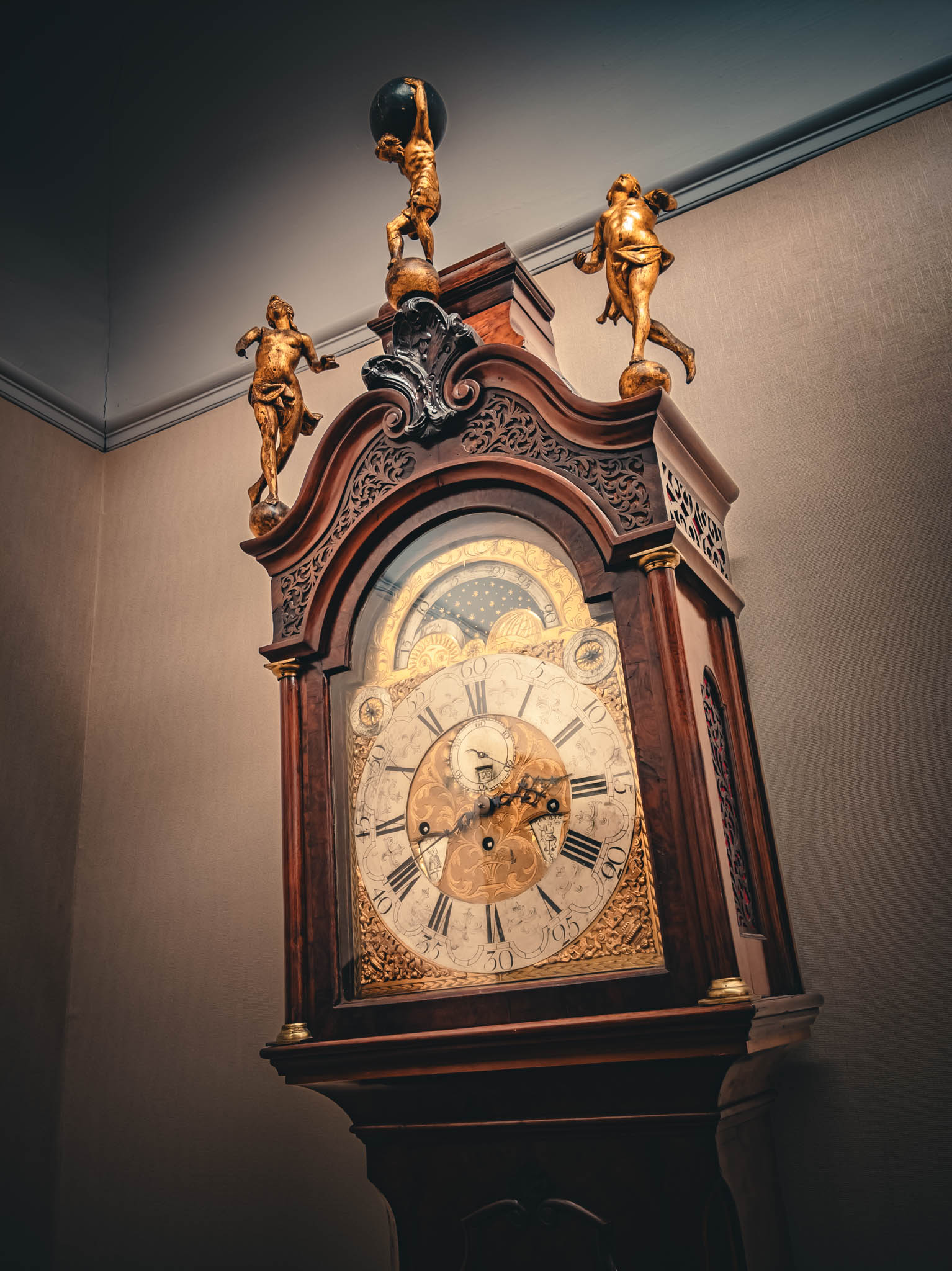
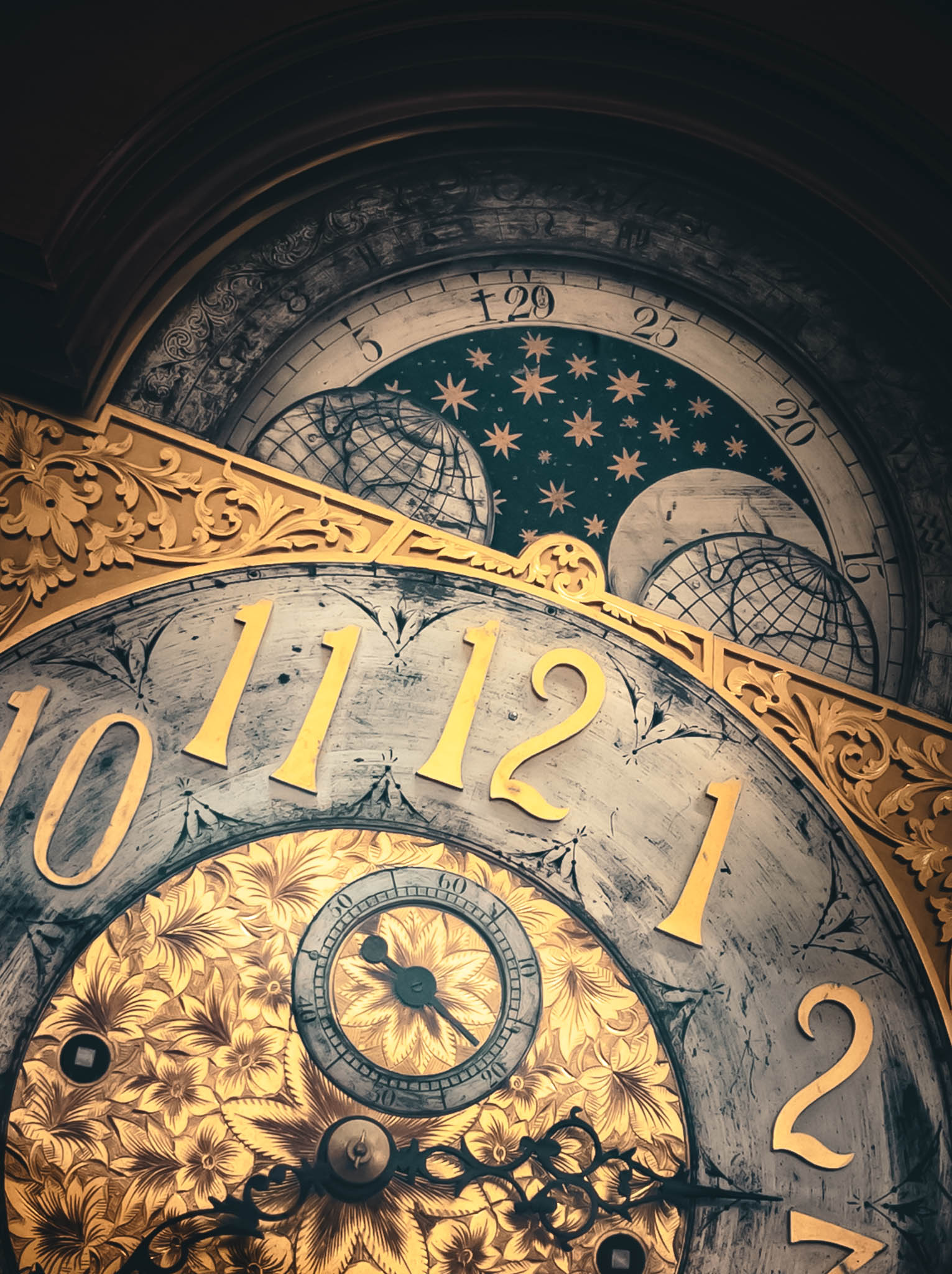
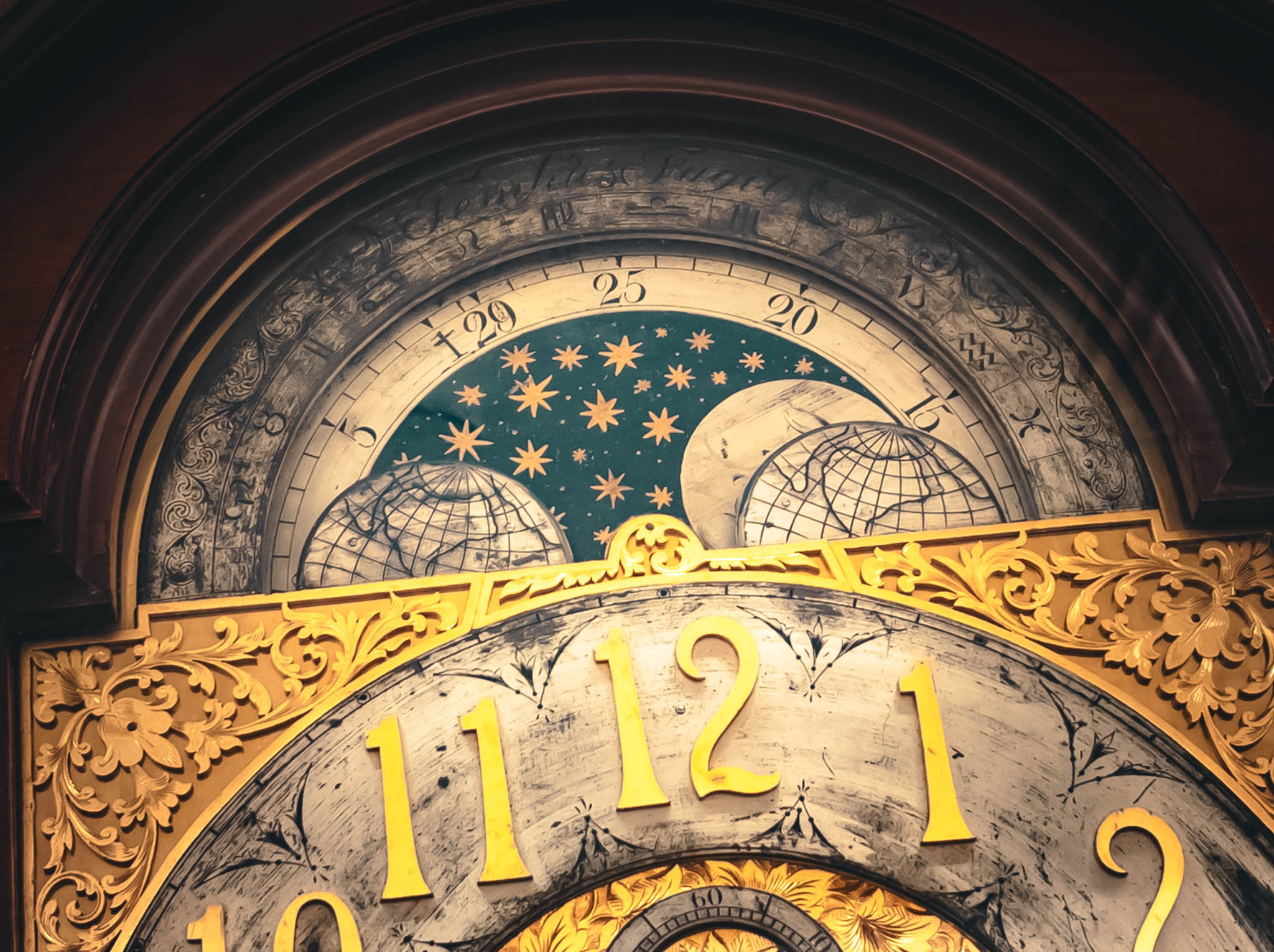
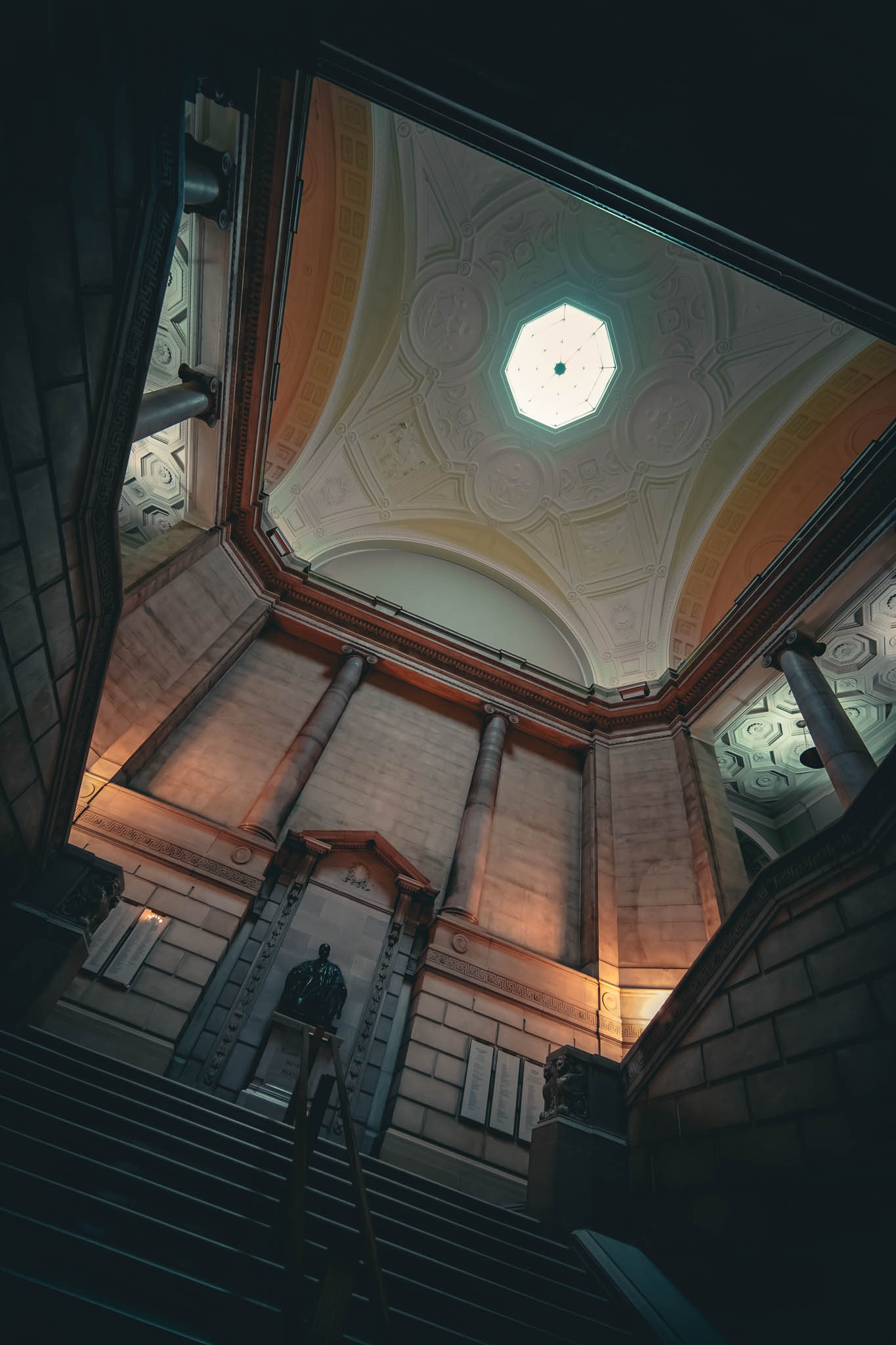
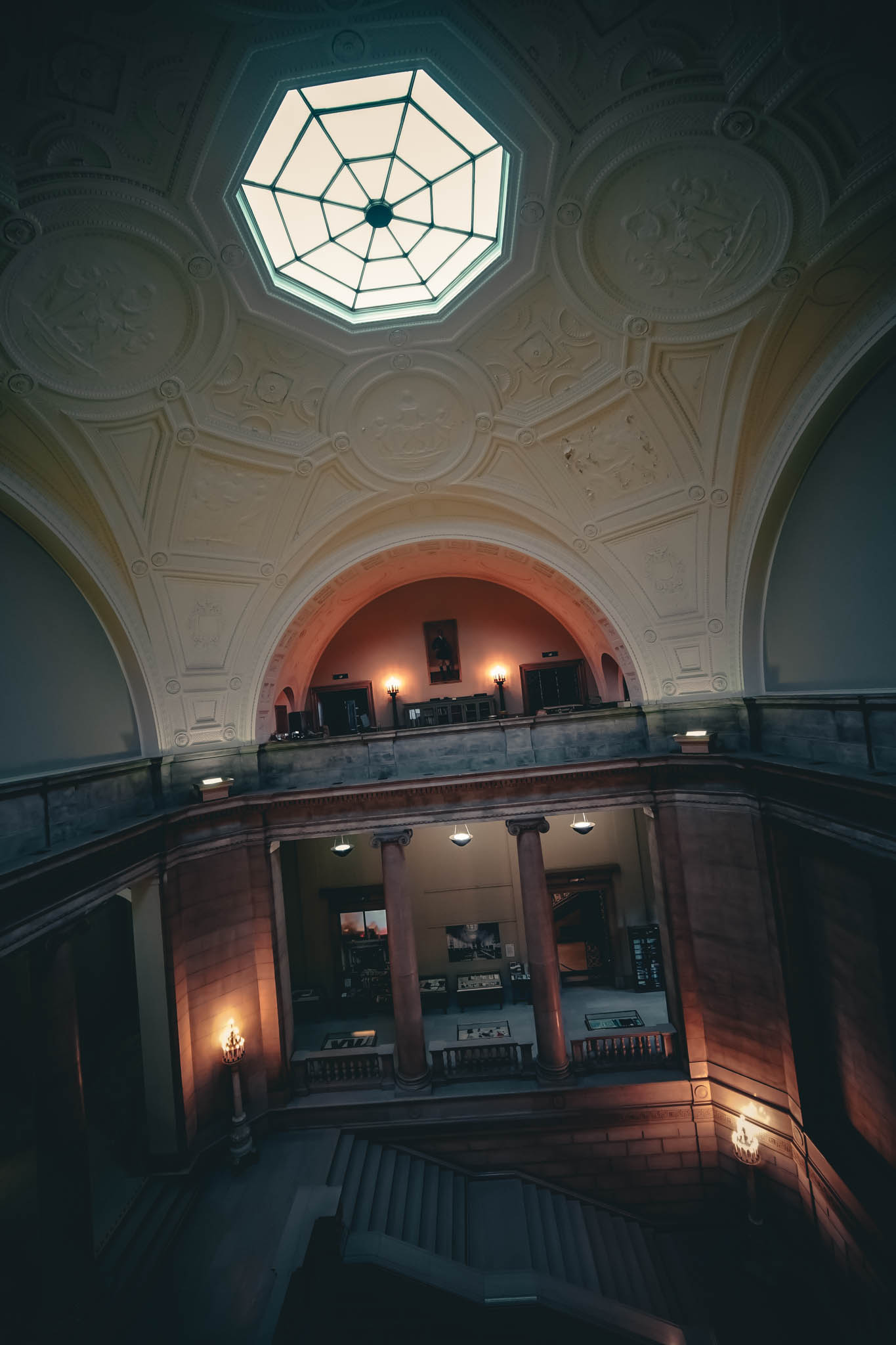
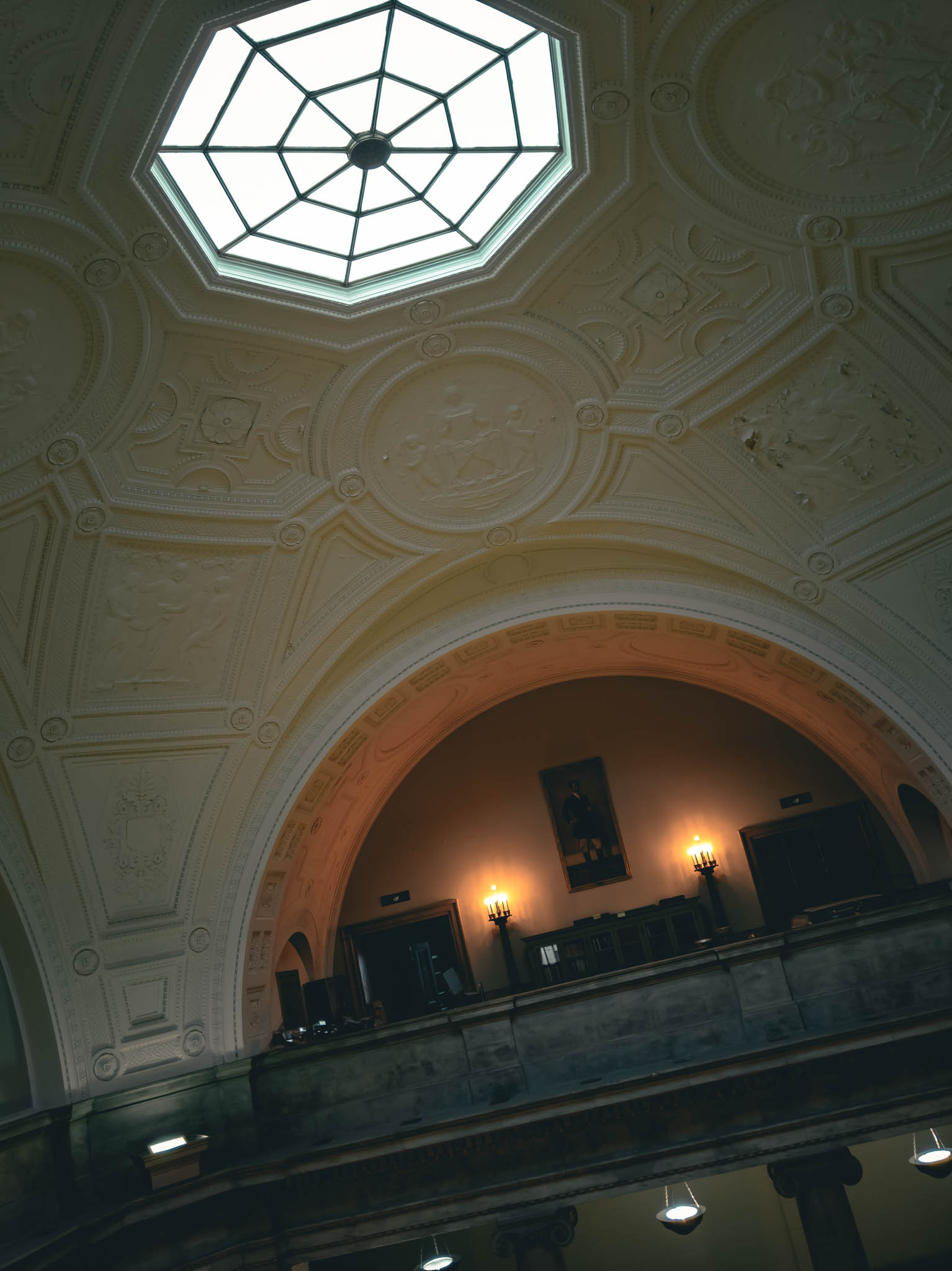
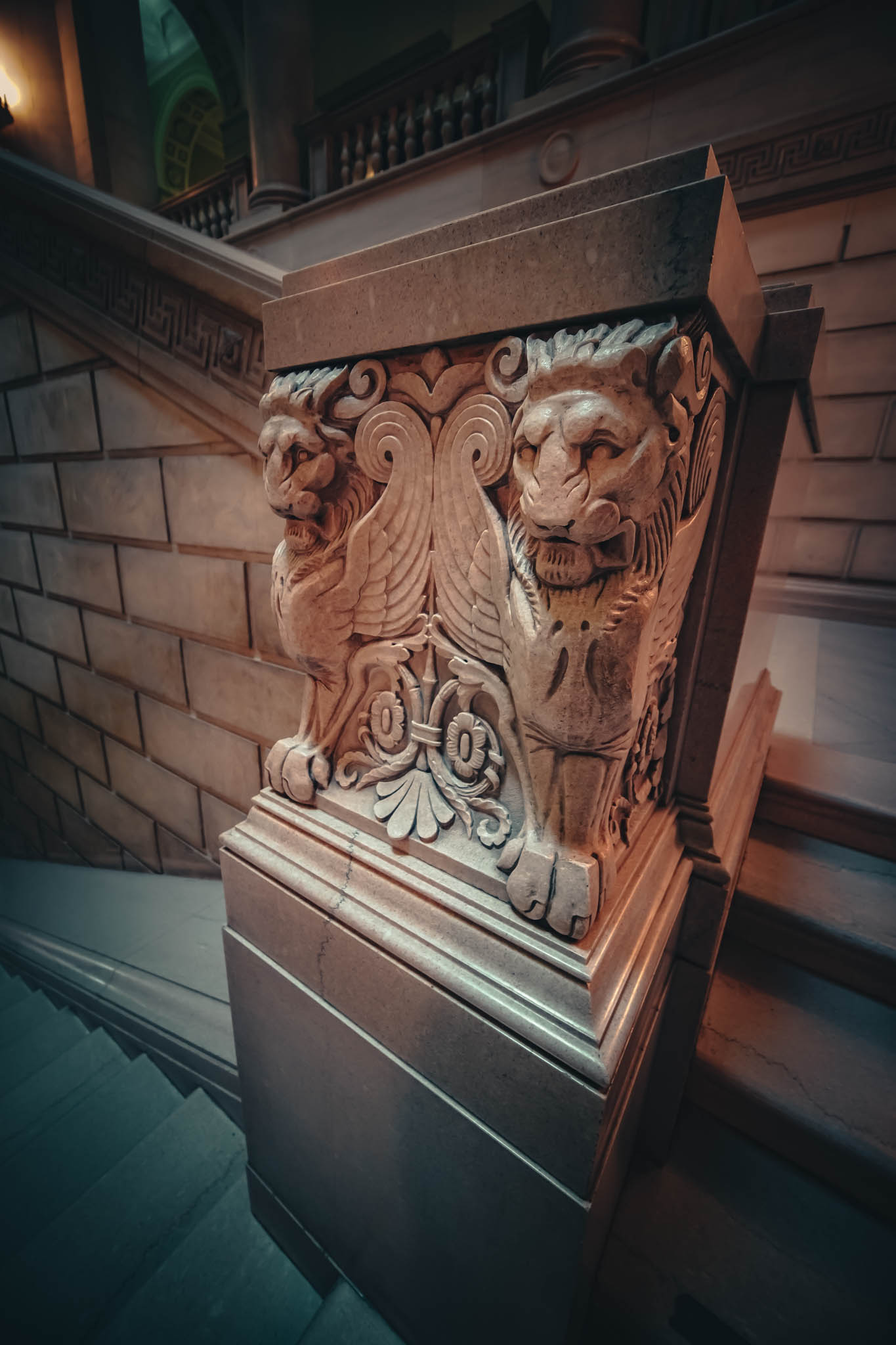
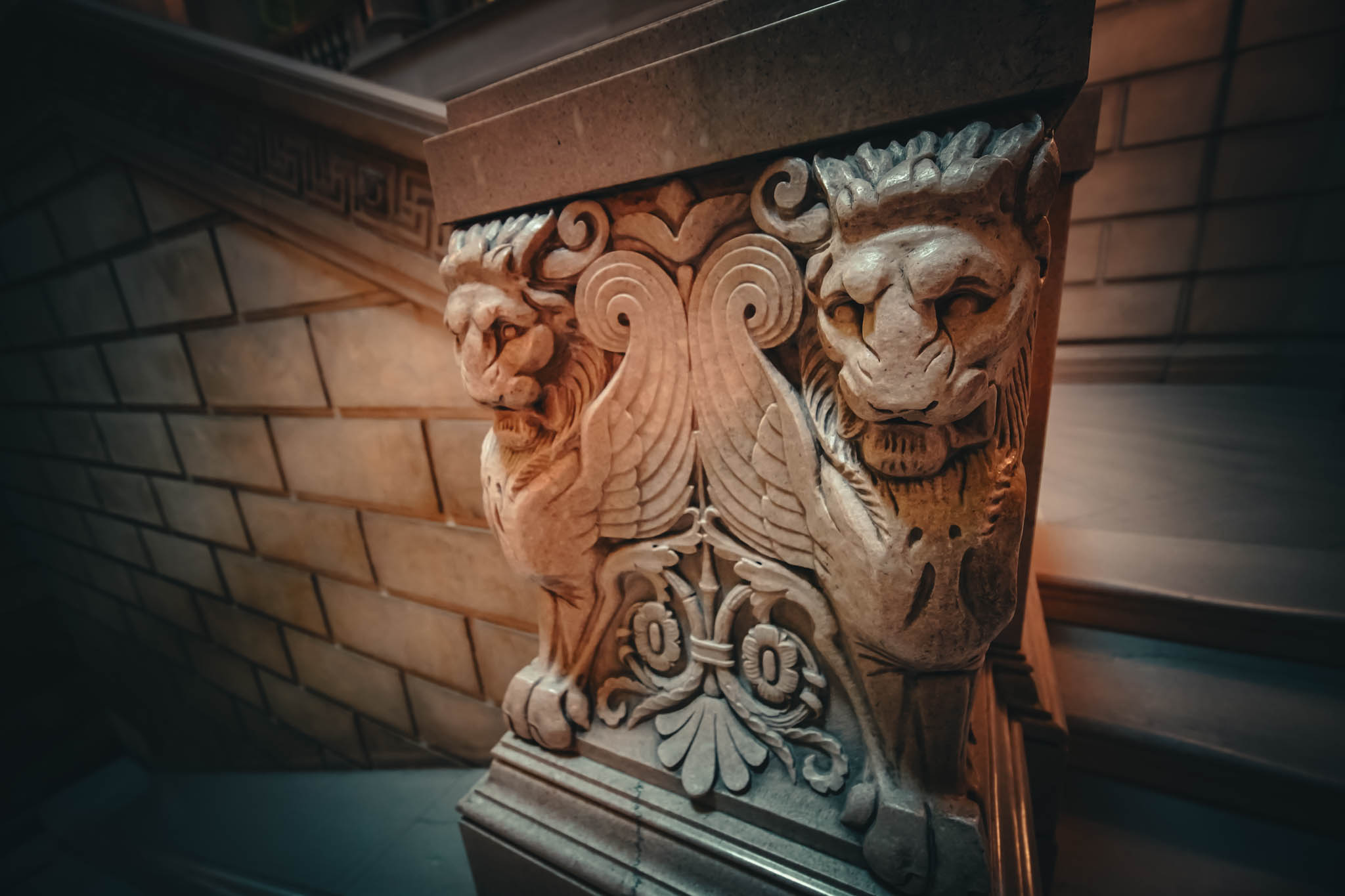
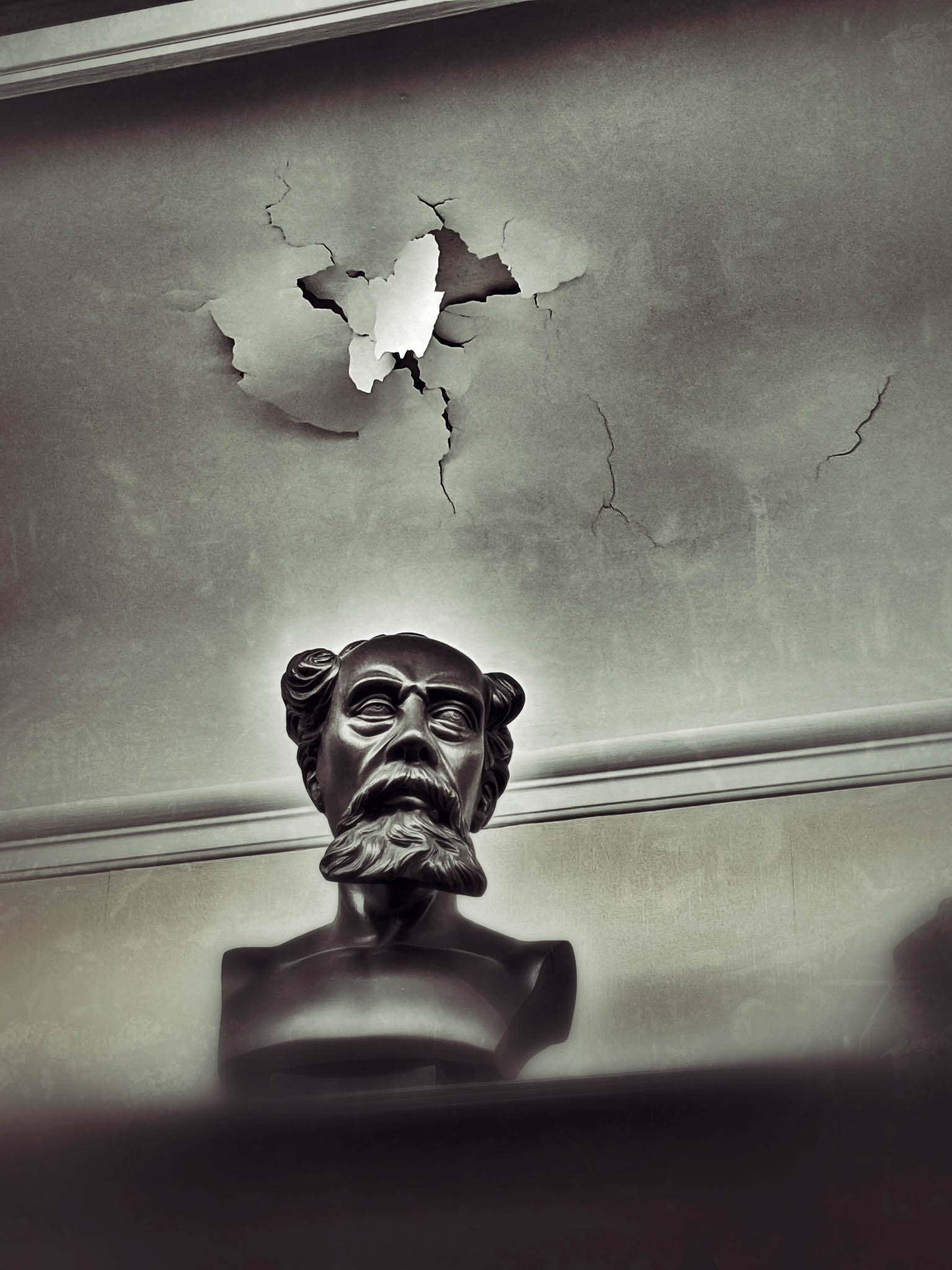
So now in Philly and with some hours to spare, I feel an obligation to go see taxidermized and mounted Grip in Al Aaraaf, described by Poe as the unearthly Quranic realm between paradise and hell — oh sorry, at the Parkway Central Library Rare Book Department — where she ended up after a century-long migration rather surprising for a dead bird. I ask at the main front desk where the Raven is and the weary woman manning it looks at me like I am insane (which was Dickens’ conclusion concerning Poe, incidentally). Nor does the young fellow at the entrance to Rare Books — at the very the top of a long set of appropriately gloomy and sepulchral staircases below architect Julian Abele’s great dome — know anything about the matter. But in the final gallery of the department — past the cuneiform tablet and the grandfather clock predicting lunar phases and an appropriately dark-lacquered bust of Dickens high on a shelf, but absolutely no mummies, not even non-animated ones — I stop a woman who smiles and with an airy Of course! You mean Grip! directs me to Night’s Plutonian shore — or rather, a neglected, ill-swept back corridor past the restrooms, which is a modern metaphor for purgatory if I have ever encountered one.
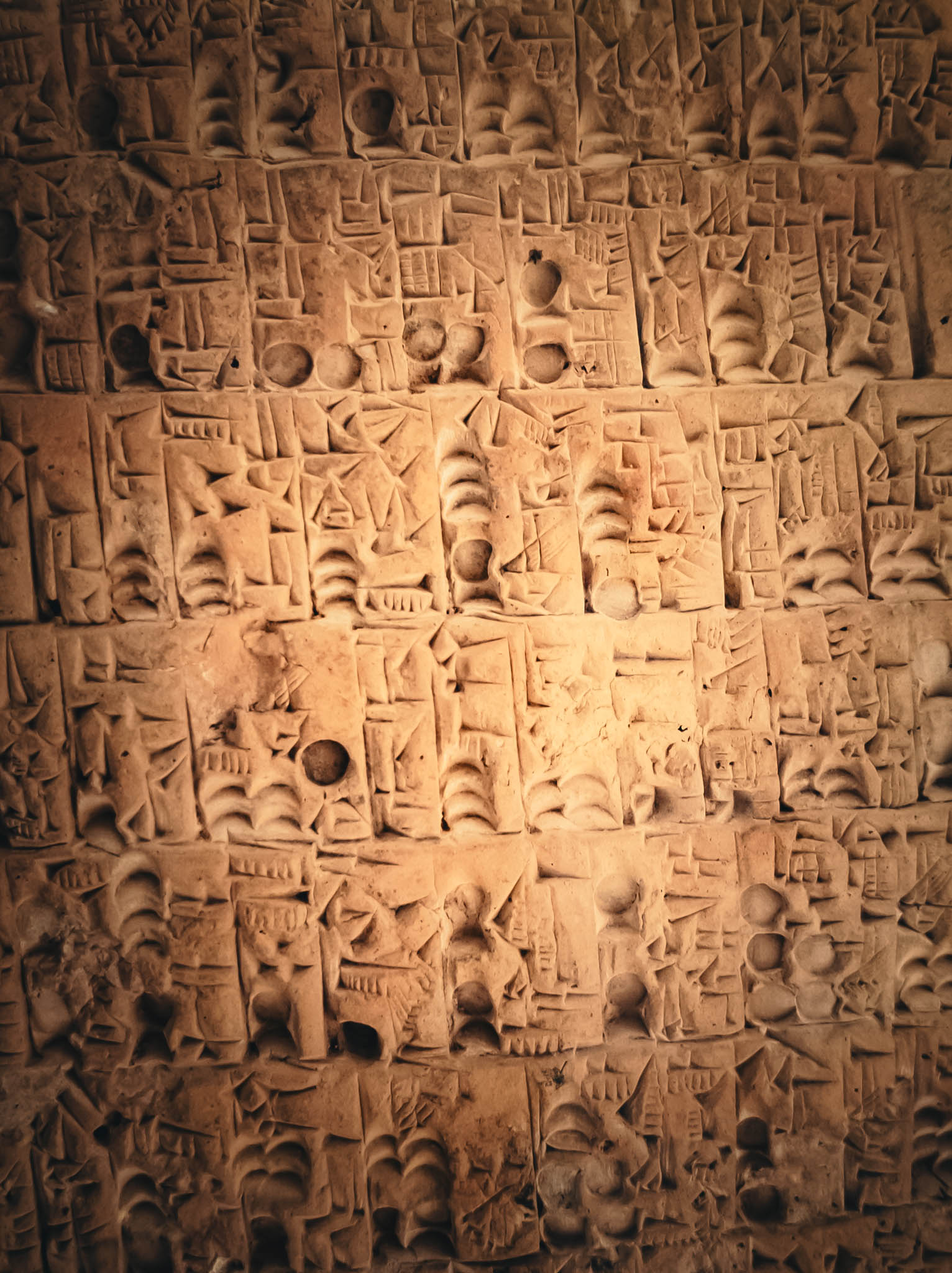
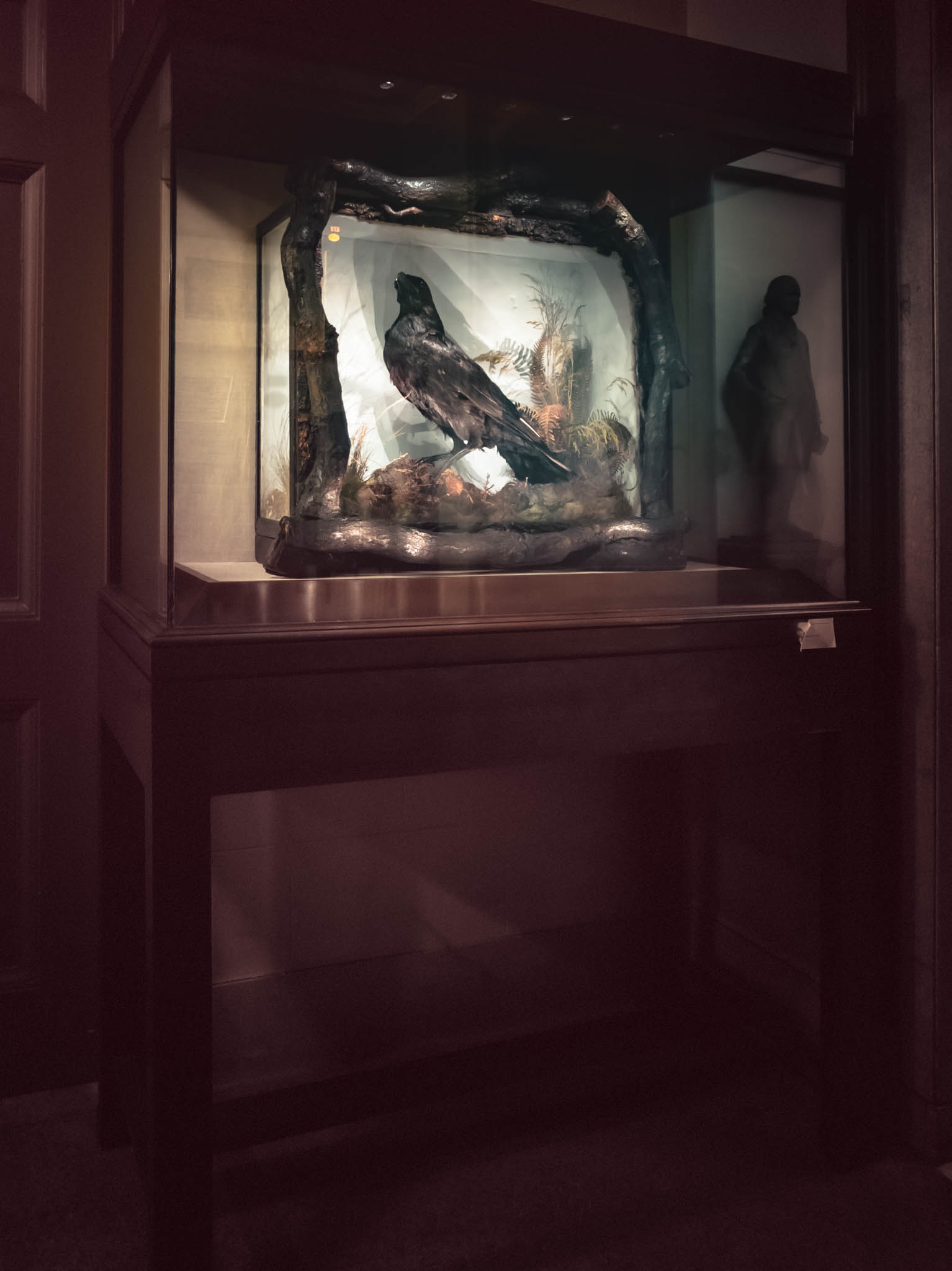
And there our bird is, in a dusty glass vivarium (or is it a dead-arium?) with dried ferns and reeds, framed in fake branches — within another glassed display, in front of a doorway with a sign labeled, “Staff Only”.
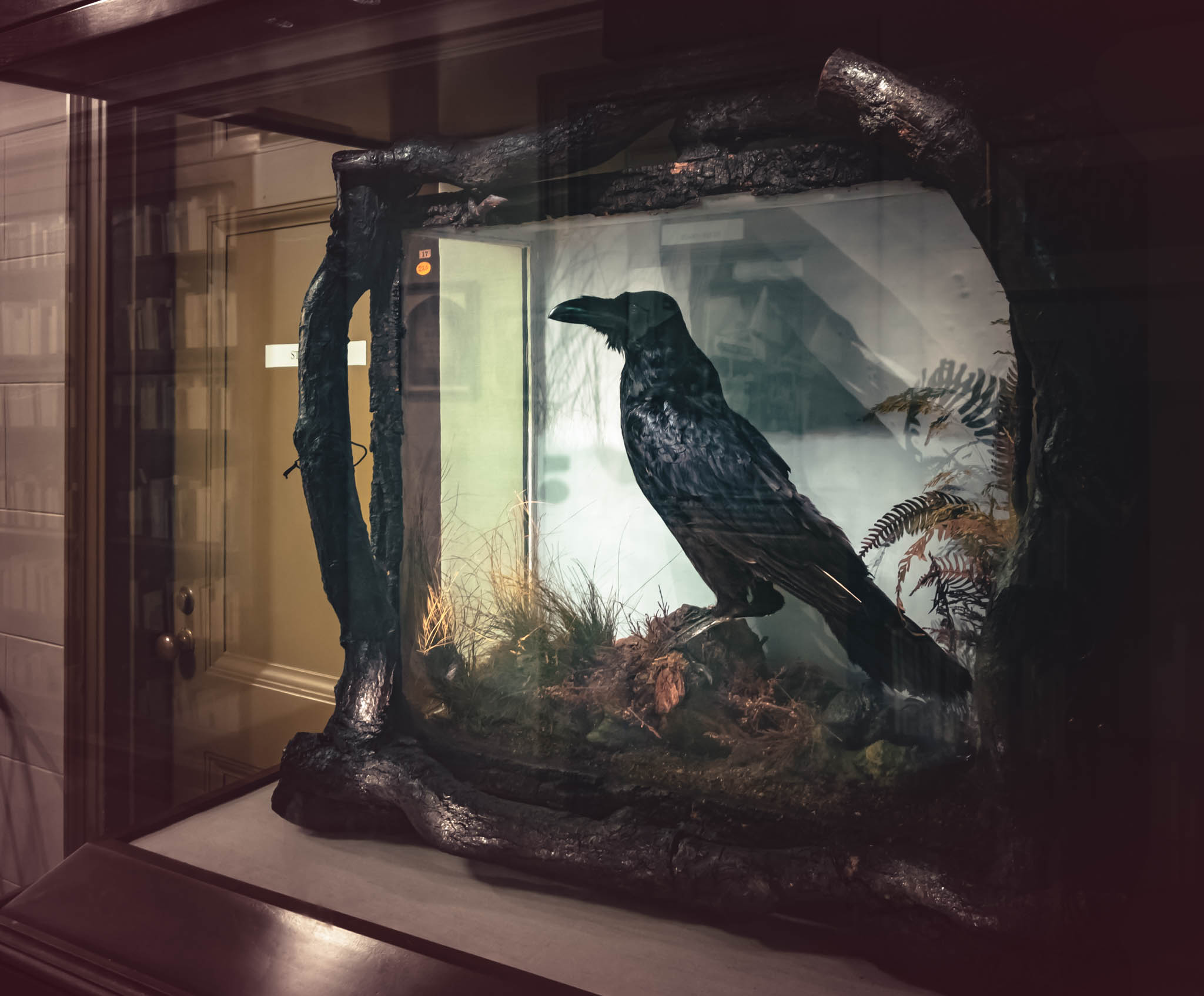
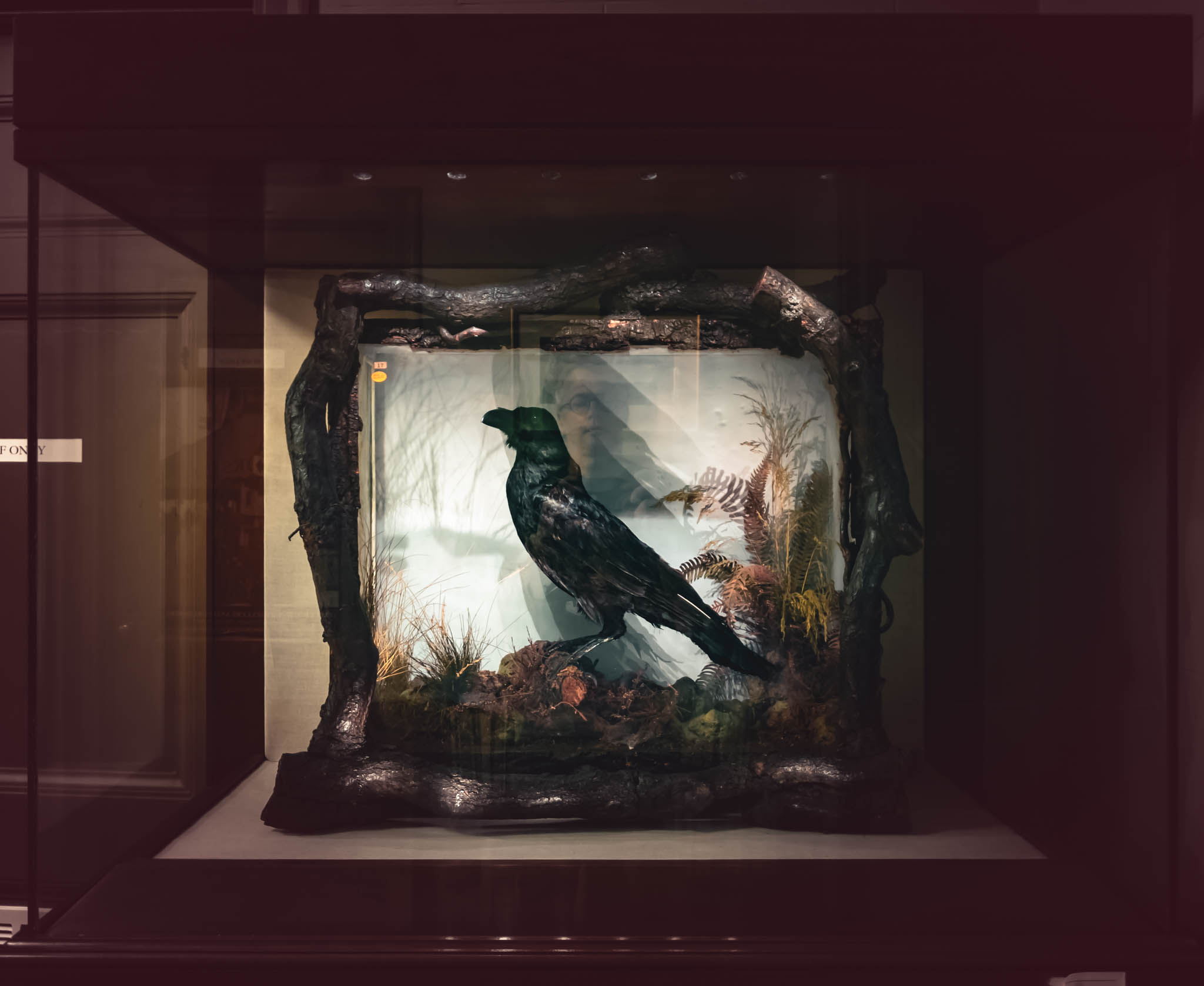
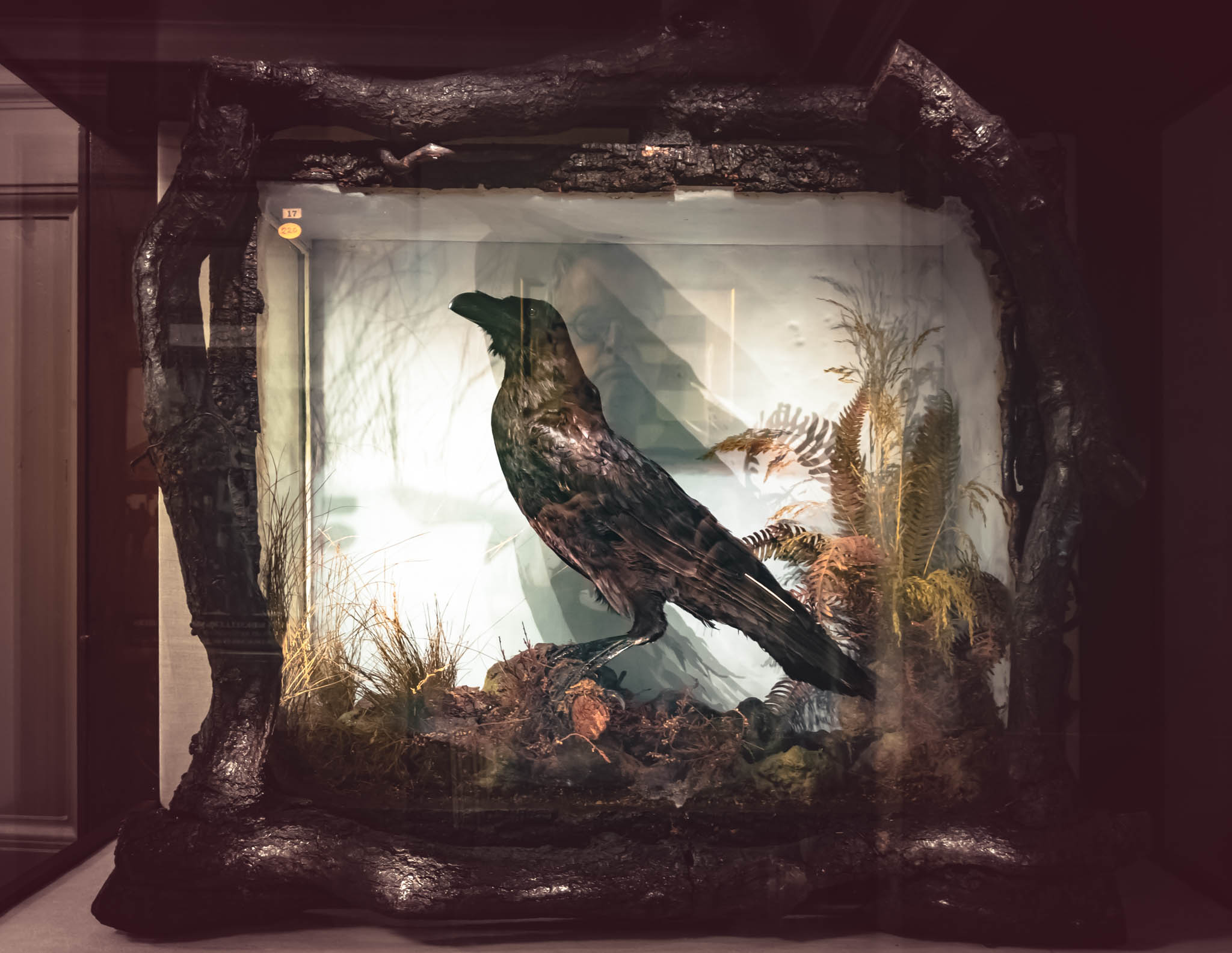
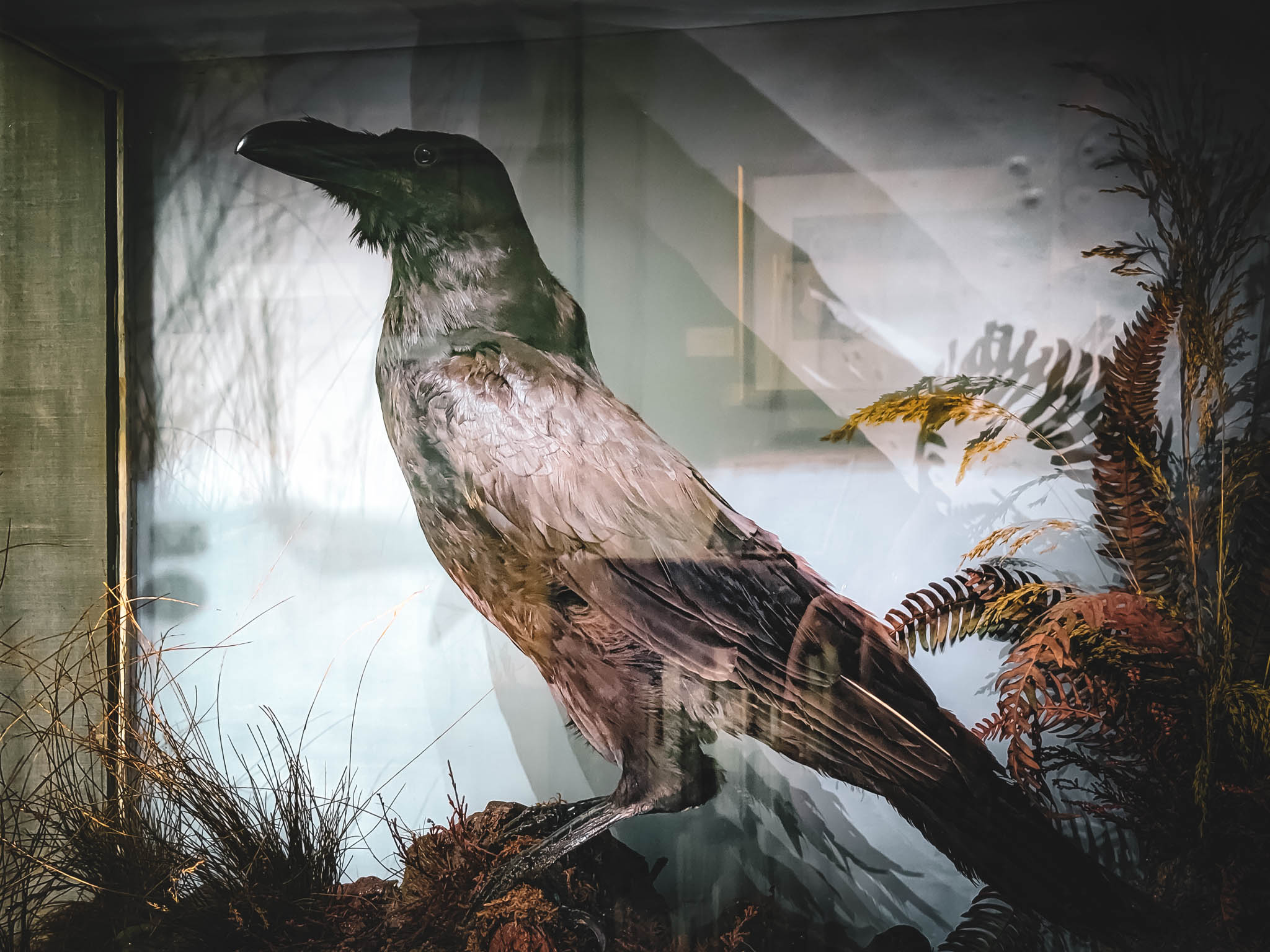
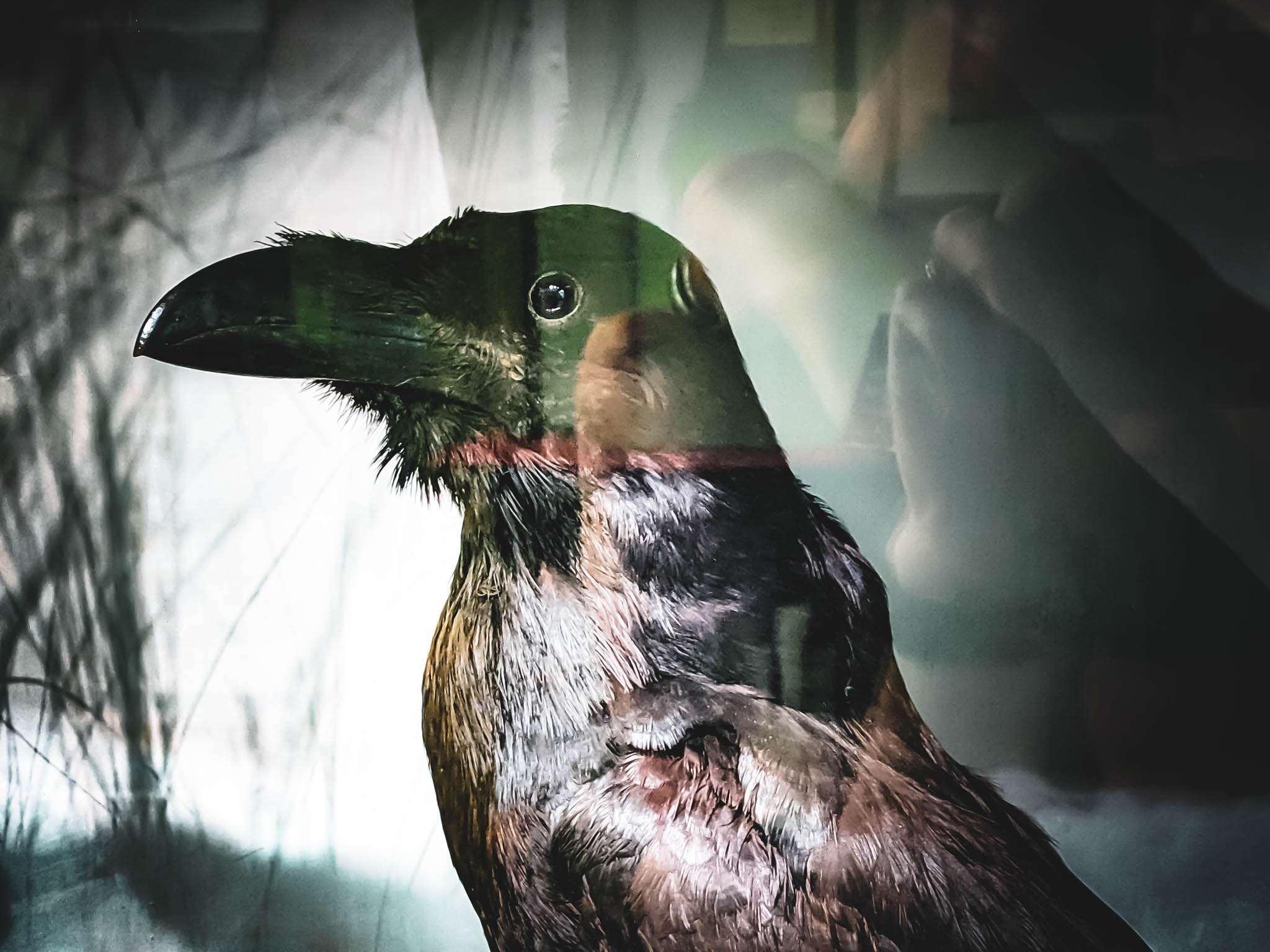
Halloa old girl!
Some late visitor entreating entrance at thy chamber door; —
This it is and nothing more.