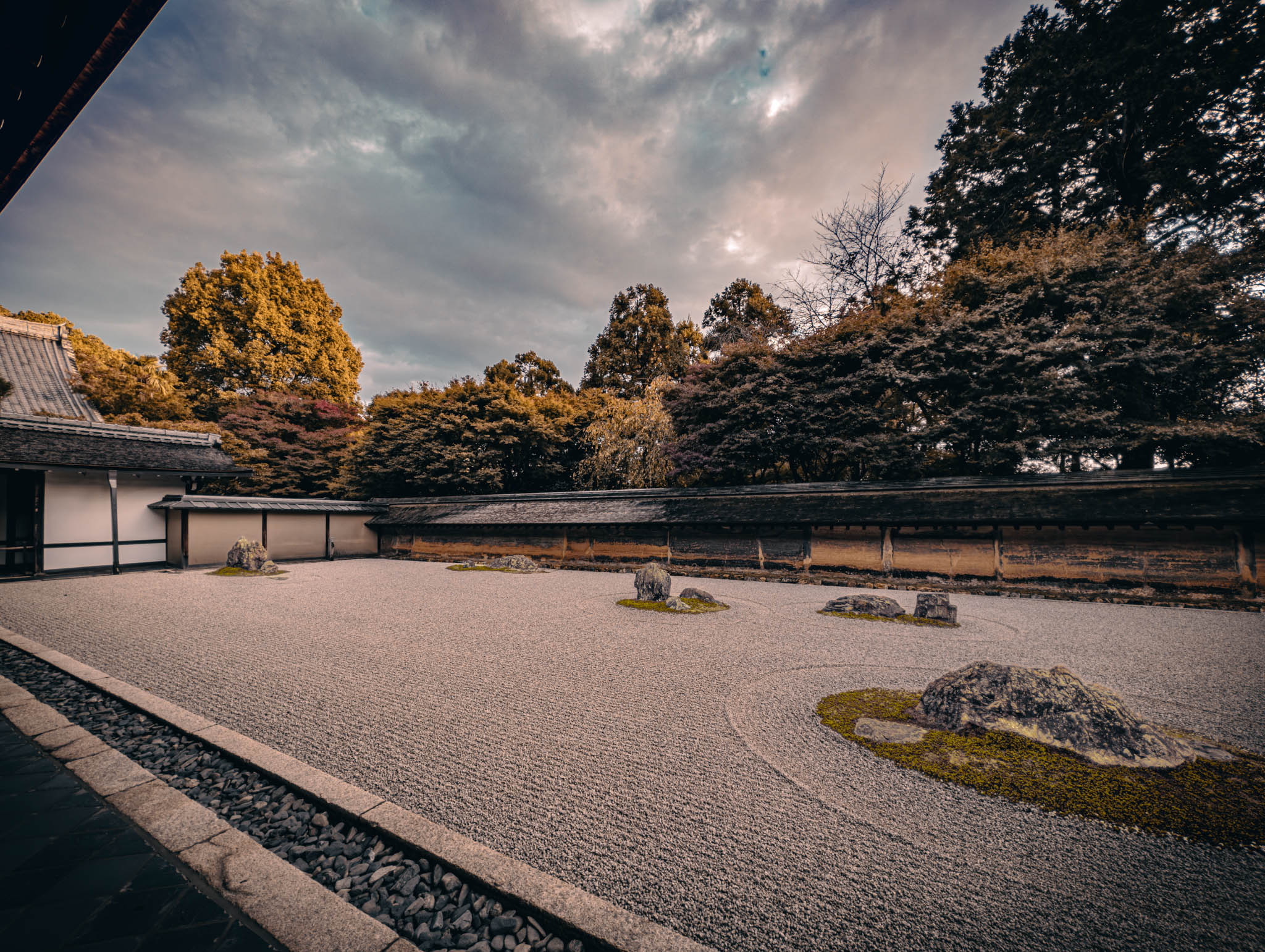
I have to admit that for me the experience of Kyoto calls in to question the value of…well, travel. How many dozens of millions of tourists (the majority wielding “selfie sticks” and thinking of themselves as “influencers”, it seems), congregate in southern Honshu each year? Should I be sneering? Am I so different from any member of these “gawking unwashed hordes” of 外国人 gaikokujin?
Is there a point to this? Want insight into an architectural marvel? There are a thousand photos online. Appreciate a cultural asset? Buy a book about it, Amazon can have it to you next day.
And learn the language via Zoom.
It’s our last day in Kansai, and I feel weary, frustrated by the crowds, and troubled by a premonition that I will never return to Japan, not this lifetime (if as the Buddhists assert, we are cursed to live through multiple ones).
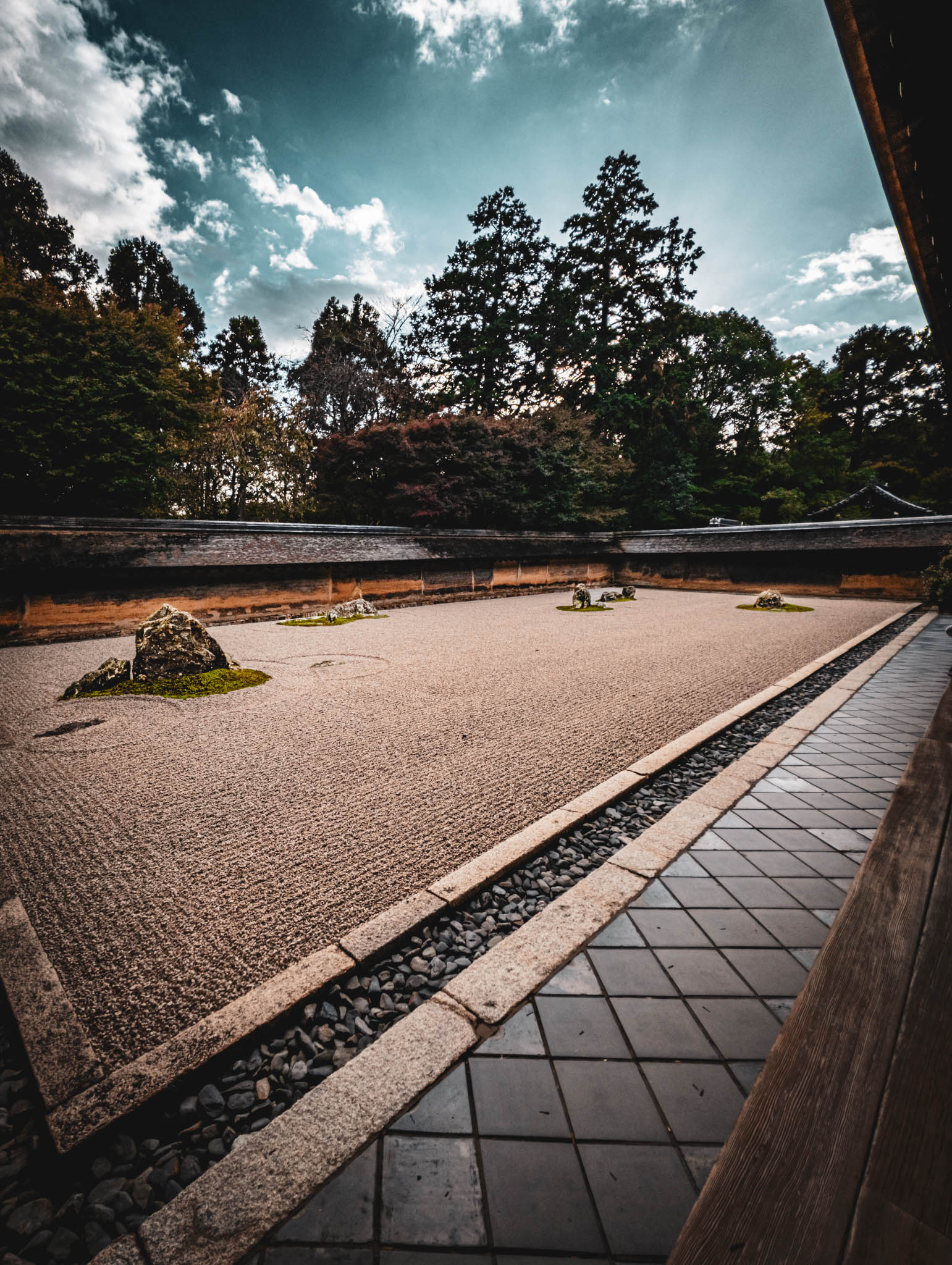
The original idea was to end the day at Kinkaku-ji, but we were running late, and Ryōan-ji was closer in the rush-hour traffic. It might be the site of the most popular of the famous dry gardens, but it can’t be anymore crowded than the Golden Pavilion. And in fact, this close to the end of visiting hours there were relatively few visitors, all of them sitting around that rockstar rockgarden.
I do have nearly a dozen books that cover the design of the classical 枯山水 karensansui, including the one at Ryōan-ji. (I also learned Japanese via Zoom.) So despite the sudden change in plans, I do have some foreknowledge of the site.
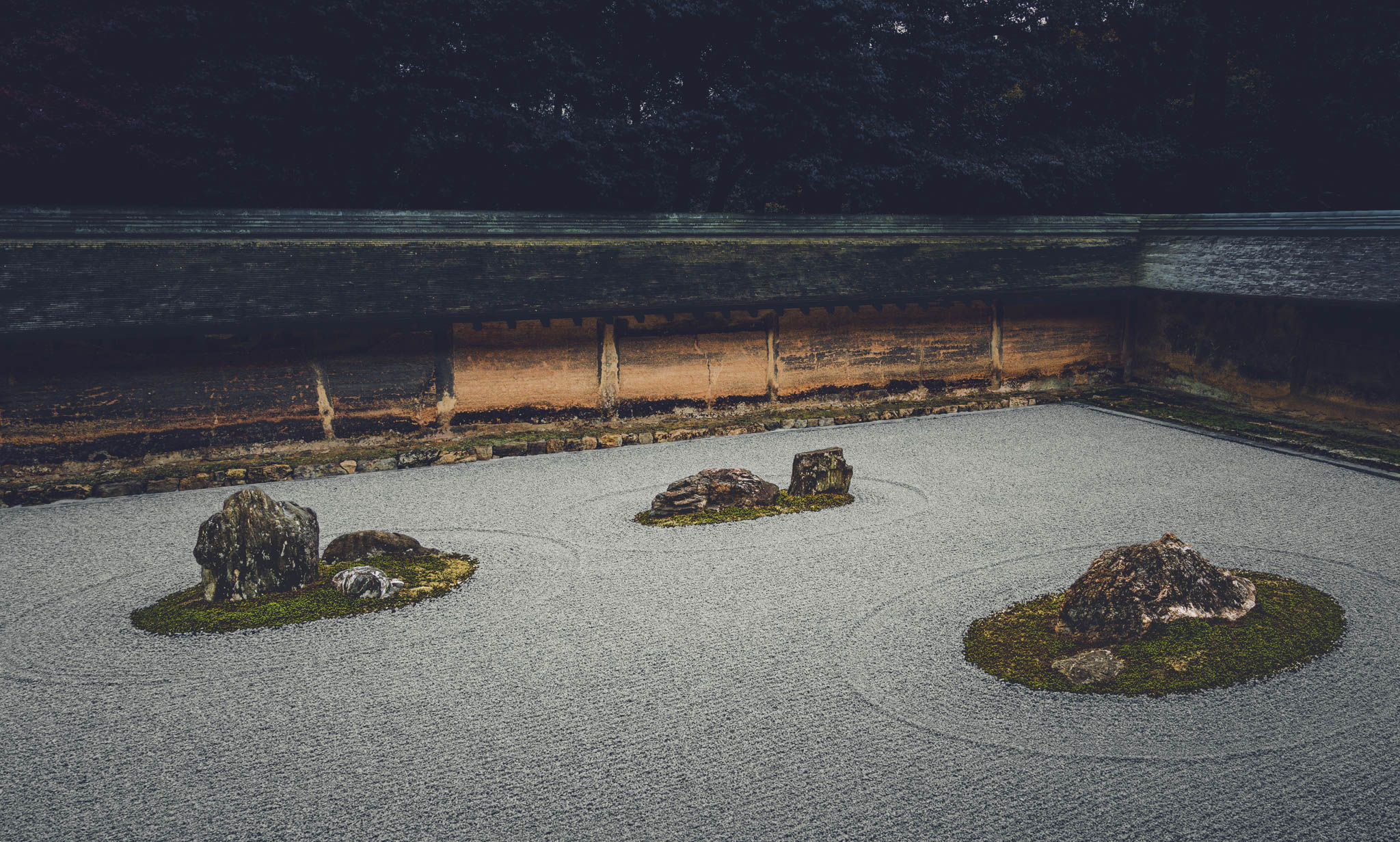
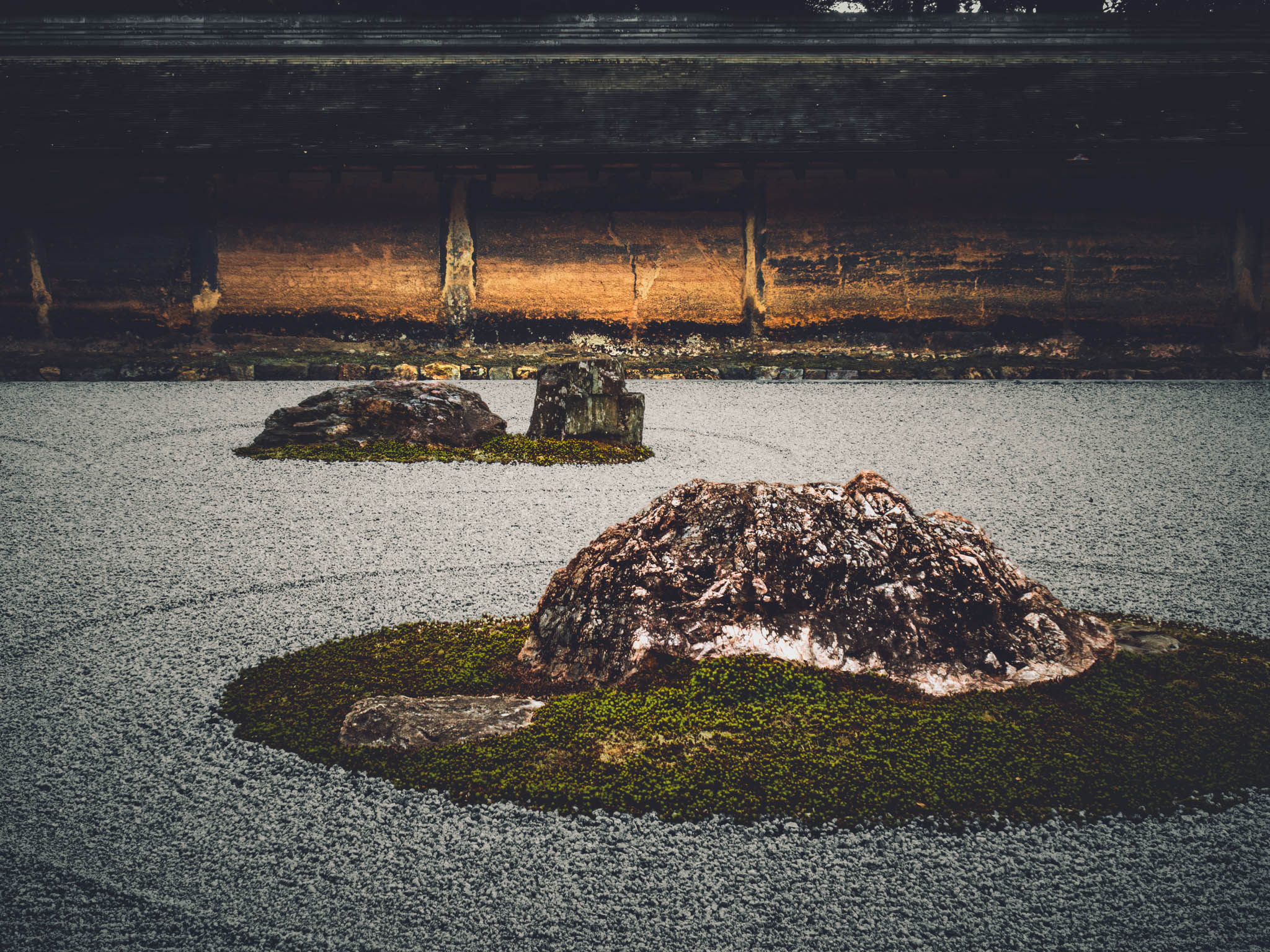
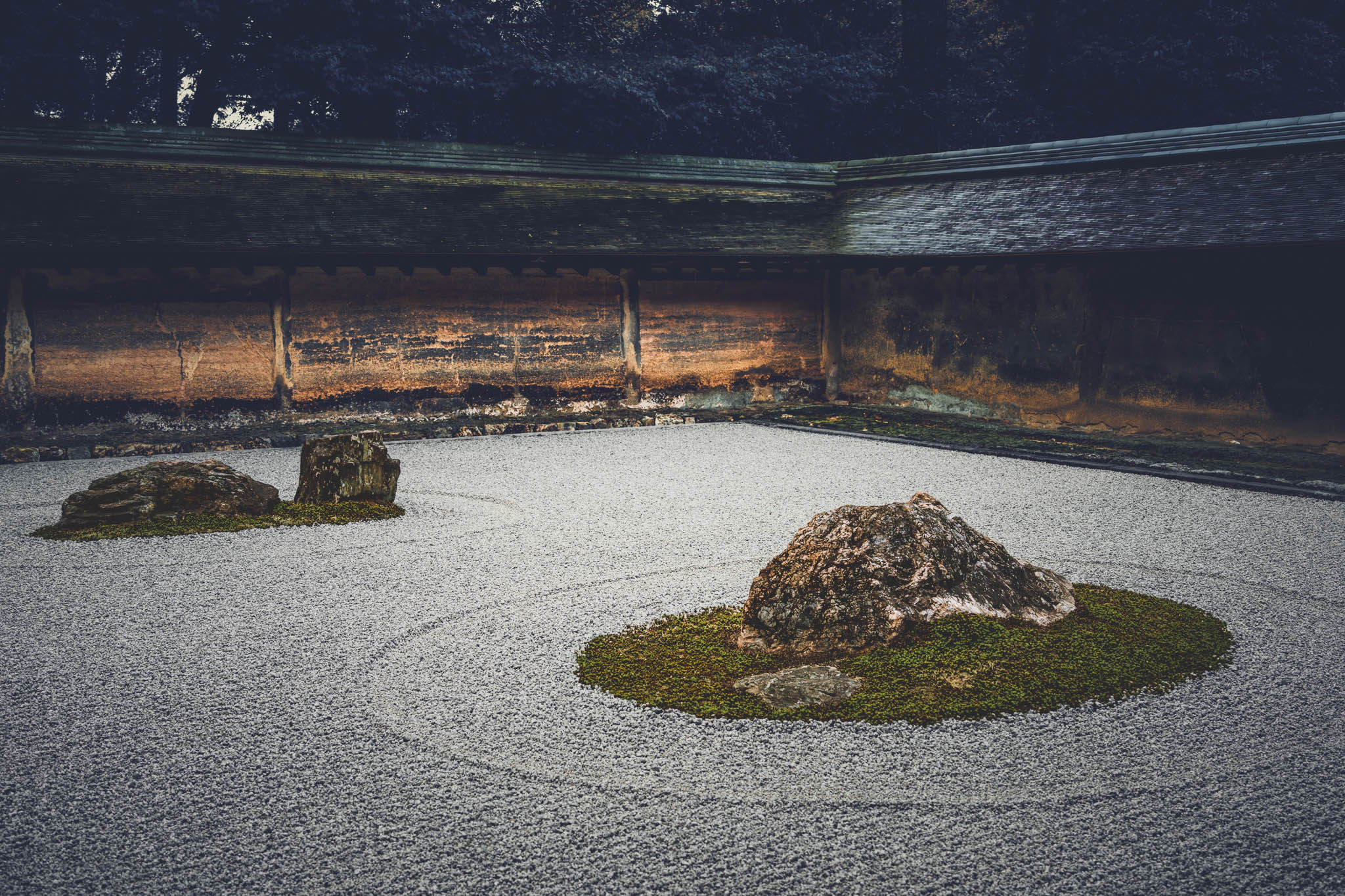
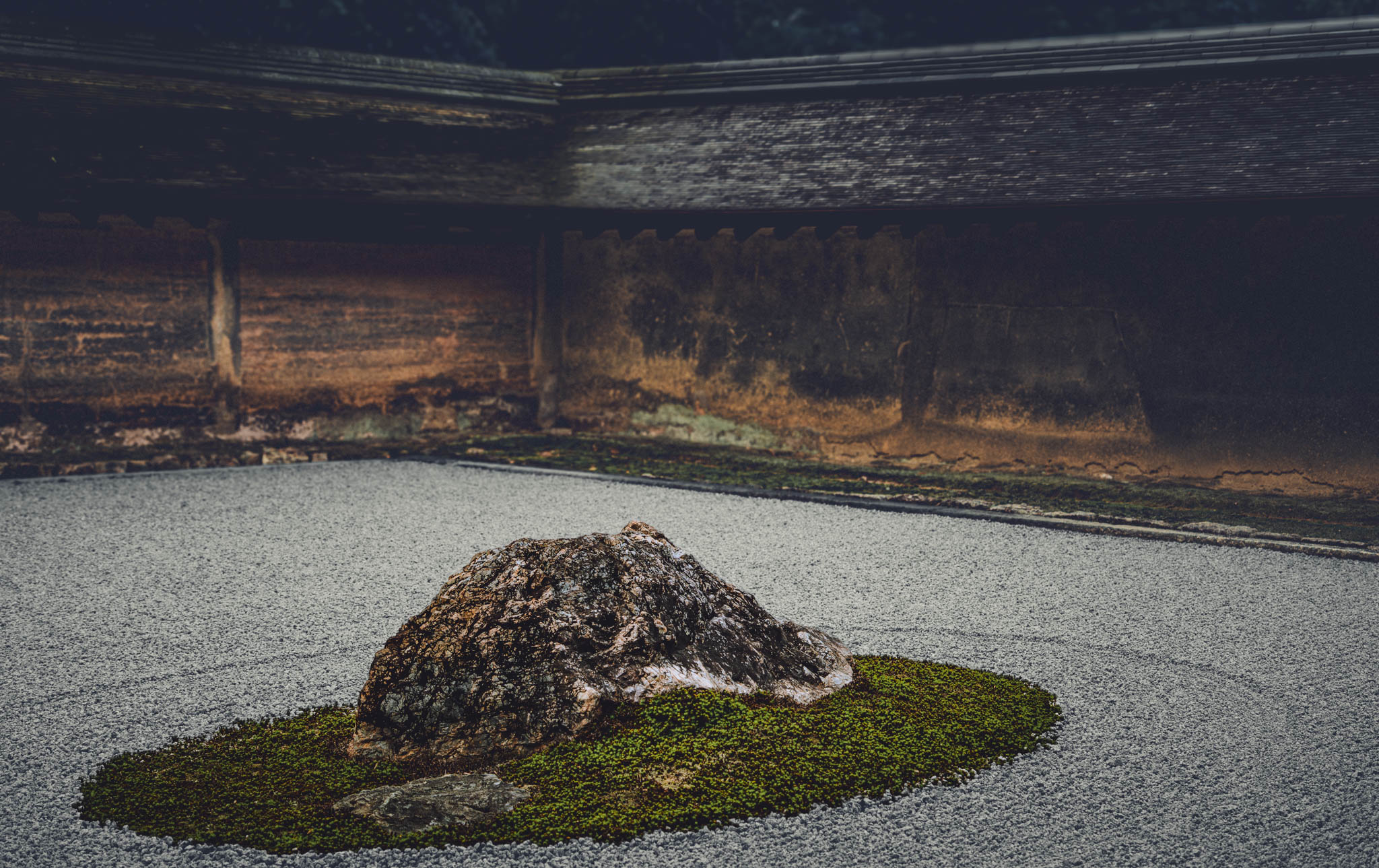
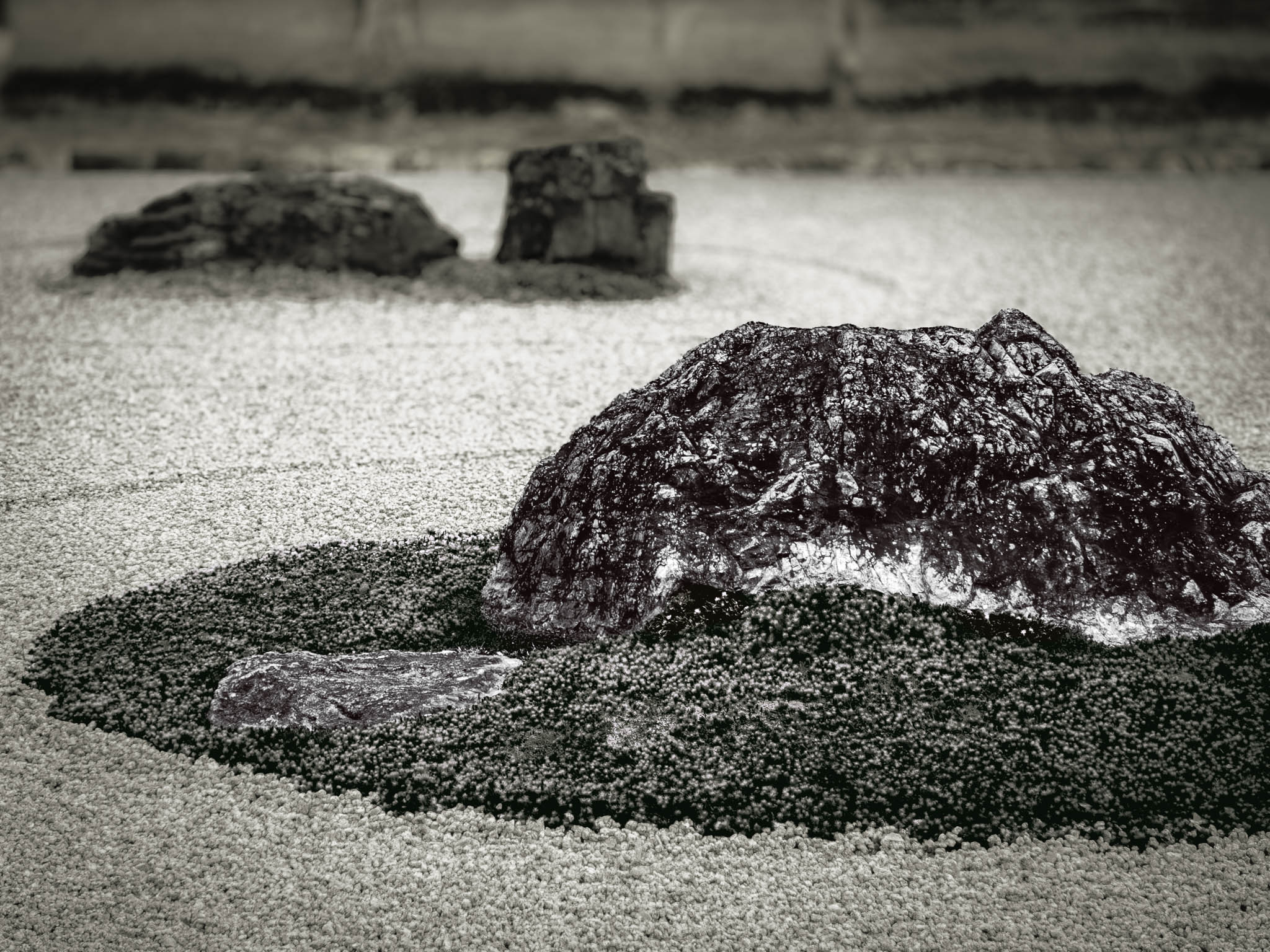
I recall that Leonard Koren, in Gardens of Gravel and Sand (Stone Bridge Press, Berkeley: 2000), which has austere photographs and a text apparently aimed at de-mystifying (or perhaps de-Zen-ing, or even simply de-riding) the dry gardens, dismisses the Hojo Teien at Ryōan-ji because it really is about the rocks surrounded by moss, and not the rake-maintained gravel — the raked gravel which he prioritizes as the truly unique element of Japanese garden design deserving of attention, gravel being a material in itself completely undeserving of interest.
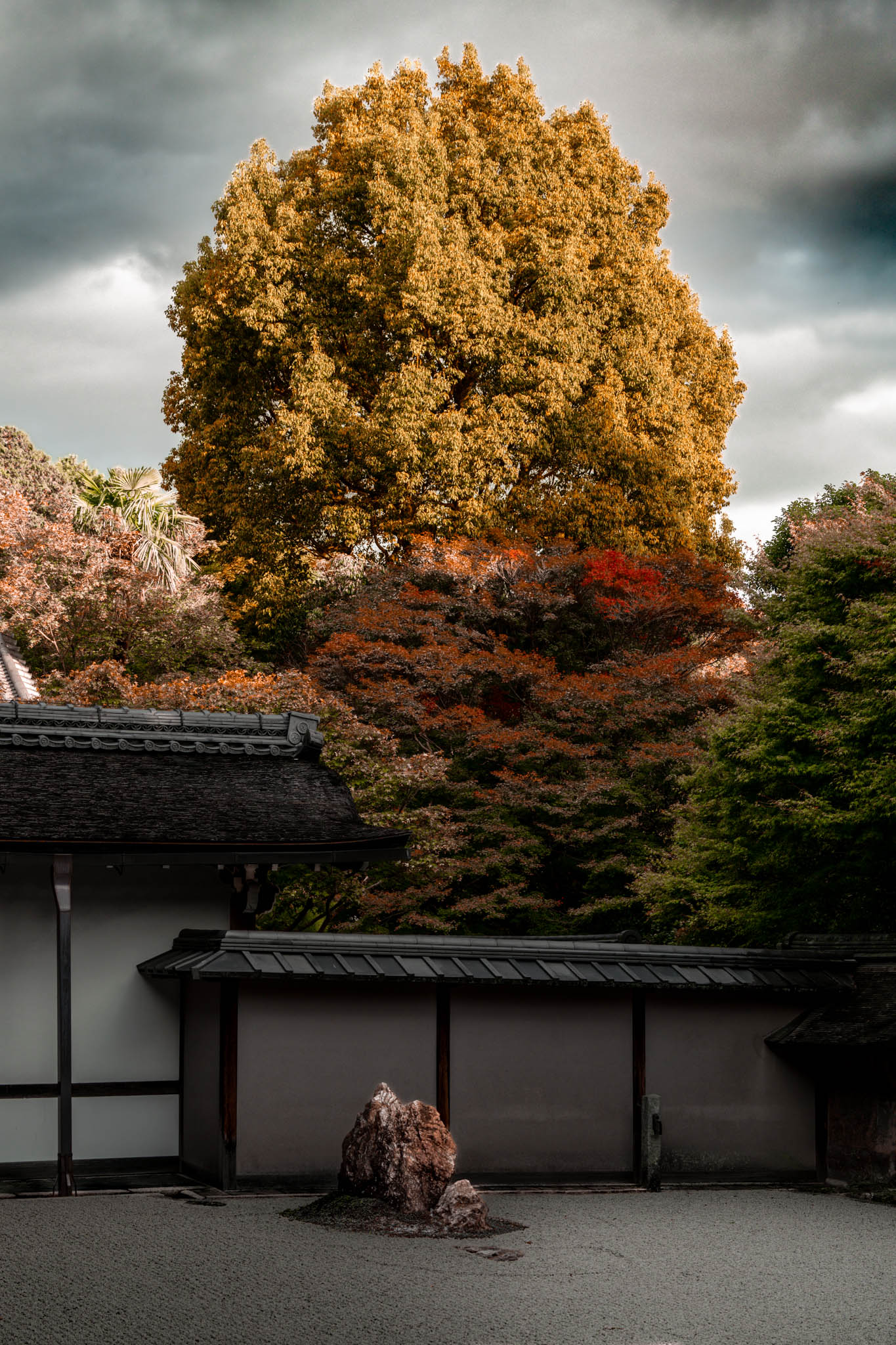
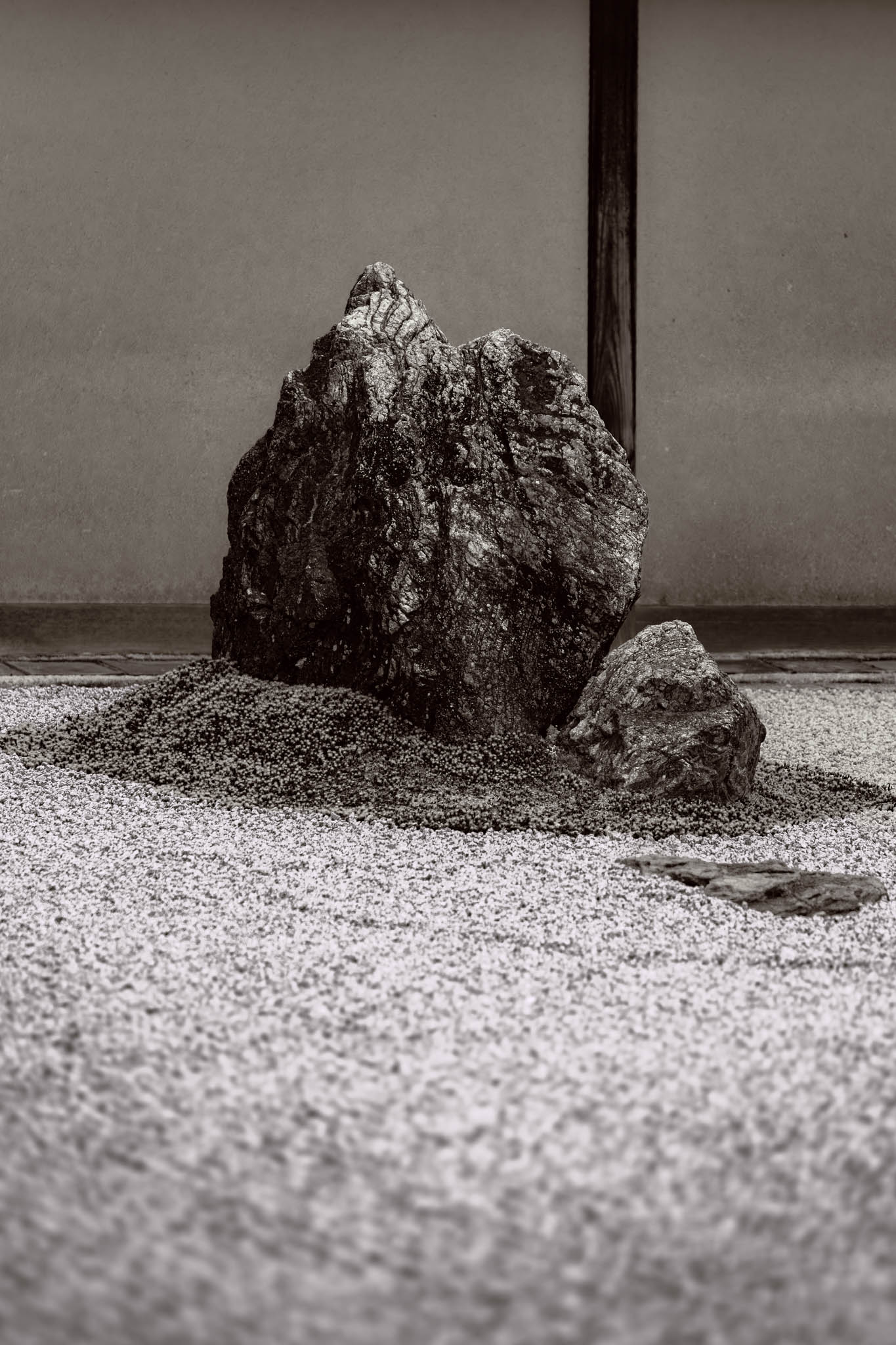
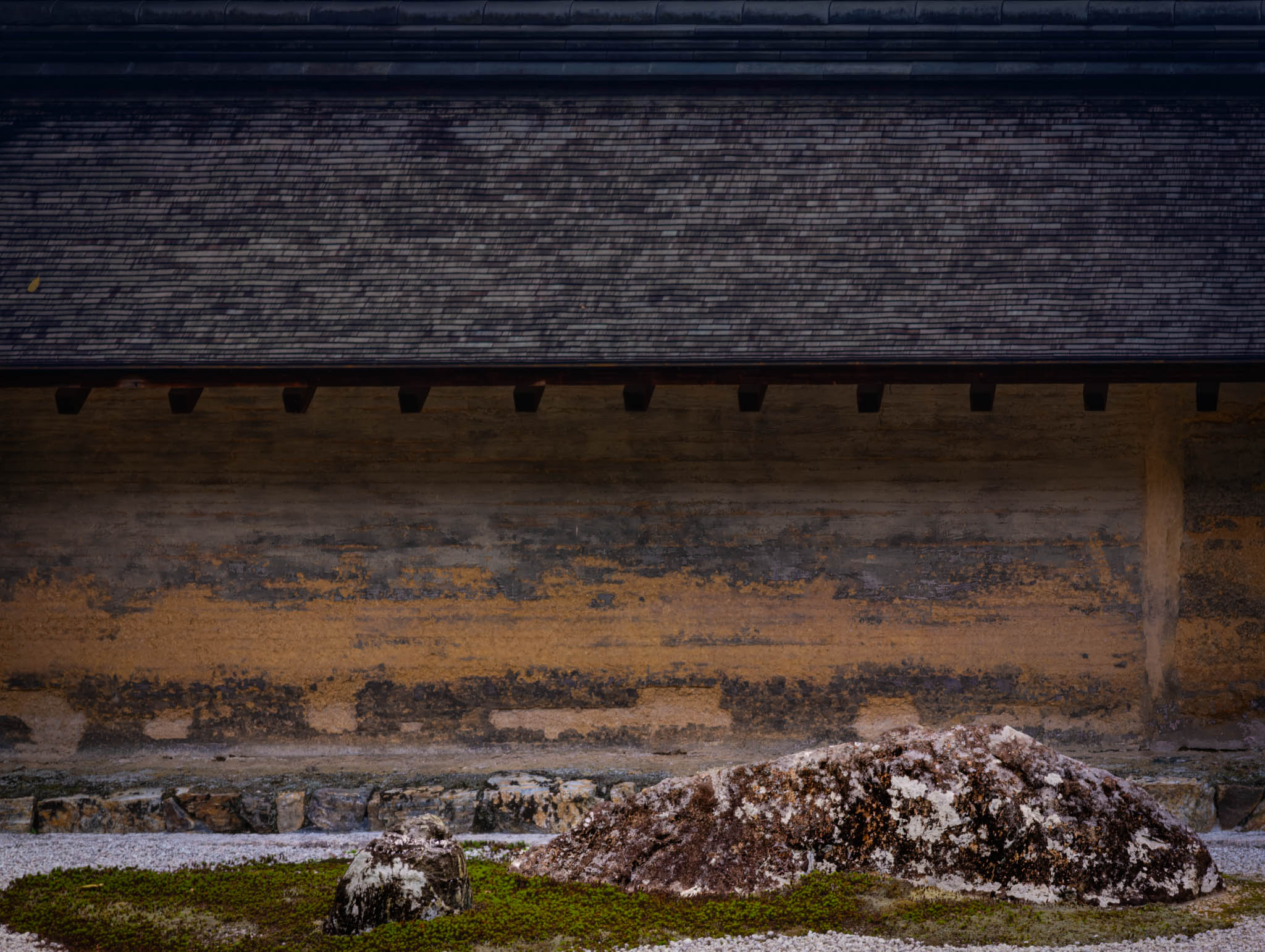
So what’s wrong with rocks and moss? The pointed, slightly-striated one at the east end, against the blank wall separating the garden from the forecourt of the Imperial Envoy’s Gate, is kind of striking. But I’m not going to count the rocks. I take it for granted that there are fifteen, even if I can’t see them all. Who cares? The wall that runs along the south and west sides of the gravel rectangle is even more interesting than the rocks. It’s described on the temple website as composed of earth mixed with rapeseed oil (basically, pressed from the seeds of a type of turnip): flaking, fissured and coarse, it indicates the rammed earth layering of its construction technique as well as its hidden vertical supports through black and orange and gray stains. And it has a bark-shingled roof of its own, topped by a formidable ceramic ridge. The wall appeals to the builder in me.
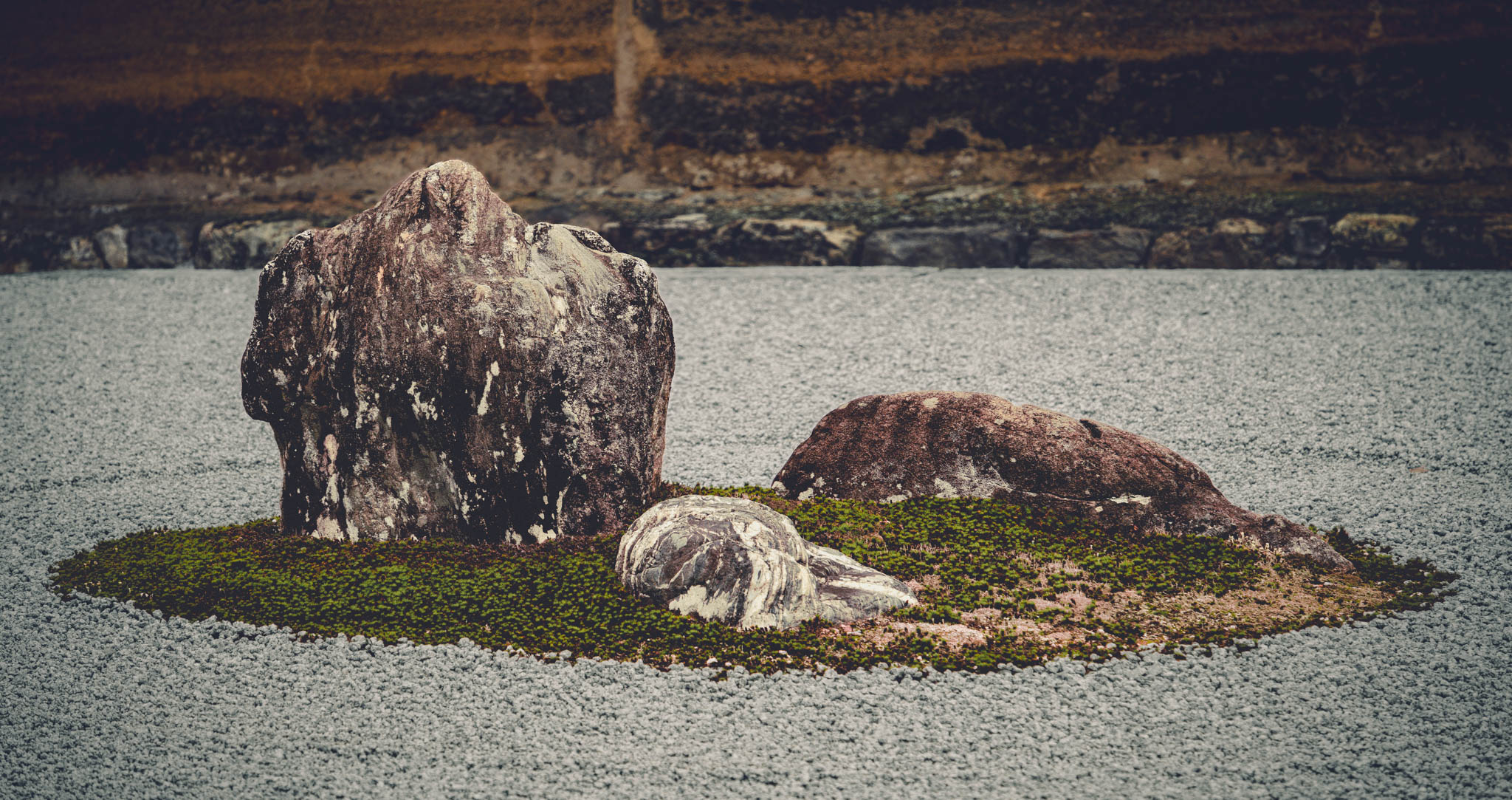
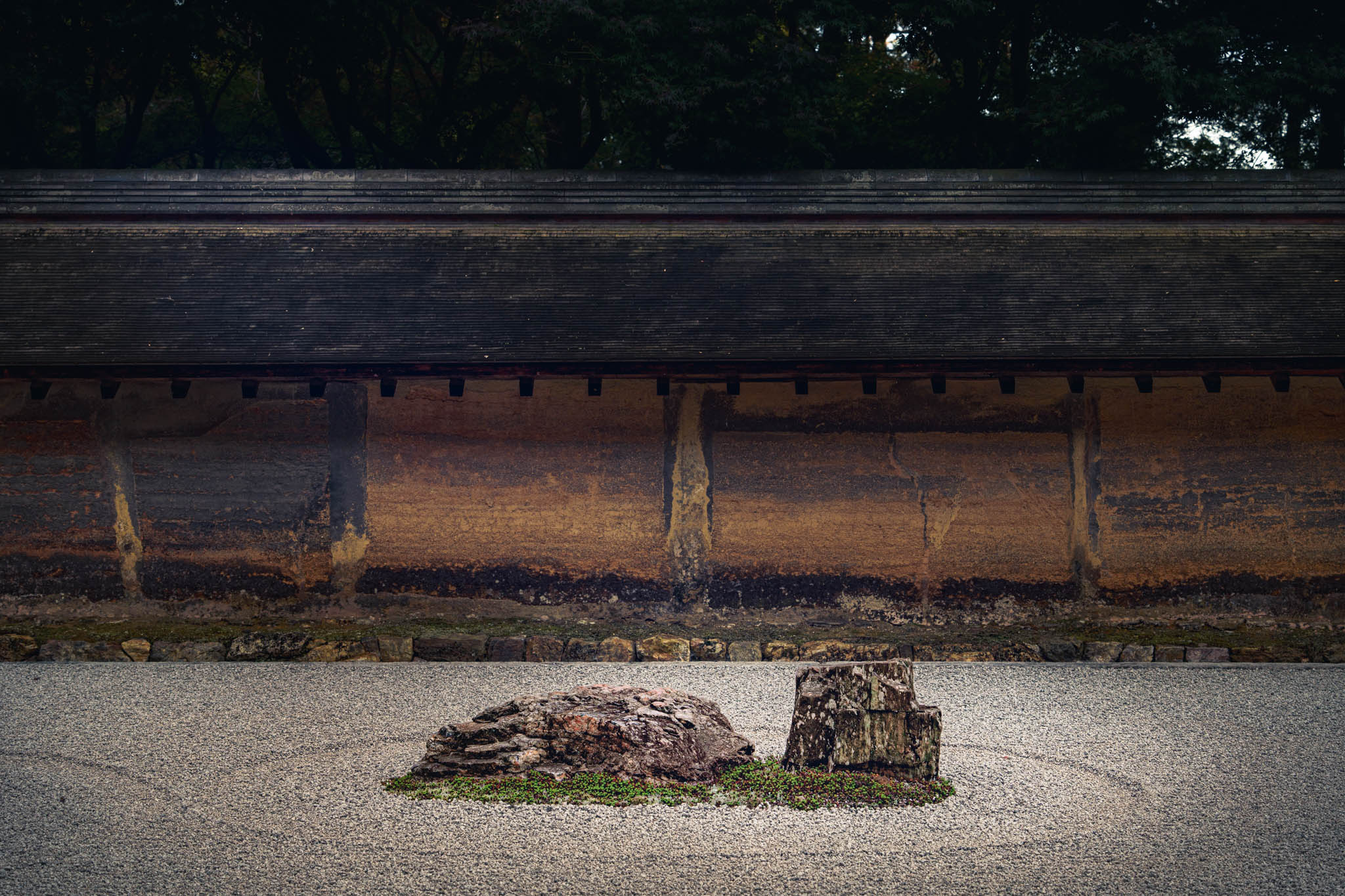
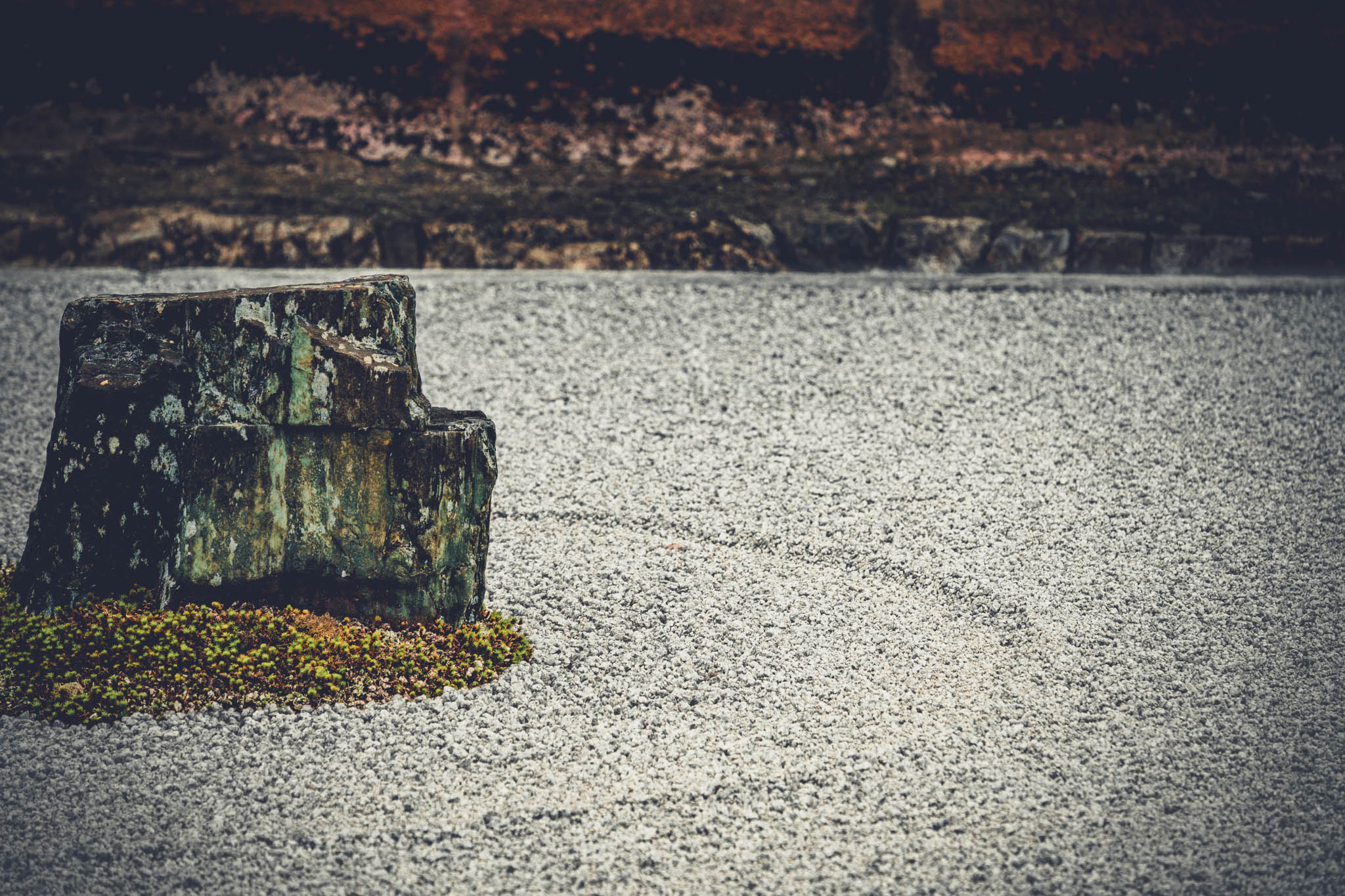
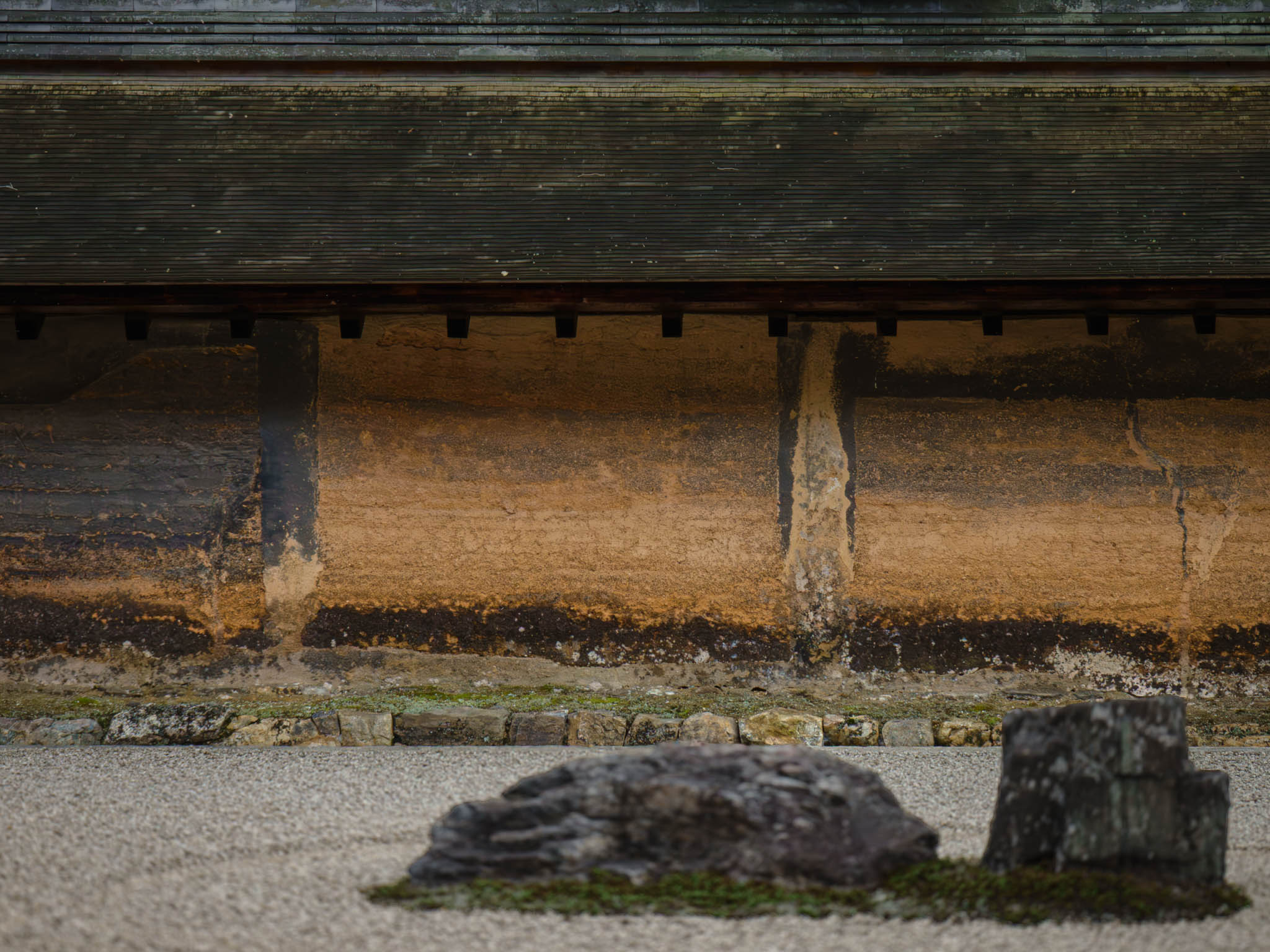
The garden (if it must be called that) seems to have been built in the early 19th century over debris dumped there after the 1797 fire that destroyed the temple, either by Akisato Rito, a painter who wrote guidebooks to gardens; or by “Kotaro” and “Hikojiro”, a pair of 山水河原者sensui kawaramono (untouchables from a hereditary pariah class of riverbank laborers generally consigned to religiously “unclean” professions like executioner, undertaker, slaughterhouse worker, butcher, tanner, and — apparently — garden landscaper) who signed a buried portion of one of the famous rocks. Personally I suspect the gravel-and-rock-assemblage was slammed into place by randos to quickly “nice-ify” the rubbish, and that afterwards no one could ever be bothered to come up with a more substantial or complex replacement. It’s the sort of thing I myself have done with hurried projects: let’s declare this intentional and artsy and call it a day.
I am not sure that I “buy” the link between dry gardens and Zen, either, especially here — since by the turn of the eighteenth century, the great age of supposedly ascetic and fearless Zen-influenced samurai had long been replaced by the comfortable totalitarianism of the Tokugawa Shogunate with the warrior class consigned to acting as sort of sullen hereditary bureaucracy.
In any case, isn’t the whole point of Zen, as a branch of Mahayana Buddhism, to convince oneself through the elaborate non-rational apparatus of 参禅 sanzen, 座禅 zazen, and 公案 koan that Nothing-with-a-capital-N really matters or really exists at all — including oneself — so as to cross that soteriological event horizon and avoid the endless hellish cycle of rebirth? In other words: to come up with a wayto irrevocably snuff it? So why would anyone who wanted to be a good Zen Buddhist care that much for a garden, even a not-really-a-garden garden of waste rock and gravel surrounded by a wall of oily mud (which, when phrased like that, doesn’t sound very nice anyway)?
Koren, in the notes at the end of his book, writes after all that no one took much note of the garden until the 1930’s, and that it was only in the 1960’s that Japanese artists began interpreting it as a monument of aesthetic abstraction in line with 20th century trends.
More like found art, then.
But what do I know? As I noted above, I’m in a bad mood, troubled by bad premonitions. If is life is suffering and suffering is inescapable as Sakyamuni observed…well, it’s simple enough to do something about life. Who needs all the ritual and rigamarole?
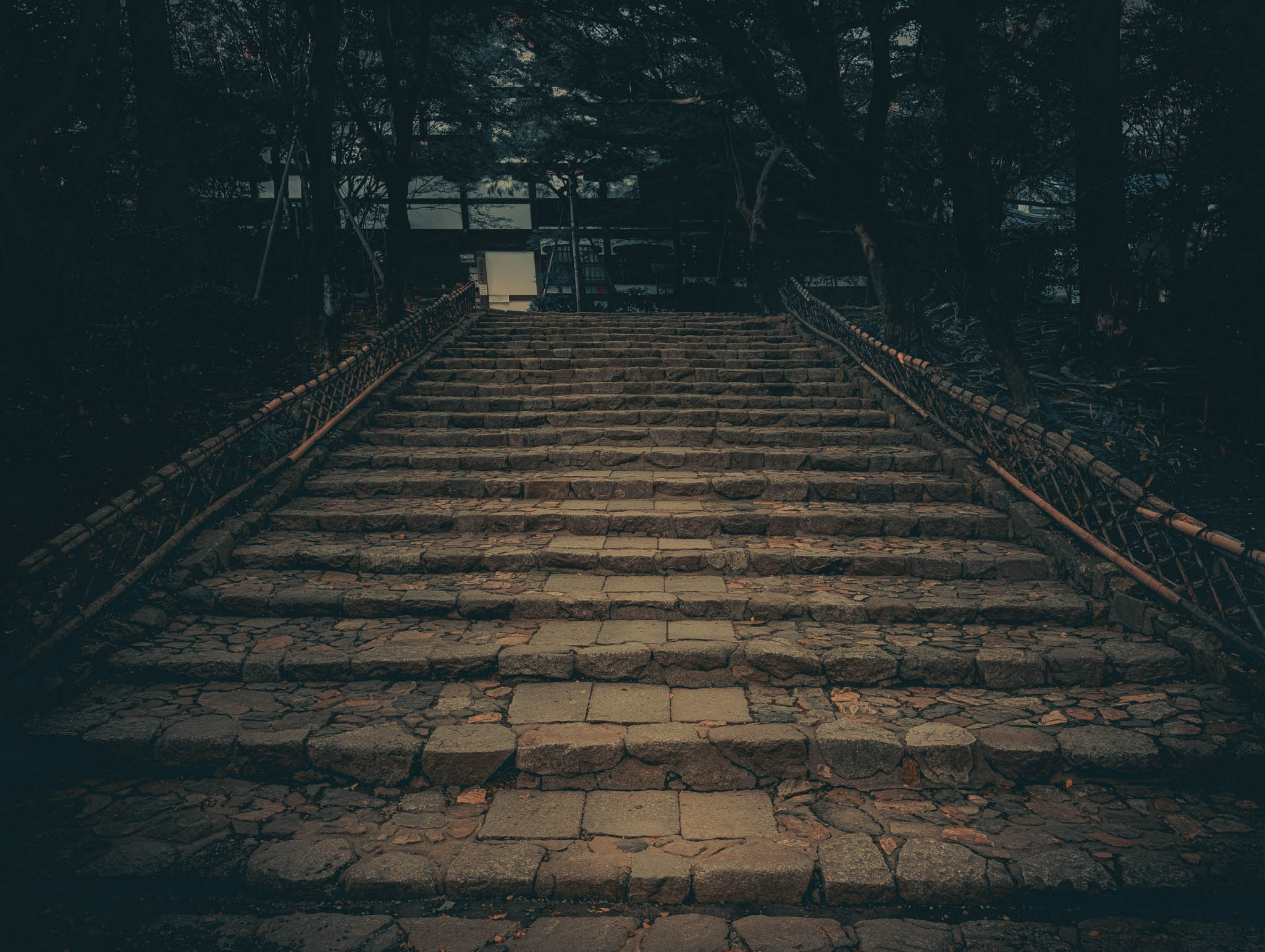
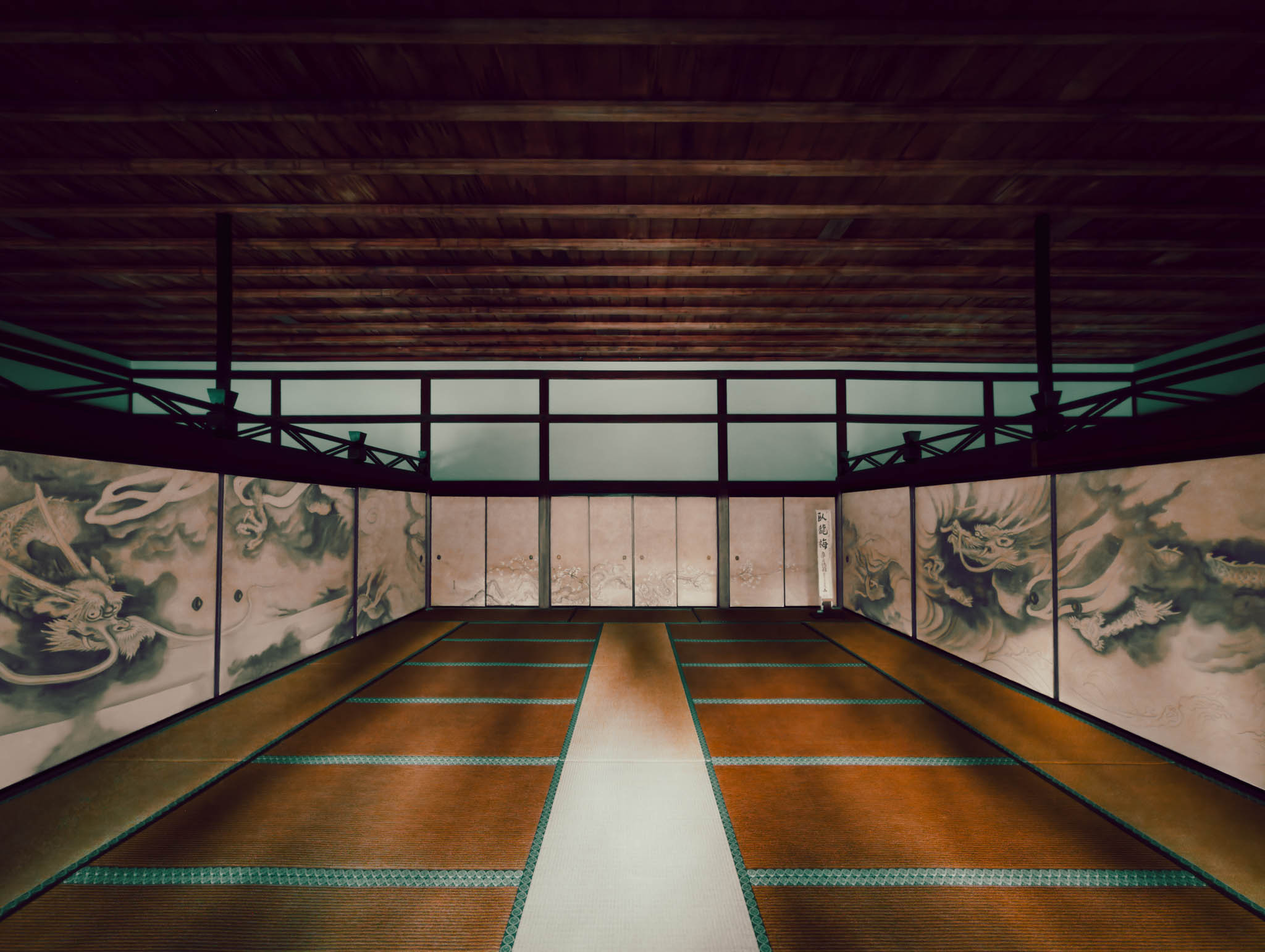
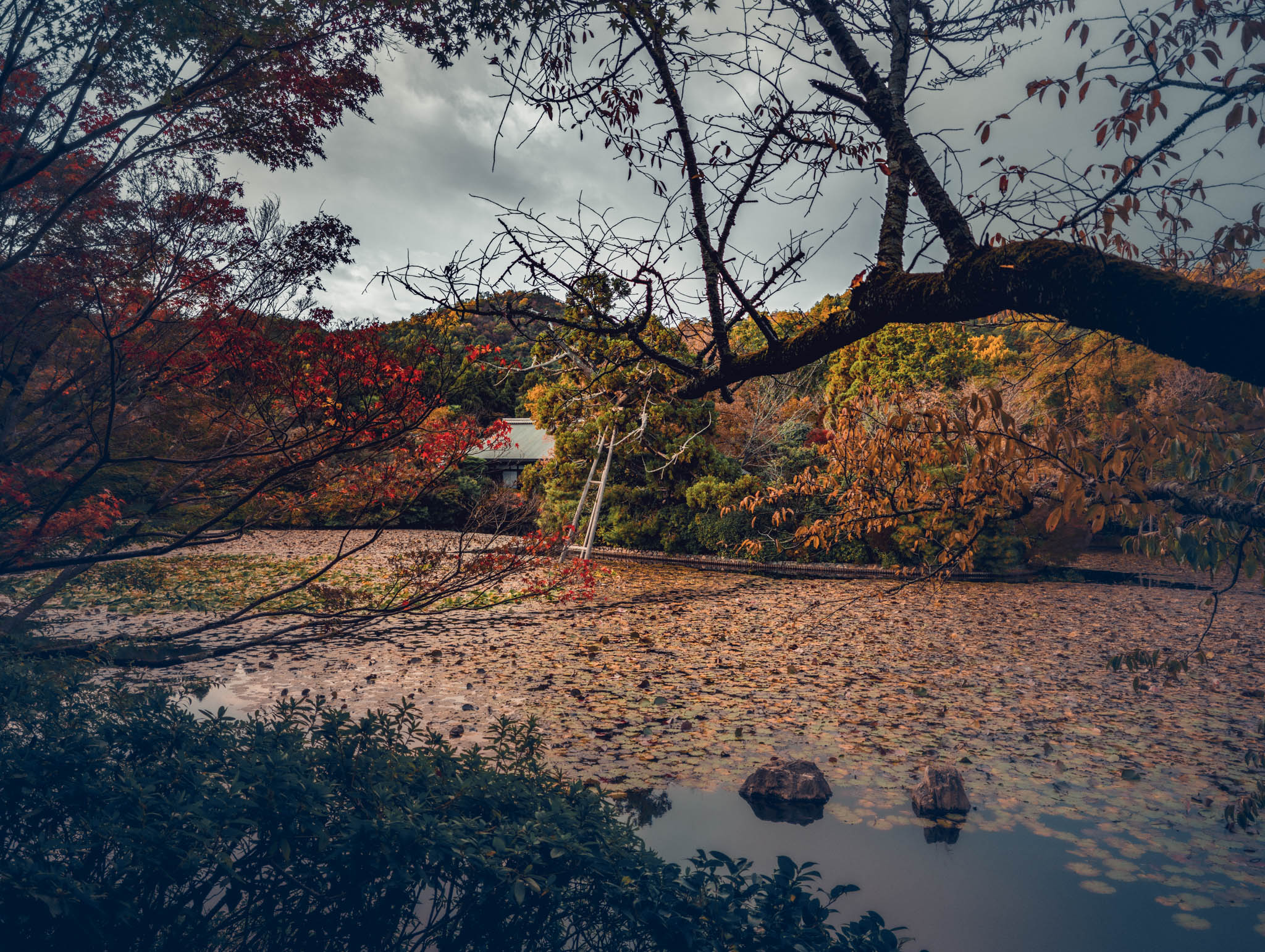
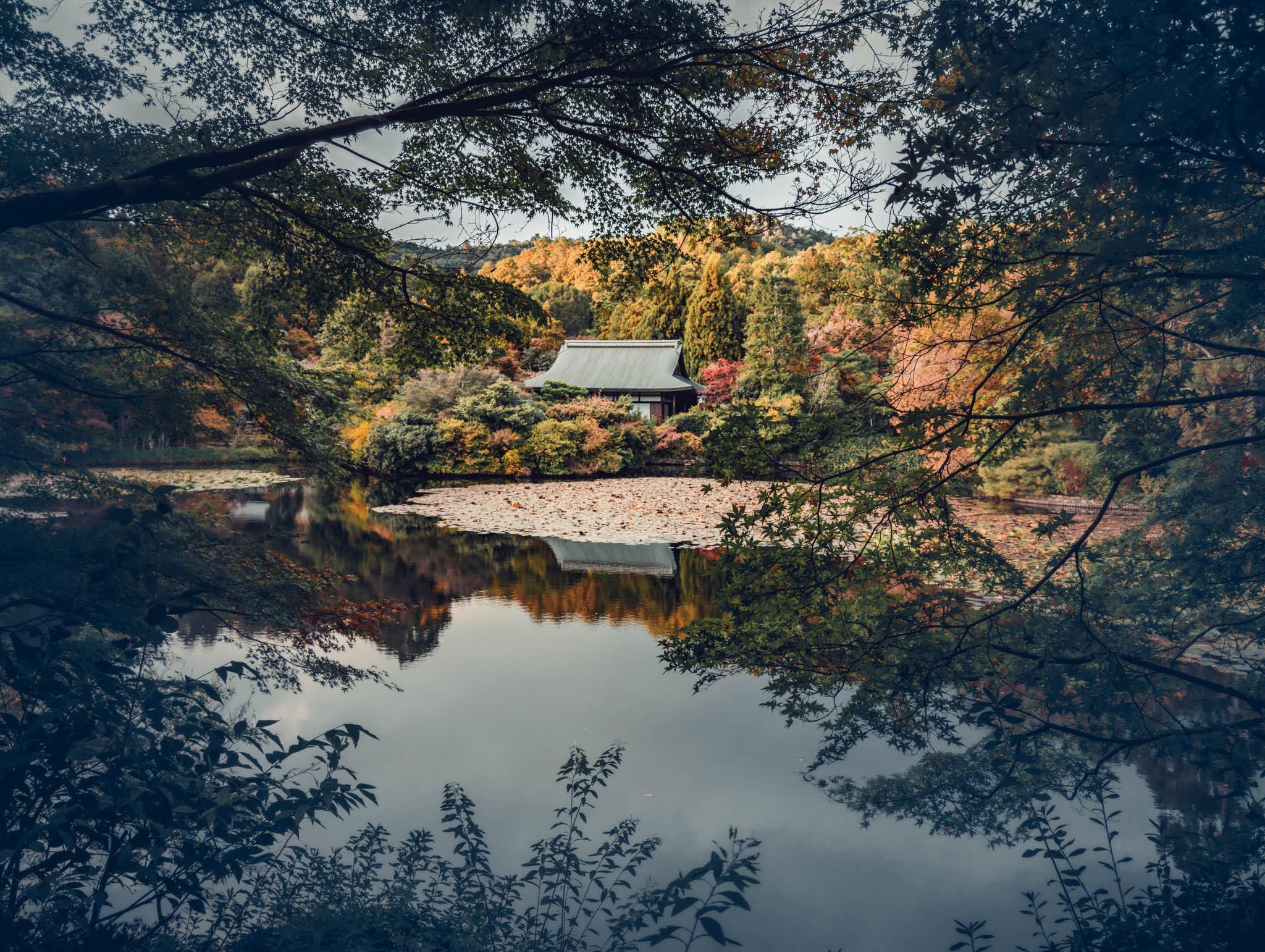
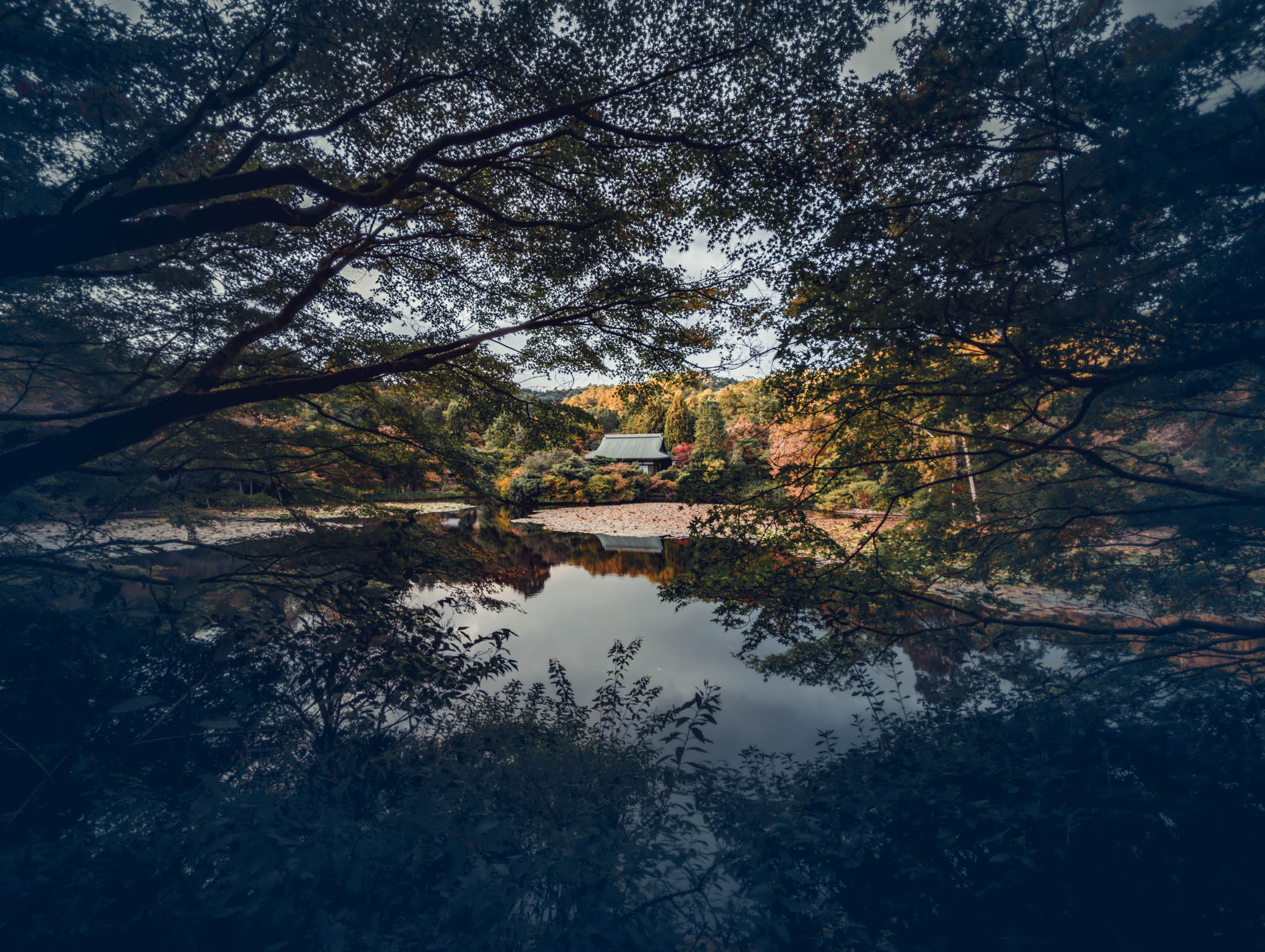
I capture a few pictures of the rocks and the wall, glimpse a tatami-floored chamber of the hojo (empty but walled with 襖 fusuma painted with marvelous cavorting dragons) before they slide the panels shut, and then (since there’s no time before closing to search out the famous coin-shaped water basin or the obscure north-side tea garden) rush out to dash around the mirror pond, which reflects sunset autumn tints in the best Japanese taste. In fact, our taxi is the last waiting in the otherwise empty parking lot.